In other threads around the blog, I have argued that the politically correct position against black make-up on a non-black individual, which is that it is the equivalent of “blackface” and thus racist per se regardless of the intent or purpose of the wearer or how it is reasonable perceived by others, is the declaration of a taboo rather than a logical argument. We have reached a similar taboo state with the use of the term “nigger” (and I have just violated that taboo by printing the word.) Teachers and professors have been punished for expressly employing the word to discuss racist uses of the word in other contexts. This is obviously bats—such instructors are not engaging in racist speech or intending to do so—but that is how taboos work. It’s like saying “Niagara Falls” in the old vaudeville skit.
Amusingly—hypocritical searches for secret exits when one is hoisted on one’s own petard amuses me—the fact that two Democrats in Virginia were found to have once worn black make-up has set off new safaris on the Left to find a way to define blackface so the taboo approach doesn’t hurt the good people—you know, anyone who isn’t a conservative or a Republican. Now harsh focus has fallen on a black group that has used blackface for over a century.
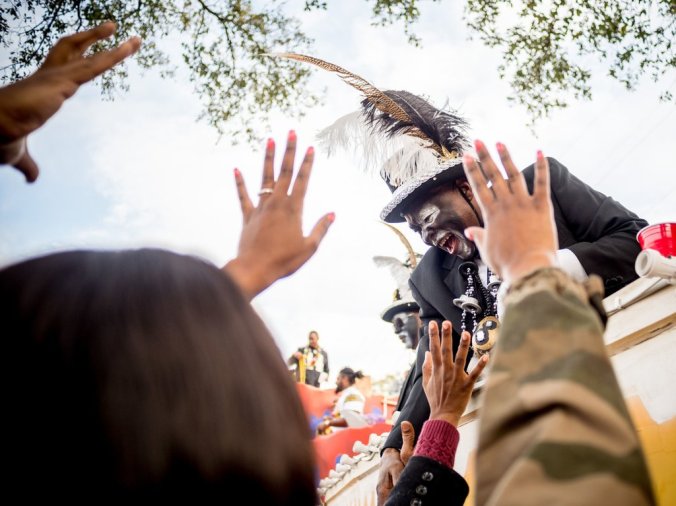
The Zulu parade is staged on Mardi Gras by the New Orleans African-American philanthropic and social club. The Zulu Club’s paraders, both black and white, wear blackface and grass skirts, a tradition that began in 1909. How is the Zulu Club’s fun and games different from Gov. Ralph Northam wearing blackface to imitate Michael Jackson—in a nice way, of course?
As far back as 1956, when an NAACP officer criticized the parade’s dress-up, the Zulu tradition has been controversial. “It’s always made me cringe,” wrote Jarvis DeBerry, a columnist with the Times-Picayune newspaper on Twitter. “That said, they swear it’s satire.” What? How is THAT a defense? The original blackface was satire, and it was satirizing blacks. Kim Coleman, an African-American woman who is curator of the city’s McKenna Museum of African-American Art, was interviewed by the New York Times and told the paper that she was offended by “the sight of white people in blackface.” Does that mean black people wearing blackface is OK, because it satirizes white racists satirizing blacks? I presume she knows that black performers during Jim Crow sometimes had to wear blackface to be allowed on stage. That image isn’t disgusting? Continue reading
 Ethics Alarms