5 Things PETA Doesn’t Understand About Ethics

Stay classy, PETA.

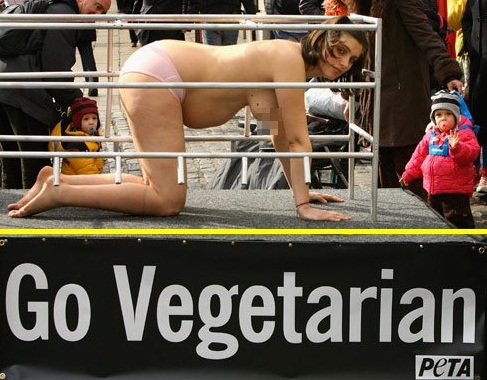
PETA—People for the Ethical Treatment of Animals— has announced that it is starting a porn website to attract attention to the plight of animals. Over on his Business Ethics Blog, Chris McDonald asks whether this means that PETA has “jumped the shark.” More so than offering Octomom money to put a billboard on her lawn advocating spaying pets so they won’t have litters like hers? More so than complaining that Punxsutawney Phil, the groundhog of Groundhog Day fame, should be replaced by a robot? I don’t think so. Besides, jumping a shark would be cruel to the shark.

The tunnel-visioned organization, well on its way to becoming a joke to the detriment of its abused animal constituency, has registered the domain name peta.xxx and plans to launch a pornography website in December that “draws attention to the plight of animals.” How will it do that, you ask? By using images of naked women performing  sex acts on men to attract viewers, and then making the audience observe graphic videos of animal abuse for the privilege of watching the graphic sex. “We try to use absolutely every outlet to stick up for animals,” says PETA spokesperson Lindsay Rajt, who adds that the organization wouldn’t use its “flashier tactics if we didn’t know they worked.”

Let’s put that right at the top of this list, entitled “5 Things PETA Doesn’t Understand About Ethics.” Continue reading
George Washington’s Vision of Religious Freedom

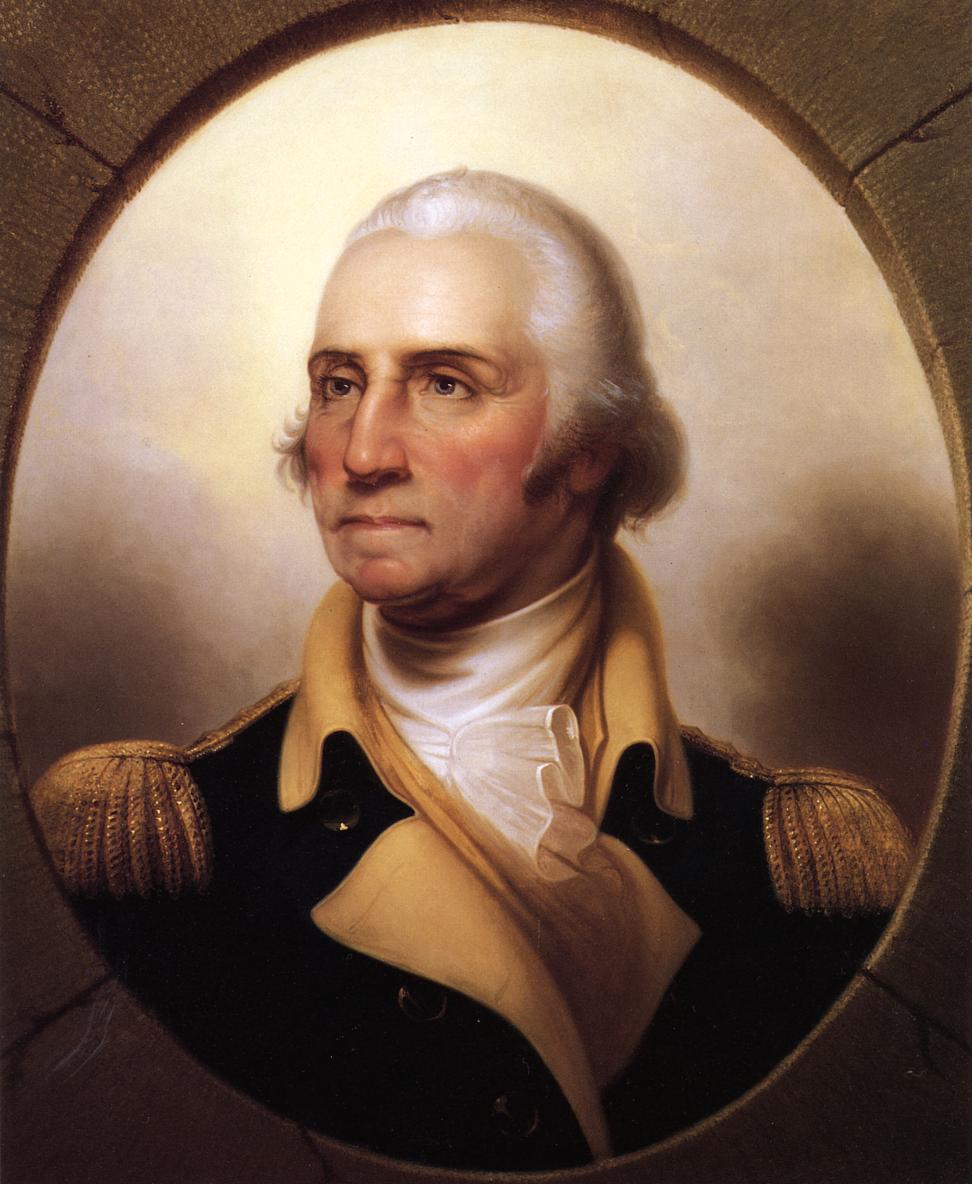
George Washington continues to be a source of wonder, wisdom, and ethical clarity.

Every year in August, Touro Synagogue in Newport, Rhode Island hosts a reading of President George Washington’s 1790 letter to “the Hebrew congregation in Newport, Rhode Island.” Before this month, I was unaware of either the celebration or the letter, I am ashamed to say. In it, the first President laid out clearly the ideals of religious freedom to be embraced by our fledgling nation, to a group that had reason to do doubt whether they would be welcome to worship as they pleased.

For generations, the Hebrew community that ultimately  settled in Newport had been fleeing religious persecution. The same year Christopher Columbus arrived in the New World, in 1492, Spain enacted a policy forcing Jews to convert to Christianity or leave the country. Thousands sought refuge in the Netherlands, the Caribbean Islands and South America, only to be pursued by the Spanish Inquisition. Continue reading

The Ethicist, the Farkel Family, and the Perils of “Maybe”

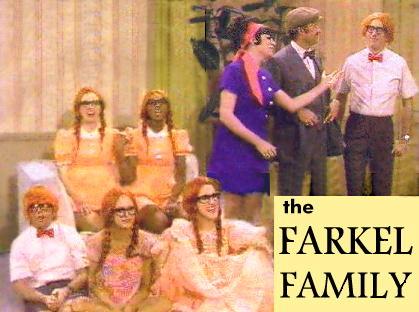
This photo is completely relevant to this post, but if you are under 50, you probably haven't a clue why. Pity. See below for an explanation.*

One of the reasons I started the Ethics Scoreboard, and continued with Ethics Alarms, was my frustration with the ethics profession’s reluctance to render useful opinions on complex ethical problems…unless, of course, the ethicist was being paid for them. Instead, ethicists are prone to issue obtuse and jargon-filled discussions allowing for every possible eventuality and interpretation, usually concluding with vague, equivocal pablum that allows the ethicist to avoid criticism and accountability. The result of this craven preference for “maybe” as the answer to every dilemma is that ethics are rarely included in public discourse or media coverage, as it solidifies its reputation for being technical, ambiguous, and pointless.

A perfect example of the reticence to make a clear choice occurs in this week’s installment of “The Ethicist,” the New York Times Magazine’s ethics column. An understandably anonymous inquirer writes that he unknowingly fathered a child with a married woman in his neighborhood, who raised the child as the offspring of her and her husband.  The mother asked the biological dad to have no contact with the girl, and he has complied. Now he asks, “Does she have a right to know her true parentage upon reaching adulthood? Sooner? Over the objection of the mother? Only when the husband dies? Who can make these decisions and when?” Continue reading

Ethics, History, and Robert Redford’s “The Conspirator”

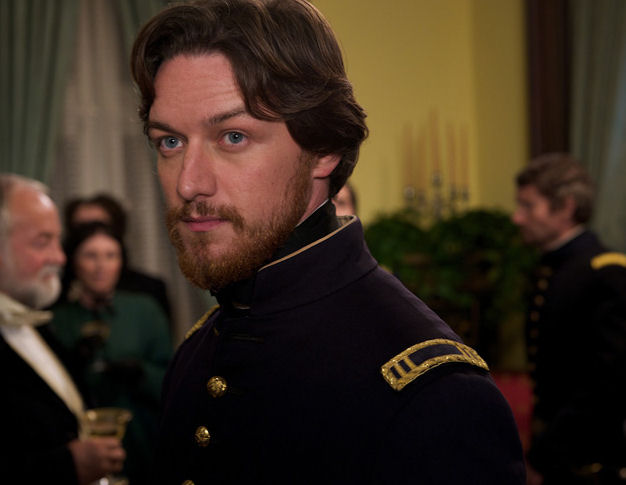
James McAvoy as Frederick Aiken, a Civil War era Ethics Hero you've never heard of.

Throughout Hollywood history, there have been actors who regularly used their screen personas to explore ethical issues: Henry Fonda, Glenn Ford, Paul Newman, John Wayne of course, Clint Eastwood, and recently, George Clooney. None of these focused their artistic attentions on ethics more sharply than Robert Redford, however, in such films as “All the President’s Men,” “The Candidate,” “The Proposition,” and “The Natural,” and he has continues his exploration of ethics as a director, in such films as “The Milagro Beanfield War” and “Quiz Show.”

Redford’s most recent film, “The Conspirator,” is another ethics movie, as well as one that explores law and American history. I am a Lincoln assassination buff, and I was eager to see the movie until I read several reviews criticizing it as a heavy-handed allegory attacking the Bush administration’s response to 9/11. Score one for the confirmation bias trap: the movie is nothing of the kind. Continue reading

God, Beck, and the Confirmation Bias Trap

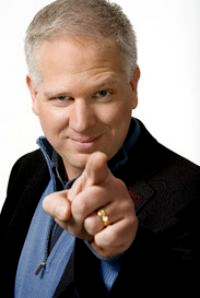
Hurricane Irene proves that God agrees with Glenn Beck. Glenn Beck says so, and he must be right, because God agrees with him. Hurricane Irene proves it.

Policy makers, decision-makers, journalists, and indeed all of us have an ethical obligation to be on the alert for confirmation bias, that insidious human tendency to interpret all external phenomena as confirmation of our established opinions and beliefs. Why do we have the obligation? We have it because confirmation bias makes us dogmatic, inflexible, close-minded, incompetent, and, in a word, stupid. Life can make us wiser, but not if we misinterpret everything so as not to disturb our most cherished certainties. Continue reading

A Damning Role Model For Wisconsin’s Public Union Protests

Fair game for Wisconsin's public unions

The ethical line between Fred Phelps’ anti-gay protesters who disrupt the funerals of  soldiers killed in action, and the self-righteous union protesters opposing Wisconsin’s governor Scott Walker’s budget balancing efforts has thinned to the vanishing point.

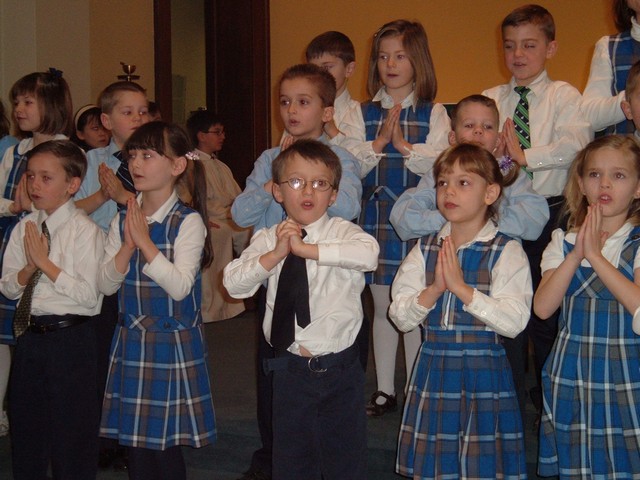
On Friday, Walker visited the Messmer Catholic Preparatory School in Milwaukee’s Riverwest neighborhood, to read to third-graders. The third-graders have no political agenda, but 100 protesters felt it was appropriate to disrupt a special day for school children to show their hatred for the governor.
Just as the Westboro Baptist Church feels that its homophobic crusade justifies interfering with military families’ private grief, Wisconsin’s ethically tone-deaf unions feel that innocent student are appropriate collateral damage in their quest to hold on to their privileged status among Wisconsin workers, and elections, laws, deficits and common sense be damned. How especially cynical of the teachers unions, to disrupt the experience of Catholic school students, who, apparently, don’t count. Tell us again, you dedicated teachers, how it’s “all for the children.” Continue reading

Memorial Ethics, Part Two: The Betrayal of 9-11 Donors

Where's the money going? Sometimes the charity has no idea.

A decade later after the attack on the Twin Towers, an Associated Press investigation has revealed wide-spread incompetence, dishonesty and waste among the many 9-11 memorial charities set up in the wake of the tragedy.

“There are those that spent huge sums on themselves, those that cannot account for the money they received, those that have few results to show for their spending and those that have yet to file required income tax returns. Yet many of the charities continue to raise money in the name of Sept. 11,” reports the AP. Among the fiascos recounted in the report:

  •   An Arizona-based charity raised $713,000 for a 9/11 memorial quilt that was supposed to be big enough to cover 25 football fields. Instead, there are only several hundred decorated sheets packed in boxes at a storage unit. One-third of the money raised went to the charity’s founder and relatives, according to tax records and interviews. Charity founder Kevin Held spent more than $170,000 of the donated money on travel since 2004, seldom traveling without his two Alaskan malamute dogs. Continue reading

Ethics Reading Assignment…

If you are waiting for Irene to hit or simply looking for some ethical enlightenment, here are some scintillating posts from around the web on ethics, social norms and morality. It is also an opportunity to check out some of the excellent blogs and websites in the Ethics Alarms links, which I heartily recommend.

Here are...

“Look Out! There’s a Speed Trap Ahead!”

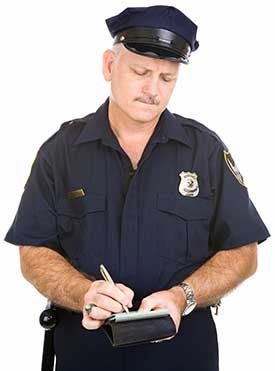
Who is your ally, the speeding motorist, or the traffic cop?

A lawsuit filed this week claims that 2,900 motorists were illegally ticketed in Florida between 2005 to 2010 for flashing their lights at oncoming, and speeding, cars to warn of speed traps ahead.  Apparently the police have been giving tickets to drivers sending a friendly “Cheese it! The cops!” message to scofflaws, in solidarity against the hated men and women in blue without benefit of an applicable statute.  The matter came to light when a college student on her way to school  spotted two  police officers on the side of the road and flashed her headlights to warn other drivers about the speed trap ahead. A police car pulled her over and the officer wrote her a ticket, saying she’d just broken the law by flashing her lights. She challenged the ticket and won, giving an enterprising lawyer an idea for class action lawsuit.

There is no Florida law that prohibits light-flashing, says Oviedo, Florida attorney J. Marcus Jones. He claims officers are simply misapplying a law that was designed to prohibit drivers from adding after-market emergency lights to their vehicles. He also claims that  officers writing those tickets are violating a driver’s constitutional right to free speech. If motorists want to flash their lights to warn about a speed trap ahead, they are free to do so, according to his suit.

Hmmmm. Continue reading

Comment of the Day on “Ethics Bob Opens An Ethics Can of Worms…”

Chase Martinez enters the debate on the ethics of Nike’s labor practices abroad, raised by a post by Bob Stone on his blog, and explicated here with some business ethics questions that have long perplexed both critics and advocates of American capitalism.Here is his Comment of the Day:

“The company has a duty to make money.”

“I think what is unethical is consumers abdicating their ethical duty to make informed choices. In big business, “everybody does it” is self-propagating because there is no consumer pressure to be better than your competition. The “free market” assumes an informed consumer-base that punishes companies who disagree with their values by taking their business to those that do. This doesn’t happen, and while some fault lies with companies for using the EBDI rationalization, most, I think, lies with consumers for being apathetic. As long as American consumers don’t care about Chinese peasants working for a dollar a day because they don’t know any better, corporations like Nike have no reason to care.”