How the Lack of Ethics Cripples Democracy, Reason #2: Corporate Executive Greed


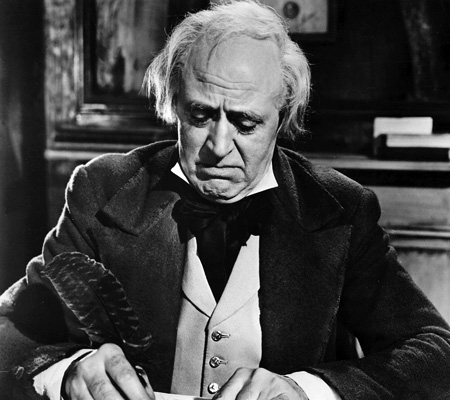
"Let's see...that's one schilling for Cratchet, 280 for me..."

The average compensation for chief executives of the 500 largest U.S. corporations is going up again.

According to Governance Metrics International, the average compensation for the CEOs, including salary, bonus and benefits plus the exercise of stock options, the vesting of stock grants and retirement benefits, was just under $12 million in 2010, up 18 percent from 2009. As Washington Post business writer Steve Pearlstein observes in his column this week, if you believe this is justified by market forces and common sense, “then you must also believe two things: First, that none of these guys would do the same job for a nickel less. Second, that the value of the chief executive went up 18 percent last year while the value of average workers in their companies changed very little.”  “And,” concludes Pearlstein, “if you believe that, you are a fool and an ideal candidate for an open seat on an S&P company board of directors.” Continue reading

How the Lack of Ethics Cripples Democracy, Reason #1: Ethical Leadership Is Neither Encouraged Nor Rewarded


How many elected leaders will be responsible when it means risking THIS?

Washington Post Metro columnist Robert McCartney relates the cautionary tale  of Fairfax (Va.) School Board member Liz Bradsher.  The school board, like others across the nation, was required to make some tough choices with its resources scarce and stretched to the breaking point.  The costs of renovating a high-achieving elementary school in the Fairfax County countryside  didn’t pass an objective, cost-benefit analysis, so the board voted to close it. Bradsher, whose district includes Clifton, the neighborhood served by the school, was expected to vigorously oppose the move.  But after studying the costs and enrollment forecasts, she reluctantly concluded that it made more sense to shutter the facility so the county could spend scarce renovation dollars where they would benefit more children.

She did what was best for the Fairfax community as a whole, which, as an elected official, is her duty. But rather than appreciating the courage it took to agree to close a beloved institution in her district for the greater good, she is being attacked. Anonymous postings on a popular local website have spread false rumors that she has a drinking problem and that her marriage is on the rocks. She is receiving threatening letters, and obscene e-mails.   Continue reading

Trapped in “The Ethics Zone”

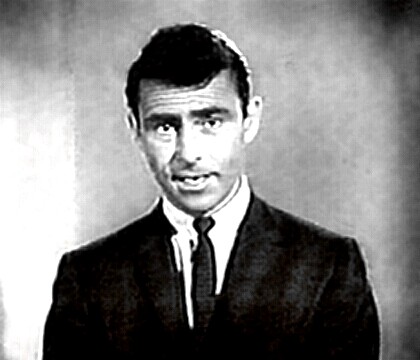
Rod Serling is your guest host for this episode.

We are traveling in a realm beyond time and space, to a dimension where right and wrong are vague and indistinguishable. Witness the strange case of Roy Thomas, a Houston man trapped in a hostile maelstrom of illogical laws and imaginary daughters. He is a victim of an ethics deficit, nourished by greed and desperation, the kind that sometimes lurks in the dark corners of….

The Ethics Zone!

Submitted for your consideration, the saga of Roy Thomas, who has been forced to pay child support for a daughter he supposedly fathered  more than two decades ago, though he always maintained that the child wasn’t his. Continue reading

Comment of the Day: “Ethics Hero and Dunce: A Tale of Two Windfalls”

In a classic example of  “Be careful what you wish for,” I had been thinking about how none of the recent comments, excellent though many were, quite struck the “Comment of the Day” gong for me, and then, like the answer granted by a perverse genie, this turns up. A reader named Lawrence Reliford argues that Stephen McDow had every right to spend the money erroneously deposited in his bank account, and in the process evokes—let’s see—six rationalizations, three misconceptions, two bad analogies, one wonderful Malaprop and a partridge in a pear tree.  (I may have miscounted; this can also be an ethics quiz.) On a more depressing note, I am quite certain that a larger portion of the population than any of us would be comfortable admitting agree with Lawrence. You can find my response to his comment with the original post, here...but please feel free to write your own. Lawrence needs all the guidance he can get. Here is The Comment of the Day: Continue reading

Unethical Quote of the Week: U.S. Secretary of State Hillary Clinton

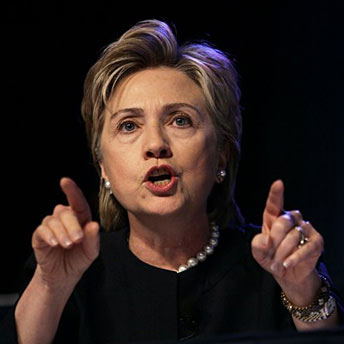
Hillary said something unethical? I'm shocked! Shocked!

“But the bottom line is, whose side are you on? Are you on Qadhafi’s side or are you on the side of the aspirations of the Libyan people and the international coalition that has been created to support them? For the Obama Administration, the answer to that question is very easy.”

—–Obama Administration Secretary of State Hillary Clinton, responding in a press conference to Congressional objections that the U.S. continued participation in attacks on Libya violates the War Powers Resolution—which it undoubtedly does.

Most of the objections to Sec. Clinton’s comments focus on her apparent hypocrisy; after all, this is the same woman who as a U.S. Senator in 2003 objected to “are you with us or against us” rhetoric from the Bush Administration regarding the Iraq war by saying,  “I am sick and tired of people who say that if you debate and you disagree with this administration somehow you’re not patriotic. We should stand up and say we are Americans and we have a right to debate and disagree with any administration.” But this isn’t necessarily hypocrisy: Hillary has a right to change her mind. What is unethical about her statement on Libya is that it is manipulative, unfair and dishonest. Continue reading

A Psychic Ethics Train Wreck in Liberty County

Surprise: her anonymous tip is not credible.

I have been remiss in not discussing a recent Ethics Train Wreck that occurred two weeks ago, a fiasco that occurred in Liberty County, about an hour from Houston, Texas.

A self-professed psychic who calls herself Angel called police and told them that she had a vision that a mass grave containing the dismembered bodies of children was on the property where Joe and Gena Bankson lived. She also described some of the features of the property. That was enough for the Liberty County Sheriff’s Office, which armed itself with a search warrant and cadaver-sniffing dogs and converged on the home,  along with a mob of reporters and two news helicopters. As the police dug holes, somebody jumped the gun, and soon cable news stations flashed alerts that up to 30 bodies had been found.

There were no bodies. Continue reading

Clearing the Ethics Palette of Despair, Finding Hope

The accumulation of depressing stories and news items is making me despair again.

Our leaders will not exercise courageous leadership, and Americans seem unable to accept any sacrifices at a time when sacrifice is essential. I watch the pathetic Greeks riot because their country has gone broke allowing them to be irresolute and irresponsible, and I find myself feeling ashamed of my Greek heritage and wondering if the citizens of the land of my birth will behave any better.

When I search for Ethics Heroes to balance the many, many candidates for Ethics Dunces, I find myself increasingly drawn  to the obituaries of World War II heroes who are dying by the hundreds every day. Yet those are dead heroes, and we desperately need living ones.

Meanwhile, the continuing economic crisis plants seeds of ethical contempt, fertilized by national leadership that shows itself willing to cut corners and warp the truth in the name of expediency. The bombing of Libya is not a hostile action. Sure. The strategic oil reserves are being released because of a national emergency, not as politically-motivated manipulation of gas prices. Tell me another.

Legislators too cowardly to pass needed tax increases are instead willing to expose the nation’s values to rot, pushing initiatives to legalize recreational drugs and on-line gambling to acquire ill-begotten government revenue from those least able to afford it,  just as state governments took over the numbers racket. What is next? I’m afraid to guess. Ethical standards are more important than ever in a crisis, but they are also at their most vulnerable. When the going gets tough, I say, the tough get unethical. And that is what we are seeing now in our society.

Patrice Roe, a dear friend, a wise woman and an occasional reader here sent me this story, about a father who gave his life to rescue his Down Syndrome son under remarkable circumstances. Today it was just what I needed to read, to clear my ethics palette of some terrible tasting tales that generated too many toxic thoughts. It reminded me that out beyond the greasy ethics smog of Washington, D.C. there are people who do the right thing when it matters, more than we know.

I feel much better having read it, and perhaps you will too. You can find it here.
When Business Rejects Ethics: the Sorabella Story

"So sorry about your wife's cancer, Carl. Let me know if there's anything we can do. Oh, by the way...you're fired."

I usually feel that organized labor rhetoric about cruel and heartless employers is archaic and exaggerated for political effect. This story, however, is almost enough to make me pick up a sign and start picketing.

Carl Sorabella, 43, got a merit raise in November for Haynes Management,  a real estate company in Wellesley, Mass., where he has worked as an accountant for almost 14 years. Then he learned that his wife, Kathy, had been diagnosed with advanced cancer. Told that the likelihood was that she had only months to live, Carl approached his boss. Sorabella explained that his wife’s illness would require him to have flexible hours as he supported her during her tests and treatment. He assured her that he would do whatever was necessary to keep his work up-to-date and complete his duties.

She fired him anyway. Continue reading

Sorrell v. IMS Health: Legal, Ethical, and Unjust

The case of Sorrell v. IMS Health, which the Supreme Court decided yesterday, sharply focuses the philosophical disagreement over the role of the courts in public policy. The legal question was rather straightforward; the ethical issues are complex. Is it the Court’s duty to make bad—but constitutional— laws work, or is its duty to follow the laws, and leave it to the legislature to fix their flaws?

This was a case about incompetent  lawmaking. Gladys Mensing and Julie Demahy had sued Pliva and other generic drug manufacturers in  Louisiana and Minnesota over the labels for metoclopramide, the generic version of Reglan. The drug, used to treat acid reflux, had caused them to develop a neurological movement disorder called tardive dyskinesia. None of the generic drug’s manufacturers and distributors included warnings on the labels about the danger of extended use of the medication, even though the risk was known to them. Neither did the manufacturers of the brand-name drug. The problem was that the state statutes required generic drug manufacturers to included warnings about dangerous side effects, while federal regulations required generic drugs to carry the exact same label information as their brand name equivalent.  Continue reading

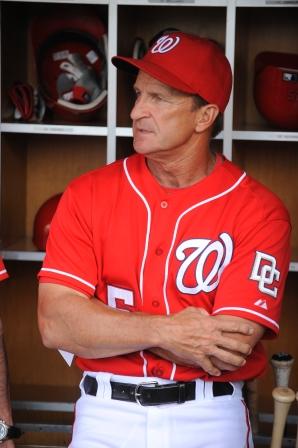
Ethics Dunce: Ex-Washington Nationals Manager Jim Riggleman

Jim Riggleman is a major league baseball manager of modest accomplishments, one of the forty or so men in the rotating pool that teams will use to fill manager vacancies with low-risk options rather than try someone promising but with little experience. He had a one-year contract with the hapless Washington Nationals that included a team option for a second, which the manager felt the team should pick up now, rather than at the end of the season.

Riggleman believed that he had some leverage. The Nationals have been surging since star third baseman Ryan Zimmerman has returned from an injury, and are, for the first time in the team’s  short time in Washington (they were once the Montreal Expos), flirting with a winning record more than half-way through the schedule. But as is often the case with players when a club option is involved, the Nationals saw no reason to make a decision on Riggleman’s contract until the season was over. A lot can happen in three months. General manager Mike Rizzo told Riggleman he would just have to wait. That’s what a team option is, after all. The team’s option. Continue reading