The Monsters, the Baseball and the Kid

“WAAA! I wanted that ball! By the way, where am I?”

I skipped this ten-minute controversy from last month, but I think it was worth mentioning from several ethics angles, so consider this catch-up.

Rangers fans Sean Leonard and Shannon Moore were at a Texas Rangers-Yankee game a few weeks ago when a  game ball was tossed into the stands by Texas’s Mitch Moreland. They caught it and gleefully posed for the TV cameras, which also caught a three-year old boy crying hysterically next to them. Immediately, the couple was vilified far and wide, on TV, in blogs and on radio talk shows ( Business Insider called them “The Monsters Who Made A Little Boy Cry”)  for taking the ball and not giving it to the child. The main accuser  who sparked all this hatred was Yankees broadcaster Michael Kay, who told his radio audience that the couple was taunting the unhappy boy.

Outrageous, all right, but Kay, not the couple. Kay’s description of what occurred was speculative and even fanciful, and for other commentators to commence vilifying the two fans without knowing anything about them, or even why the child was crying, was frighteningly unfair, irresponsible and cruel. Yes, you too can be caught on camera and turned into a national punching bag! Later, we discovered that…. Continue reading

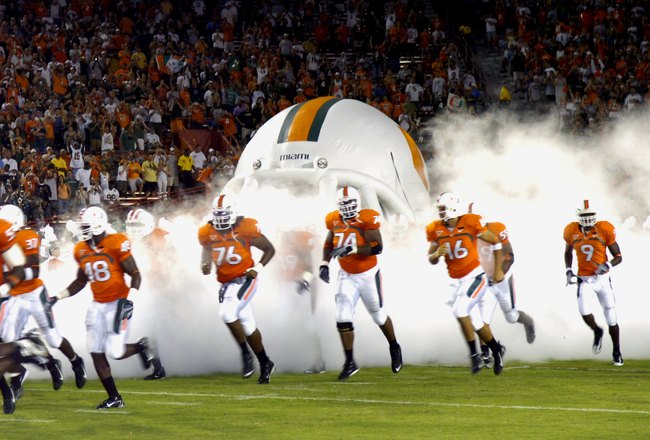
Is Buzz Bissenger Right? Should College Football Be Banned? Is He KIDDING? Of Course It Should. And Everybody Knows It.

Scholars all, I’m sure.

Not for the first time, sportswriter and commentator Buzz Bissinger has everybody buzzing about one of his frank opinion pieces, this one launched in the Wall Street Journal. His provocative title: “Why College Football Should Be Banned.”

Bissinger deserves credit for being willing to bite the hands that feed him: he is the author of “Friday Night Lights,” and many of Bissinger fans, at least up to now, tend to be football fans too. His article, however, is also one of those periodic slaps in the face of cultural apathy that occasionally causes a shift, as when Harriet Beecher Stowe wrote a little novel that alerted a lot of people to the obvious fact that a system in which human beings were bought, sold, and bred like cattle might not be consistent with civilized morality. It doesn’t take a genius, a revolutionary or a careful analyst to conclude that big time college football is corrupt and corrupting to the core. It only takes a willingness to brush aside rationalizations and face the truth.

Here are the arguments Bissinger presents to support his thesis:

  1. Football has nothing to do with academics.
  2. It is a distraction from both the purpose of higher education and attention to the serious problems facing the university system.
  3. With college tuition reaching outrageous levels and the college loan system teetering, university expenditures on pricey football programs are unconscionable.
  4. The major beneficiaries from college football are the NFL, which uses it as its minor league system at minimal cost; pathetic alumni, who wrap their self-esteem up with the fortunes of their alma mater’s football fortunes; and obscenely-compensated football coaches.
  5. Football programs, contrary to what the public might think, often lose money and become a drag on tuition funds.
  6. Colleges like Maryland have cut other varsity sports (eight of them, in Maryland’s case) to allow it to pay for football.
  7. The representation that the athletes are students is largely a sham, with many of them failing to graduate and the majority spending minimal time on substantive course study.
  8. The athletes are exploited.
  9. The game entails serious health effects, primarily head trauma, that are only now being recognized.

I’m sure we can come up with a #10, too. Oh! I have one: Penn State. We were just given a front row seat to a frightening display of how even a “model” football program could warp the priorities and ethical values of an entire campus culture.

Of course Bissinger’s attack has college football supporters scrambling into a defense formation. What can they come up with? Not much, but it’s a fascinating study of how rationalizations rush into voids caused by the lack of substantive arguments. One college football-hyping blog’s first response was this: Continue reading

The Case of the Sexy Six-Year-Old

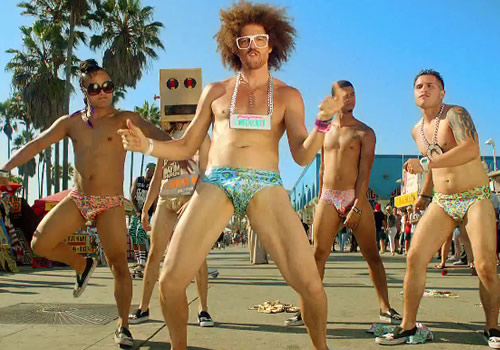
To a 6-year-old, this music video is not sexy, because he has no idea what sexy is. And school administrators “know it.”

We haven’t had a jaw-dropping case of  “no-tolerance” idiocy from school administrators in, oh, a week or so, but this one is worth at least three.

D’Avonte Meadows, a first-grader at Sable Elementary School in Aurora, Colorado, was suspended for three days for “sexual harassment” and “disrupting other students.” His offense was singing a portion of the popular song (by hip-hop group LMFAO) “I’m sexy and I know it” to a female student. Sample lyrics: Continue reading

Estate Tax Ethics

This was not my father. For one thing, he was shorter.

My sister and I finally settled up the estate of our parents after over a year of paper signing, meetings with accountants, and mind-numbing calculations. The estate, as my folks wanted it, was divided 35%-35%-30%, with the last portion going into a trust for the three grandchildren. The amount of money in the estate was a shock to my sister and me, and a very pleasant surprise, though for all the problems the money will solve, we would have forfeited all of it to have Mom and Dad alive today. Still, being able to give over substantial assets to their children and grandchildren was one of their lifelong goals, and they would have been satisfied and proud that they succeeded so spectacularly.

My sister, a good, reliable liberal, asked me whether I felt guilty about the inheritance. I said yes, in the sense that I wish our parents hadn’t been so resolutely frugal in their retirement, and had spent more of the money they earned and saved on more of their own pleasure and enjoyment rather than squirreling it away for us. But did I feel any pangs of conscience because the money wasn’t going to Uncle Sam’s coffers?

Absolutely not. Continue reading

“Show Boat” Ethics: Defining Deceit

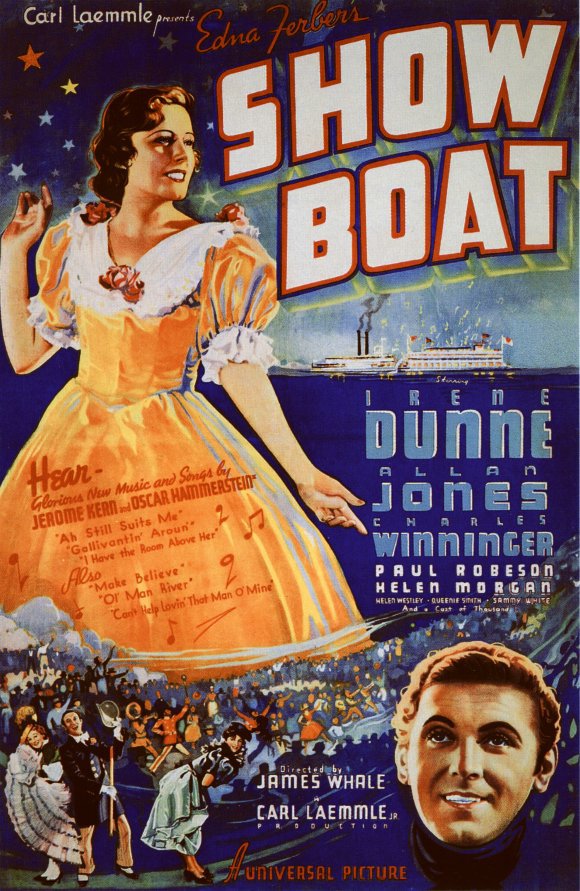
I frequently discuss the concept of deceit in ethics seminars, and my favorite example, which I have also used on Ethics Alarms, is the famous “Does your dog bite?” gag from “The Pink Panther Strikes Again!” This morning I was reminded of an even better example, though not so funny, while watching Turner Movie Classics. TMC was showing the 1936 Hollywood adaptation of “Showboat,” the black-and-white version directed by James Whale of “Frankenstein” fame, that is richer and more faithful to the original Oscar Hammerstein-Jerome Kern Broadway musical than the later, color version starring Ava Gardner, Kathryn Grayson and Howard Keel. Continue reading

Combating “Linsanity”—The Ethics Variety.

Look out ! It’s a trap!

In today’s Washington Post letters section, Fred Shwaeary writes:

“In the April 28 Sports article “Harper called up to majors,” Adam Kilgore wrote, “General Manager Mike Rizzo made his bones in player development, and he crafted a careful scheme for [outfielder Bryce] Harper’s ascension.” “Made his bones”? Not the old mob reference again! This is a phrase that should never be used when writing about those of Italian descent — or anyone else, for that matter.”

Thanks, Fred! Now Mike knows he ought to be grievously offended,  Kilgore knows that he was derisively suggesting that Italian Americans are all Mafia types the rest of us know Kilgore is a bigot, and the Italian-American Anti-Defamation League can demand that 1) the Post ban the term, which I have been using now and then for years and never associated it with Italians at all, from its writers’ lexicon; 2) Kilgore issue an abject apology to save his job and 3) Kilgore be symbolically suspended for a slur he neither intended nor that anybody else other than Shwaeary, and perhaps Fredo Corleone, took as an insult. Continue reading

Ethics Quiz: Elizabeth Warren’s Native American Ancestry

Remember that old Cher song, “1/32 Breed”?

If Scott Brown wins re-election as a Republican Senator from Massachusetts this fall, he will go on record as one of the luckiest political candidates since, well, Barack Obama. Brown won an upset victory in the special election in 2009 (any time a Republican wins in my home state, it’s an upset) in part because his inept Democratic opponent, Martha Coakley, showed herself to be unforgivably ignorant on the one topic most state residents really care about—the Boston Red Sox. Now he has the latest contender for his job, Harvard professor Elizabeth Warren, on the ropes because of her own self-inflicted wound, Warren’s dubious claim of minority status as a Native American between 1986 and 1995.

Warren listed herself as part Native American in the Association of American Law Schools desk book, she says, in the hope of meeting others in her field with similar backgrounds. She did not, she insists, do so to gain any professional edge. Yet in 1992 she was hired to teach at Harvard, and when she became a permanent faculty member in 1995, Warren dropped the minority claim from her profile in the directory. Harvard, meanwhile, began counting Warren as a Native American in its diversity statistics, just as her previous employers had at the University of Texas and the University of Pennsylvania. Whatever her intent may have been, a former chair of the AALS confirms that minority listings in the organization’s directory were used in hiring decisions by members.“In the old days before the internet, you’d pull out the AALS directory and look up people. There are schools that if they were looking for a minority faculty member, would go to that list and might say, ‘I didn’t know Elizabeth Warren was a minority, ” George Mason University Law professor David Bernstein, a former chairman of the American Association of Law Schools, has told reporters. Continue reading

Ethics Hero: CNN’s Anderson Cooper

Will wonders never cease —- an outbreak of legitimate, fair and balanced journalism on CNN!

Once again, I find myself in the conflicted position of bestowing Ethics Hero status on someone who did no more than meet his professional duties. This is broadcast journalism we are talking about, however, where unbiased professionalism is as rare as the ivory-beaked woodpecker. Anderson Cooper may have been just doing his job, but he was doing it well and ethically, which means that he qualifies as a promising role model as we head into the ugliness that promises to be the 2012 campaign. Continue reading

Ethics Dunce: David Barton

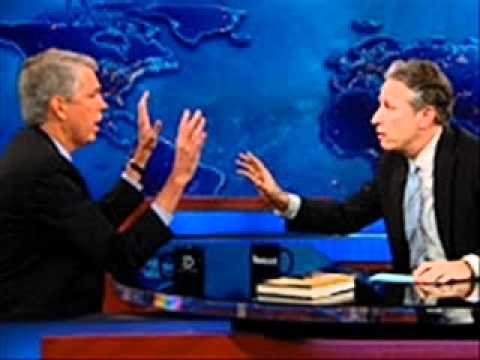
David Barton, telling fairy tales to Jon Stewart

Pseudo-historian and evangelical leader David Barton went on Comedy Central’s “The Daily Show” this week and trotted out a factually dubious story ( and one that is almost two decades old) about a St. Louis elementary school student named Raymond Raines who was, the story goes, reprimanded by both his teacher and a principal for praying over his lunch in the cafeteria. Jon Stewart was skeptical, but Barton, an author, a self-styled historian and, of course, a man of God, insisted that the tale was true, and indicative of the persecution Christians are subjected to in Obama’s America. The story is  not “true;” at best it is disputed; I think, as Stewart suggested, that it is highly unlikley. It is dishonest to state that it is fact, because Barton doesn’t know that.

There is no excuse for this, but plenty of possible reasons. One is that Barton was intentionally lying to bolster his claim of culture-wide persecution. Another is that he was in the throes of confirmation bias, and assumed that a horror story that seemed to support his already-formed beliefs must be true. A third is that he related a popularly-repeated myth on national television without bothering to check whether it was true or not. None of them are acceptable. Continue reading

New Passengers on the Roger Clemens Ethics Train Wreck

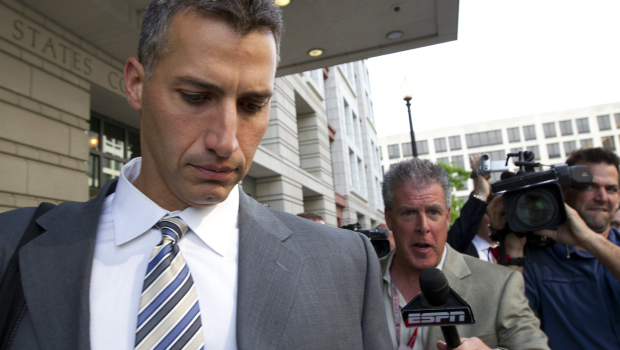
Hey Andy! Listen to that guy behind you…you won’t believe what he’s saying about you!

First, an Ethics Train Wreck recap, before we get to yesterday’s developments:

The Roger Clemens ethics train wreck officially started rumbling down the tracks in 2008, when Major League Baseball’s Mitchell Report, itself something of a train wreck to begin with, revealed that Roger Clemens’ trainer, a rather shady character named Brian McNamee,  had told the investigative commission that he had injected the pitching great with banned performance-enhancing drugs, or PED’s. In rapid succession there was ethics carnage everywhere. Clemens, under the pretense of inquiring about the health of his former trainer’s child, who was gravely ill, tried to get the trainer to admit he was lying. Congress, absurdly, called a special hearing on the matter. Clemens visited select Congressional offices beforehand, which tainted the objectivity of questioning. The Congressional committee, rather than seeking to illuminate the Clemens dispute or the status of PED’s in baseball, instead decided to take sides, with Republicans defending Clemens (a Bush-supporting Texan) and the Democrats seeking his scalp—facts had nothing to do with it. Clemens, meanwhile, made several dubious statements, and showed his class by telling the world that his wife, not he, was the PED-user in the family. A few months before, Clemens prevailed upon his friend Mike Wallace, then in his late 80’s and semi-retired, to tarnish his reputation as a tough and objective truth-seeker by tossing soft-ball questions to Clemens on CBS, so the pitcher could deny his drug use to a famously skeptical interviewer who was, in fact, thoroughly conflicted. Continue reading