The Girl Scouts, the Loyal Wife, and “Wisconsin Sickness”

Just what I want to see on my daughter's Girl Scout troop leader's husband's website! And you?

The Girl Scouts have been going through a strange period lately. There was the controversy over a transgender troop member, a boy who identified as a girl.  Then it was revealed that the organization’s literature was promoting Media Matters as a means of civic education.  This, however, takes the cake.

Stacy Hintz, a 28-year-old mother from West Bend, Wisconsin,was removed from her volunteer position as a Girl Scout troop leader because of her husband’s website. The site is called Wisconsin Sickness, is slick, professional, unique, and 100% batty. Here is its introduction:

“Whatever the reason, there is a deep and passionate psychosis that runs through the unstable synapses of those of us from Wisconsin, land of serial killers and cannibals. And we’re proud of it. Wisconsin Sickness, a Mental Shed project, is all about bringing the independent, underground Wisconsin scene together and spreading the sickness like a virus.”

And really, that’s nothing: wait until you see the site, which, among other things, celebrates Ed Gein, the serial killer/cannibal/necrophiliac whose horrific crimes and, uh, interior decorating style inspired “Psycho,” “The Texas Chain Saw Massacre,” and dozens of lesser horror films. Continue reading
Ethics Alarms Recap: A Long Weekend of Ethics

If the long Presidents Day weekend took you hither and yon and away from ethical dilemmas and controversies, welcome back! Here is what went on here in a lively three days:

The Broadcast Media’s Golden Rule: “Do Unto Others What You Will Use Cronyism To Stop Others From Doing Unto You”

Two Denver TV stations are feuding, and why? Because one of them refused to allow the other to suppress news footage that was embarrassing to a news anchor.

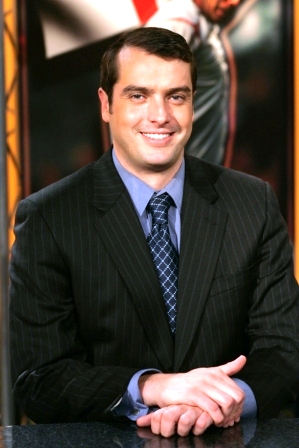
On February 8, KUSA-Channel 9 news anchor Kyle Dyer was interviewing the owner of Max, an 85-pound Argentine Mastiff, and the firefighter who had rescued the dog from an icy pond. I saw the video. Dyer had me wincing throughout the interview, showing herself to be the most dangerous kind of dog lover, someone who is fond of animals but naive and ignorant about their behavior.  She kept rubbing the dog’s ears and face during the interview, and the mastiff was obviously stoic but stressed by the strange environment, the cameras, and this women talking and running her hands all over him.  Mastiffs are gentle dogs, but very shy;  it was clear to me that Dyer was not according sufficient respect and caution to a powerful creature. As the interview ended, she suddenly moved in to kiss the dog on the muzzle, and the dog reacted defensively, biting her on the face and taking off part of her lip. She was seriously injured, and she had to have 75 stitches. Continue reading

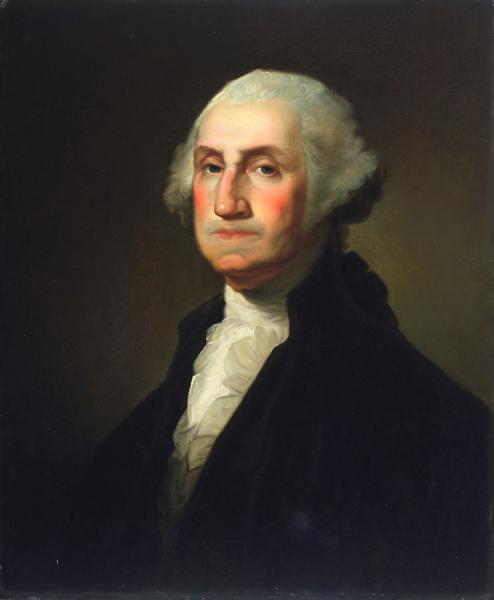
The Most Ethical President

When I am asked who I think was the most ethical President of the United States, my answer is the man whose birthday President’s Day preempts: George Washington. He was not our most brilliant or eloquent President, and it often took him a while to find his way to the right thing to do, slavery being the most important example. Still, the United States was extraordinarily fortunate to have such a principled and instinctively wise leader as its first. He created the template that, though weakened by time and inferior successors, continues to exert a powerful influence over our choice of Presidents. He was honest. He was civil. He was dignified and insisted on respect, but never worship: his simple decision that America’s Chief Executive be called, humbly, “Mr. President” had immense consequences for the nation’s attitudes toward executive leadership. Perhaps most important of all, Washington was a gifted leader but a reluctant one. He believed that a citizen should heed the nation’s call when needed, but he was a reluctant public servant, and condemned those who sought power for its own sake.

I am always amazed, when I return to Washington’s writings and speeches, how sure, persuasive and perceptive his statements remain, so long after they were made.

Here are some of my favorite quotes from our most ethical President.

Happy Birthday, approximately, General Washington. Continue reading

Assignment For The Righteous Persecutors of ESPN’s Max Bretos: Learn “The Niggardly Principles”

I'd advise staying away from "niggardly" too, Max.

Ethics Alarms first promulgated the Niggardly Principles in the midst of the so-called Ground Zero Mosque controversy. The Principles are named after the embarrassing controversy that roiled the Washington D.C. government more than a decade ago, in which a supervisor who used the good, old English word “niggardly” meaning “penurious or cheap” was fired for racial insensitivity after an African-American who hadn’t kept up on her Reader’s Digest “It Pays To Increase Your Word Power” complained that he had made a racist remark. The outcry in D.C. over this capitulation to ignorance was so great that the D.C. government reversed itself, though there remained some, like those supporting ESPN’s decision to fire Bretos for an innocent and appropriate application of the idiom ” a chink in the armor” today, who argued that the supervisor should have chosen his words so as not to offend those too ignorant and hair-trigger grievance-minded to comprehend them.

The First Niggardly Principle, therefore, is this:

“No one should be criticized or penalized because someone takes racial, ethnic, religious or other offense at their conduct or speech due to the ignorance, bias or misunderstanding of the offended party.”

A corollary of the FNP is that violating it unconscionably empowers the kind of people who should not be empowered in a free, fair and intelligent society: bullies, race-baiters, grievance police, censors of free expression, and the shamelessly ignorant. That was the theme of a disgraceful incident in which Hallmark pulled an “offensive”card because some African-Americans complained that the term “black hole”—as in Stephen Hawking and “Star Trek”—sounded too much like “black ho”—I’m not making this up— and was thus a racial slur. Hallmark’s craven capitulation was off the charts as First Niggardly Principle breaches go, but in some ways ESPN’s breach was worse; at least Hallmark didn’t pick an employee’s pockets and finger him as a closet racist. Continue reading

Punishment for Color Blindness: ESPN’s Unfair and Cowardly Suspension of Max Bretos

What Max Bretos means by "chink in the armor." Not that ESPN cares.

The headline “Chink in the Armor: Jeremy Lin’s 9 Turnovers Cost Knicks in Streak-stopping Loss to Hornets” appeared on ESPN’s mobile web site last week, and it was quickly removed. ESPN apologized, then fired the over-night headline writer who thought it would be cute to make a racially-offensive play on words between the derogatory slur for a person of Chinese descent, and the old, respectable, and the completely non-racial phrase meaning “a flaw or weak point.”

ESPN’s response to the tasteless headline was appropriate.

But it wasn’t enough for ESPN, which was under a full barrage from the  political correctness police and race bullies as well as Jeremy Lin fanatics. So the station also decided to make a victim of  innocent anchor Max Bretos, suspending him for 30 days because he used the expression Wednesday when he asked New York Knicks legend Walt “Clyde” Frazier on air about Lin.

“If there is a chink in the armor, where can he improve his game?” Bretos asked. Continue reading

Tim Wakefield, the Knuckleball, and Character

My favorite baseball player retired a few days ago. Tim Wakefield, a knuckleball specialist who had pitched the last 17 years with my home town Boston Red Sox, finally decided to hang up his spikes at the age of 45. There were several remarkable aspects to his long and successful career (he won 200 games, something the vast majority of major league pitchers never do), not the least of which was throwing the knuckleball almost exclusively, an infamous and rare pitch that is almost as difficult to throw as it is to hit or catch. (Former catcher Bob Uecker famously quipped that the best way to catch a knuckleball was to wait until it stopped rolling, and pick it up.) The most remarkable, however, was the way Wakefield always exhibited exemplary character, on the field and off of it. Continue reading

Ethics Incoherence From Sir Paul

"Obladi oblada."

I thought about a lot of possible headlines for this post. “Most Muddled Ethics Statement of the Century” was a real contender. I thought about making it an Ethics Alarms quiz, with the plaintive query,“Can anyone please tell me what the heck Paul McCartney thinks he is saying?” And, yes, I thought about skipping the story completely, as I am not eager to rattle the cages of the zealous pot enthusiasts, several of whom bombarded me, my business and my wife with vicious and threatening e-mails last week.

But this cannot pass without comment. Paul McCartney has given an interview to Rolling Stone in which, among other things, he announces that he is giving up smoking pot as a responsible father of an eight-year-old girl.

“I did a lot, and it was enough,” the co-writer of “With a Little Help From My Friends” (“I get high with a little help from my friends…”) and “Lucy in the Sky With Diamonds” tells the interviewer. “I smoked my share. When you’re bringing up a youngster, your sense of responsibility does kick in, if you’re lucky, at some point. Enough’s enough – you just don’t seem to think it’s necessary.”

This is completely bewildering. Is Paul saying he’s had his fill, and now that he has, come to think of it, it’s irresponsible to smoke pot? Is he expressing regret? Continue reading

“King Lear” in Connecticutt

"Happy 98th birthday, Mom! Now get the hell out of my house."

Perhaps it is not fair to compare 71-year-old Peter Kantorowski to King Lear’s heartless  daughters Regan and Gonoril. After all, Peter says that his 98-year-old mom, Mary, is welcome to stay with him and his wife at their home, but she refuses. Still, Kanterowski, like the Lear girls, is trying to evict an aged parent from her residence after she had signed the property over to him. And even Regan and Goneril didn’t serve their father the King with an eviction notice on his birthday…but that’s what Peter’s gift was to his mother last December.

According to Probate Court records, in 1996 Mary Kantorowski and her husband, John transferred their small, yellow Cape Cod-style house to a trust administered by eldest son Peter on the condition that Mary could live there until her death, and that upon her death the house would go to Peter and his younger brother, Jack. In July of 2005, Peter quitclaimed the house from that trust to another he and his wife set up, giving him ownership, he says, without the prior conditions. A retired taxidermist, Kantorowski swears he is trying to evict his mother from the home she has lived in since 1953 for her own good. “She would be better off living with people her own age,” he told the Connecticut Post.

Well at least he doesn’t want to stuff her. Continue reading

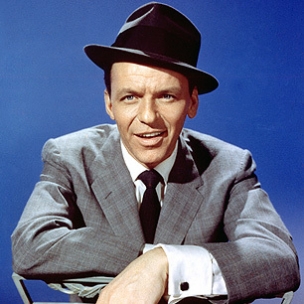
The Flag and Whitney Houston

If Ol' Blue Eyes was worthy, why not Whitney?

New Jersey Governor Chris Christie  ordered New Jersey’s flags flown at half-staff in official mourning for Whitney Houston, and a lot of people are outraged. The critics of the honor fall into two categories: those who believe that the honor should be reserved for military heroes and high government officials, and those who believe that Houston is especially unworthy because of her well-documented substance abuse problems.

For his part, Governor Christie defiantly declares that Houston, as a daughter of New Jersey, deserves the state honor because of her contributions to the culture.

Technically and officially, Christie is out of line. Federal law is very specific about the proper treatment of the flag, including when it can be flown at half-staff. Simply put, celebrities don’t qualify, no matter who they are. A state governor can proclaim that the flag be flown at half-staff in his or her state for fallen soldiers, but not for non-military individuals. But governors ignore the law routinely, and have for decades. Tennessee’s governor lowered the flag when Elvis died. Massachusetts did the same for Red Sox great Ted Williams, though he was also a war hero, so no one was going to object. The law, in terms of custom and enforcement, is a dead letter, and probably should be.

True, some governors have abused the spirit of the law, including Christie, when he lowered the flag for Clarence Clemons, the saxophonist for Bruce Springsteen’s E Street Band—a great musician, but hardly a figure of transcendent national significance. If 4 USC Section 7 isn’t going to be followed or enforced, then we need some new standards, or before we know it they’ll be lowering the flag for Joan Rivers. Continue reading