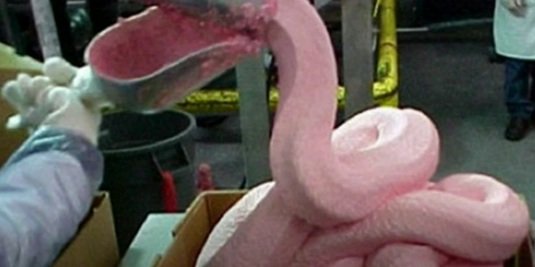
YUM!!!!
The maker of so-called “pink slime” filed for bankruptcy last week as the direct result of a public furor and public relations disaster related to “finely textured beef.” As a result, upwards of 650 people are losing their jobs, perhaps many more. Ground beef and other beef-based food will be more expensive, and quite possibly less healthy. Who, if anyone, is at fault?
The “pink slime” controversy was launched by cable TV chef Jamie Oliver, a healthy eating advocate who urged his viewers to reject ground beef that included the commonly-used filler. It is all meat, you know. In fact, it is virtually fat-free beef that begins as slaughterhouse trimmings, is then heated and spun in a centrifuge to separate tiny particles of meat from fat, and subjected to a puff of ammonium hydroxide gas to kill bacteria. Then it was mixed with ground beef. The process sounded unappetizing, and the nickname, coined in an e-mail by a USDA official, made it seem especially disgusting. The internet and social media got a hold of it, and the next thing you know, there were petitions and outrage. And the net result…jobs lost, beef made more expensive, no improvement in taste or health…a complete loss.
Good job everybody!
And almost everybody’s to blame too.
In rough order of culpability:
- The meat industry, for using unnatural, treated meat as filler and hiding it with the deceitful label “100% beef.” Consumers should have known what was being added and how it was produced, and it should have been on the labels.
- The clever USDA official. His cute name was a food slur, and in these days of viral tweets, YouTube videos and emails, coming up with a disgusting name for a safe food was reckless and irresponsible.
- The news media and websites, for not adequately defusing the controversy by explaining exactly what the substance was, indulging the anti-meat agenda of certain writers and reporters.
- Consumers, for being naive, emotional, irrational, and too easily stampeded. Most processed food can be made to seem disgusting, especially anything to do with meat. So is a lot of food preparation. The public won’t take the time to distinguish between genuinely unhealthy foods and those that just involve processing that isn’t suitable for the squeamish, so they go overboard on the random targets of attention-seeking, half-cocked activists, and often the government and regulators follow the hysteria. This is the tragedy of DDT; this is Alar; this is cyclamates. Industries are destroyed that don’t deserve to be; lives are ruined, and the public health isn’t improved.
Was Jaime Oliver’s conduct wrong? I don’t think so. He’s a natural foods advocate; he has philosophical objections to processed food, and he performed a public service by letting the public know something about its food that it should have been told about sooner. The story of “pink slime” could and should have been explained truthfully by someone who approved of it; it’s not Oliver’s fault that the job fell to an opponent.
 Ethics Alarms
Lease don’t let the media know about sausage. I like sausage.
I am continually amazed by how ignorant people are of where our food comes from and how it gets in those nice, neat, attractive packages in the grocery store. My school taught us, in pretty graphic detail, how we get food. We even killed a bunch of chickens, plucked them, cooked them, and ate them as a school exercise. Of course, living next to farms for most of my life meant that I didn’t have many illusions to begin with.
Next foods on the list: hot dogs, sausage, gelatin, yogurt and some cheezes, not to mention some medications. I have been trained to eat much less appetizing foods but they were loaded with valuable nutrients and proteins. I would be disappointed not going to a baseball game and not being able to have a hot dog with a beer. Pink slime isn’t poison. Imagine the people who eat at McDonald’s every day and they advertize a 100% real beef and Wisconsin real cheese?
If I’m not mistaken, McDonald’s was one of the first to cave and quit buying the pink slime.
Ahhh, I wondered when you were going write about this.
Culpability rests equally with the meat industry (read: lobbyists) and the USDA. The undersecretary that approved the inclusion without a label change ended up on BPI’s board of directors after retiring from the government. Sounds like payola.
The meat industry handled this recent outrage in such a poor manner by continually reiterating what the government permits them to say, “It’s 100% beef” and not addressing public concerns. They sounded like a broken record. It was laughable. And the Rick Perry and other governor hamburger eating photo opp was lame.
2. But the clever USDA official should be left alone. He wrote an internal memo to a colleague ten years ago while testing LFTB to ensure that it met government standards. This is some guy looking for his 15 minutes.
3. The media reports that I saw on ABC World News seemed very balanced and fair.
4. Agreed. Consumers are stupid.
Oops. Number 2 should read: This is not some guy looking for his 15 minutes.
The ABC News Report was fair. Not so the blogs and webzines, at least the ones I saw.
Whatever happens from here, one thing is certain: All foods will only get more expensive. Any excuse and opportunity will do.
I missed watching CBS’ 60 Minutes last Sunday because they were covering something about how sugar is toxic. There goes more money that ought to be followed – and less money to spend, and fewer jobs to be hired for, and less sugar for everyone. And/but bigger government for all.
I never really had a problem with pink slime, any more than spam (the canned variety, not the gold farmer variety). Meat is meat, isn’t it? If we’re going to murder cows for our food, we may as well use every part of them instead of throwing half the poor creature away.
This is my Taiwanese background speaking, but I wish people out west were more receptive to eating intestines, stomachs, etc. They do actually taste good if prepared correctly.
My grandfather loves canned menudo, which is basically cow intestines if I remember properly. I never tried it- smells funny. We also tended to eat pork rinds with breakfast (good simmered in homemade salsa and served over eggs), and that’s just fried skin. The point is, it’s not just the Taiwanese who eat miscellaneous parts, lots of cultures do. It’s more that modern American society is rather squeamish.
Here’s an oxymoron for you: ethical lobbyist
I am with Oliver on this one but the food industry was my bread and butter for 25 years and I can tell you that there are way bigger issues than pink slime in your food. Issues that would bother not only the squeamish and that made me go local, organic, non-processed long before it was fashionable. The number of people inside the industry interested in solving or publishing them is zero and that included me. I feel for the pink slime email guy but pink slime was an unfortunate choice of words and he should have known that even if he wasn’t a marketing guy. Marketing guys are great for coming up with palatable names for unpalatable ingredients.