The Donald’s Dangerous Ethics: Loyalty Trumps Honesty On “Celebrity Apprentice”

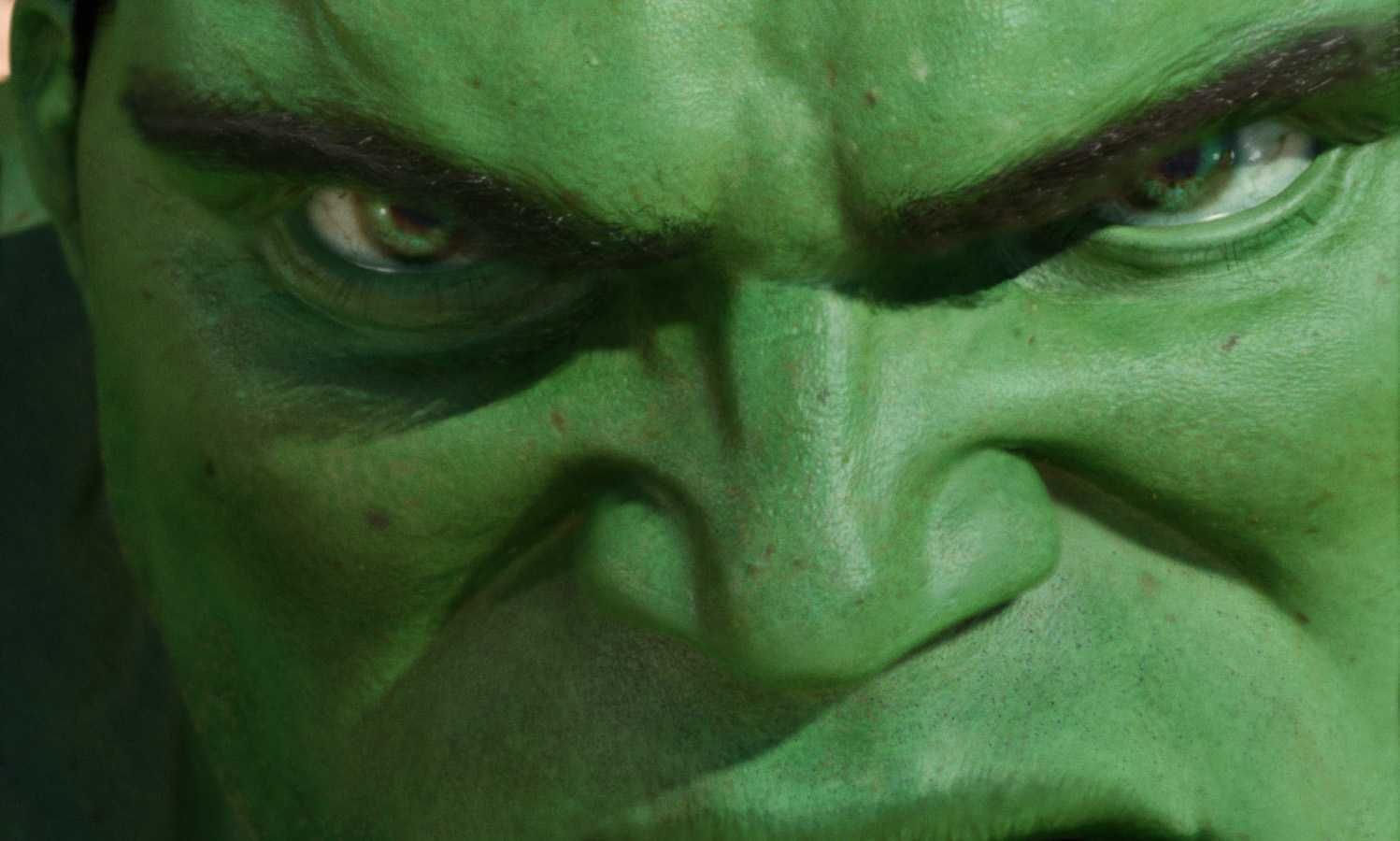
Your ethics ignorance makes me angry, Donald. You won't like me when I'm angry...

The original version of Donald Trump’s self-promoting  reality show competition “The Apprentice” occasionally created a useful business ethics scenario. Once The Donald started using B-list celebrities instead of real aspiring executives, however, the show deteriorated into ego insanity and the kind of freak show conflicts one would expect with participants like Jose Canseco, Joan Rivers and Dennis Rodman.

Surprisingly, last week’s episode blundered into a substantive, if confusing, ethics lesson. It was Donald Trump’s ethical priorities that were exposed, and as should surprise no one, they are as warped as Trump himself.

I can spare you all the details of the episode, which involved the weird assortment of celebs breaking into two teams to see who could devise the better commercial for Entertainment.com, as judged by the website’s execs. As usual, the losing team’s leader and the two team members fingered by her (in this case) had to have a show-down with Trump in “the Board Room” to determine who would be on the receiving end of Trump’s trademark line, “You’re fired!” This time one of the three potential firees was none other that  old Incredible Hulk himself, Lou Ferrigno, who has distinguished himself this season as a perpetual whiner, especially adept at blaming the members of his teams rather than accepting responsibility himself. He was richly deserving of the Trump pink slip in this episode, especially for the over-the-top violent and disparaging language he leveled at a female team mate, comedian Lisa Lampanelli. In the eyes of Trump, however, Lou clinched his demise not by being an unprofessional boor, but by being…honest.

“Who do you think had the better commercial?” Trump asked the former green alter-ego of the late Bill Bixby. It sure didn’t sound like a trick question. Ferrigno responded that the winning team’s commercial was better, an eminently reasonable response given that he and the other two celebrities on the hot seat were there because the commercial they had crafted had been judged as inferior. This, however, was seen by The Donald as a rank betrayal. He fired Lou, in part for his slug-like performance on the assigned task, but mostly, he said, for Ferrigno’s “great disloyalty” to his team.

Whaa? Continue reading

Comment of the Day: “Unethical Quote of the Week: Georgetown Professor Michael Eric Dyson”

Presenting one of the very best Comments of the Day

Rick Jones, whose own blog Curmudgeon Central should be on everyone’s list of bookmarks and visited often, delivers one of the finest and most thoughtful comments ever to grace Ethics Alarms, and we’ve had many excellent ones. His topic is my post regarding Professor Dyson’s comments on ABC this Sunday about criticism of President Obama, but Rick makes a perceptive connection to the Trayvon Martin controversy as well.And here is the really amazing part: there is not a word here that I don’t agree with completely.

Here is his Comment of the Day, on the post Unethical Quote of the Week: Georgetown Professor Michael Eric Dyson:

“It strikes me that President Obama has come in for at least his share of sniping—legitimate and otherwise. But that isn’t the issue here. Rather, how much of that criticism is based on race? The honest answer is that we can’t say with certainty, but we can make some pretty fair conjectures. Continue reading

Ethics Hero: The American Bar Association

Well, I'll be hornswoggled! INTEGRITY!

The mainstream media and left-of-center pundits managed to leave criticism of President Obama’s bizarre—for a lawyer and supposed authority on Constitutional law, and yes, for a President too—assertion that there was something “unprecedented” about the Supreme Court declaring an act of Congress unconstitutional, and something inappropriate for this to be done by “unelected” judges, to conservative sources, an increasingly common and deplorable technique that allows the Left to thereafter discredit legitimate and non-ideological observations as “partisan.” Thus it was a relief, and a credit to the organization, when the reliably liberal American Bar Association weighed in with the same critique of the President’s comments, with similar intensity. Continue reading

Unethical Quote of the Week: Georgetown Professor Michael Eric Dyson

 “Look all of this othering of Obama, like he’s from some other planet. Everything he does is subject to a different lens and seen through a microscope that really tends to pick him apart. I think it’s indivisible from the broader issue of his race, of his being a black man with a certain kind of authority. These are impolite things we don’t want to talk about. We think that they’re being extraordinary ratcheted up. But I don’t see any other way to explain it but a remarkable resistance to the integrity of this man that has no other explanation”

—-Prof. Michael Eric Dyson, discussing criticism of President Obama’s comments on the Supreme Court during Sunday’s edition of ABC’s “This Week with George Stephanopoulos.” 

Prof. Dyson

When we look at why it is that there is a vast divide between black and white Americans regarding such incidents as the Trayvon Martin tragedy, the irresponsible comments of supposedly respectable commentators like Dyson must be given due weight. How all previous presidents must envy President Obama, whose defenders have a ready and versatile, if disgraceful, defense for any misstep, error, mistake, misstatement or policy that goes awry: it’s just racism.  What a wonderful tool to deflect criticism! Of course, it is ethically indefensible and contributes to racial divisions in the nation and society, which President Obama supposedly sought to heal, but polls must be telling the Democrats, and their flacks in the media, that it is effective.

Prof. Dyson is a scholar at a major university, and his race-baiting to discourage open and fair political discourse is thus more despicable and harmful than that of celebrities like Morgan Freeman and professional race-card dealers like Representatives Sheila Jackson Lee and Maxine Waters. Astoundingly, his outburst occurred during a discussion of President Obama’s almost universally derided and shockingly inaccurate comments about the possibility that a majority of the Supreme Court would find Obamacare’s individual mandate unconstitutional. The criticism of the President was legitimate, substantive, and richly deserved: if that criticism was based on race, than all criticism of Obama is motivated by race. That, of course, is exactly the message that Prof. Dyson wants to deliver.

Trayvon Ethics Train Wreck, Next Stop: Is George Zimmerman A Ham Sandwich?

It now appears likely that Angela Corey, the special prosecutor appointed by Florida Governor Rick Scott, will bring the Trayvon Martin shooting matter before a grand jury this week. Under Florida law, she doesn’t have to do that: she could issue an indictment or clear shooter George Zimmerman of a crime on her own authority. It is likely, however, that a grand jury will get the job of deciding whether there is probable cause that a crime was committed, and whether Zimmerman was guilty of it.

[UPDATE: CNN just announced that there will be NO grand jury. Corey will make the decision herself. The post now applies solely to her, and her alone.]

In Florida, a grand jury consists of between 15 and 21  jurors, who have been appointed for five to six months of intermittent service. For the grand jury to indict Zimmerman, 12 jurors must decide that an indictment can be supported by the evidence. The grand jury’s final decision may take any amount of time, though seldom more than a week.

New York State chief judge Sol Wachtler famously said that if a prosecutor wants it to happen, a grand jury can be made to indict a ham sandwich. Corey will be the only official who interacts with the jury, and she is already in a nearly impossible ethical dilemma. What if, having reviewed the evidence, she sincerely believes that Zimmerman did not commit a crime? Continue reading

What Do You Do When The Ethics Alarm Sounds Late? This…

A photography site that knows about ethics, too.

SmugMug is a photo sharing website that comes complete with a blog on photo sharing issues, including ethical ones. Here is the blog’s most recent post, a remarkable confession and an apology, as excellent an example of  taking responsibility for a mistake, being accountable and apologizing sincerely to the party harmed as there is. The post is entitled, “What Were We Thinking?”

“Sometimes you see the dumb things companies say and you wonder, ‘What were they thinking?’

I never imagined that happening to us, but we did something so dumb in a blog post, we’re now looking at each other blankly and asking, what were we thinking? The post was about image theft and we used examples from pro photographer Valerie Schooling’s site and gave the impression she was doing things wrong, which she wasn’t.

To make matters worse, we somehow embedded screen captures of her site without asking her permission.  If it weren’t such a dumb thing to do, I could explain why we did it other than the obvious: she and her photos are awesome. Naturally, her friends and other respected photographers in the industry asked us what we were thinking, and unfortunately the honest answer was, “We weren’t.”

We learned a lesson we’ll never forget because we also betrayed ourselves, since we are photographers.  We apologize for the time and angst this caused a lot of wonderful people.”

“Chris MacAskill
President & co-founder
Not usually so clueless”

Perfect. Continue reading

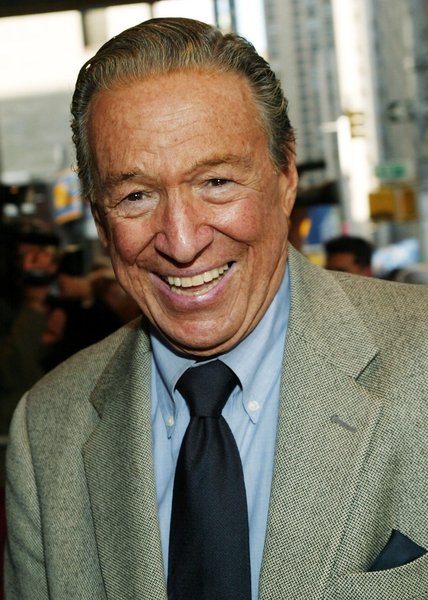
Farewell To A Professional Journalist: Mike Wallace (1918-2012)

Mike Wallace, professional.

Mike Wallace, the tough interviewer who formed the backbone of “60 Minutes” in its heighday, and who was one of the last links to the Golden Era of Walter Cronkite and Edward R. Murrow, when broadcast journalism was seen as a public service rather than entertainment and partisan sport, has died. That’s amazing in itself, for I had come to believe that he would live forever. He was only 93.

There will be many tributes to Wallace in the coming days, but for now, you can remind yourself of his remarkable career here. Mike Wallace performed a difficult job well longer than anyone else, and he always strived to meet the highest ethical standards in a profession that once had some.

He will be missed.

Hell, he was already missed.

“Dear Legal Ethicist: I’m a Lawyer, and I Think My Real Estate Client Might Be Jack the Ripper. What Should I Do?”

Here is a perfect example of where legal ethics and ethics diverge.

The Supreme Judicial Court of Maine reprimanded veteran Maine lawyer Eric B. Cote for investigating the background of Rory Holland—leading a “one man crusade” was how the court put it— after Holland  was convicted of a double murder and sentenced to two life sentences. Cote was convinced that Holland was a serial killer, and that there were other victims. Cote set out to find out who they were.

What’s wrong with that, you ask? Well, Cote had represented the convicted murderer in a real estate transaction. The reasons he suspected Holland came from information he learned in the course of the representation, and under the ethics rules of every state, he cannot reveal such information for the benefit of others to the detriment of a current or former client. Continue reading

Trayvon Martin Ethics Train Wreck Update: The Wreckage So Far, and The Wreckers

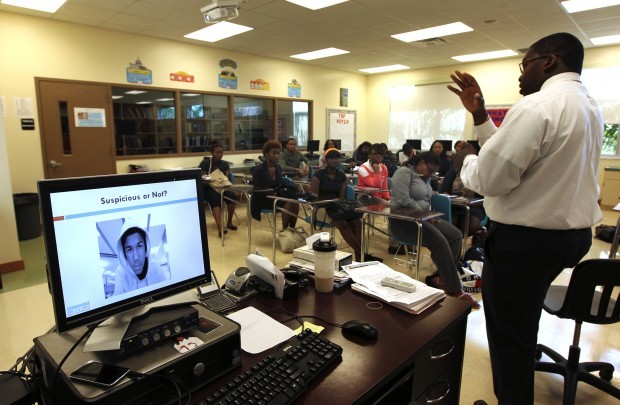
The "George Zimmerman Is a Racist" segment in Clinton Mitchell's high school ethics class.

Gallup released a poll yesterday, showing:

  • African-Americans are nearly five times more likely to be convinced that gunman George Zimmerman is “definitely guilty” of a crime than non-blacks.
  • 75% of African-Americans believe that racial bias led to Martin’s shooting, whereas less than half of non-blacks do, though a majority of the public believe that race was a factor in the tragedy.
  • 73% of blacks, about twice the percentage of the rest of the population,  believe that Zimmerman would have been arrested if the person he shot was white.

What we now have, clearly, is  significant, dangerous, and festering racial distrust, not created solely by the Trayvon Martin incident but exacerbated by it. This can only harm race relations, law enforcement, and the nation generally, and yet it is beyond argument that this divide has been encouraged and nurtured. Obviously the potential already existed, and one would think that responsible figures in public life, the civil rights establishment, elected office and the media would take the responsible course and attempt to minimize the shooting’s potential for increasing racial divisiveness in America.

They did not. Once again, they ripped the scab right off racial healing, and did so recklessly, cruelly, ineptly, and in some cases, maliciously. They are still doing it, or passively allowing it to be done by others. This is wrong, and shockingly so. Rational and fair analysts and observers all along the ideological spectrum should be saying so, but they are not. Fairness and honesty should not partisan issues. Playing the politics of hate and divisiveness is a threat to the fabric of the United States of America and in this case, risks unraveling decades of progress in race relations and understanding. There can be no excuse for it, and yet the primary culprits reside among the most influential and prominent institutions in the country. Journalists. Congress. Civil rights organizations. Pundits. Educators. And the President of the United States. Continue reading

“Blue Bloods” Ethics: The Good Lie?

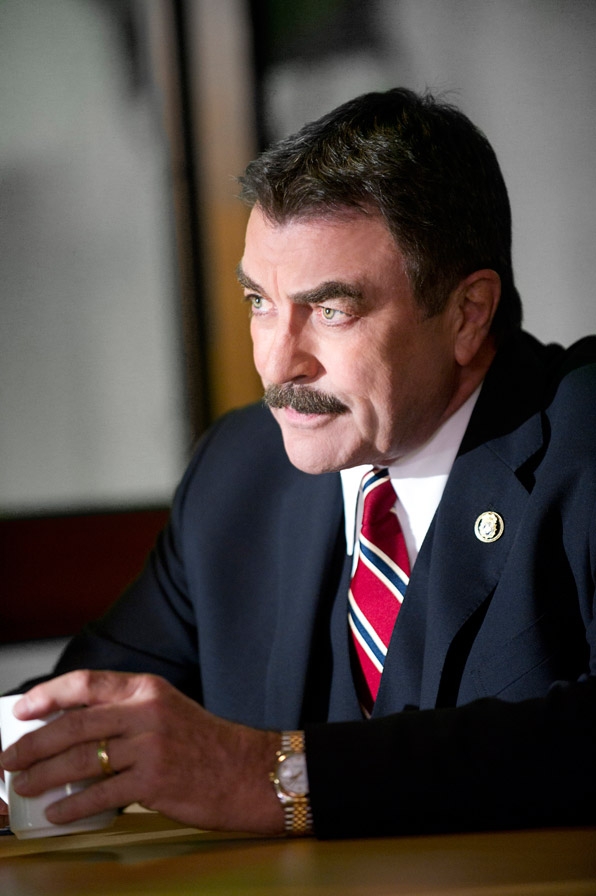
Tom Selleck as NYC Chief of Police Frank Reagan

Tom Selleck’s CBS drama “Blue Bloods,” chronicling the exploits of  the Reagans, an improbable fictional New York City family that dominates NYC’s law enforcement, featured an excellent example of a necessary lie last night, in which utilitarian principles would hold that the lie,  a rather serious and extensive one—many interlocking lies, really—was the most ethical option available.

The situation arose because the Chief of Police (Frank Reagan, played by Selleck) learned that his police officer son, Jamie Reagan, had rescued a child from an explosion, and the press and city were clamoring to know who the hero was. (Nobody saw the rescue, which is a contrived detail, but necessary to set up the ethical dilemma.) But Jamie was also working undercover in a serious and dangerous operation, having infiltrated an organized crime family. (Why was a uniformed cop allowed to stay on the street while leading a double life? Seems reckless to me, but Father Chief knows best.) To protect the undercover operation and his son, Frank Reagan decides on an elaborate deception, persuading his son’s partner, who was on the scene of the rescue, to take the credit and even accept a commendation in a public ceremony.

Lying to the public and the press to such an extent is almost always inexcusable, but protecting an anti-crime effort in the public interest, as well as the imperiled officer involved in it,  is a rare case in which the balance tips away from the truth. The “Blue Bloods” solution was the best one available given the situation and the law enforcement priorities.  But… Continue reading