A Dinosaur Brain Fart From Fox

“All right, who farted?”

Here’s a rule that I would like to propose: if a news outlet can’t find a reporter who has the education and analytical ability to comprehend a complex concept, then the story shouldn’t be covered at all. Better no coverage than misleading coverage. What do you think?

Of course, this would mean that about half of all news stories wouldn’t be covered, since if journalists had the ability to understand those topics, they would have entered professions other than journalism.

Fox News shocked the world this week by announcing that a new study had shown the dinosaurs farted themselves out of existence: Continue reading

Unethical Quote of the Week: “Chronicle of Higher Education” Editor Liz McMillen

A Note to Readers: When we published Naomi Schaefer Riley’s blog posting on Brainstorm last week (“The Most Persuasive Case for Eliminating Black Studies? Just Read the Dissertations”), several thousand of you spoke out in outrage and disappointment that The Chronicle had published an article that did not conform to the journalistic standards and civil tone that you expect from us. We’ve heard you, and we have taken to heart what you said. We now agree that Ms. Riley’s blog posting did not meet The Chronicle’s basic editorial standards for reporting and fairness in opinion articles. As a result, we have asked Ms. Riley to leave the Brainstorm blog. Since Brainstorm was created five years ago, we have sought out bloggers representing a range of intellectual and political views, and we have allowed them broad freedom in topics and approach.  As part of that freedom, Brainstorm writers were able to post independently; Ms. Riley’s post was not reviewed until after it was posted. I realize we have made mistakes. We will thoroughly review our editorial practices on Brainstorm and other blogs and strengthen our guidelines for bloggers. In addition, my Editor’s Note last week inviting you to debate the posting also seemed to elevate it to the level of informed opinion, which it was not. I also realize that, as the controversy unfolded last week, our response on Twitter did not accurately convey The Chronicle’s message. I sincerely apologize for the distress these incidents have caused our readers and appreciate that so many of you have made your sentiments known to us. One theme many of you have sounded is that you felt betrayed by what we published; that you welcome healthy informed debate, but that in this case, we did not live up to the expectations of the community of readers we serve.
You told us we can do better, and we agree.”

Liz McMillen, editor of the highly respected Chronicle of Higher Education, tossing away the integrity of her publication in a complete and cowardly capitulation to political correctness and enforced academic dogma, while trashing the principle of academic freedom and the free exchange of ideas which her publication is supposed to champion.
The big ‘C’ stands for “chicken.” Or maybe “choke.”

Riley, the fired blogger, is a well-established iconoclast and critic of liberal arts institutions, which is undoubtedly why she was recruited as a blogger in the first place.  Her post was a reaction to an earlier Chronicle article about rising scholars in “black studies,” and she took to the the blog to point out that the summaries of their scholarly topics in that article’s sidebar showed what was wrong with the field, at least as it was currently taught.  She concluded, Continue reading

The Curse of the Honest Vice-President and the Evolving President

“EEEK! The President is EVOLVING!!!”

Vice-President Joe Biden sent Washington, D.C.’s pundits into a tizzy when he told  NBC’s “Meet the Press” last Sunday that he was“absolutely comfortable” with same-sex marriage. It is amazing, when Biden has lapped all previous Vice Presidents in goofs, mistakes, outrageous statements and embarrassments that this statement—honest, reasonable and forthright—should be regarded as a serious blunder. What did he do wrong this time? As Dana Milbank of the Washington Post put it, Biden “committing the classic Washington gaffe of accidentally speaking the truth.”

And why is it a gaffe for this Vice President to tell the truth by stating his support for a position strongly favored by the majority of Democrats, and increasingly the public as a whole? Why would Biden be off message by embracing a core cause of the gay, lesbian and transgendered community, which is overwhelmingly in the Obama camp? The answer is that he has embarrassed the President by calling attention to the fact that President Obama has conspicuously avoided making such a clear and unequivocal statement on the issue, because he wants to avoid being open, honest, direct and truthful about his views on gay marriage until after the election. Continue reading

When A Corporation Trusts Too Much: The Saga of the Unlimited AAirpass

If you sell this guy a ticket to your all-you-can-eat buffet and he eats the table, is he at fault, or are you?

A strange subplot of the American Airlines bankruptcy is the saga of its unlimited AAirpass, a special deal offered by the airline in 1981. The company sold passes for a lifetime of free and unlimited First Class travel with no limitations at a price of $250,000. An additional $150,000 permitted AAirpass customers to buy one “companion ticket” that would let one person—anyone— accompany them on any flight, anywhere, again, for life.

Apparently eschewing competent market research—and you wondered why this airline went belly up?—American assumed that the lifetime luxury travel passes would be bought by corporations for their high-flying employees. But no; the purchasers were almost all very rich people with a lot of time on their hands. As designed, American got a quick influx of cash, but at an unacceptable and strangely unanticipated cost: the AAirpasses placed the company at the mercy of  few profligate travelers who exploited American’s carelessness to the edge of absurdity, thereby raising a fascinating ethical question: If someone lets you have the right to ruin them, is it ethical to do it? Continue reading

The Schizo Principal’s Facebook Dilemma

Principal Losos, a.k.a Suzy Harriston. Don’t ever call  her “Sooz”.

In Clayton, Missouri, the high school principal has resigned after being outed as a fake student on Facebook. Posing as Clayton High student Suzy Harriston, Principal Louise Losos amassed over 300 student friends from her school, until a former student pierced her false identity and urged everyone to de-friend it. Poor, fictional Suzy vanished, and shortly afterward so did Louise, who was placed on a leave of absence. Now she has resigned.

Can anyone think of a good reason why Losos should not have lost her job? In addition to being creepy, her posing as a student was a lie, and hardly proper conduct for the head of a school, a role model, and an ethical exemplar. If she were investigating a murder, or a series of unexplained thefts, or a suspected Al Qaeda cell working out of the Science Club, she might have some ammunition on her side, but the only use she seems to have put Suzy to was building student support for a friend of hers, a physical education teacher, whose job was in jeopardy.

There was one note in the Yahoo! report that complicates the analysis: Continue reading

The Monsters, the Baseball and the Kid

“WAAA! I wanted that ball! By the way, where am I?”

I skipped this ten-minute controversy from last month, but I think it was worth mentioning from several ethics angles, so consider this catch-up.

Rangers fans Sean Leonard and Shannon Moore were at a Texas Rangers-Yankee game a few weeks ago when a  game ball was tossed into the stands by Texas’s Mitch Moreland. They caught it and gleefully posed for the TV cameras, which also caught a three-year old boy crying hysterically next to them. Immediately, the couple was vilified far and wide, on TV, in blogs and on radio talk shows ( Business Insider called them “The Monsters Who Made A Little Boy Cry”)  for taking the ball and not giving it to the child. The main accuser  who sparked all this hatred was Yankees broadcaster Michael Kay, who told his radio audience that the couple was taunting the unhappy boy.

Outrageous, all right, but Kay, not the couple. Kay’s description of what occurred was speculative and even fanciful, and for other commentators to commence vilifying the two fans without knowing anything about them, or even why the child was crying, was frighteningly unfair, irresponsible and cruel. Yes, you too can be caught on camera and turned into a national punching bag! Later, we discovered that…. Continue reading

Is Buzz Bissenger Right? Should College Football Be Banned? Is He KIDDING? Of Course It Should. And Everybody Knows It.

Scholars all, I’m sure.

Not for the first time, sportswriter and commentator Buzz Bissinger has everybody buzzing about one of his frank opinion pieces, this one launched in the Wall Street Journal. His provocative title: “Why College Football Should Be Banned.”

Bissinger deserves credit for being willing to bite the hands that feed him: he is the author of “Friday Night Lights,” and many of Bissinger fans, at least up to now, tend to be football fans too. His article, however, is also one of those periodic slaps in the face of cultural apathy that occasionally causes a shift, as when Harriet Beecher Stowe wrote a little novel that alerted a lot of people to the obvious fact that a system in which human beings were bought, sold, and bred like cattle might not be consistent with civilized morality. It doesn’t take a genius, a revolutionary or a careful analyst to conclude that big time college football is corrupt and corrupting to the core. It only takes a willingness to brush aside rationalizations and face the truth.

Here are the arguments Bissinger presents to support his thesis:

  1. Football has nothing to do with academics.
  2. It is a distraction from both the purpose of higher education and attention to the serious problems facing the university system.
  3. With college tuition reaching outrageous levels and the college loan system teetering, university expenditures on pricey football programs are unconscionable.
  4. The major beneficiaries from college football are the NFL, which uses it as its minor league system at minimal cost; pathetic alumni, who wrap their self-esteem up with the fortunes of their alma mater’s football fortunes; and obscenely-compensated football coaches.
  5. Football programs, contrary to what the public might think, often lose money and become a drag on tuition funds.
  6. Colleges like Maryland have cut other varsity sports (eight of them, in Maryland’s case) to allow it to pay for football.
  7. The representation that the athletes are students is largely a sham, with many of them failing to graduate and the majority spending minimal time on substantive course study.
  8. The athletes are exploited.
  9. The game entails serious health effects, primarily head trauma, that are only now being recognized.

I’m sure we can come up with a #10, too. Oh! I have one: Penn State. We were just given a front row seat to a frightening display of how even a “model” football program could warp the priorities and ethical values of an entire campus culture.

Of course Bissinger’s attack has college football supporters scrambling into a defense formation. What can they come up with? Not much, but it’s a fascinating study of how rationalizations rush into voids caused by the lack of substantive arguments. One college football-hyping blog’s first response was this: Continue reading

The Case of the Sexy Six-Year-Old

To a 6-year-old, this music video is not sexy, because he has no idea what sexy is. And school administrators “know it.”

We haven’t had a jaw-dropping case of  “no-tolerance” idiocy from school administrators in, oh, a week or so, but this one is worth at least three.

D’Avonte Meadows, a first-grader at Sable Elementary School in Aurora, Colorado, was suspended for three days for “sexual harassment” and “disrupting other students.” His offense was singing a portion of the popular song (by hip-hop group LMFAO) “I’m sexy and I know it” to a female student. Sample lyrics: Continue reading

Estate Tax Ethics

This was not my father. For one thing, he was shorter.

My sister and I finally settled up the estate of our parents after over a year of paper signing, meetings with accountants, and mind-numbing calculations. The estate, as my folks wanted it, was divided 35%-35%-30%, with the last portion going into a trust for the three grandchildren. The amount of money in the estate was a shock to my sister and me, and a very pleasant surprise, though for all the problems the money will solve, we would have forfeited all of it to have Mom and Dad alive today. Still, being able to give over substantial assets to their children and grandchildren was one of their lifelong goals, and they would have been satisfied and proud that they succeeded so spectacularly.

My sister, a good, reliable liberal, asked me whether I felt guilty about the inheritance. I said yes, in the sense that I wish our parents hadn’t been so resolutely frugal in their retirement, and had spent more of the money they earned and saved on more of their own pleasure and enjoyment rather than squirreling it away for us. But did I feel any pangs of conscience because the money wasn’t going to Uncle Sam’s coffers?

Absolutely not. Continue reading

“Show Boat” Ethics: Defining Deceit

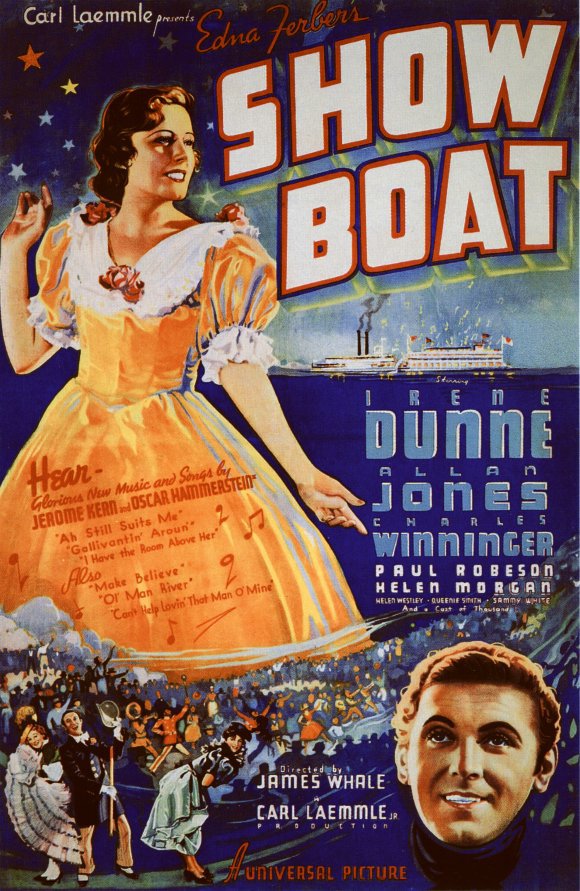
I frequently discuss the concept of deceit in ethics seminars, and my favorite example, which I have also used on Ethics Alarms, is the famous “Does your dog bite?” gag from “The Pink Panther Strikes Again!” This morning I was reminded of an even better example, though not so funny, while watching Turner Movie Classics. TMC was showing the 1936 Hollywood adaptation of “Showboat,” the black-and-white version directed by James Whale of “Frankenstein” fame, that is richer and more faithful to the original Oscar Hammerstein-Jerome Kern Broadway musical than the later, color version starring Ava Gardner, Kathryn Grayson and Howard Keel. Continue reading