“If you’re not doing it, you’re falling behind. It’s not obviously – shall we say – the moral thing to do, but I’m not willing to sacrifice my personal performance and four years of hard work for someone that is willing to do it and get away with it.”
—– South African Olympic swimmer Cameron van der Burgh, admitting that he cheated in his gold medal winning race because, you understand, everybody else cheats too.
Yechhh.
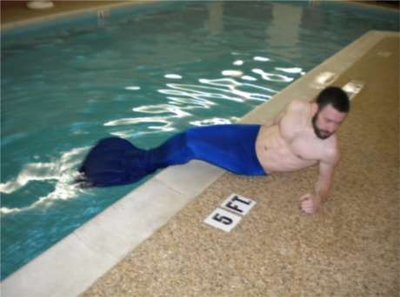
Maybe they won’t notice…
The commercialism is blatant, the nationalism is sickening, the warping of the lives of the young athletes as they prepare for the Games is disturbing. The one constant that has made the Olympics worth our attention is the opportunity to see great athletes in fair and intense competition with the most capable rivals in the world, and to see the best of the best triumph in the various sports by dint of superior effort, skill, training and character.
Who wants to see who the most effective cheater is? If you do, what’s the matter with you? The most disturbing aspect of van der Burgh’s admission is that there was no shame in it. He matter-of-factly explained that he cheated, how he cheated and why, and apparently believes that this doesn’t diminish his victory at all. And, also apparently, he’s right. Despite the fact that a gold medal winner blandly declaring that he cheated robs the Olympics of any pretense of integrity, it appears unlikely that anything will happen to the swimmer or his prize.
See? Cheating works!
And nobody cares!
Well, if the Olympics are going to stand for the cultural standard that cheating is acceptable as long as enough competitors do it, I have better things to do with my time, like making dust bunny sculptures under my bed. Just about everything we see and read about these days is corrupting and cynicism-producing; if the Olympics are just going to add one more toxic lesson to the array, what good are they? What’s the point?
Higher, faster, sneakier?
Wonderful.
_____________________________________
Pointer: Rick Jones
Facts: NBC
Graphic: Deviant Art
Ethics Alarms attempts to give proper attribution and credit to all sources of facts, analysis and other assistance that go into its blog posts. If you are aware of one I missed, or believe your own work was used in any way without proper attribution, please contact me, Jack Marshall, at jamproethics@verizon.net.
 Ethics Alarms
I hate to burst your 5 ringed bubble Eupolus of Thessaly
Point? “Not all athletes lived up to this code of excellence. Those who were discovered cheating were fined, and the money was used to make bronze statues of Zeus, which were erected on the road to the stadium. The statues were inscribed with messages describing the offenses, warning others not to cheat, reminding athletes that victory was won by skill and not by money, and emphasizing the Olympic spirit of piety toward the gods and fair competition.” Your own source backs my point. Cheating was considered contrary to the Olympic ideal. What “bubble”? Presumably the ancient cheaters, which I never denie3d existed, didn’t publicly boast about it.
It doesn’t surprise me at all. After my daughter was murdered in ’09, I was barely functioning. I decided though, to go back to college (online) and am working towards my degree, all A’s so far. Having graduated high school in ’76, I could type but was not computer literate, so I had to learn fast. One of the first things I learned was that cheating in college classes is so prevalent as to be entirely commonplace. With the advent of Net and literally tens of thousands of sources to choose from, including Wikipedia, they think nothing of it, and defend themselves by saying times are hard and they have to! No shame at all. I’ll be damned if I will do that. Every word of every essay and test question answer is my own and the day I EVER cheat in school is the day I hang it up.
DKATT, Cheating certainly existed 53 yrs ago when I got my degree (C+ average), but I don’t think as prevalent as today, nor would kids have bragged about it so much in 1959…shame still existed. I’m so sorry about your daughter (I have one of those too); when you get your degree your integrity will be a fitting memorial to her.
One of the better reasons to avoid the Olympics, and the sad fact of historical cheating just makes it worse.
Little League World Series is about a week away. There may be (and no doubt has been) some cheating going on in its competitions too, but the LLWS is nonetheless far more entertaining to me than the Olympics. I am convinced the younger ages of the LLWS players (relative to most Olympic athletes) enable at least a few more natural limitations on how much cheating can be gotten away with. Plus, it’s easier to relate to a sport that one has experienced personally. Lots of Olympic sports are awe-inspiring to watch, and yet, no matter how much the human drama is hyped in any one event, one cannot adequately experience the vicarious thrill/agony of victory/defeat, respectively, unless one has invested almost as much of one’s life in a sport as have the competitors one is watching.
Jack, however you’ve formatted the big quote at the top of your post, it doesn’t appear at all in the RSS feed. (This isn’t the first time I’ve noticed this happening).
Regarding this issue, I don’t care much, because it’s sports. But as a general rule, although I don’t excuse this guy’s behavior, I blame the folks organizing the event more than I blame this one particular athlete, since there’s a simple solution that would assure all the athletes that they won’t give up their once-in-a-lifetime shot if they play by the rules.