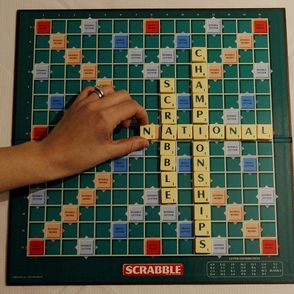
And you get a 50 point bonus for CHEATERS…
Over at Slate, Stefan Fatsis, one of the competitors at the recently completed National Scrabble Championship—Olympics? What Olympics?— gives background and details to the cheating scandal that put the Championship front and center in the blogosphere and cable news fare, if only for a little while.
Fatsis has two complaints about the coverage: first, that the cheater (he palmed extra blank tiles to help him make high scoring words) was a kid, not an adult, and thus the media abuse heaped on him for his transgression was unduly harsh and cruel, and second, that…
“Two of the greatest players of all time, joined in one of the most remarkable finishes Scrabble has ever seen, and all anyone wants to talk about is a kid who made a terrible mistake.”
He’s dead wrong on both points.
Cheating is a habit learned early in life, and the sooner it is broken, the better. If a child (he could be as young as 11) enters an adult tournament, he submits to adult standards of conduct. If a child had won the championship, he would have received far more publicity than an adult,. Why should his rewards be greater than his competitors, and the penalties for his misconduct be less? Fatsis writes,
“…something called Good Afternoon America thought it would be fun to have members of their studio audience hold up giant Scrabble tiles spelling CHEATER. That the cheater in question was a child apparently didn’t register with anyone at ABC. ‘If you can’t count on the integrity at the Scrabble championships, then what has this world come to?’ one of the hosts, former ESPN smartass Josh Elliott, cracked.”
I’m sorry, but I don’t comprehend Fatsis’s objection. The kid was humiliated and kicked out of a Scrabble tournament; when he cheats in college, he could get expelled. Which is worse? I really doubt that the name of the Scrabble cheat will live in infamy, especially since it wasn’t made public. The boy learned a tough lesson, but its a lesson worth learning. I blame the news media for a lot, but not this.
As for his final objection, that the culture is more concerned about cheating in Scrabble than a thrilling championship match, my response is good. Cheating and ethical misconduct are cultural diseases that can bring great societies to ruin and have, many times. It is extremely healthy that incidents of cheating receive extensive publicity and public condemnation, whether the area is politics, business, sports, finance or board games. A rousing championship Scrabble game decided because the losing player missed the obvious “bingo” ARCIFORM—the fool!—may be fascinating to aficionados, but building a more ethical culture is a matter of life and death.
You can read the entertaining and informative essay here.
__________________________________
Facts: Slate
Graphic: Belfast Telegraph
Ethics Alarms attempts to give proper attribution and credit to all sources of facts, analysis and other assistance that go into its blog posts. If you are aware of one I missed, or believe your own work was used in any way without proper attribution, please contact me, Jack Marshall, at jamproethics@verizon.net.
 Ethics Alarms
Interesting that Stefan Fatsis was the complainant. I had some dealings with him years ago. Suffice to say that I didn’t think that the ethics he displayed in that encounter were particularly admirable either.
Scrabble cheating is so popular in people. I love this game. Why? Because of cheating!