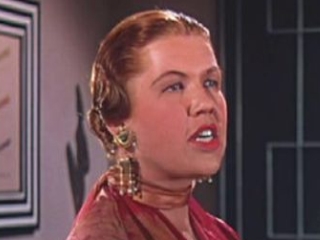
The ethicist in “Singing in the Rain”
For many years, I have been attempting to persuade the local professional theater community in Washington, D.C. to develop and adopt an official Code of Ethics. I have not been successful, and it’s not surprising. Theater, indeed professional show business of all kinds, has been almost ethics-free for centuries. These are tough pursuits, and tough pursuits easily gravitate toward the Law of the Jungle—“Kill or be killed”—unless the culture makes a concerted effort to evolve in a different direction. Theater certainly has not. There a few unwritten rules in theater that could form the backbone of a useful code, such as “The show must go on!”, and there have certainly been members of the profession who are thoroughly ethical, they tend to be very successful individuals who have taken on high ideals once the need to back-stab has lessened, people who are so talented and fortunate that the need to lie and cheat never arises, or, a special category, marginally talented but hard-working and versatile professionals whose trustworthiness is their primary asset. (This last group usually fares poorly in the end.)
Not only have I been unable to interest anyone in developing a code for the theater, I have never heard of one being developed anywhere else. Until now, that is. I recently learned that Kathleen Freeman, a great character actress* who died in 2001, wrote and adopted an ethics code for a small theater company, the Circle Players, that she established in Los Angeles when she was 24 years old.
The daughter of vaudevillians, her code relied heavily on the professionalism and unwritten laws of that rough-and-tumble world. Her “Code of Ethics for Theatre Workers” was discovered among Ms. Freeman’s papers by her executor. It is limited to actors, and is far from complete or perfect, concentrating primarily on trust, professionalism, diligence, fairness and respect, and never touching on key matters like honesty, candor, and conflicts of interest. Still, Young Freeman’s work is a solid and thoughtful beginning; if the profession had begun thinking seriously about its ethics in 1945, it would be far healthier today. The theater press, on-line and in print, has treated Freeman’s work as an oddity, which, sadly, it is. It should also serve as an inspiration.
We shall see, but it doesn’t look good. The Code surfaced in 2008, and it hasn’t spawned any news code or ethics initiatives yet. Nonetheless, brava, Kathleen Freeman (1919-2001), Ethics Hero Emeritus. [It is clear that she followed her own ethical principals to the end. Following rule #2 in her Code — “I shall play every performance with energy, enthusiasm and to the best of my ability regardless of size of audience, personal illness, bad weather, accident, or even death in my family”—Freeman played her last performance in Broadway’s “The Full Monty” on August 18, 2001 while in the final stages of cancer. She died five days later.]
Here is her Code, which every performing member of the Circle Players was required to sign:
The Theatre Workers’ Code of Ethics
Foreward
A part of the great tradition of the theatre is the code of ethics which belong to every worker in the theatre. This code is not a superstition, nor a dogma, nor a ritual which is enforced by tribunals; it is an attitude toward your vocation, your fellow workers, your audiences and yourself. It is a kind of self-discipline which does not rob you of your invaluable individualism.
Those of you who have been in show business know the full connotation of these precepts. Those of you who are new to show business will soon learn. The Circle Players, since its founding in 1945, has always striven to stand for the finest in theatre, and it will continue to do so. Therefore, it is with the sincere purpose of continued dedication to the great traditions of the theatre that these items are here presented.
1. I shall never miss a performance.
2. I shall play every performance with energy, enthusiasm and to the best of my ability regardless of size of audience, personal illness, bad weather, accident, or even death in my family.
3. I shall forgo all social activities which interfere with rehearsals or any other scheduled work at the theatre, and I shall always be on time.
4. I shall never make a curtain late by my failure to be ready on time.
5. I shall never miss an entrance.
6. I shall never leave the theatre building or the stage area until I have completed my performance, unless I am specifically excused by the stage manager; curtain calls are a part of the show.
7. I shall not let the comments of friends, relatives or critics change any phase of my work without proper consultation; I shall not change lines, business, lights, properties, settings or costumes or any phase of the production without consultation with and permission of my director or producer or their agents, and I shall inform all people concerned.
8. I shall forego the gratification of my ego for the demands of the play.
9. I shall remember my business is to create illusion; therefore, I shall not break the illusion by appearing in costume and makeup off-stage or outside the theatre.
10. I shall accept my director’s and producer’s advice and counsel in the spirit in which it is given, for they can see the production as a whole and my work from the front.
11. I shall never “put on an act” while viewing other artists’ work as a member of an audience, nor shall I make caustic criticism from jealousy or for the sake of being smart.
12. I shall respect the play and the playwright and, remembering that “a work of art is not a work of art until it is finished,” I shall not condemn a play while it is in rehearsal.
13. I shall not spread rumor or gossip which is malicious and tends to reflect discredit on my show, the theatre, or any personnel connected with them-either to people inside or outside the group.
14. Since I respect the theatre in which I work, I shall do my best to keep it looking clean, orderly and attractive regardless of whether I am specifically assigned to such work or not.
15. I shall handle stage properties and costumes with care for I know they are part of the tools of my trade and are a vital part of the physical production.
16. I shall follow rules of courtesy, deportment and common decency applicable in all walks of life (and especially in a business in close contact with the public) when I am in the theatre, and I shall observe the rules and regulations of any specific theatre where I work.
17. I shall never lose my enthusiasm for theatre because of disappointments.
I understand that membership in the Circle Theatre entitles me to the privilege of working, when I am so assigned, in any of the phases of a production, including: props, lights, sound, construction, house management, box office, publicity and stage managing-as well as acting. I realize it is possible I may not be cast in a part for many months, but I will not allow this to dampen my enthusiasm or desire to work, since I realize without my willingness to do all other phases of theatre work, there would be no theatre for me to act in.
* Among her many performances that you may have seen: Freeman was Lena Lamont’s frustrated elocution coach (“Round tones!”) in “Singing in the Rain”; the sarcastic hotel maid in the episode of “The Dick Van Dyke Show” who kept calling Rob “ace” while Laura got her toe caught in the tub’s faucet; and in one of her last movie roles, she was the tough old gun moll in “Naked Gun 33 1/3,” who memorably asked Anna Nicole Smith, “What are you doing in my bathing suit?”
____________________
Facts: LA Stage Times
Source: Internet Movie Database
Ethics Alarms attempts to give proper attribution and credit to all sources of facts, analysis and other assistance that go into its blog posts. If you are aware of one I missed, or believe your own work was used in any way without proper attribution, please contact me, Jack Marshall, at jamproethics@verizon.net.
 Ethics Alarms
My impressions: There’s not much that I could disagree with Jack, but it seems to place most of the burden on actors, not the people running the theaters.
The list does point to an element of “noise” which the public is generally unfamiliar with. I think it’s beneficial to bring it to their attention and reemphasize it to the acting community.
Should there be an all inclusive “Code of Ethics for the Theater”? I think so. Just like I think there should be one for critics. Some of the theaters place a code of conduct (or rules) for audience members in their program guides, which they expect adherence to. Since we all participate in the experience of theater, to some degree, why shouldn’t there be an acceptable code (or Code) that we can all agree to live by? This might be a starting point for achieving consistency in performance on stage and evaluating it from the house.
Number 9 (re: Illusion) is of interest to me since I think we need to do more to break down barriers to promote the theater, rather than enhance them. Musicians regularly warm up (and run through their passages) in front of a concert audience before performance. To take another example from sports: players loosen up, stretch, and practice in front of fans before a game. Why the mystery in theater? It’s even more amazing, at least to me, to see seemingly regular folks take their craft to another level when you know them.
My theater has a code of ethics that is management focused. It’s not complete, but it’s unique in the area. This is it:
Artistic and Administrative Principles
The American Century Theater is the only area theater with a statement of ethical principles. These were developed with the recognition that professional theater is an unusually unethical environment, partly because it is so competitive, and partly because those involved seldom come from more traditional professions. But theater is a calling, and should have the ethical standards of a calling.
These ethical principles regularly come into play in our theater’s operations. It is our hope that if we can show that a theatrical company can be ethical and successful too, theater ethics will cease to be an oxymoron in the Washington area.
The American Century Theater hereby pledges that these principles will govern its activities and operations:
In our productions… we will preserve the dignity, integrity, spirit and content of classic American plays, amplifying without distorting the voices, vision, and viewpoints of their authors for audience members, whether they are experiencing these plays for the first time, or the last.
For theater audiences… we will make affordability and access to great American theater for all ages, incomes, ethnic origins, and worldview our highest priority
To the artistic community... we pledge truthfulness, openness in communications, fairness in contractual relations, and to honor all commit-ments, oral or written, expressed or implied, long or short term.
Toward other theaters and dramatic organizations… professional or volunteer, we will offer willing and generous support, cooperation, respect and assistance; and to that end, we will never induce any individual to break an existing commitment to another theater’s production.
In advertising and other communications with the public… we will not intentionally misrepresent the content of a play or the critical reaction to its production.
To all who support us, work with us, and watch us… we guarantee vigilant enforcement of these principles, and ask that audiences, artists, colleagues, critics, and the general public hold The American Century Theater to the highest standards in all aspects of its work.
#9 – Illusion is the only one we don’t adhere to at our company. Since we were founded fist and foremost as an educational company, we encourage our actors to go out and greet in costume after the show. There’s something special to the kids about being able to meet Dorothy, Maria, or Harold Hill in person, even if they aren’t in character anymore. Woe betide the actor who is seen in costume before the show, however!
Yes, I’m torn on this one as well. In general, post-show illusions are pointless, though I have had productions where I insisted on it.
Naked Gun 33 1/3, not 3 1/3
Oops–didn’t hit that 3 hard enough. Thanks.
One principle they taught in Acting 101 at Los Angeles City College that could serve as the foundation stone of any such code::
“The most important people in any play are the audience.”
Yes, that explains a lot about Hollywood, doesn’t it? Actually the playwright is the most important. If you sacrifice the play to the audience, you’re not doing anyone any favors.
Spoken like a true playwright! No, I think what LACC was getting at was that the stage is no place for egotism; that “scene-stealing” is totally unprofessional; that actors have a duty to the audience to give their professional very best; all the things Ms. Freeman was talking about.
LACC took nothing away from writers. A close friend of mine had a very successful 30-year run directing in community theatre; people could not praise him enough. The local paper interviewed him upon his retirement. One of the questions asked was, “What one thing do you attribute your directing success to?”
He replied, “I trust the playwright.”
Pingback: Code of Ethics for Theatre | The Alumnae Theatre Company's Blog