Ooh, Apparently The New ABS Challenge System That Stops Umpires’ Wrong Ball and Strike Calls From Changing The Outcomes Of Baseball Games Has Hurt Umpires’ Feelings…

Tough. Do your job better.

The major MLB baseball rules addition this season, and one that is, as I so sagely predicted many years ago, both popular and beneficial to the game’s integrity, is the ability of players to challenge ball and strike calls instantly and have a computer image almost immediately appear that either confirms or overturns the home plate umpire’s call immediately. The results of many games have already been affected by the new technology. Of course umpires hate it, especially bad umpires, like the infamous Angel Hernandez, who is an embarrassment to the game. For the best umpires, the system is mostly beneficial, because it shows how accurate they are. Umpires in general have tightened up their pitch calling because of the technology. In the past, they used to defiantly talk about “my strike zone.” The ABS system makes it indisputable that there is just one strike zone, and that’s the one in the rule book.

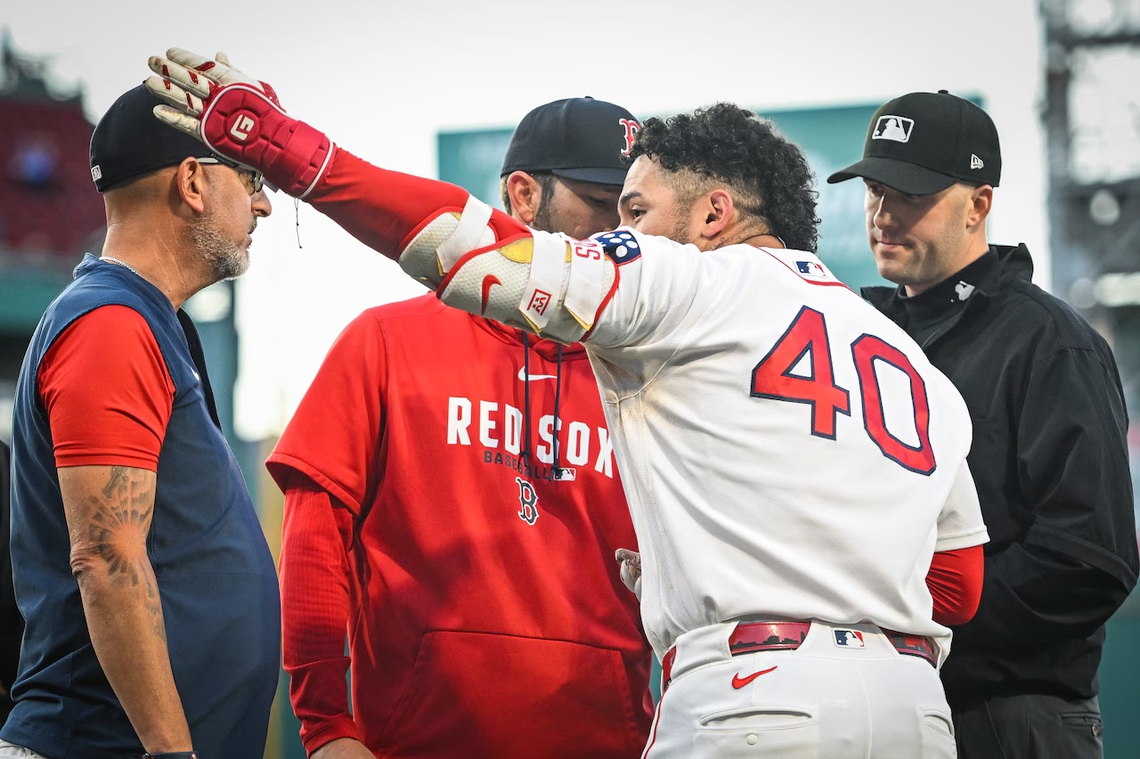
In yesterday’s game between the Washington Nationals and the Boston Red Sox in Fenway Park, Boston’s best hitter, Willson Contreras, was called out on strikes after the first base umpire Nick Lentz ruled that his attempted check-swing had indeed crossed the plate. That call is (currently) unappealable and entirely within the umpires’ discretion. But as Contreras walked away from the plate to the dugout, he tapped his helmet in the manner in which a player signals that he is challenging a ball or strike call. Lenz threw him out of the game.

Contreras and Red Sox manager Chad Tracy were shocked, and came out of the dugout to argue against the ejection. Red Sox broadcasters were initially confused, since Contreras hadn’t said anything to the home plate umpire. (There are a few “magic words” that will guarantee a player’s exit). Then they saw that the video showed Lentz indicating the ejection and tapping his head to explain why.

“I called him out on appeal for the check swing, and as he was walking back to the dugout, he started gesturing, tapping his helmet, like he wanted to challenge something that is not a challengeable call,” Lentz explained to reporters. “And so [it was] disrespect, and again gesturing towards what he thought was an incorrect call, got him removed from the game.” The umpire claimed that it is an automatic ejection if a player makes that gesture in a mocking way. “It’s a lot like drawing a line in the dirt,” Lentz said.

No, it’s really not. Players standing at the plate and drawing a line to show how far a ball was out of the strike zone was obviously an attempt to show up an umpire and always resulted in an ejection, as did a batter curling his fingers around his eyes to say “you need glasses.” Those gestures neverfhappen any more, because the computer settles the issue. Most fans in the stands didn’t even notice Contreras’s gesture, nor did TV viewers, because the camera wasn’t on Contreras when he tapped his helmet.

Lentz added the gesture is “on the list for items for removal from the game.” If it is, I can’t find it, and if there was a memo, the players didn’t get it. Here is the current criteria for an umpire ejecting players:

The ABA Issues An Ethics Opinion To Help Lawyers, Not Clients

 The ABA Standing Committee on Ethics and Professional Responsibility has issued ABA Formal Ethics Opinion 523 titled “Engagement Agreements Allowing a Lawyer to Withdraw When the Client Fails Substantially to Fulfill an Obligation Regarding the Lawyer’s Services.” 

The opinion’s summary:

“Rule 1.16(b)(5) of the ABA Model Rules of Professional Conduct permits a lawyer to withdraw from a representation, or to seek the tribunal’s permission to do so, when “the client fails substantially to fulfill an obligation to the lawyer regarding the lawyer’s services and has been given reasonable warning that the lawyer will withdraw unless the obligation is fulfilled.” This provision is ordinarily invoked when a client fails to fulfill an obligation regarding payment of legal fees and expenses. The engagement agreement may memorialize additional obligations of the client, both obligations that are otherwise implicit such as the client’s truthful cooperation with the representation, and further obligations insofar as they are not forbidden by the Rules, other law (including court rules), or public policy. A client’s persistent failure to fulfill obligations regarding the lawyer’s services, including obligations unrelated to payment of fees and expenses, may constitute a basis for withdrawal if the procedural requirements of Rule 1.16(b)(5) are met. Further, the lawyer’s engagement agreement may put the client on notice of permissible grounds for withdrawal under Rule 1.16(a) and (b), including the client’s failure to fulfill obligations regarding the lawyer’s services. However, the engagement agreement may not expand on the grounds for withdrawal set forth in Rule 1.16 or purport to alter or amend the grounds for withdrawal or the process for withdrawal required by the Rule.”

The ABA is being coy. Traditionally, because, you know, we lawyers are professionals and are not in it for the money but rather for the good of society, lawyers aren’t automatically allowed to drop deadbeat clients because they have stopped paying. It is not unusual for a judge to refuse to allow an attorney to withdraw for that reason, and there is another Catch 22: the confidentiality rules in most states forbid a lawyer from telling a judge that a client isn’t paying his or her legal bills, or can’t.

One coded message that some jurisdictions wink at is “Your honor, I request to withdraw because Mr. Green is unavailable at this time.” Of course, coded violations of confidentiality are still violations. Now the American Bar Association is saying that “the client’s failure to fulfill obligations regarding the lawyer’s services” makes dropping that client reasonable and ethical. This is supposed to be a profession. But for most lawyers out there, it’s all about the money.

The ABA’s pronouncements aren’t binding on anyone, remember.

The full opinion here

Sen. Paul: Allow Me To Introduce You To The Concept Of “Professionalism”…Perhaps You Are Unfamiliar With It [Corrected]

Yecchh.

Senate Homeland Security Chair Senator Rand Paul (R-Ky) angrily confronted President Donald Trump’s nominee to lead the Homeland Security Department based on Sen. Markwayne Mullin’s insulting Paul in the past.

Uh-uh. Wrong. Bad. Unethical! Paul’s job is to assess whether Mullin is qualified for the important job he needs Senate approval to step into, not to settle old scores. The confirmation process is not supposed to be personal, because those engaged in it are allegedly professionals. Professionals, as I have been reminding people a lot lately, are worthy of the public trust because they do not let personal grievances and non-ethical instincts like anger, revenge, hate and retribution enter into their decision-making process.

Clearly, Paul does not agree. He began the hearing saying that the Oklahoma Senator might not qualify for the role of Homeland Security Secretary because last month Mullin called Paul a “freaking snake” for trying to block the passage of a funding bill. Worse, Mullin had said he understood why a neighbor attacked Paul in 2017, when he sustained broken ribs and a punctured lung.

“Tell it to my face, tell the world why you believe I deserved to be assaulted from behind, have six ribs broken and a damaged lung!” Paul said in his reserved, dignified, fair and decorous opening statement. “And while you’re at it, explain to the American public why they should trust a man with anger issues” to be head of Homeland Security, Paul added.

“In fact, let’s duke it out right here if you’re man enough, dick-head!” he contin…Okay, I’m kidding; he didn’t go that far.

Unethical Quote of the Month: Georgia Chief Justice’s Commission on Professionalism

“Diversity involves recognizing, including, celebrating, rewarding and utilizing differences of gender, race, ethnicity, age and thought – sweetening and often strengthening the pot.”

—-The Georgia Chief Justice’s Commission on Professionalism in the document supposedly designed to give Continuing Legal Education trainers (like me) guidance in preparing seminars on “professionalism,” exemplary conduct that goes beyond the Rules of Professional Conduct to bolster public trust and the reputation of the legal profession.

What utter, illogical, embarrassing, unethical, woke garbage this is…and from a judicial commission no less! I dare anyone to defend it. The putative author is someone named Karlise Y. Grier, who is supposedly a lawyer, and lawyers are supposed to be trained in critical thought. Gee, I wonder if…[checking]….of course she is. Only the undeserved beneficiary of such nonsense could endorse it so fatuously.

I’m going to be teaching, not for the first time, a professionalism seminar for Georgia lawyers, who are among those in the few states that require special “professionalism” credits. I had to read, in due diligence, the guidelines for such programs in Georgia that almost took longer to read than the course will last (one hour) because it was full of bloated bureaucratic babble. It is a professional requirement for lawyers to write clearly, but most don’t, and this thing was a disgrace. Nothing was as bad as that paragraph above, though.

What does “recognizing” differences in gender mean, and what does it have to do with the ethical practice of law? (Hint: Nothing.) Lawyers should treat all clients and adversaries the same regardless of race, gender or other group characteristics. Is that paragraph saying that Georgia lawyers should be able to tell a man from a woman? Is this a problem in Georgia?

Continue reading

On Re-Watching “The Magnificent Seven” and Finally Realizing What It’s About

I am trying hard to write about something other than the Charley Kirk Ethics Train Wreck despite the din making even thinking about other ethics issues difficult. Naturally, my default solution is the Great American Ethics Genre: the American Western.

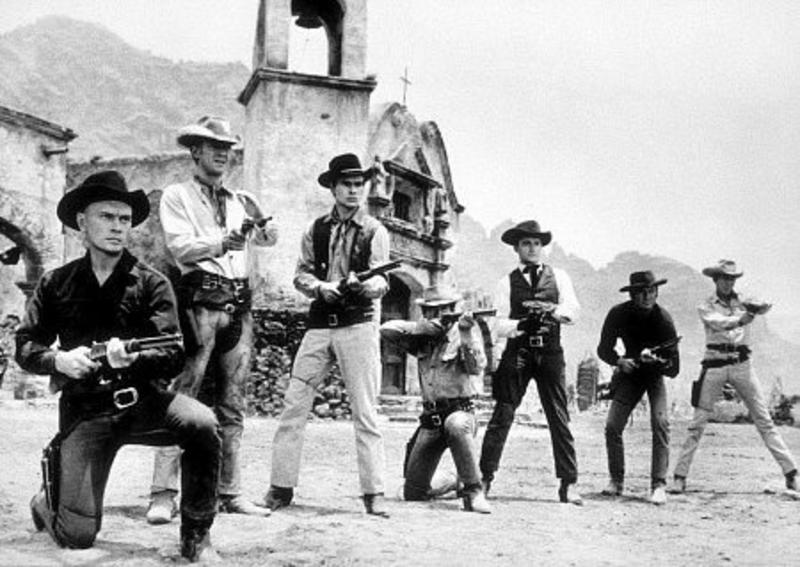
I have been bringing a younger friend up to speed in his cultural literacy pursuits, and recently had him view the original John Sturgis-directed version of “The Magnificent Seven,” a great ethics movie and one of the ten best Hollywood Westerns ever made, a tough field. I have written about the movie several times on EA, but I am abashed to say that it never quite sunk in what the film was really about until that last viewing.

The film is about professionalism. Once that bell rang, I couldn’t believe that I hadn’t realized it before. It is a filmed course in professionalism—the quality of justifying the trust a particular practitioner of an occupation dedicated to public service must maintain to be considered a professional. I would love to teach a professionalism course using the movie as the centerpiece.

Years ago, retired EA commenter Bob Stone-–I hope he isn’t Trump-Deranged now—wrote a piece for his own blog about how the film illustrated the difference between law and ethics. He wrote in part,

Continue reading

Chess Ethics: The International Chess Federation Makes “Professionalism” Look Ridiculous [Updated!]

Did the world go nuts last week and I missed it? Curmie just sent me this crazy story, and I though it was a gag.

For those of you who don’t follow international chess (that is, all of you), the wonderfully named Magnus Carlsen is a five-time world chess champion from Norway. He has held the No. 1 position in the FIDE world chess rankings since July 1, 2011, indisputably making him one of the greatest chess players of all-time, right next to household names like Raul Capablanca, Ruy Lopez, and Emanuel Lasker. Yesterday he was kicked out of the World Rapid and Blitz Chess Championships in New York after chess’s governing body FIDE barred the Norwegian from participating in the tournament.

Why? He was wearing bluejeans.

Continue reading

Ethics Dunce: Tender Miami Weatherman John Morales

Aw, isn’t he caring! A supposedly professional meteorologist gained fans and social media hits by choking up as he covered Hurricane Hurricane Milton. Oooh, it was so big and scary!

Time to retire, John.

Now we know the professionalism rot that has crippled law, science, journalism, academia, politics, the judiciary and so many other fields has struck meteorologists. Morales’s job is, or was supposed to be, relaying information about weather phenomenon, not to show everyone how sensitive and frightened he is. There is no excuse for this, none, never. If you can’t broadcast the explosion of the Hindenburg, a fire, a bomb blast or a murder without either losing control of your emotions or, worse, virtue-signaling with them, then you are in the wrong job.

Furthermore, such a reaction seeds panic. It is as irresponsible as it in incompetent.

Continue reading

Ugh! Ethics Dunce—AGAIN—: University of Houston Law Professor Renee Knake Jefferson

This is an example of why I am disgusted with my field and chosen profession. Just last month I designated Jefferson, a legal ethics professor among other things, as an ethics dunce for her blatantly partisan and biased commentary. This time, it’s personal.

Seeking to find a reliable, trustworthy, accurate source of legal ethics news and developments (since the demise of the excellent legal Ethics Forum, I am reduced to the scattershot, overwhelmingly left-biased commentary on the APRL listserv), I subscribed to the professor’s substack, Legal Ethics Roundup, taking seriously her promise that it would supply a “Monday morning tour of all things related to lawyer and judicial ethics.” But the Legal Ethics Roundup I received this morning, like all its predecessors this month, cheerfully informed me that “For the month of August, the Legal Ethics Roundup is on pause.”

Continue reading

Ethics Hero: Orioles Catcher James McCann, No Weenie He!

Wow.

Blue Jays rookie pitcher Yariel Rodríguez threw a first-inning 95 mph fastball that hit Baltimore Orioles back-up catcher James McCann directly in the face. Blood gushed from his nose and mouth, and he immediately dropped to the ground. Team trainer Brian Ebel began providing treatment at the plate, but McCann got to his feet, still bleeding, and went to first base. O’s manager Brandon Hyde summoned him to the dugout while the Jays were replacing their wild pitcher, but McCann was adamant that he could continue. It was the first game of a doubleheader, and McCann didn’t want the O’s young star catcher, Adley Rutschman, to have to catch both games, an invitation to injury.

“I felt like if I could get the blood to stop flowing then I could stay in the game, and that was what I was able to do,” McCann said. When play resumed, McCann went back to first, wearing a fresh, unbloodied jersey.

Continue reading

Unethical Quote of the Week: The Columbia Law Review

I gave a legal ethics seminar 90 minutes after finding my wife dead, and these infants are too traumatized to take their exams because of a “horrific time on campus” and their “level of distress”:

Continue reading