Buzz Bissinger’s Primer on Unethical Reasoning

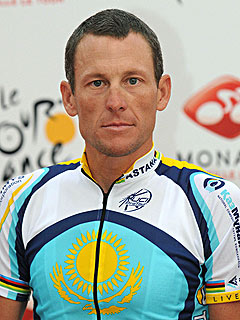
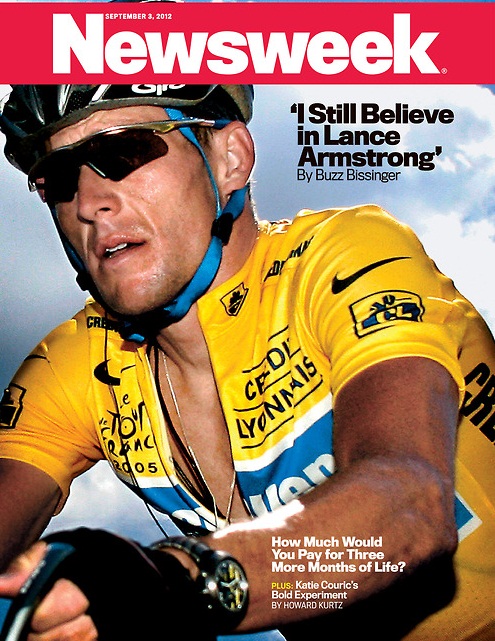
Sportswriter Buzz Bissinger, already an Ethics Dunce in good standing, has contributed something immensely valuable to the world of ethics: a cover story for Newsweek that can serve as a teaching aid in college ethics classes.

Titled “I Still Believe in Lance Armstrong,” Bissinger lurches from one rationalization to another, contradicting himself repeatedly along the way. This is a professional journalist, writing in his field, for what once was a respected news commentary magazine. Why is so much of the public unable to tell right from wrong? Because they spend a lifetime reading junk like this: Bissinger’s essay could be Exhibit A.

Bissinger begins by talking about the reactions of his son, a cycling enthusiast who worshiped Armstrong, to the recent news that the tarnished athlete would no longer challenge the U.S. Anti-Doping Agency’s efforts to strip him of his titles:

“Caleb is not blind. He said it was hard not to read the statement and conclude that when Armstrong said, ‘There comes a point in every man’s life when he has to say ‘Enough is enough’ ” and that he was finished fighting the United States Anti-Doping Agency’s fanatical attempt to strip him of his victories, what lay below the outrage was an admission that he may well have cheated with performance enhancers in order to win. That bothers my son. It is why he called the stunning announcement a ‘sad day.’ But it is also why he called it a ‘weird day’ emotionally because of the constant effort to make Armstrong into a villain.” Continue reading

Bad Crime, Unethical Punishment, Ominous Sign

Here’s a pop quiz for you.

The topic: crime and punishment

“Off with his head!” Uh, Queen? Isn’t that just a tiny bit severe?

An attractive woman falls asleep on an airplane, and the stranger sitting next to her, a card-carrying, pig-man creepazoid, takes that opportunity to “feel her up.” He is caught in the act, and arrested when the plane lands. What should be the maximum penalty imposed for such a violation of the poor woman’s privacy, dignity, and person?

If you said “life in prison,” go to the head of the class. The federal government has exclusive jurisdiction over  sexual abuse cases that occur on American airplane flights, and sets the penalties. A New Jersey man is currently awaiting trial after allegedly engaging in such in-flight molestation. How can such an extreme sentence be justified or even contemplated? What is this, “Midnight Express”? Rumania under the wise rule of Vlad the Impaler? Continue reading

Disturbing Ethics Quote of the Week: Terri Miller

“It is very common for the teachers of the year, the championship coaches and the vanguards of education to be perpetrators…They will put on this mask of an exemplary teacher to look the same as a true exemplary teacher.”

Terri Miller, president of the national organization Stop Educator Sexual Abuse, Misconduct and Exploitation.

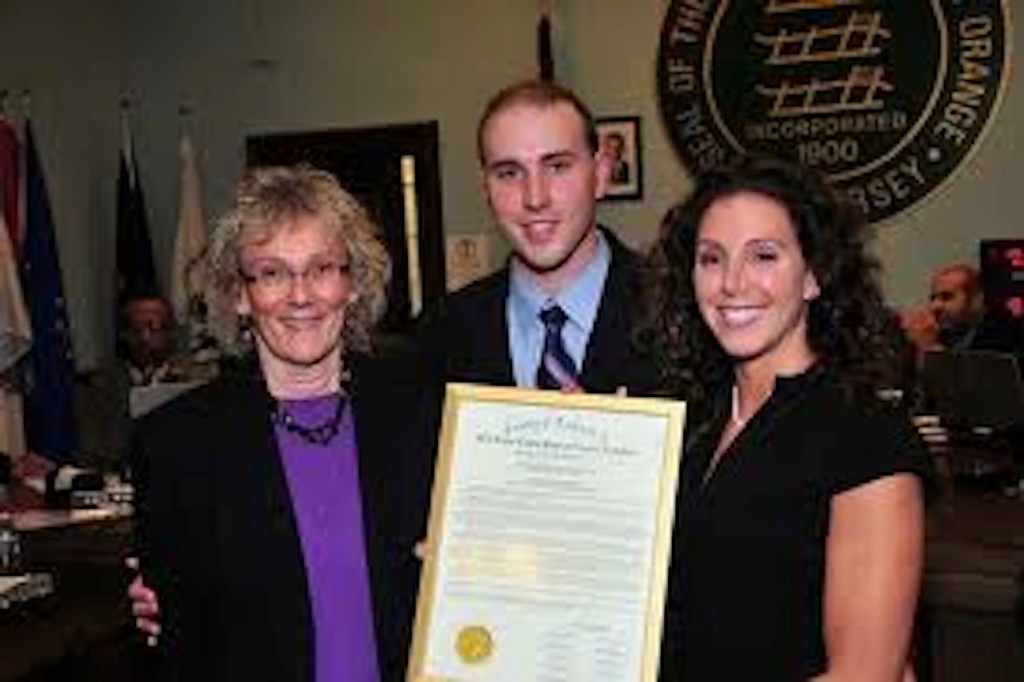
Erica Depalo (right): Teacher of the Year, vanguard, child-molester

Miller’s quote was prompted by the recent arrest of West Orange High School English teacher Erica DePalo, 33,  who is accused of having a sexual relationship with a 15-year-old male student she taught in her honor’s English class. Prosecutors charged DePalo with first-degree aggravated sexual assault, second-degree sexual assault and endangering the welfare of a child. DePalo, who teaches Honors English to ninth and tenth-graders and is also the school’s junior varsity tennis coach, was honored as Essex County’s top teacher for 2011-2012  as part of the state Department of Education’s “New Jersey Teacher of the Year” program. Accepting her award, she said, “I am merely a representative of all the hardworking dedicated teachers, especially those with whom I work at West Orange High School … teachers who are committed to their students, who consistently advocate for their students, and who exceedingly go above and beyond their everyday duties and job descriptions.”

Yes, I’d say having sex with 15-year-old student qualifies as going above and beyond their everyday duties and job descriptions. Or perhaps below and beyond. Continue reading

The Forgotten Meaning of Labor Day

Do you know who this is? You should! It’s Labor Day, dammit!

Labor Day commemorates one of the great ethical victories of American society, and not one in a hundred Americans know it. Labor Day marks the end of summer, and a time for retail store sales, and the last chance to get away to Disney World, but few of us think about the real meaning of the word “labor” in the name, and how it is meant to honor brave, dedicated men and women who fought, sometimes literally, the forces of greed, political influence, wealth and privilege in this country to ensure a measure of safety, consideration, fairness and justice for the hardest working among us.

Today labor unions are controversial, and with good reason. Many of them have been run as criminal enterprises, with deep connections to organized crime; many operate in a blatantly coercive and undemocratic fashion. Union demands and strong-arm tactics, while providing security and good wages to members, have crippled some American industries, and limited jobs as well. Today the unions  get publicity when one of them tries to protect a member who should be punished, as when the baseball players’ union fights suspensions for player insubordination or even drug use, or when school districts are afraid to fire incompetent teachers because of union power, or when the members of public unions protest cutbacks in benefits that their private sector counterparts would be grateful for. It is true that today’s unions often embody longshoreman philosopher Eric Hoffer’s observation that  “Every great cause begins as a movement, degenerates into a business and ends up as a racket.” *

That not what Labor Day honors, however. It is celebrating the original labor movement that began at the end of the 19th century, and that eventually rescued the United States from an industrial and manufacturing system that was cruel, exploitive, deadly and feudal. Why the elementary schools teach nothing about this inspiring and important movement, I do not know. I suspect that the story of the American labor movement was deemed politically dangerous to teach during the various Red Scares, and fell out of the curriculum, never to return. Whatever the reason, it is disgraceful, for the achievements of the labor movement are every bit as important and inspiring as those of the civil rights movement and the achievements of our armed forces in the protection of liberty abroad. Continue reading

He Must Not Have Liked The Tofu At The Reception: Worst Wedding Guest Ever

“I invited him? I thought YOU invited him!”

The Ethics Alarms week just completed week was notable for the bizarre and lengthy argument over proper conduct by wedding reception hosts, prompted by my criticism of advice columnist Carolyn Hax. It is with some trepidation that I now ask: Can we agree that this is the worst wedding reception guest ever?

The guest is Omar Santiago, a young lad invited to the reception by the brides’ niece, who probably needs to cultivate better taste in boyfriends. Omar was observed around midnight doing something suspicious in a closet at the West Sayville (New York) Country Club as the less larcenous guests were bunny-hopping. The maitre d’ asked bride Joanna Williamson  if she had directed a young guest to handle her gift box. Why no, she hadn’t, Williamson replied—Holy cats!!  Someone is stealing our wedding gifts????? Continue reading

MDA Walks Alone

They miss you Jerry.

Last year at this time, the hot news was how the Muscular Dystrophy Association had unceremoniously dumped Jerry Lewis from the organization’s annual Labor Day telethon, it highest profile event and the centerpiece of its fundraising efforts for medical research. The telethon, shortened and without Jerry’s bombast and bathos, went forward, and MDA announced that it had brought in  $61 million, 4 percent more than 2011 when Lewis was still around. I was skeptical.  The MDA had violated core ethics rules that apply all organizations: Never cut yourself off from your roots. Honor your founders. Pay your debts. Keep peace with your past.  An organization that is estranged from its past heroes is estranged from itself.

I wrote, while designating the MDA an Ethics Dunce: Continue reading

Comment of the Day: “Most Entertaining Ethics Alarms Discussion Ever: A Salute”

Reader Yardley’s observation on the endless back and forth between a peculiar commenter and her critics here is worthy of Comment of the Day status, if only to make us pause to consider why we are arguing, and what we are really arguing about. Here is his observation on the Most Entertaining Ethics Alarms Discussion Ever…

“I can’t help but wonder what the value of such debates are once the primary points and counter points have been stated, and restated; then restated once again ad nauseum. I don’t have the answer of course, but it has got my wheels spinning. Maybe there’s merit in it, or maybe it’s about flexing our egos, or maybe it’s a sort of meme warfare… ideas battling it out for control over our brains. Certainly, it is entertainment! The most I can say is that the spectacle of it all somehow subtracts from content. Worse yet, at a certain point those on the rational side of the argument only serve to give status to the mistaken party. When a clash of ideas turns into a Hundred Years’ War, even the winners get a bloody nose.”

________________________________

Graphic: XKCD

The Significance of Paul Ryan’s Marathon

Interviewer : Are you still running?
Paul Ryan: Yeah, I hurt a disc in my back, so I don’t run marathons anymore. I just run ten miles or [less].
Interviewer : But you did run marathons at some point?
Paul Ryan: Yeah, but I can’t do it anymore, because my back is just not that great.
Interviewer : I’ve just gotta ask, what’s your personal best?
Paul Ryan: Under three, high twos. I had a two hour and fifty-something.
Interviewer : Holy smokes. All right, now you go down to Miami University…
Paul Ryan: I was fast when I was younger, yeah.

Thus did Republican Vice-Presidential candidate Paul Ryan describe his athletic exploits to ABC News reporter Hugh Hewett. But it was bad information: Runner’s World did some digging, and discovered that Ryan, intentionally or unintentionally, fictionally improved his best marathon time by an more than an hour. That “intentionally or unintentionally” is as important as the media and blog sleuths are making it out to be. Continue reading

Sports Ethics: Come and Get It!

Kirk O. Hanson and Mark Savage have prepared useful and provocative materials on the broad topic of ethics in sports, and have posted them over at the excellent Markkula Center for Applied Ethics site.

It’s one of my favorite topics, and with Lance Armstrong finally shedding his mask, that Penn State scandal and surprise steroid suspensions in Major League Baseball, it has never been more current. These four essays, presented under the heading, Sports Ethics: Matching the Issues, can be found here:


Discovered: An Ethics Hero and a Theater Code of Ethics—From 1945!

The ethicist in “Singing in the Rain”

For many years, I have been attempting to persuade the local professional theater community in Washington, D.C. to develop and adopt an official Code of Ethics. I have not been successful, and it’s not surprising. Theater, indeed professional show business of all kinds, has been almost ethics-free for centuries. These are tough pursuits, and tough pursuits easily gravitate toward the Law of the Jungle—“Kill or be killed”—unless the culture makes a concerted effort to evolve in a different direction. Theater certainly has not. There a few unwritten rules in theater that could form the backbone of a useful code, such as “The show must go on!”, and there have certainly been members of the profession who are thoroughly ethical, they tend to be very successful individuals who have taken on high ideals once the need to back-stab has lessened, people who are so talented and fortunate that the need to lie and cheat never arises, or, a special category, marginally talented but hard-working and versatile professionals whose trustworthiness is their primary asset. (This last group usually fares poorly in the end.)

Not only have I been unable to interest anyone in developing a code for the theater, I have never heard of one being developed anywhere else. Until now, that is. I recently learned that Kathleen Freeman, a great character actress* who died in 2001, wrote and adopted an ethics code for a small theater company, the Circle Players, that she established in Los Angeles when she was 24 years old. Continue reading