Hollywood Ethics and Lindsay Lohan: Kick ‘Em When They’re Down

Here's a pro tip, Lindsay: when you find yourself in bad with Charlie Sheen, there is trouble ahead.

Here’s a pro tip, Lindsay: when you find yourself in bad with Charlie Sheen, there is trouble ahead.

If Hollywood reports are true—and when the sources are primarily gossip sites, you never know—the honchos at Dimension Films played a dirty trick on actress Lindsay Lohan. Lohan is one of the featured performers in the upcoming comedy “Scary Movie 5,” like its occasionally funny predecessors a parody of recent horror films. Lohan’s sequence has her paired with Charlie Sheen, in a spoof of “Paranormal Activity.” In one scene, we are told, Lindsay screams hysterically as if she has seen some ectoplasmic horror, when what has really upset her is having to see Lohan’s own 2005 post-“Mean Girls” pre-train wreck Disney flop, “Herbie Fully-Loaded” appear on her TV.  When the trailer for the yet-to-be-released film was unveiled, however, there had been a change in the scene to make a more hurtful joke at the actress’s expense. Now it appears that Lohan is screaming at the news that her probation has been revoked, as indeed it was just this month. Lohan could get significant jail time.

Lindsay says she was blind-sided by the switch, which holds her up to (more) humiliation and which she never approved. Inside sources say that the producers changed the trailer in retribution for Lohan’s unprofessional conduct during the shooting. Continue reading

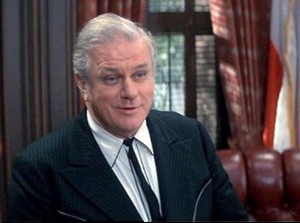
Ethics Hero Emeritus: Charles Durning, 1923-2012

Charles DurningWorld War II veterans are dying by the thousands every year now; “the Greatest Generation” is running out of members. When one of the survivors of World War II combat who became famous in subsequent pursuits leaves us, it is important to remember that their brave service to their country was probably the most important thing they did in their lives, and was their invaluable gift to all of us. In most cases, that is how the veterans looked at it too. I know my late father did.

I can’t be sure about the great character actor Charles Durning in this regard, because he generally refused to talk about his World War II experiences, which resulted in his being honored by a Silver Star and three Purple Hearts. This too is admirable. His military service was his duty, but having to kill other human beings, no matter who they are, is something that throw most ethical people into a searing conflict of values and emotions. Durning, who died today at the age of 89, preferred to discuss his acting.

He was as talented and brave at entertaining us as he was in combat. Never a leading man, Charles Durning could play drama and comedy with equal deftness, and given the chance to be in a musical, the (awful) film version of “The Best Little Whorehouse in Texas,” he proved that he could sing and dance well too. He was outstanding in such classic films as “The Sting,” “Dog Day Afternoon” and “Tootsie,” an actor who seemed incapable of seeming false or inauthentic  while never playing the same kind of character twice. Perhaps the performance that was closest to the real Charles Durning was in his Emmy-winning role on “NCIS” in the episode “Call of Silence,” in which he played an elderly Marine veteran and Congressional Medal of Honor recipient who is tortured by the belief that he had been responsible for the death of his best friend in combat.

Durning’s own military service would have made an exciting movie on its own.  His highest rank was Private First Class, and like many others, he did the most dangerous and dirtiest work of the war. On D-Day, June 6, 1944, and was among the first troops to arrive at Omaha Beach in Normandy, after overshooting  his landing zone and having to fight his way to the beach.  He was severely wounded by a German “S” Mine on June 15, 1944 at Les Mare des Mares, France, but despite suffering from the effects of shrapnel in the left and right thighs, the right hand, his head, and his chest, he declared himself fit to return to the lines, which he did just in time for the Battle of the Bulge. During that battle he was wounded again, captured, and survived the German massacre of American prisoners at Malmedy, one of the most heinous war crimes perpetrated in the field.

We should honor the memory of Charles Durning as a wonderful actor who contributed a great deal to films and popular culture, entertaining millions in the process. We should also honor him as a patriot, a soldier, a citizen, a World War II veteran and a hero, not because he was unique, but because he was not, and when we salute him as he passes from this world, we also honor all the anonymous and forgotten fighting men like him who never became famous, saved the United States and the human race, and who, like Charles Durning, refused to boast about it.


 

Tales From The Moral Luck Files: The Truck, The Ice, and the Hero

"I'm a hero!"

“Woo-Hoo! I’m a hero!”

A story from Manitoba, Canada raises the question, “Should someone get full credit for being a hero when he rescues the victim of his own poor judgment?”

A father on an ice fishing trip with his daughter drove his pick-up truck onto the ice of frozen Lake Manitoba, misestimating just how frozen it was. The truck broke through the ice, and he reportedly had to dive deep into the freezing water to rescue his daughter from an icy death. Is it heroism to repair the results of a near tragedy you caused yourself?

Let’s consider at a range of possible frozen ice scenarios:

1. You see someone else’s truck break through the ice, and rescue the occupants from drowning at great personal risk.

2.  You tell a driver that its safe to drive his truck onto the ice, and it breaks through because you were wrong. You rescue his daughter.

3.  You watch several trucks drive on the frozen lake without incident. You follow them, and your truck falls through the ice. You have to rescue your daughter.

4. You drive onto the ice without proper precautions, and after your truck falls through, you rescue your daughter.

5. A local citizen warns you about driving your truck on the ice, which he says is too thin. You do it anyway, and have to save your daughter.

6. The Homer Simpson scenario: You see a truck fall through the ice, and yet drive yours onto the ice anyway. You rescue Lisa. Continue reading

The Ethics of Christmas Shaming

Ethics Alarms participant Jeff Hibbert asks my reactions to this photo:

Blurry face boy

[The sign reads: “I have to take back my PS3 that I was getting for Christmas because I wasn’t grateful to receive a Captain America action figure (That I received from Church) so I’m going Christmas shopping for other kids with the refund money!”  The actual photo on the web shows the unblurred face of an unhappy boy, and that is how I originally posted it. However, after some prompting by Jeff, I concluded that I was adding to the boy’s plight by helping to publicize his identity. Ethics Alarms commenter texagg04 kindly provided this version, as well as three others that gave me some Christmas mirth by replacing the boy’s face with Bart Simpson’s, a smiley face, and most inspired of all, the face of recent Ethics Alarms’ subject John Dillinger.]

I can’t find any context for it, back-story, or the name of the family involved. (I’m glad about that last part, by the way.)  If it is what it appears to be, a young boy’s parents are subjecting him to rather harsh punishment for displaying inadequate gratitude for a gift he didn’t care for, by forcing him to return his favorite gift, a Play Station 3, and use the money to buy gifts for presumably needy children. Continue reading

Unethical Quote of the Month: 34,812 Americans*

“British Citizen and CNN television host Piers Morgan is engaged in a hostile attack against the U.S. Constitution by targeting the Second Amendment. We demand that Mr. Morgan be deported immediately for his effort to undermine the Bill of Rights and for exploiting his position as a national network television host to stage attacks against the rights of American citizens.”

—- The language on a petition posted at whitehouse.gov and signed by 34,812 American citizens,* asking the Obama Administration to deport Piers Morgan.

brainless-empty-open-head-screamingYou can’t get much more ignorant, hypocritical and dumb than this, can you? A talk show host criticizes the Second Amendment, and these fools think the appropriate remedy for “his effort to undermine the Bill of Rights” is for the government to punish him with deportation, thus violating the First Amendment, from the Bill of Rights.

Passionate, engaged, and completely incapable of rational thought: what a frightening combination.

* UPDATE, 12/26/2012  The number is now over 75,000, and still rising. If every American who can’t see that this petition represents an absurd contradiction signs it, we’re looking at about 200,000,000 people, maybe more. This would probably spell doom for Morgan’s show, as it would mean that the only people conceivably dumb enough to watch him want him deported.

_______________________________

Pointer: Drudge

Comment of the Day: Ethics Bob Asks: “Did Torture Lead Us To Bin Laden”? My Answer: “So What If It Did? It Was Still Wrong.”

How did we end up discussing torture on Christmas Eve?

Sorry about that.

timebombHere is a stimulating comment by Zoebrain in the “Zero Dark Thirty” torture thread. I’m especially fond of it, because as theoretical and probably impossible as her resolution would be in practice, it neatly addresses the central problem conflict in the “torture is an absolute wrong but you might have to use it to save the world” scenarios, like the familiar “ticking bomb” hypothetical.  In her analysis. one violates the absolute rule, but accepts a proportional penalty for doing so.

I advocate a similar approach in legal ethics in situations where a lawyer decides as a matter of personal conscience that he or she must violate core legal ethics values, like keeping the confidences of a client, in furtherance of a higher objective not recognized be the Rules of Professional Conduct, such as keeping a serial killer from going free.

Here is Zoebrain’s Comment of the Day on the post, Ethics Bob Asks: “Did Torture Lead Us To Bin Laden”? My Answer: “So What If It Did? It Was Still Wrong.” Continue reading

Holiday Ethics Quiz: The Family Stuffing Dilemma

Families can fight about anything.

Further proof that families can fight about anything.

In the category of the kind of ethics controversy only families can devise comes this one, from an old friend from high school, who just e-mailed me for advice:

She is having her sister and her sister’s family, all adults, over for Christmas dinner. She is cooking all of it, turkey, stuffing, chestnuts roasting on a open fire, Andy Williams on a spit—the works. Today her sister tells her that her daughter will be bringing her own turkey stuffing, because she likes her recipe best. My friend said, “Fine,” and hung up. Now she is quietly fuming. She asks, “What kind of behavior is that? I’m inviting them to dinner. Who brings their own private courses because it’s their personal preference?” (She adds that nobody has ever complained about her stuffing. I can personally vouch for that: I’ve eaten it in past years, and it’s excellent.)

My friend thinks the whole idea is an insult and bad manners, and wants to call up her sister to say, oh, lots of possible things, like “You know Christmas Eve when we’re coming over to your house for dinner? Well, my daughter will be bringing hamburgers, because she thinks the food you serve is crap,” or, Tell Phyllis she’s welcome to make her own stuffing and get her ass over here at 6 AM to stuff it in our bird, or she can live with what I’m serving,” or “Why don’t you all just bring your favorite damn dishes and we can just have pot luck?”

So it’s a two-part Christmas Ethics Quiz for the Ethics Alarms faithful:

1. Is the daughter’s conduct inexcusably rude?

2. Should my friend say anything about it? Continue reading

Your Ethics Assignment…

christmas_carol_02

…read “A Christmas Carol,” out loud if possible.

As literary celebrations of ethical values go, there is nothing better.

Here.


Sen. Inouye And The Duty To Leave

A distinguished life, missing one important act of leadership

A distinguished life, missing one important act of leadership

Washington D.C. and Hawaii are awash in tributes to the late Senator Daniel Inouye, who died last week, in office, at the age of 88. This is as it should be. Inouye was a historic figure in his state, a war hero (a Congressional Medal of Honor recipeient, in fact) , a statesman, in in all respects, from every source I’ve seen, the epitome of an honorable U.S. Senator and a good man.

But he stayed too long at his job. This is an obvious statement, since he dropped dead while still committed to filling his position for four more years. In 2010, Inouye ran for office knowing that he would be 92 when he finished his term. In this he was irresponsible, just as his former colleagues Robert Byrd, Strom Thurmond, Jesse Helms and many, many others were irresponsible before him. Senator Inouye even allowed himself to become President pro tem of the Senate, placing him third in line to succeed to the Presidency, after the Vice President and Speaker of the House.

We do not need term limits: if the voters, as they do, choose to keep electing representatives on the basis of nostalgia, or laziness, or fear of change, or loyalty, that’s democracy, just as it’s democracy that they elect officials for no better reasons than the fact that they had popular or successful grandfathers, parents, and spouses. The presumption in democracy is that we elect leaders who are better qualified to assess our best interests than we are, and that means that we should be able to trust them to know when it’s time to take themselves out of the active process of governing, and to remove from us the opportunity to irresponsibly confer power on those who are no longer fit to wield it. Continue reading

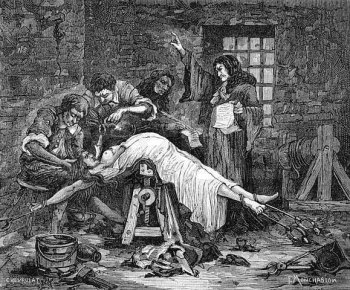
Ethics Bob Asks: “Did Torture Lead Us To Bin Laden”? My Answer: “So What If It Did? It Was Still Wrong.”

It's all for the best.

It’s all for the best.

The last time my friend “Ethics Bob” Stone blogged about ethics, it was way back in August, and he was writing about some guy named “Romney.” Now he’s back on the job, thank goodness, with a comeback post titled “Zero Dark Thirty: Did torture lead us to Osama bin Laden?”. And he’s ticking me off.

“Zero Dark Thirty” is Hollywood’s treatment of the search, apprehension and execution of Osama Bin Laden. The film suggest that methods of torture were employed by the CIA to uncover crucial intelligence that led to the terrorist mastermind’s demise. Torture opponents, including some U.S. Senators, are alarmed by this, and disputing the film’s account. (Imagine that: a movie that misrepresents history!) Meanwhile, conservatives, neocons, Bush administration bitter-enders, talk radio hosts and admirers of Dr. Fu Manchu and James Bond villains are citing the film as confirmation that they were right all along: torture is a wonderful thing.

I am puzzled that Bob got in the middle of this debate as an ethicist. “It worked!” and “It came out all right in the end!” are not valid ethical arguments or justifications. The first is an embrace of a pure “the ends justify the means” rationale, a favorite tool of Auric Goldfinger and Dr. No. The other is consequentialism. When ethicists and principled opponents of torture allow the issue to be adjudicated on this basis, they are surrendering their principles at the outset. “Torture doesn’t work” is a pragmatic argument, not an ethical one. If the societal consensus regarding torture is going to be determined by how much we can benefit by returning to the rack and wheel, then ethical considerations have already been jettisoned. Continue reading