No, Mark Mattioli is Not An Ethics Hero

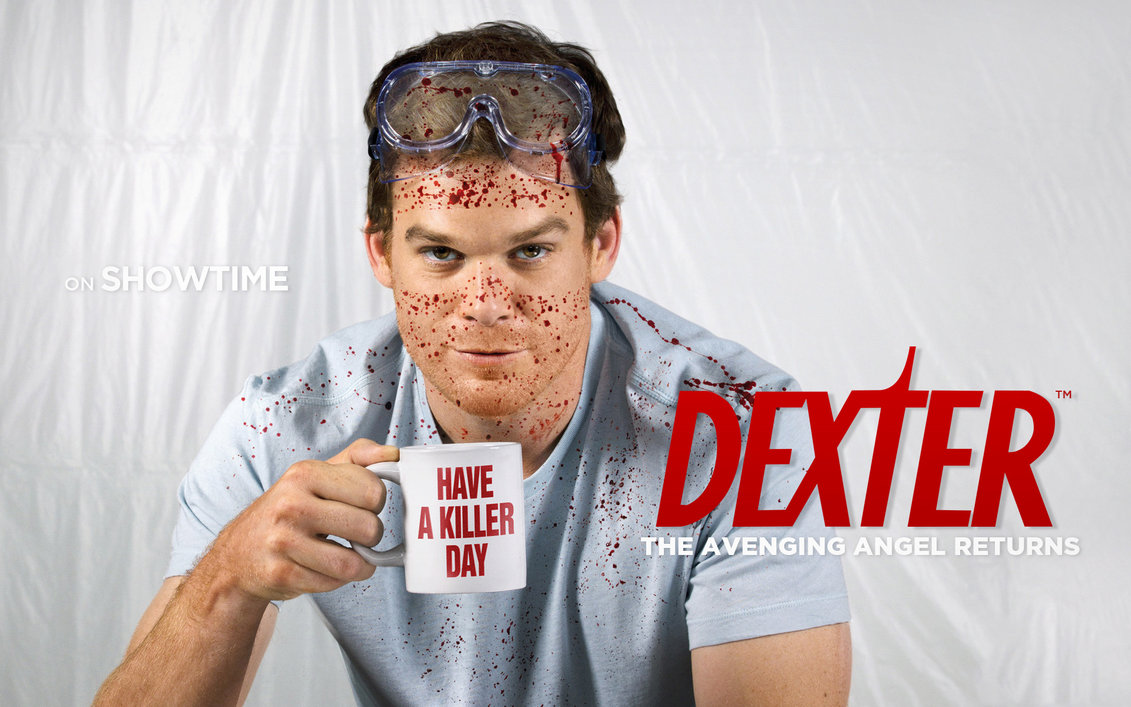
Dexter, for example, is a very civil serial killer.

Dexter, for example, is a very civil serial killer.

I’ve been getting emails from people nominating Mark Mattioli as an Ethics Hero for his comments before a subcommittee of the Connecticut Legislature considering gun control measures following the Newtown, Connecticut school attack. It’s easy to see why they think that is appropriate, since his emotional remarks—he lost his son in the tragedy—sounded ethical themes throughout.  Insisting that more laws were not the solution, Mattioli decried violence on television, and poor parenting. “We need civility across our nation,” he said, and for “common decency to prevail.” He called for accountability, and personal responsibility.  All nice sentiments; he got a standing ovation from the legislators.

Ethics, however, is not some kind of magic wand that fixes all problems, and how Mattioli thinks it will eliminate crazy teens with semi-automatic weapons is beyond me. We heard the “incivility kills” argument once before, you will recall, when the Left and the media went on a “blame Rush Limbaugh and Sarah Palin for Jared Loughner”  rampage of their own.  Mattioli’s lament had all the practical relevance to addressing gun violence as Rodney King’s “Can’t we all get along?” and John Lennon’s “Give peace a chance”…which is to say, none. Continue reading

The Lovers’ Complimentary Meal: An Ethics Tale

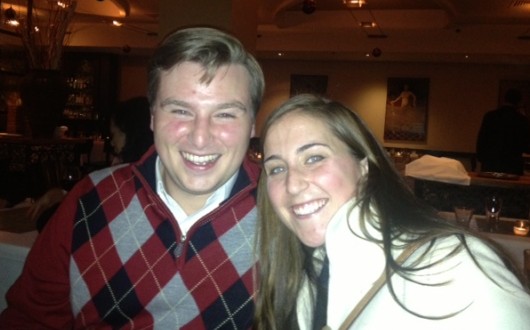
The couple

The couple

On his blog, Virgin Airlines tycoon Richard Branson told a story, reputedly true, that show vividly how kindness and ethical conduct can have far-reaching consequences.

Three years ago, a young couple was dining  in a Boston restaurant about . Their affection for each other was obvious, and it attracted the attention of a friend of Branson’s named Pankaj Shah. He was eating at a nearby table, and is apparently a lovable eccentric who likes to anonymously pay for the meals of strangers when he is dining out. He had asked the restaurant staff that night to let him pay the bill for “the couple who looked most in love.”

It was done. The couple learned that a mysterious benefactor had paid for their romantic rendezvous, and Shah received his usual pleasure from the random act of kindness.

Three years later, Pankaj Shah returned to have dinner at the same establishment.  The manager recognized and approached him, and said that he night be interested to learn that the same couple he had treated  three years before were also in the restaurant. Not only that: the manager revealed that
the “dude just got down on one knee and proposed.” He asked the aspiring groom why they he had chosen his restaurant for this life-changing ritual, and was told  that three years ago, at the same table, some stranger had paid for their meal right out of the blue. The gesture made the couple ponder on the importance of kindness, selflessness and love, and had talked about the incident many times since. He said both he and his girlfriend had been inspired to be better, more caring, ethical people as a result, and he felt that the place where this epiphanal event occurred would be the perfect place to propose.

The manager introduced them to Shah, who attended their wedding.

It seems that the couple has preferred to stay anonymous, and hell, I don’t know if the story is really true. That couple in the photo on Branson’s blog may be friends of Manti Te’o, if you get my meaning.

But I hope it is true. It should be.

It could be.

And its lesson is true, regardless.

________________________________

Pointer and Source: Cafe Mom

Facts and Graphic: Richard Branson

Facts: Richard Branson

Consequentialism, Bias, Moral Luck and Malpractice on PBS’s “Downton Abbey”

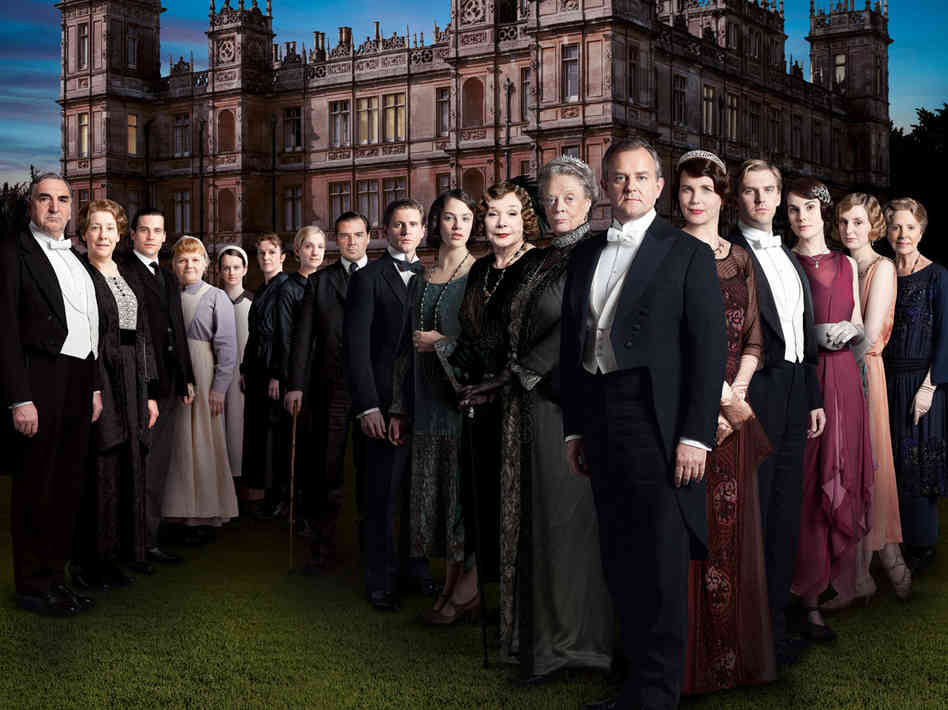
downton_abbey

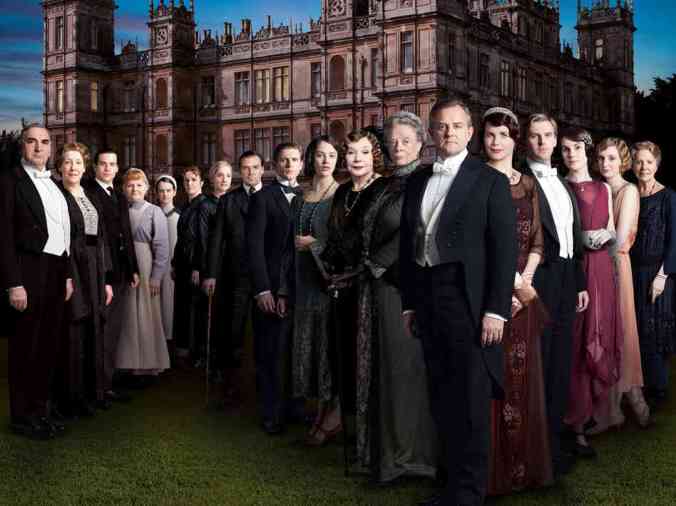
The fourth episode of the PBS sensation “Downton Abbey” provided a clinical examination of how bias of all kinds can rule the most important decisions in our lives, and how moral luck so frequently determines our conclusions about whether those decisions were right, wrong, or really, really wrong. It also shed some light on the  current policy conundrum of how best to consider medical malpractice suits—as a fair and necessary means of rewarding the victims of professional errors, or as a decidedly unfair device that distorts the practice of medicine and inflates its costs without improving treatment.

For those who have not caught the trans-Atlantic mania of following the saga of the Earl of Grantham and his extended family as they try to maintain their life of luxury as members of the landed aristocracy post-World War I, here are the relevant plot points of the most recent episode (in the U.S.; Great Britain is a season ahead of us):

Sybil, the much loved but rebellious daughter of the Earl is staying at the family estate (all right, castle) as she prepares for childbirth. (She and her Irish revolutionary husband Tom are on the lam from British authorities, but never mind that). The Earl naturally wants the best medical care for his daughter, and rejects the long-time family physician, Dr. Clarkson, for the task, because he has made some faulty diagnoses of late that led to all kinds of sorrow in last season’s drama. So the Earl calls in a renowned surgeon to the upper crust who is upper crust himself, Sir Philip Tapsell. (He appears to be an arrogant, pompous jerk, but the show’s writers show him giving sage and well-worded advice to the Earl’s non-Irish revolutionary son-in-law on the delicate matter of his sperm count, so we know he’s not a fraud as well.)

The Earl’s American but far too deferential wife Cora (in case you wondered whatever happened to the cute Elizabeth McGovern from “Ordinary People,” the answer is, “This!”) seeks to rescue Dr. Clarkson from a stinging snub by insisting that he come to Downton Abbey and be present for the childbirth as what we would call a consulting physician to Sir Philip, who doesn’t want one. Two head-strong doctors and hostile doctors looking after the same patient—yes, this will work out well.

Sure enough, Sybil’s pregnancy takes an ominous turn. Her ankles are swollen (“Perhaps she has thick ankles!” huffs Sir Philip, pooh-poohing the symptom. “She does not!” replies loyal Dr. Clarkson), her mental state is confused, and there is protein in her blood. Clarkson concludes that Sybil is toxemic and believes she could suffer eclampsia if she isn’t taken to the hospital immediately for a Caesarian section. Sir Philip dismisses him as a hysteric hack, and insists that Sybil’s pregnancy is normal and fine. Since Caesarians were risky in the 1920’s, often resulting in the deaths of the mother, the baby, or both, he believes Dr. Clarkson is giving irresponsible advice. As critical minutes tick away, Lord Grantham asks Clarkson if he can guarantee that Sybil will survive the ordeal of a Caesarian. “There are no guarantees,” he replies, correctly. Not hearing what he wanted to hear, the worried father turns to Sir Phillip and asks how certain the blue-blood doc is that the operation is unnecessary. “Completely certain,” is the ridiculous reply.

Announcing that certainty is a better bet than equivocation, Lord Grantham decrees that Sybil will remain at the castle to have her child, which she promptly does. All seems to be well, too, with a healthy baby, a beaming mother, a relieved family, and a smugly gloating Sir Phillip. But then Sybil goes into the violent seizures characteristic of eclampsia, and it is too late to save her. She dies. Dr. Clarkson’s diagnosis was correct. The family is devastated; Sir Philip is stunned, Cora is furious at both him and her husband, and the Earl of Grantham is feeling guilty.

Got that?

Cora’s anger, the Earl’s guilt and the vindication of Dr. Clarkson are all the result of a bad-tasting recipe of hindsight bias and moral luck. Sybil might have not gone into convulsions. She might not have survived the Caesarian, in which case Dr. Clarkson would be the one looking incompetent, Sir Phillip would say “I told you so,” and Cora would be furious at a different doctor but the same decision-maker, her husband, who would still be sleeping in the guest room. Continue reading

How Fake Statistics Become “True”: A Case Study From The Newtown Massacre Ethics Train Wreck

As predicted, this ethics train wreck keep getting bigger.

As predicted, this ethics train wreck keep getting bigger.

There was a lot to wince about in Diane Sawyer’s “exclusive” interview two weeks ago with former Congresswoman Gabriella Giffords and her husband, Mark Kelly. The Arizona couple announced their intention to launch a non-profit organization dedicated to more effective anti-gun violence measures, concentrating, predictably, on the prominent features of the maniac’s rampage in Tucson that left Giffords with brain injuries that will impede her for a lifetime. Nothing to wince about regarding the effort, but Giffords’ diminished state—she can speak in only short burst of words, cannot see well out of one eye, and has difficulty walking—is tragic. It reminded me how unconscionable it was that she held her post in the Congress for more than a year when it should have been clear that her disabilities precluded her functioning as a Representative. The disturbing feeling also arose that Giffords, in her current pathetic condition, is now like the children President Obama used as window dressing for his gun-related Executive Orders announcement at the White House, an exploited figure of sentiment and public manipulation being used in the anti-gun wars. Her name was listed as the author of a first person op-ed in USA Today that contained sentences and perhaps thoughts that she cannot possibly compose. Diane Sawyer told us that she will be dragged into Congressional offices with her husband to seek support from her former colleagues, who will be forced, as Sawyer said, to say no “to her face.”

The most substantive wince, however, came from a statement of “fact” by Mark Kelly, who told Sawyer this:

“You know, how do we get to the point where 85 percent of the children in the world that are killed with guns are killed in the United States. That is a sobering statistic.”

Sobering, and obviously nonsense. Continue reading

Bad Management As A Virtue: Cory Booker’s Message To Idiots

The Mayor of Newark has a strange job description...

The Mayor of Newark has an overly broad job description…

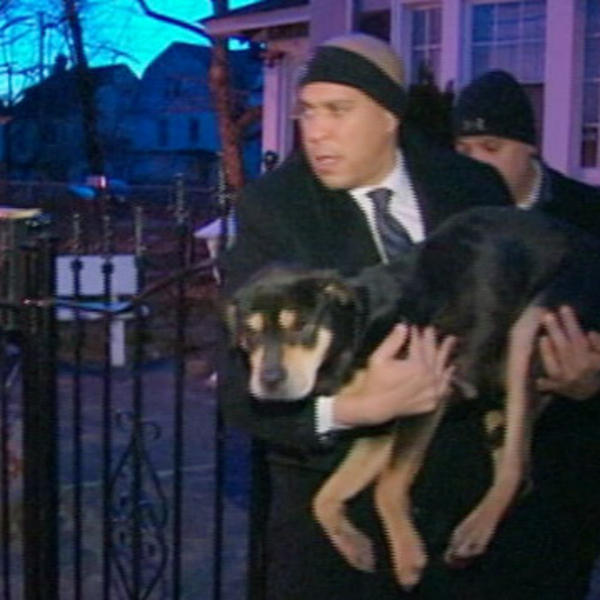
I came close to giving Newark Mayor Cory Booker the “Incompetent Elected Official of the Month ” designation for his well-publicized stunt of rescuing a freezing puppy from the cold. I decided it would be unfair. An executive who wastes his or her time doing the jobs of others is indeed incompetent, not to mention inefficient, wasteful, and dumb, but that’s really not what Booker was doing. What he was doing was shamelessly sucking up to dim-bulb voters who are impressed with silly PR maneuvers like this rather than actual job performance.

To a moderately intelligent, informed citizen of Newark, a mayor interrupting his day to do what the city pays animal control workers a fraction of what he earns to do more responsibly would be an indictment of that mayor’s priorities, time-management skills, and judgment. To an idiot, it means that the mayor is a real swell guy who loves animals and is running willy-nilly all over the city, leaping tall building in a single bound—a hero! Booker has apparently made the calculation that Newark has more idiots than moderately intelligent, informed citizens, so his conduct was an insult as well. Or maybe he’s right.

The public’s grasp of what their elected leaders actually do is tenuous enough without elected officials like Booker intentionally adding to their ignorance. To be fair, he is an activist, hands-on leader who has engaged in genuine and appropriate acts of generosity, kindness and bravery. He should not, however, be rescuing kittens from trees or dogs from the cold, rushing to answer 911 calls or cleaning the streets. The taxpayers are already paying people to do those things. His job is to be mayor, and Newark needs one, full-time. If he has so much time on his hands that he’s doing the jobs of other city employees, then he’s neglecting his own responsibilities.

BAD mayor! BAD!

_____________________________________

Sources: News One, Time

New Mexico Abortion Wars: Yes, It’s A Terrible Law, But Not A Terribly Unethical One

Paving the road to hell? New Mexico lawmaker Cathrynn Brown

Paving the road to hell? New Mexico lawmaker Cathrynn Brown

My friend (and Ethics Alarms Ethics Blogger of the Year) Rick Jones went full-Django on New Mexico State Legislator  Cathrynn Brown for her proposed, now withdrawn, measure forbidding women who are pregnant as the result of incest or rape from getting an abortion on the theory that it constitutes “destruction of evidence.” The attempt launched Rick into rare form:

“Every once in a while someone mixes up a cocktail of such mind-melting stupidity, monumental inconsistency, and transcendent arrogance that there is little for the rest of us to do but drop everything and gaze in slack-jawed wonderment at the inanity before us. Behold, therefore, one Cathrynn Brown (right), a New Mexico legislator whose latest bill rockets off the scale, leaving “moronic” and “horrific” as feeble understatements of the idiocy involved.”

Whoa, Nelly!

Let’s calm ourselves and consider, shall we? Continue reading

“The Judge in the Hat” (With Apologies To Dr. Seuss)

antonin-scalia hat

The sun did not shine.

Inaugurations are gray.

So reporters sat mocking the people that day.

Senator Claire McCaskill tweeted just what they said.

“Why does Justice Scalia have THAT on his head?”

“It’s a beret on steroids!” one journalist claimed.

“It’s so floppy! It’s silly! He should be ashamed!”

But the mockers just showed what they’d proven  before:

They are dim wits, for the hat honored Sir Thomas More. 

It is seen on his portrait, sitting right on his hair,

And Scalia had chosen his fashion with care.

Brave Sir Thomas fought power abused by a king,

And he died fighting tyranny, beheaded one spring.

For Scalia to emulate More on this day

Meant his hat was a message, and not just some beret.

He was telling this President, as More might have said it,

“Keep abusing your powers, and you will regret it.

Obamacare skated when Roberts’ mind quit,

But  we’ll fight for the Founders, don’t you doubt it one bit!” 

It was clever of Nino, and audacious, and tough

To choose this event to declare, “That’s enough!”

And in such a sly way that he certainly knew

Would go over the heads of all but a few.

Still I’m sorry to say, but I’d say to his face,

“Mister Justice, that symbol was just out of place.

The swearing in isn’t the place for defiance; 

You were bound to show loyalty, just not compliance.”

So as much as I honor More’s ethics and fight,

For Scalia to wear his hat then…

Wasn’t right!

thomas-more

Bizarro World Ethics in North Carolina

bizarro_world

Also known as “North Carolina”…

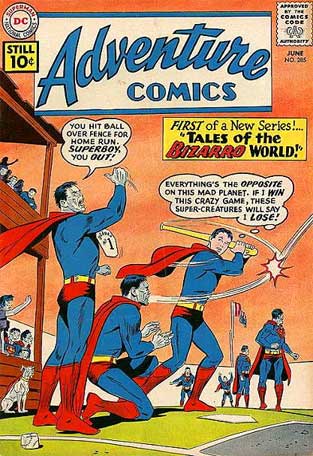
The Bizarro planet, occasionally mentioned on “Seinfeld,” was a humorous feature in Superman comics, a cube-shaped planet populated by flawed clones of Superman and Lois Lane. Nothing made sense on the Bizaaro world, since its denizens were sub-cretinous, their traditions absurd, and their logic inverted. They threw away food and ate the plates—that sort of thing, hilarious if you’re a nine-year old boy in 1962.

I sometimes refer to “Bizarro World ethics,” which invokes the principle that it is difficult, if not impossible, to be ethical in a culture where a lack of ethics is the norm, just as behaving normally with Bizarro Supie and Bizarro Lois would be rude and confusing to them. This is the dilemma facing North Carolina, which is apparently trying to devise an ethical way to run a state lottery. That is a hopeless goal. It is like insisting on clean mud-wrestling, non-violent Jason Statham films, or healthy junk food. State-run lotteries are by definition unethical. The states that run them, and almost all do, have traded principle for encouraging and endorsing activities they once declared harmful and criminal, as a cowardly way to acquire revenue without paying the political price of raising taxes.

By doing this, they… Continue reading

Ethics Hero: Bindi the Jungle Girl

Bindi Irwin,posing with an American politician

Bindi Irwin,posing with an American politician

It shouldn’t surprise us that 14-year-old Bindi Irwin, a.k.a. “Bindi the Jungle Girl”, has the stuff of ethics heroism. After all, she is the daughter of Steve Irwin, the late lamented “Crocodile Hunter,” and his intrepid wife, Terri Irwin. She has also been hosting her own Australian TV show since she was 7, in which Bindi regularly faces-off with the same nasty critters that amused her father so.

But Bindi’s heroism doesn’t involve crocodiles on this occasion, but rather the treachery and deceit of American politics. She was asked to write an article about protecting the environment for Secretary of State Hillary Clinton’s e-journal. (I’m not sure why this is a topic for discussion by the Secretary of State, but never mind.) After spending many hours of school time writing the piece for the “Go Wild – Coming Together for Conservation” edition of the newsletter last month, Bindi received the edited version of her 1000 word essay from State and found that it was drastically changed to the point of being rewritten completely.  ( You can read the original essay—which isn’t bad at all—here, and the re-written one, on a substantially different topic, here. She refused to let it be published with her name as author, withdrew it, and called foul to the Australian press.

This is called integrity. It is a rare and exotic breed in today’s Washington, D.C. Continue reading

Playwright David Mamet on Abuse of Power, Government and Gun Control

Mamet

I have wrestled over whether to feature Pulitzer Prize winning playwright ( author, screenwriter, director, teacher) David Mamet’s recent essay in what is left of Newsweek on Ethics Alarms. The essay is at least 50% political/ideological, maybe more, and I try, often unsuccessfully, to keep the ethical analysis of political events as separate as possible from the political analysis—some would argue not hard enough, and not well. I also don’t agree with a lot of his piece, but that’s the least important factor. I decided that the essay, titled “Gun Laws and the Fools of Chelm” belongs here because I know, from his plays, his screenplays and his essays, that Mamet is driven by a pursuit of ethical thought and action, and it is a theme underlying most of what he writes. He is also a vivid and expressive writer, one of the very best alive, in my view. Mamet is blisteringly smart as well. That doesn’t mean he is always right—he is, after all, a conservative, and in the prevailing view that puts his presumed  brain capacity somewhere between Hulk Hogan and Todd Akin—but he is always thoughtful, and to those few with open minds and good reading comprehension, potentially persuasive and necessarily enlightening.

Mamet’s essay is relevant to current events, of course, due to the sweeping gun ownership restrictions being proposed by Sen. Diane Feinstein, and the hysterical over-reaction to the Newtown tragedy, fanned by a shameless media and demagogues of all stripes that cleared the way for it. I’ve written plenty about all that already, alas not as well as David Mamet could. I am less alarmed at the prospect of Feinstein’s effort succeeding (because it won’t) than I am at what its sudden leap to the fore of Obama Administration priorities indicates beyond question: these people really have no intention of taking any serious, responsible and courageous efforts to address the debt and deficit. To only slightly paraphrase the excitable Matt Hooper in “Jaws” speaking to the pusillanimous mayor of Amity,  I think that I am now familiar with the fact that our current leaders  are going to ignore this particular problem until it swims up and bites us on the ass. This is unconscionable, incompetent, weak and despicable…but I digress.

The money quote in Mamet’s essay, I think, is this:

“Disarmament rests on the assumption that all people are good, and, basically, want the same things. But if all people were basically good, why would we, increasingly, pass more and more elaborate laws? The individual is not only best qualified to provide his own personal defense, he is the only one qualified to do so: and his right to do so is guaranteed by the Constitution.”

What ever your thoughts are regarding gun control policies, you should read Mr. Mamet’s essay, and you can, here.

___________________________________

Graphic: All Music