A Lifetime Ethics Train Wreck: The Ongoing Tragedy Of Patterson and Georgia Inman

Inman twins

I was sent this horrifying story under the heading of “Ethics Train Wreck,” and a better description of it there could not be. It is the tale of the twin teenaged heirs to the massive Doris Duke fortune,Patrick and Georgia Inman, their miserable upbringing and the continuing instability of their lives, soon to be dominated by lawsuits and litigation. The twins have been alternately spoiled, neglected, and abused, and are desperately seeking some direction in their lives before their mega-trust funds kick in—if they can survive that long. Moreover, their existence is almost sure to get worse before it gets better, if it ever does.

Consider, for example, this ominous passage, late in the piece, referring to the plans of their inept mother, Daisha:

The kids need to figure out what comes next for them – how they can start creating a life for themselves, and connect with others. Daisha has devised what she thinks is a terrific idea for an appropriate new set of playmates: She’s working on getting the twins together with Michael Jackson’s kids, with whom she thinks they’d have tons in common. “Wouldn’t that be historic? The Jacksons and the Dukes, two of the most famous names, together?” Daisha asks. Continue reading

Yes, The Best Criminal Defense Lawyers Represent The Worst People. Or You.

When your life is at stake and you need help, don't screw around.

When your life is at stake and you need help, don’t screw around.

The degree to which the average American, even the average educated American, even the average educated and rational American, is ignorant about the ethical mandates and structure of the legal profession and the justice system is by turns shocking, depressing, and frightening. The consequences of this ignorance, for which the legal profession itself is largely to blame, bursts forth in all their ugly splendor after the acquittal of a Casey Anthony or, even more disturbingly, a George Zimmerman. Well meaning members of the public, who are nicely represented in this Ethics Alarms thread, think they are declaring their support for justice when they advocate cutting through all the troublesome bureaucracy and making sure what “everyone knows” is the correct result happens, and process be damned. Just do the right thing! How hard can that be?  This blogger, for example, has it all figured out. Leave it to him and people of a like mind, and we’ll have a police state in no time. Continue reading

Ethics Dunce: Harvard’s Institute of Politics

Thank God Clinton is a Yalie...

Thank God Clinton is a Yalie…

From the Harvard Gazette (Full disclosure: My parents met at Harvard, so I owe Harvard my life, literally. My mother worked in the Harvard administration f0r 25 years, and I (C 1972, American Government), my sister and my father all graduated from the college):

“IOP [ Institute Of Politics] fall visiting fellows include Hilda L. Solis, former U.S. labor secretary (2009-13) and U.S. representative (CA-32nd, D; 2001-09) and Antonio Villaraigosa, two-term mayor of Los Angeles (2005-13). Visiting fellows traditionally meet with student groups; lead discussion groups on topical issues and their experiences in public and political service; and participate in public policy classes.”

Antonio Villaraigosa engaged in exactly the kinds of unethical practices that Harvard is supposed to be training leaders to eschew. He is neither academically distinguished (he flunked the bar four times) nor an appropriate role model, and for Harvard to intentionally expose its students to a repeat ethics violator like Villaraigosa is a breach of trust and responsibility. It is ethically indefensible.

Right now, I am in a state, Virginia, where the Republican governor, Bob McDonnell, has been exposed for accepting unreported gifts. While mayor, Villaraigosa set the record for the largest ethics fine levied in California state history $41,849 — for failing to disclose about $42,ooo in free tickets he received to Los Angeles Lakers games, the finals of “American Idol” and more than two dozen other sports and entertainment events. Accepting gifts and not reporting them provides the slippery slope to bribery, and involves the use of an official position for personal advantage. Continue reading

Clown Act: The Dumbest Ethics Train Wreck Of All

deluxe-barack-obama-mask

I had hoped that I wouldn’t have to write about this.

Unfortunately, the saga of the Obama-mocking rodeo clown has, against my fervent hopes, turned into a full-fledged ethics train wreck. The diagnosis was complete once the Missouri chapter of the NAACP decided to disgrace itself, its parent organization’s mission and its supposed dedication to civil rights by calling for a Secret Service investigation into the incident, which Ken White posted on definitively here.

The Horror: someone mocked the President!  And because this President is black, and because his supporters have continually tried to use his pigmentation  (which should have no impact whatsoever on how he is treated, respected and judged, which is to say, like every other President) to shield him from unrestrained criticism, opposition, responsibility, accountability and satire, a crude comedy act in a setting where crude comedy is  the norm (a rodeo is hardly the Algonquin Round Table) has been turned into a full-fledged exercise in chilling political speech by intimidation. Continue reading

Jonathan Capehart’s Confrontation Against Bigotry: Better Than Nothing, But Not Enough

confrontationWashington Post writer Jonathan Capehart shared a personal experience in a column today. Attending an aunt’s funeral in  church in the North Carolina community of her birth, he sat fuming as a guest minister used the occasion to condemn all gays as sinners, and urging them to use faith to give up their sinful ways.

Capehart, who is openly gay, decided that he was obligated not to accept this insult without a response. Here is what he did:

“After the visiting preacher was thanked for his rousing sermon by the congregation and the home pastor, the two made their way to us in the  front pew. During his oration, I vowed I would not shake his hand. But I did, given the immediate circumstances. So I used that as opportunity to make my displeasure known. As he shook my hand and leaned down for a sympathetic hug, I told the preacher, “Your sermon was offensive!” He leaned back, looked at me and replied, “What?” I repeated, “Your sermon was offensive to me. I need you to know that. That’s all I have to say.”

That seemed to satisfy Capehart. “As he moved his way down the pew, the anger I felt was replaced by relief and pride. Never before had I faced down religion-based bigotry. And it felt great.”

I feel terrible for Capehart having to endure such an indignity, and I’m glad what he did  made him feel better. But in no way did he “face down religious bigotry,” and I agree that facing down religious bigotry was called for. What did he do, really? He told the reverend that he was offended. He didn’t even say why he was offended. Continue reading

Language Ethics: Letting The Inarticulate Control Expression

literally

I know, I know.

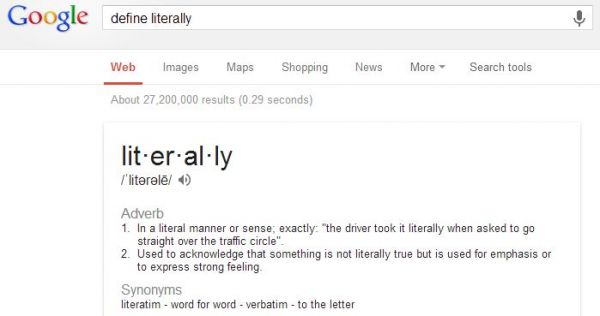
Tell me about how the English language is dynamic. Next, “irregardless” will be in the dictionary—heck, maybe it is already; I’m afraid to look. Baloney. The fact that “everybody does it,” defined as “people in high places, like Joe Biden, who should know better but don’t,” does not justify treating inarticulate, lazy, careless, embarrassingly stupid language as acceptable. If “literally” means figuratively, then nothing means literally. When someone says that “her marriage was literally destroyed,” thanks to Google and the rest, the only way we know whether her marriage was destroyed or not is if we can find out whether or not the speaker is literate, and maybe not even then.

Call me a stickler, call me a crank, but making the public dumber and communication harder by declaring that those who are poor speakers and lazy thinkers are right and those who champion expressive and accurate language are wrong is not ethical. It is literally irresponsible.

_______________________________

Pointer: Fark

Ethics Quiz (And a Poll!) : The Fan, The Girl, and The Grope

I wrestled with whether it was ethical to show this video or  just link to it on another website instead. I have, as you might have surmised by now, an ethical objection to the practice of taking videos, photographs or recordings of people without their knowledge or permission and publicizing them, and that objection is intensified when it is done for the purpose of embarrassing them or shaming them, unless the conduct is illegal or so unquestionably vile that society is obligated to issue an objection in the strongest terms possible. I think that the borderline episodes of this are  important to discuss and yet it is difficult to do that without aiding and abetting what may be unethical conduct, as I help publicize what perhaps should have been left private.

I haven’t resolved this dilemma. When a video has gone viral, as this one has (as well as another I show here), I think that the impact of my embedding the clip in order to discuss it is minimal, and that the value of presenting the actual video for readers to see outbalances the harm to the victim/victims, if that’s what they are, of posting it on one more site on the web among many. I invite opinions to the contrary. (In the instant case, I should note, the episode was inadvertently captured by a TV cameraman—he shot what he thought was a sleeping fan, and then the copping and feeling began—and broadcast live. Someone else then put the touching moment online.)

With that introduction, here is the video, YouTubed and picked up by Gawker (naturally) as well as many other sites. It shows a male fan at a Yankee game with a sleeping or otherwise unconscious young woman resting her head on his chest. While she sleeps, he appears to fondle her breast, thus spawning endless leering references, since it was at a ballgame, of “stealing second.” We do not know whether the young woman was a stranger who collapsed his way (this actually happened to me once, and at a ballgame, so it’s not that far-fetched), a friend, his wife, his girlfriend, or, as some disturbed individual on one site suggested, his sister.

For the sake of this quiz, we will assume they are a couple. YouTube pulled the video I had embedded, so to see the action, go here.

All set?

Your Ethics Alarms Ethics Quiz today is…

Assuming this was the fan’s wife or girlfriend, was it unethical for him to cop a feel, in public, while she was unconscious? Continue reading

“Studies Prove BMW Drivers Are Jerks”….And So It Begins

"Look at THAT jerk. What's he up to, I wonder?"

“Look at THAT jerk. What’s he up to, I wonder?”

If you would like to ponder on how prejudices, stereotypes and bias worm their way into our brains, look no further than here, a Yahoo! report, via the Wall Street Journal, about how research backs up the widespread belief that drivers of BMWs are jerks. (Full disclosure: my son drives an old BMW, and loves it dearly. I love it less, because repairing the damn thing has required me to moonlight by entertaining at kids’ birthday parties and rodeos…)

Various studies, we are told, show drivers of the car are less likely to yield to pedestrians in crosswalks and to take the upper hand at four-way stops. In addition,

“…in the U.K., motorists were asked to identify the make and color of the car from which they have most frequently suffered road-rage incidents…The study of 2,837 motorists found men between the ages of 35 and 50 driving blue BMWs were most likely to be reported as having engaged in road-rage behaviors such as aggressive driving and swearing.” Continue reading

Exemplary Ethical Conduct I’m Embarrassed I Didn’t Know About Dept.: Jonas Salk and Albert Sabin

Salk and Sabin

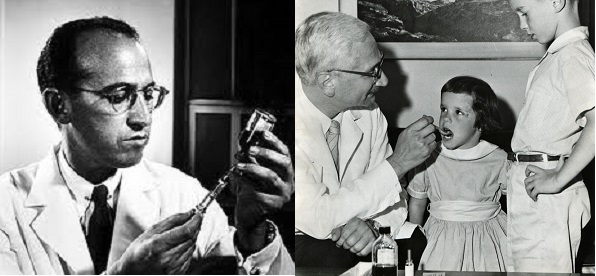
Salk and Sabin, true professionals. Did you know?

You learn the damnedest things in the damnedest places, which is a good reason to keep your ears open wherever you may be.

Last night I found myself listening to Michael Savage, easily the most offensive of all conservative talk show hosts, and he gives Rush and Mark Levine a run for their money in the ego category, too. I only listen to Savage by accident, and then only in bites of five minutes or less; it frightens me that millions of people might be influenced by such consistently hateful commentary.

But Savage (whose real name is Michael Alan Weiner) is no dummy, and not infrequently goes off on learned tangents about philosophy, history or religion in between declaring that the nation is under Nazi rule. Yesterday, just as I was reaching for the dial, he disclosed that one of his heroes growing up was Jonas Salk, not because he invented the first effective polio vaccine, but because he refused to patent it, and gave it to the world for the benefit of humanity. A bit later, Savage noted that Albert Sabin, Salk’s bitter rival who later invented the oral vaccine, also declined to profit from his invention.

Could all this be true, I wondered?  If it is true, why did I not know about it? Why doesn’t everybody know about it? Continue reading

A Handbook For Manipulation and Deceit, Rationalizations Included

PreventingGunViolence

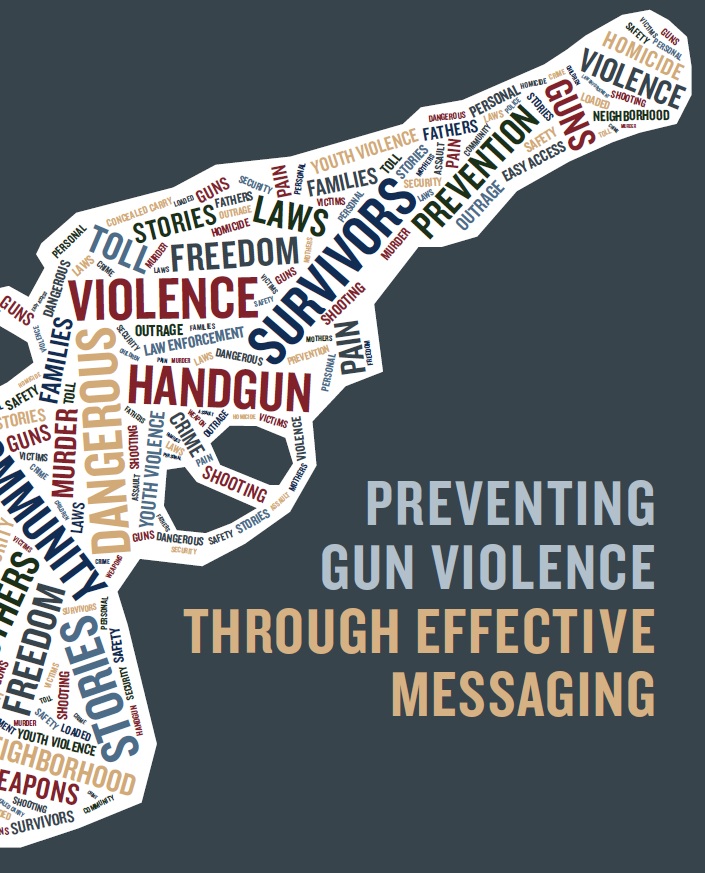
This wasn’t considered newsworthy by the mainstream media, and that alone is worthy of some pondering: a 70-plus page how-to guide titled “Preventing Gun Violence Through Effective Messaging” has surfaced, produced last year by the Washington, D.C.-based firm of Greenberg Quinlan Rosner.* The guide is a political strategy lesson for anti-gun advocacy, and its favored tactics involve emphasizing emotional hot-buttons over rational discourse and informative debate. The manual was produced, it appears, for the Seattle-based Washington Alliance for Gun Responsibility (WAGR) before the Sandy Hook tragedy, but its advice tracks in every way with the approach employed by Democrats, including President Obama, during the disgraceful rush to exploit public horror over the shooting in an effort to pass strong anti-gun measures in the states and nationally.

Of course this is newsworthy. The public is the target of manipulation, deception and persuasion tactics that are designed to provoke half-baked opinions and positions based on emotion rather than rational analysis. If the public recognizes such tactics as the cynical ploys they are, such tactics will not be as effective. Such tactics shouldn’t be effective, and should be employed by honest, ethical advocates on any side of any issue. The mainstream media chose not to publicize the manual because 1) most reporters agree with the manual’s objective, and 2) the mainstream media eagerly facilitated the unethical methods recommended, and will probably continue to do so.

“The debate over gun violence in America is periodically punctuated by high-profile gun violence incidents including Columbine, Virginia Tech, Tucson, the Trayvon Martin killing, Aurora, and Oak Creek,” the guide points out. “When an incident such as these attracts sustained media attention, it creates a unique climate for our communications efforts.”  Early on, the document it makes it clear that the “communication efforts” must always concentrate on stirring up emotions, not relying on facts or engaging in substantive debate. “A high-profile gun violence incident temporarily draws more people into the conversation about gun violence. We should rely on emotionally powerful language, feelings and images to bring home the terrible impact of gun violence.”

For example,  the guide addresses Stand Your Ground laws and advises substituting pejorative (and misleading) descriptions like  “Shoot First” and “Kill at Will,” asserting that these terms are “more accurate and persuasive.” At every turn, the guide cautions against getting bogged down in potentially nuanced statistics and facts, and urges anti-gun advocates to overwhelm any efforts at balancing or considering pros and cons with talking points based on  emotion salted with one-sided, group-tested statistics and generalities...”The core frame should be personal and emotional—centered on ‘people’ and not on facts, laws, or legislation.”  The top things to remember, cautions the guide,

#1: ALWAYS START WITH THE PAIN AND ANGUISH THAT GUN VIOLENCE BRINGS INTO PEOPLE’S LIVES

#2: USE STATISTICS TO REINFORCE AN EMOTIONAL ARGUMENT, NOT TO REPLACE IT.

Recommended phrases to use in forums and interviews include,

  • “It breaks my heart that every day in our country (state or city) children wake up worried and frightened about getting shot.”
  • “Just imagine the pain that a mother or father feels when their young child is gunned down.”
  • ” The real outrage – the thing that makes this violence so unforgivable – is that we know how to stop it and we’re not getting it done”

To the authors of the guide, effective persuasion “means emphasizing emotion over policy prescriptions, keeping our facts and our case simple and direct, and avoiding arguments that leave people thinking they don’t know enough about the topic to weigh in.”

That’s right, keep them ignorant and thinking that they aren’t. It’s the American way.

The guide is professional and well-thought out. It is certainly a useful document for any advocate to study before going on a talk show, or before drafting remarks at a rally, and it is obvious that this is exactly what such advocates do, if not with this document, then with similar ones. It is creepy to read line after line that is immediately recognizable as an endlessly repeated “talking point” during the Trayvon Martin uproar and the Sandy Hook aftermath. The manual also could grow cynicism on a rock. There is nothing honest or genuine about the political and policy-making process that the guide presupposes and attempts to control. There is nothing productive either. The objective is only to win—to get a desired policy initiative past the stage where public support is important and into the back rooms where the deals can be cut . You know that there was an equivalent document during the Affordable Health Care Act. These are blueprints for rushing policies into law, not for educating the public or fairly exploring complex issues before taking giant leaps of faith. They are, in short, instruction books on how to exploit the ignorance of the American people and distort the democratic process.

This is a bi-partisan practice, of course. The only difference between this guide and those produced by conservative consultants is that if one of those was found, the mainstream media would have reported it, Media Matters would have announced that it was a smoking gun document showing how evil Republicans corrupt America with their lies, and on MSNBC, Lawrence O’Donnell would have smirked over it for a week.

The number of rationalizations at the ready, therefore, begin powerfully with “Everybody does it” (#1 on the Rationalizations list). So is, as a direct result, #2, “They’re just as bad” and #7, “Tit for tat,” Such a document and the politics behind it also invokes #3, Consequentialism, and #4, Marion Barry’s favorite, “If it’s legal, it’s ethical.”  It employs # 11, the Dissonance Drag, since the reason it will be deemed acceptable by anti-gun types is because they happen to like the people using the strategy; if the same document outlined the NRA’s approach, they would sincerely and passionately feel it was despicable.

It is the very embodiment of The Saint’s Excuse (#12), otherwise known as “It’s for a good cause,” as well as #13, Self-Validating Virtue. #17,  Hamm’s Excuse or “It wasn’t my fault,” is one of the predictable responses to criticism: “Hey, this is how the game is played. We didn’t make these rules; this has been going on for decades. Don’t blame us!”  My least favorite rationalization of all, #22, Comparative Virtue,  “There are worse things,” is also in play; so is “We have no choice” (because the evil NRA keeps buying legislators and rational debate doesn’t work!), # 24#27, “These are not ordinary times!” is a natural, of course.  So is #30, The Troublesome Luxury, usually expressed as “Ethics is a luxury we can’t afford right now!”

Politics being politics, it’s perfect for #31, The Unethical Role Model, as in “Thomas Jefferson/Abe Lincoln/ Jack Kennedy would have done the same thing.” Heck…A new book suggests Jesus might have done the same thing!

Fourteen out of thirty-two possible rationalizations is an impressive arsenal, all right, but they are still rationalizations for what is a Machiavellian, “the ends justifies the means,” “by any means necessary,” unethical strategy that intentionally aims at the weaknesses of democracy and exploits them through the cynical use of psychology, manipulation, and deceit. Yeah, I know, it works, just as so many methods used by governments and interest groups to deceive the public and warp their perceptions have worked and work still.

That’s not really working, though, is it now? Causing a system designed to involve an informed and rational citizenry  to malfunction by exploiting laziness, ignorance and hysteria isn’t working, just because it succeeds. In fact, such tactics result in the kind of politics and government we have right now.

That is called, not working, but failing.

* According to the guide, Quinlan was part of “a team of communicators” with “decades of experience advising organizations on message development and strategic communications.” Other members of this team were Frank O’Brien, creative director and founder of OMP, another Washington, D.C.-based firm, and Jeff Neffinger and Matthew Kohut at KNP Communications, also headquartered in Washington, D.C. Among GQR’s clients are the Mayors Against Illegal Guns, the Joyce Foundation, several state education associations, Defenders of Wildlife, National Public Radio and the Sierra Club. Among OMP’s clients are Planned Parenthood of America and the Natural Resources Defense Council.

_______________________________________

Sources: WSJ, Washington Examiner, Examiner