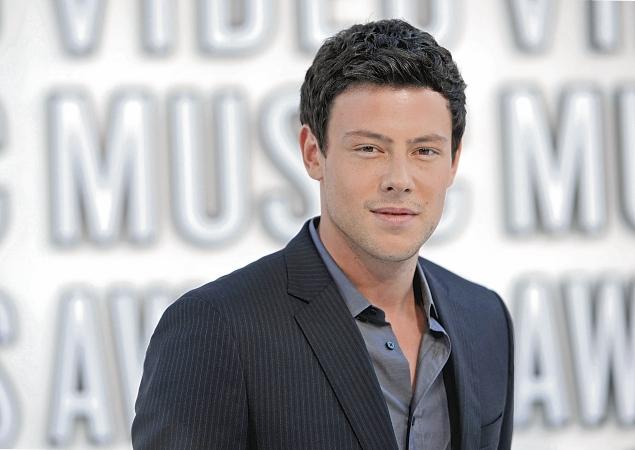
Quick, now…and no cheating: Who is this recently deceased TV legend?
Three separate organizations present the Emmy Awards: the Academy of Television Arts & Sciences (ATAS), the National Academy of Television Arts & Sciences (NATAS), and the International Academy of Television Arts & Sciences. Each is dedicated to the television industry, and the award the organizations collaborate to hand out for excellence are intended to serve multiple objectives. Prime among them is to honor and promote the professionals who bring—in theory, at least, quality entertainment into the homes of Americans. The show itself that broadcasts the awards only exists because of their larger mission, which is to say that the Emmy show exists to support the Emmys, not the other way around. The program’s producers, not for the first time, managed to forget their priorities this year, and are getting well-deserved scorn for it both in and outside the entertainment community.
The offense occurred during Sunday’s live telecast, when the show reached its annual “In Memoriam” segment. The Oscars have botched this crucial part of its own show in recent years by failing to recognize the deaths of important Hollywood figures who deserved their final bow and a last ovation. Emmy found a new and different way to insult its own. The Oscars’ omissions were negligent; the Emmys insult was, incredibly, intentional. It’s just that either nobody realized it was insulting, or, more likely, they knew but had other objectives.
This year, the three Academies singled out five of the deceased for special tribute, or “special superstar tributes,” as the show’s opening teaser put it. Naturally, the choices made an unspoken, and guaranteed to be controversial, assertion that of all the important artists and stars who had perished since the 2012 awards, these were the most deserving, and the rest, noted by a rushed montage of photos, less so. Making such a subjective distinction is a fool’s task: surely the Emmys have noted how the unavoidable distinction of being the last star shown in the Oscar “In Memoriam” parade of death has caused debate and consternation in the past. This plan was bound to annoy fans and family members alike—and it did.
Chosen for special tributes were James Gandolfini of “The Sopranos” fame, memorialized by co-star Edie Falco; improvisational comedian Jonathan Winters, with a tribute by his friend and latter-day equivalent Robin Williams; “All in the Family’s” Jean Stapleton, sent off to the big studio in the sky by the Meathead, Rob Reiner; writer-producer Gary David Goldberg, whose “Family Ties” launched the career of Michael J. Fox, lionized by…Michael J. Fox, and finally “Glee” heart-throb Cory Monteith, dead in his twenties of a drug overdose, eulogized by fellow cast member Jane Lynch.
NOT chosen for “special superstar tributes ” (as the Emmy marketing department termed them) among the important performers and other familiar TV figures who died since the 2012 broadcast, were Jack Klugman, David Frost, William Froug, Julie Harris, Lisa Robin Kelly, Eydie Gormé, John Palmer, Michael Ansara, Eileen Brennan, Larry Hagman, Dennis Farina, Richard Matheson, Steve Forrest, Ken Venturi, Dr. Joyce Brothers, Pat Summerall, Annette Funicello, Roger Ebert, Bonnie Franklin, Dale Robertson, Patti Page, Charles Durning, Deborah Raffin, Gary Collins, Alex Karras, Turhan Bey, and Andy Williams, and more.
That’s the problem. There is no way one can say that Jonathan Winters had a greater impact on television than Andy Williams. It is absurd to claim that Jean Stapleton was more of a television icon than Jack Klugman, the star of two classic series, a comedy (“The Odd Couple”) and the first of the forensic investigation dramas, “Quincy.” As much as a cultural force as Tony Soprano was, J.R. Ewing, Larry Hagman’s immortal TV villain, was just as important, and he, like Klugman, also starred in a long-running classic sitcom, “I Dream of Genie.” Williams, Klugman and Hagman’s photos, however, were merely rushed passed TV viewers eyes, in part because of the time taken up by a tribute to…Corey Monteith?
Reponding to the complaints by members of the slighted stars’ families as well as TV critics and fans, Los Angeles Times TV critic Robert Lloyd defended the apparent injustice as just show biz. He wrote:
“The Emmy broadcast is made up of many such choices — who hosts, who presents, what packages and production numbers to include, all arguable. Nor do the awards themselves represent any absolute measure of quality: Deserving people win them, but other deserving people do not. That those decisions are made by a large body does give them a kind of statistical weight, but they are also open to unresolvable dispute. The decision to break out these tributes, with “superstars” honoring the selected departed — the selections seemed categorical (middle-aged actor, young actor, woman, comic, writer) — was no different, really, than the choice to include an appearance by Elton John, justified only by the fact that a movie about Liberace, with whom he shares an instrument and a certain sartorial extravagance, was nominated for a lot of awards this year. And that he is Elton John. It was made for the sake of television.”
He misses both the point of the objections and the reason why this particular choice was unethical. As I began by noting, the TV production of the Emmy Awards is about the purpose of the awards, which in turns is to accomplish the mission of the Academies: promote excellence in the television arts and honor television professionals who do important and memorable work. Sacrificing that mission in the interest of audience demographics or ratings is a breach of organizational loyalty and integrity. The Emmys didn’t owe anything to Corey Montieth, except sympathy; it does owe something, a great deal, to David Frost, Jack Klugman, Larry Hagman, Pat Summerall, Andy Williams, John Palmer, Roger Ebert, even Annette Funicello and Dr. Joyce Brothers, all of whom changed and expanded television, its popularity and its diversity in important ways. To relegate these and other pioneers and icons to second class status, whatever the reason, is indefensible; to do so for the reasons it did are nauseating.
What reasons? Well, Michael J. Fox has a new sitcom that debuted last week, which is why his connection was extolled, giving Fox valuable screen time. Robin Williams is returning to TV too, so the Winters honor was devised to give Old Mork exposure (Jonathan Winters never had a successful TV show, you know); Gandolfini’s death was covered in the kind of excessive media orgy usually reserved for princesses, Kennedys and singing child molesters, so the Emmys were confident that everyone knew who he was. They needed a woman to honor, since political correctness and quotas are de rigueur in LaLa Land, and Jean Stapleton’s fame was more recent than Annette’s, more associated with TV than Julie Harris, and created by a longer-running series than Bonny Franklin (Stapleton was the best of the choices for special recognition).Corey Monteith was a transparent nod to younger audiences, even though he had not “paid his dues,” was a brief comet across the silver screen, and bears considerable responsibility for his own demise. Any of these “choices” are defensible on their own and in a vacuum. I see nothing wrong, for example, with a eulogy for a young and promising star who died tragically before his time….unless it results in a display of disrespect for more deserving figures, in the one television production where those departed individuals, their families and their fans should have been able to count on loyalty and gratitude.
That is exactly what Emmy’s gratuitous and arbitrary super-star tributes did.
______________________________________
Sources: LA Times 1,2; Daily Mail
 Ethics Alarms
Truly shocking but not surprising considering the younger audience probably never has heard of Larry Hagman, Roger Ebert or David Frost. Paraphrasing a certain politician, “The Emmys is about the money, stupid”!
You don’t create art by demographics.
I am not sure I agree here. This kinda falls under the arguemnt I will sometimes hear. I am discussing topic A. Topic B is also an important topic. I am asked “why are you talking a bout topic A and not B”. Well, at the time I wanted to discuss topic A. That doesn’t mean that I don’t believe topic B is less important that topic A. It just means that at the point in time, I chose to discuss one (since I likely cannot discuss both at the same time).
Perhaps Hagman and Klugman and others are also deserving of their own monologue instead of being in the montage. However, the choice of other people for the monologues doesn’t necessarily mean that a certain weight of importance is being given to them over the others.
Specifically Cory Monteith, whose inclusion likely had more to do with the manner of his death over his relative fame.
Obviously, however it is intended, the impression is one of relative value and merit. That occurs because of the context, which is honoring the dead. If you are going to set up a hierarchy of honors, people will presume a reason. It is not a “Why are you writing about A rather than B?” situation, which I do object to when its raised here. This is continuing blog, and I write about as much as I can. There is no implied or real hierarchy here—I explain my criteria. It’s not “these are what I think are the most important issues of the moment” and never has been. I am exploring various ethical issues as they arise according to their value in exploring ethical analysis generally. But if you single out members of an identifiable group for special honors, there is an implied assertion that they are the most deserving. I don’t see how you can deny that. Mount Rushmore makes an assertion that these four Presidents, up to the time the mountain was carved, were the four greatest. Don’t say Andrew Jackson, Monroe and Wilson have no reason to feel slighted. Of course they were slighted.
I feel sorry for Millard Fillmore.
That being said, I think William Henry Harrison should be listed among the greatest presidents.
The In Memoriam segment is one of the highlights of every Emmy Award ceremony for me. I didn’t watch the show at all this year. Why did there need to be special tributes to single out anyone?
Each year, the Emmys (and the Oscars) produce grumbling over someone they left off the list. Inevitably, the official response is that they can’t include everyone due to time constraints. I’m guessing they could have dispensed with any special tributes, included everyone in the In Memoriam segment and saved time. All without singling out anyone for extra recognition.
Especially when they lump in someone who died of a drug overdose with less than ten years of IMDb credits to his name with four other people who spent decades in the business. Your mileage may vary.
I’m going to ignore your main point – which I sort of agree with, but also find hard to care about – and disagree with you on one minor point.
Dallas was in no way as important a TV series as The Sopranos. It was a perfectly ordinary nighttime soap, only remembered because it had a single plotline which was that year’s trendy subject. Its success didn’t lead to the creation of any other memorable shows, and nothing about the rich-people-and-their-backstabbing-bedhopping-ways soap formula was at all innovative.
The Sopranos was the bellweather show of what turned into a major new movement of high-quality, ambitious TV – what many critics are calling a new golden age of TV. Both in terms of artistry and innovation, The Sopranos is as far above Dallas as Calvin and Hobbesis above Garfield. And it’s success led to many notable shows that followed in its wake- Madmen, Breaking Bad, Six Feet Under, The Wire, and so on.
That said, I agree it was a bad idea to have any distinctions among the dead. A dignified slideshow, treating the “I wonder who that was?” folks and the legends equally, is definitely the way to go.
You do realize that Dallas and its spinoff ran for 28 years. Just because it hasn’t done anything lately doesn’t mean it didn’t do anything. Just because you don’t view it is important, doesn’t mean it wasn’t. Any show on for 28 years in prime time is significant (not necessarily in a good way, Married With Children). The Sopranos? Madmen? The Wire? I don’t really know anyone who watches them. I haven’t even heard of Six Feet Under. I’m sure it is important to YOU, but you need to realize how important a blockbuster series like Dallas was when there were only 3 stations.
By the extremely generous way you’re counting how many years a show ran, I could say “Love, American Style” and sequels ran 43 years (and who even remembers that show now?).
By the usual way of counting, “Dallas” ran 14 years, which is impressive enough to not require exaggeration. (Larry Hagman, to his credit, was the only actor to appear in every episode.) The show earned a place in TV history, I agree. It’s just not as significant a place as The Sopranos earned.
All “I don’t really know anyone who watches them” measures is if a show is important to you and your friends. But just because you and your friends don’t watch a show, doesn’t mean the show isn’t important in some other ways.
You can say “it’s all a matter of taste, and this finger painting by my three year old is just as good as the Sistine Chapel because I like looking at it and the Sistine Chapel bores me.” Or you can admit that there are actually some standards in the world, and some works of art are greater than others.
TV air time is a negotiated commodity, irrelevant of worthiness or talent.
Cynicism and profit motive are alive and well in Hollywood.
Is this news to anyone? Award shows are all about entertainers blatent self-promotion. Integrity is not in the mix.
This is a subtle sub-form of the newest rationalization.
Consider that long list of deceased actors. I recognized every name and could put a face and a short resume on them from memory. I realize that it would have been impossible to eulogize every one of them… but were individual eulogies necessary. A well presented picture montage would have worked just fine and been respectful to their memory. Was that too much for any competant producer to come up with?
Apparently!