Well, Crap. Again.

Regret2

I am now in shock, having just learned that a dear friend of four decades is now in a hospice with complications of congestive heart failure, and not long to live. We had been exchanging cheery emails, and while I knew of his health issues, I was under the impression that they were manageable, and certainly not this dire. Naturally, we had kept planning on getting together for dinner or a ball game, but one thing or another always intervened, usually on my end, and I had not seen him since the Spring.

This has happened to me before, more than once. What will it take to make me take the time to show love and appreciation to the many people in my life who have earned it, and to try to enrich their days, however many they have left, in some small way, rather than allowing everything else to get in the way?

________________________

Graphic: Ronnie Tabor

Unethical Quote Of The Week: Mediaite Reporter Tommy Christopher

“When I had a heart attack a few years ago, I was uninsured and I haven’t been able to get insurance ever since then. Listening to all the pressure on the President to negotiate, some of it coming from inside this room, made me think: Is there a chance the President would be willing to delay Obamacare for a year if Republicans would agree to delay heart attacks for a year?”

—- Tommy Christopher, Mediaite reporter, questioning White House spokesman Jay Carney in this week’s press briefing.

Naaa, there’s no media bias! That’s just a right wing myth!

So let us just say that Christopher’s question is unprofessional, evidence of a conflict of interest, unethical journalism and worthy of employer sanctions, if not outright firing. That wasn’t a question; that was a pro-Administration talking point and outright advocacy. It was an abuse of his position and obligation to the public.

The shutdown isn’t about his personal needs, and whether or not the Affordable Care Act is especially helpful to his health problems shouldn’t influence his coverage of the dispute or his questions to Carney. Since Christopher is apparently incapable of keeping his personal biases from influencing the performance of his job, at least on this issue, he needs a different assignment, as well as a refresher course in journalism ethics.

____________________________

Source: The Blaze

“Hot Mom” Maria Kang Is A Self-Obsessed Narcissist, and Yes, There’s A Reason Humility Is An Ethical Virtue

Kang

Lots of Americans are obsessed with outward appearances, unreasonably devoted to being attractive at all costs and for as long as possible,convinced that their own priorities are what everyone should embrace, and feel superior as a result. Most don’t go out of their way to broadcast these obnoxious attitudes and to accuse others of being inferior, rationalizing slugs while thrusting their cosmetic successes in the faces of those who no longer can squeeze int their fashion jeans.

Maria Kang, pictured above in all her buff glory, did, reaped the predictable result, and now is being called the aggrieved victim while she remains resolutely self-righteous.

Yechhh. Continue reading

Annals Of The Ethics Incompleteness Theorem: The Snuggle House And “The Dress Code Effect”

Awww! Who could object to a little snuggle?

Awww! Who could object to a little snuggle?

Almost any rule, low or ethical principle can be deconstructed using what I call border anomalies. The first time I was aware of it was as a Harvard freshman in the late Sixties, when all assumptions, good and bad, useful and not, were considered inherently suspect. The college required all students to wear jackets and ties to meals at the student union, and up until my first year, nobody objected. But that fall, my classmates set out to crack the dress code, so they showed up for meals with ties, jackets, and no pants, or wearing belts as ties, or barefoot. (Yes, there were a lot of future lawyers in that class.) Pretty soon Harvard gave up, because litigating what constitutes ties, jackets and “proper dress” became ridiculously time-consuming and made the administration look petty and stupid. Of course, there are good reasons for dress codes—they are called respect, dignity, community and civility—-but never mind: the dress code couldn’t stand against those determined to destroy them by sending them down the slippery slope.

If any rules are to survive to assist society in maintaining important behavioral standards, we have to determine how we want to handle the  effects described by  the Ethics Incompleteness Theory, which holds that even the best rules and laws will be inevitably subjected to anomalous situations on their borders, regarding which strict enforcement will result in absurd or unjust results. The conservative approach to this dilemma is to strictly apply the law, rule or principle anyway, and accept the resulting bad result as a price for having consistent standards. The liberal approach is no better: it demands amending  rules to deal with the anomalies, leading to vague rules with no integrity—and even more anomalies. The best solution, in my view, is to regard the anomalies as exceptions, and to handle them fairly, reasonably and justly using basic principles of ethics, not strictly applying  the rule or law alone while leaving it intact. Continue reading

The Naked Teacher Principle Strikes In Texas: The Playboy Variation

"Miss DEWEESE?? Ay Caramba!!!"

“Miss DEWEESE?? Ay Caramba!!!”

This version of the NTP is not especially close to the gray area of ethics, nor is the result surprising, though I expect a lot of teeth gnashing about it because the naked teacher in question will attract a lot of, uh, sympathy.

Dallas’s school district has apparently fired Cristy Nicole Deweese, 21, a Spanish teacher for the city’s Townview Magnet High School. Less than three years ago she posed in various provocative positions and states of undress for Playboy, in its February 2011 issue. That magazine is still available, but more to the point, the photos are easily available online. Naturally some students found them, and the core tenets of the Naked Teacher Principle had been triggered.

The Naked Teacher Principle states:

“A secondary school teacher or administrator (or other role model for children) who allows pictures of himself or herself to be widely publicized, as on the web, showing the teacher naked or engaging in sexually provocative poses, cannot complain when he or she is dismissed by the school as a result.”

I won’t keep you in unnecessary suspense. Deweese is almost dead center in the middle of the NTP. Continue reading

The Strange, Conflicted, Unethical Holiday We Call Columbus Day

"Yes, it seems like a catastrophe now, but some day creatures called human beings will celebrate this day..."

“Yes, it seems like a catastrophe now, but some day creatures called human beings will celebrate this moment…”

What are we celebrating on Columbus Day, and is it ethical to celebrate it?

When I was a child, I was taught that we were celebrating the life of Cristoforo Columbo, popularly known as Columbus, who was convinced, against the prevailing skeptics of the time, that the Earth was round rather than flat, and in the process of proving his thesis, made the United States of America possible by discovering the New World in 1492. Virtually none of what we were taught about Columbus was true,  so what we thought we were celebrating wasn’t really what we were celebrating. Columbus wasn’t alone in believing the world was round: by 1492, most educated people knew the flat Earth theory was dumb. He blundered into discovering the New World, and by introducing Spain into this rich, virgin and vulnerable territory, he subjected millions of people and generations of them to Spain’s destructive and venal approach to exploration, which was, in simple terms, loot without mercy. The Spanish were like locusts to the Americas; South and Central America are still paying the priced today. Surely we aren’t celebrating Columbus’s complicity in that. Continue reading

Better Never Than Late: Steve Bartman’s False Exoneration

ALCS - Detroit Tigers v Boston Red Sox - Game TwoMy mind is much on the baseball play-offs today, an unavoidable hangover from last night’s amazing and exhilerating Red Sox-Tigers game, in which Boston went from hitless, five runs down and doomed in the 6th inning to miraculously victorious in the 9th thanks to a storybook grand slam by David Ortiz (you can see the immortal end result of that mighty blow in the photo to the left). It is 10 years to the day from when another remarkable play-off game occurred, infamous in Chicago, in which a fly ball foul that wasn’t caught by Cubs outfielder Moises Alou led to a furious rally by the Florida Marlins that resulted in the hapless Cubs being denied a trip to the World Series—the team’s first since 1935— that their fans thought was in the bag. The reason Alou missed the ball, or so the legend goes, was that a clueless Cubs fan wearing earphones reached out and deflected the ball. That fan, Steve Bartman, was awarded instant villain status. It was accompanied by media attacks and death threats, and poor Bartman left the city and may well have joined the witness protection program or jumped into a volcano. Nobody has heard from him in many years.

There is an ethics lesson in what happened to Bartman: one is never truly a bystander, and you have a duty to pay attention to your surroundings and to be ready to act. If you are present, you can make a difference, and might be needed, even it it is only to get out of the way. Call it the Duty of Life Competence.

The following post, however, is not about Bartman as much as it what happened to him, and how someone who could have come to his aid waited five years—too long—to do it. It was first posted on The Ethics Scoreboard in 2008:

Continue reading

“Print the Legend” Ethics (Again): Does It Matter If Matthew Shepard’s Death Was Really A Hate Crime?

Powerful story; moving story; useful story. Does it matter if it isn't a true story?

Powerful story; moving story; useful story. Does it matter if it isn’t a true story?

It apparently matters to a lot of people for the wrong reasons—unethical reasons, in fact. As a result, legitimate efforts to determine what really happened to the gay rights icon, then a 21-year-old University of Wyoming student, who was beaten,  tortured and murdered  in Laramie, Wyoming  in 1998, have been exploited for ideological goals by adversaries of gay rights, and attacked by the media, gay rights advocates and good progressives everywhere. Just as it is important to the civil rights establishment, the black grievance community and anti-gun advocates that Trayvon Martin be seen as the innocent victim of a racist vigilante with murder in his heart—a characterization of Martin’s murder at war with all known facts and rejected by a jury after a fair trial—thus is it crucial to gay advocacy groups and others that Shepard be remembered as the victim of a hate crime, brutally killed because he was gay.

And facts be damned. Continue reading

Scott Carpenter And Being Unfair To #2

scott-carpenter

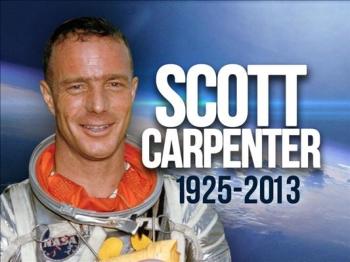
Scott Carpenter died last week, at the age of 88. Did you notice? Did you even remember who Scott Carpenter was?

I remember who he was and what he did, but I didn’t know that he had died. The world stops when the actor who played Tony Soprano dies, but an aged American hero and explorer? The news media says “Meh.” If Carpenter was still famous or a celebrity at all, it was only in the vague, foggy sense that obscure rock artists from the 60’s and expired pop icons are famous. I think Tony Dow, Barbara Feldon and Mama Cass are about as familiar to today’s public as Scott Carpenter, if not more. I just asked my son, who is 18 and better schooled in history and culture than most of his contemporaries. He knew Mama Cass was a member of the Mamas and the Pappas. The rest? Crickets.

Yet Scott Carpenter was, unlike those people, important. He was  one of the original Mercury astronauts, and in 1961, he orbited the Earth. After he left NASA he became a different kind of explorer, challenging “inner space,” the ocean’s mysterious depths. He launched an undersea habitation called Sealab II, where he and three other men conducted experiments on how well humans  function in a high-pressure undersea conditions for extended periods. Carpenter was a deep-water pioneer, mining on the sea bottom and harvesting exotic fish and other sea creatures. He salvaged and refloated a sunken jet fighter; he built an undersea petroleum-exploration platform.

Scott Carpenter, however, wasn’t famous by the time he died, because one of his fellow astronauts and good friends, John Glenn, orbited the Earth before him. Glenn went on to become a U.S. Senator based on his fame and heroic reputation (it helped that he was a combat pilot and decorated military hero as well). Carpenter did something important, dangerous, selfless, difficult and heroic, but he did it second, after John Glenn. We don’t remember second, and the distance between the accolades and honors heaped on #1 and the shrugs that follow #2 is disproportionate and unfair. Continue reading

Psychic Found Guilty Of Fraud: Did She Know This Would Happen?

gypsy-fortune-teller2Now that the required joke is out of the way, I can more soberly state that the New York conviction of psychic Sylvia Mitchell for larceny and fraud opens up a welter of ethical, legal and religious issues. Law prof-blogger Ann Althouse is troubled by the result, writing,

“In my book, this is entertainment and unconventional psychological therapy. Let the buyer beware. Who’s dumb enough to actually believe this? Should the government endeavor to protect everyone who succumbs to the temptation to blow a few bucks on a fortune teller?”

Clearly not, and that’s where courts and states generally land in this matter, as in the case I wrote on three years ago, Nefredo v. Montgomery County. There the courts ruled (in Maryland) that it was an infringement of free speech for Maryland to ban what is, for most, just an exercise in supernatural entertainment. But the New York case involved a little bit more than that: Mitchell apparently bilked some clients out of significant amounts, getting $27,000 from one in an “exercise in letting go of money,”  $18,000 from another to put in a jar as a way to relieve herself of “negative energy,” and thousands from other clients to purchase “supplies” for various rituals—what does the eye of a newt go for these days?

Admittedly this seems to cross the line from harmless, if stupid, entertainment into preying on the stupid and gullible, but that doesn’t convince Althouse that the conviction, or the prosecution is a legitimate use of government power. She reminds us about the Supreme Court case of U.S. v. Ballard, in which the Court upheld the conviction of a faith healer for fraud. The SCOTUS majority, headed by William O. Douglas, held that if the faith healer didn’t believe in her claimed powers, then she was a fraud, and thus could be prosecuted under the Constitution if she used a claim of false powers to take money from her clients. In a sharp and thought-provoking dissent, Justice Robert Jackson wrote in part… Continue reading