The Klan’s Birthday Cake, Individual Boycotts And The Ethics Of Refusing to Give Service To Jerks

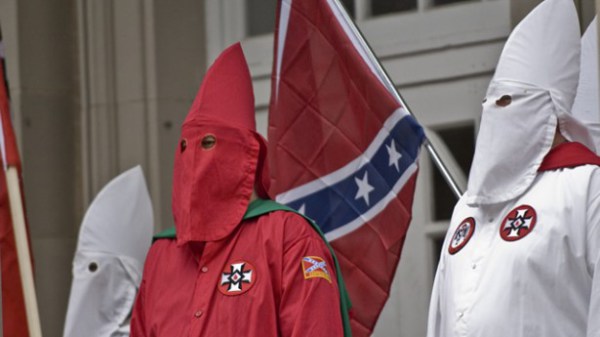
"Happy Birthday to You! Happy Birthday to You! Happy Birthday, Dear Racists..."

“Happy Birthday to You! Happy Birthday to You! Happy Birthday, Dear Racists…”

[UPDATE: Apparently, the “news story” that prompted this post is a fake. In that case, I want to thank the hoaxers for  inadvertently sparking a useful discussion—nothing in my post is dependent on the factual nature of the story. I wasn’t the only one fooled, and I originally noted the links on reliable sites. On the other hand, to hell with people who plant fake stories that are not obviously tongue in cheek or satirical: it’s a despicable practice, and abuse of the web, and right down there with public vandalism and creating computer viruses as unforgivable public conduct. I apologize to readers here for misidentifying a false story as true, but I’m not the unethical jerk involved. If anyone knows who that is, please forward their names. I have some choice words for them.]

As I wrote the first time I stuck my ethics big toe into this kind of controversy, I am conflicted over the current trend of forcing certain kinds of service providers to serve customers they just don’t feel like serving. I have consistently come down on the side of the rejected customer, even when the service, as in the case of bakeries and photography salons, edges perilously close to art. I think I am there still, but my resolve is weakening. I think. Let’s look at this again, in the context of the kind of recent case that always eventually occurs when one sits on the slippery slopes.

A three judge panel of a Georgia appellate court recently ruled in favor of Marshall Saxby, the Grand Wizard of a local KKK chapter, after he sued a local bakery for refusing to bake a cake for the KKK chapter’s  annual birthday party. Elaine Bailey, who owns Bailey Bakeries, said she rejected the Klan its activities violated her religious beliefs, and Saxby claimed that Bailey’s refusal of service discriminated against his religious beliefs.

The difficulty with making an ethical call on this case and others like it (and sort of like it, arguably like it or a little bit like it) is that the crucial question in ethics analysis, “What’s going on here?” cannot be answered with certainty or clarity. There are ethical arguments and ethical principles, on both sides, making the issue an ethical conflict (rather than an ethical dilemma). In an ethical conflict, we must prioritize among important ethical principles that are opposing each other.

Let’s answer “What’s going on here?” in some of the various ways this case allows, as if only one of these ethical principles were in play: Continue reading

Grassy Knoll Ethics: How Deception Breeds Distrust

UmbrellaMan2

We once again must squarely face the hoary  quote from Walter Scott’s epic poem Marmion: “Oh what a tangled web we weave when first we practice to deceive.” It is hoary because it is true, and this month’s Smithsonian Magazine reminds us of how true it is, recounting how well-intentioned deceptions by the news media regarding evidence in the assassination of President Kennedy helped create a conspiracy theory that will not die, and that may have begun the slow, relentless deterioration of America’s trust in its own government that has reached dangerous proportions today.

Frame 313 of Abraham Zapruder’s accidental record of one of the pivotal moments in U.S. history gave him nightmares, and when he sold the rights to his amateur movie to Life Magazine, he insisted that frame be withheld from the public, and not published. “We like to feel that the world is safe,” documentary maker Errol Morris explains in the article.“Safe at least in the sense that we can know about it. The Kennedy assassination is very much an essay on the unsafety of the world. If a man that powerful, that young, that rich, that successful, can just be wiped off the face of the earth in an instant, what does it say about the rest of us?” I understand, but withholding the truth is not the way to make the world seem safer. As the story of the conspiracy shows, it is how we end up trusting no one. Continue reading

Ethics Hero: Sid Bream

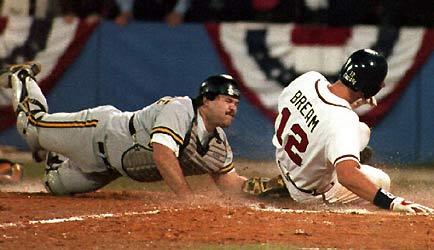
sid_breamYou all remember Sid Bream, don’t you? Well, probably not: he was a mediocre first baseman about 20 years ago who played for the Pittsburgh Pirates and the Atlanta Braves. He hasn’t been heard from in a long time, being quietly retired, but the Braves may be hosting the Pirates in an upcoming National League Division Playoff Series as the baseball post season gets underway, and they invited Bream to throw out the first pitch in Game #1 if that is the case—-Pittsburgh has to win a wildcard play-off game with Cincinnati first. You see, the one thing in his career that Bream is remembered for, at least in Atlanta, is scoring the run that won the National League Championship Series over the Pirates in 1992, in a close play that also lives in Pirates’ fans nightmares.

Throwing out the first pitch is fun: the team flies you in and pays for your hotel, gives you a prime ticket, and then announces your name as you trot on the field to cheers. If you have kept your arm in shape, you might even get off a throw to the catcher from the pitcher’s mound that doesn’t embarrass you, and that will acquire more cheers. from the packed stadium. Wait…this is Atlanta, not Boston. OK, from the two-thirds filled stadium. Even then, what’s not to like?

But Sid Bream turned the Braves down. Remember that I began by saying that he played for both the Braves and the Pirates. He said,

“Whatever their motive (for the invite) was, I don’t want to be involved. I wasn’t surprised (by the offer). Whether their motive was to rub it in the Pirates’ faces, I don’t know. I think it was just more of a gesture to commemorate those two teams getting back together in the postseason. But I’ll stay neutral. I’m not going to do anything to tell the fans in Atlanta or Pittsburgh that I’m (rooting) one way or the other.”

Oh, I think it’s fair to say that rubbing the Pirates’ faces in their last loss to the Braves in a postseason game was exactly what the Braves had in mind. This kind of voodoo has been a standard part of baseball gamesmanship for a long time: nobody believes that the Yankees had Bucky Dent throw out the first pitch when the Yankees had a crucial playoff game against Boston (which they lost) in 2004 “to commemorate those two teams getting back together in the postseason.” It’s psychological warfare, and more or less good-natured; there’s nothing wrong with it, and there would have been nothing wrong with Bream agreeing to play along.

But Sid Bream is, it seems, loyal. He was a Pittsburgh Pirate for a long time, a Brave only for a couple of years, and he doesn’t feel like being part of one of his former teams’ effort to unsettle the other one, even though its’ no big deal, and even though his old team won’t hold it against him. It just would feel right to him.

This is called integrity.

Good for Sid Bream.

_______________________

Pointer, Graphic and Facts: NBC Sports


Celebrity Values: The Good, The Bad And The Ugly

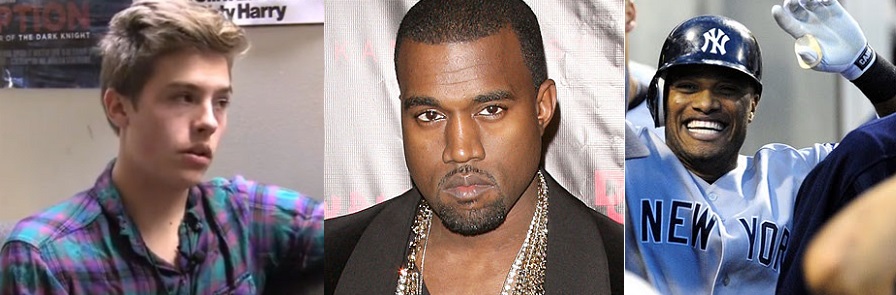
Sprouse-West-Cano

Celebrities have the opportunity to use their disproportionate and sometimes unexplainable fame to pass along good values, priorities and ethical habits to those who admire and follow them. The problem is that the U.S. culture’s current values are in a muddled state, with virtues sometimes being treated as embarrassments, and the enthusiastic embrace of non-ethical goals that once were regarded as the seven deadly sins are now often looked upon as the norm, and even appropriate. Here are some recent events in the strange world of celebrity values:

The Good: This headline on numerous web sources piqued my interest: “Dylan Sprouse Defends Restaurant Host Job.” Dylan Sprouse is a former Disney child star, a long time lead, with his brother, on the long-running “The Suite Life of Zach & Cody,” one of those loud, hyper-frenetic tween comedies that Disney and Nickelodeon acquire from some production company in Hell. Dylan was seen working in a restaurant, and this immediately spawned multiple rumors that he was broke, had blown through his millions, and was, in brief, a pathetic loser….because he has the same kind of job most American twenty-somethings fresh out of college would be thrilled to have.

Thus Dylan, who along with his brother decided to get out of the child star rat-race that has recently put Lindsay Lohan in rehab, Amanda Bynes in a mental health treatment facility and Miley Cyrus naked on a wrecking ball, and start a more conventional life with a college education (at NYU). Sprouse decided to address the weird criticism being sent his way on social media and in the gossip blogs by writing, Continue reading

Ethics Hero: Matt Labrum, Union High (Roosevelt, Utah) Football Coach

Six Pillars

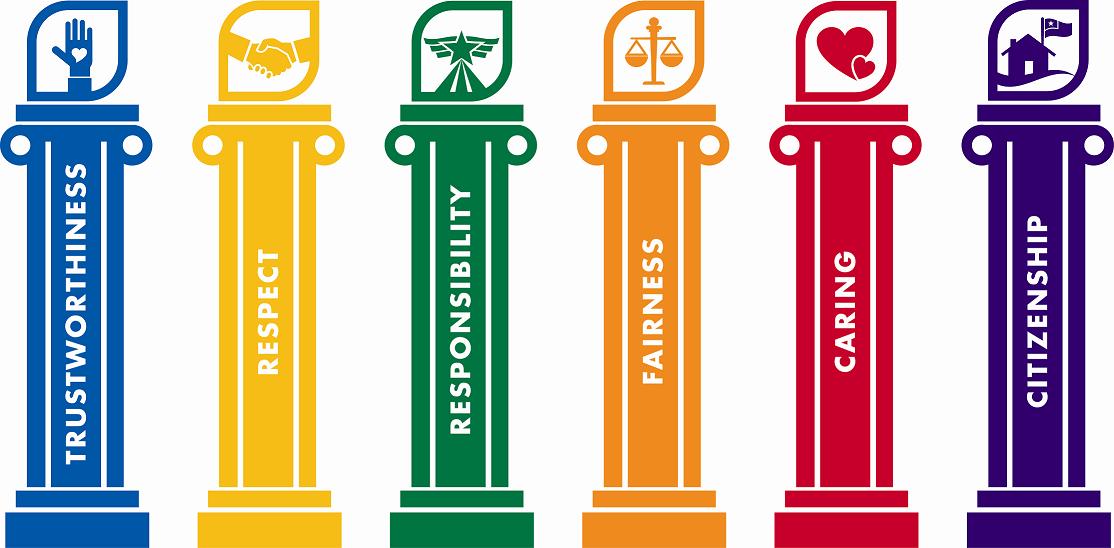
Matt Labrum, head coach of Union High School in Roosevelt, Utah, suspended all 80 of his players, citing  a lack of character. He instructed them all to turn in their jerseys and their equipment, and announced that there would be no football until they earned the privilege to play. Labrum gave his shocked players a letter titled “Union Football Character” which declared in part,

“The lack of character we are showing off the field is outshining what we are achieving on the field. It is a privilege to play this wonderful game! We must earn the opportunity to have the honor to put on our high school jerseys each Thursday and Friday night!”

Instead of practicing during the days leading up to this weekend’s game, the students were ordered to perform community service, to attend study hall and go to a class on character development. They were also required to perform service for their own families, and write a report about their actions. Academically, the players were told to be on time for classes, and to improve their grades.

It is unclear what prompted the coach’s action, though some of the players, he felt, had engaged in cyber bullying, and he was aware of other instances in which various players had not, in his view, lived up to exemplary standards of behavior. Several of them had been rude and obnoxious, he had learned to other students and teachers—in other words, they were behaving like high school football players. Rather than punish individual students, Coach Labrum decided to impose team wide measures designed to foster good character. His theory, clearly, was to encourage a team culture of ethical conduct, strengthened  by group encouragement and enforcement of shared values. Labrum is also a gifted salesman, since it appears that opposition from students, their parents and the school administration has been minimal.

In many schools, including colleges, football players are the biggest jerks on campus: the culture of school sports too often nurtures entitlement and arrogance. Imagine a school athletic culture in which the athletes were expected to embody the best of ethical values both on and off the field.

The implications are staggering.

_________________________

Pointer: Lianne Best

Sources: Yard Barker Deseret News

Ethics Note To Senator Cruz: You Can’t Begin A Principled Stand With A Lie

Little is more damaging to the public’s trust and faith in government than when elected officials engage in gratuitous lies—statements that can only convince those who don’t bother to check the facts underlying them, made for their momentary impact on the theory that the effect is worth the eventual exposure of the lie for what it is. Such lies are detestable, because they not only reinforce the impression that politicians lie when their lips are moving, they also convey the message that lies are merely tools of the politicians trade, and not even particularly shameful or worthy of criticism. When a politician engages in such transparent dishonesty, he or she is saying, quite literally, that lying is no big deal.

It is a big deal. It is especially a big deal when the point of the lie is to fool the public into believing something the politician is doing is a big deal itself, when it is really a sham.

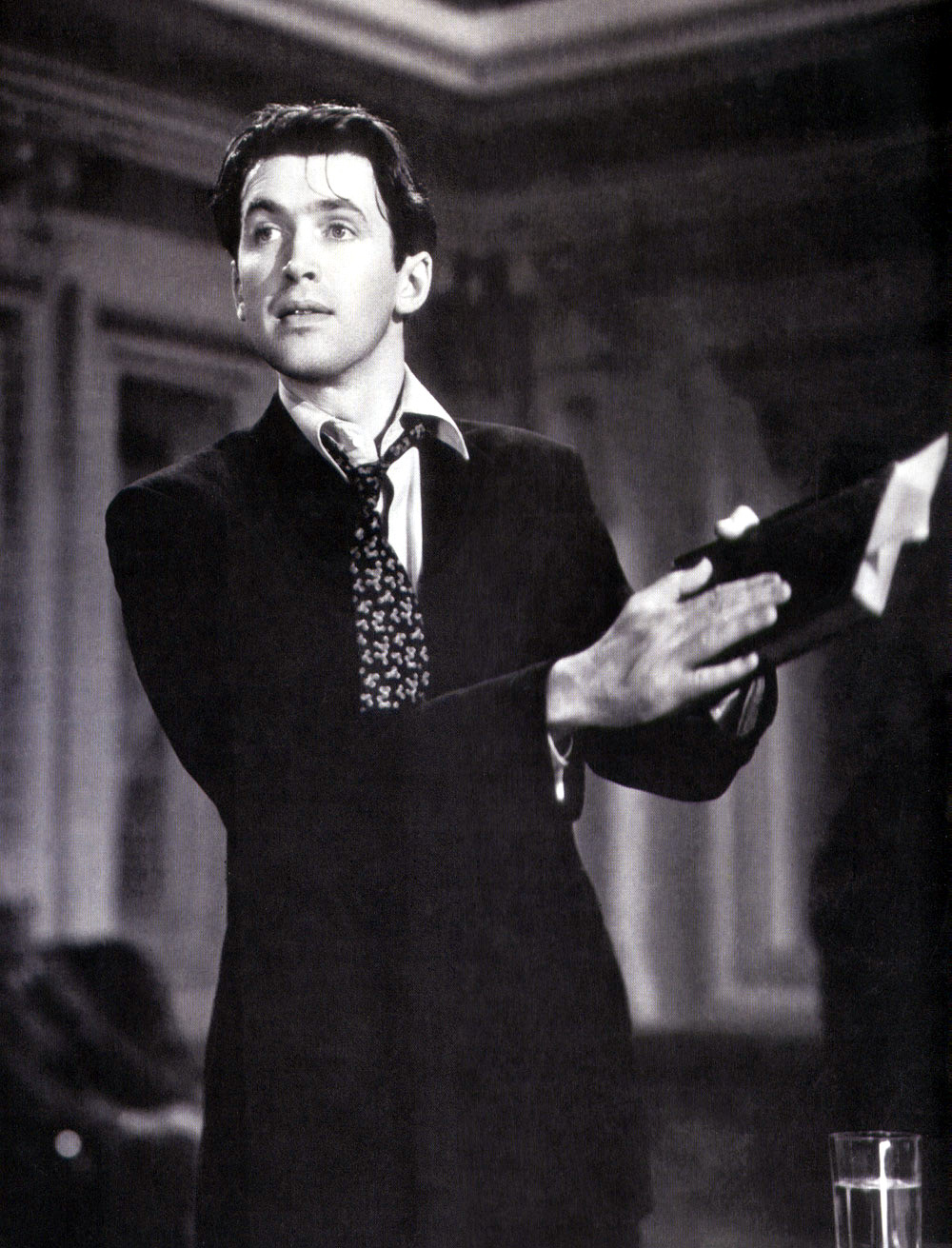
Welcome to Sen. Ted Cruz and his fake filibuster, also known as Ted Cruz’s Bad Jimmy Stewart Impression.

"Ted, I knew Mr. Smith, and you're no Mr. Smith. You're not even Rand Paul..."

“Ted, I knew Mr. Smith, and you’re no Mr. Smith. You’re not even Rand Paul…”

Evoking memories of the Frank Capra classic, “Mr. Smith Goes To Washington,” Sen. Cruz told the world that he was going to talk on the floor of the Senate against Obamacare until he couldn’t stand any more…you know, just like the Jimmy’s idealistic junior Senator in the film, who finally collapses of exhaustion to end his filibuster but whose courage makes the corrupt, manipulating senior Senator from his state confess that he was trying to fund a lousy health care b…no, wait, it had something to do with a kids camp and influence peddling. I haven’t seen the film in a while.

Cruz, however, unlike Stewart, is not engaging in a filibuster, because he is not trying to block a vote or anything else: Senator Majority Leader Harry Reid has scheduled a vote on funding the Affordable Care Act for today, whereupon Cruz has to sit down and shut up whether he can still stand or not. Continue reading

Rationalization # 35: Victim Blindness, or “They/He/She/ You should have seen it coming.”

"Yup, should have seen THIS coming..."

“Yup, should have seen THIS coming…”

Mark Draughn, who blogs at Windypundit, proposed this latest addition to the Ethics Alarms Rationalizations list,  after I forgot to add it to the list in December 2012, when it was first proposed by reader Dwayne Zechman. It is an excellent one, and both Dwayne and Mark deserve the credit for it.

Asserting the rationalization of Victim Blindness attempts to shift responsibility for wrongdoing to the victims of it, who, the theory goes, should have known that their actions would inspire the conduct that caused them harm, and thus they should have either avoided doing what sparked the unethical response, or by not doing so waived their right to object to it. This is closely related to a sub-category of #7, The Tit-For-Tat Excuse, which holds that one party’s unethical conduct justifies similar unethical conduct in return. The sub-category is “They asked for it.” Victim Blindness is similar, but it applies even greater responsibility to victims: whether they asked for it or not, they should have known their actions would be met with this unethical response, and their ignorance,  carelessness or stupidity constitutes a waiver of ethics. Continue reading

The Emmys Play Favorites And Undermine Their Mission

Quick, now...and no cheating: Who is this recently deceased TV legend?

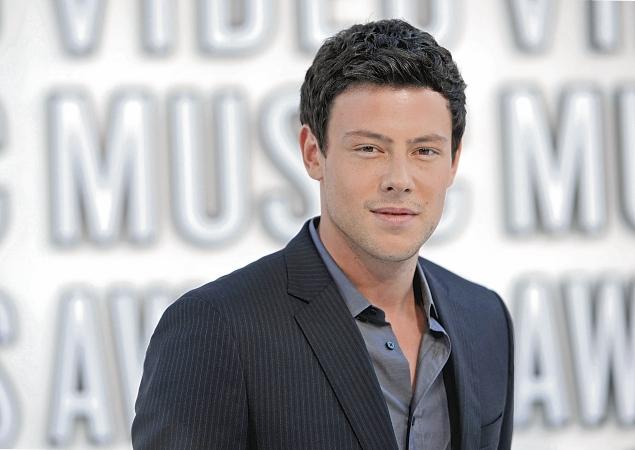
Quick, now…and no cheating: Who is this recently deceased TV legend?

Three separate organizations present the Emmy Awards: the Academy of Television Arts & Sciences (ATAS), the National Academy of Television Arts & Sciences (NATAS), and the International Academy of Television Arts & Sciences. Each is dedicated to the television industry, and the award the organizations collaborate to  hand out for excellence are intended to serve multiple objectives. Prime among them is to honor and promote the professionals who bring—in theory, at least, quality entertainment into the homes of Americans. The show itself that broadcasts the awards only exists because of their larger mission, which is to say that the Emmy show exists to support the Emmys, not the other way around. The program’s producers, not for the first time, managed to forget their priorities this year, and are getting well-deserved scorn for it both in and outside the entertainment community.

The offense occurred during Sunday’s live telecast, when the show reached its annual “In Memoriam” segment. The Oscars have botched this crucial part of its own show in recent years by failing to recognize the deaths of important Hollywood figures who deserved their final bow and a last ovation. Emmy found a new and different way to insult its own. The Oscars’ omissions were negligent; the Emmys insult was, incredibly, intentional. It’s just that either nobody realized it was insulting, or, more likely, they knew but had other objectives. Continue reading

Why Are The Core American Rights Ethics Alarms Malfunctioning?

The spark for this post is the recent fiasco engineered by Modesto Junior College in California, which told a student that he could not pass out copies of the United States Constitution outside the student center on September 17, 2013, which happens to be Constitution Day. College police and administrators demanded that student Robert Van Tuinen stop passing out Constitution pamphlets and told him that he would only be allowed to pass them out in the college’s tiny free speech zone, and only after scheduling it several days or weeks ahead of time. Fortunately, as is almost always the case in such campus outrages, The Fire, The Foundation for Individual Rights in Education (and what does it tell us that this indispensable champion of individual rights is widely regarded as a “conservative” organization?) was at the ready, and ripped off a letter to the school administrators that served the dual purpose of warning it to back off and holding it up to national ridicule. Continue reading

The Answer To Popehat’s Web Shaming Ethics Quiz

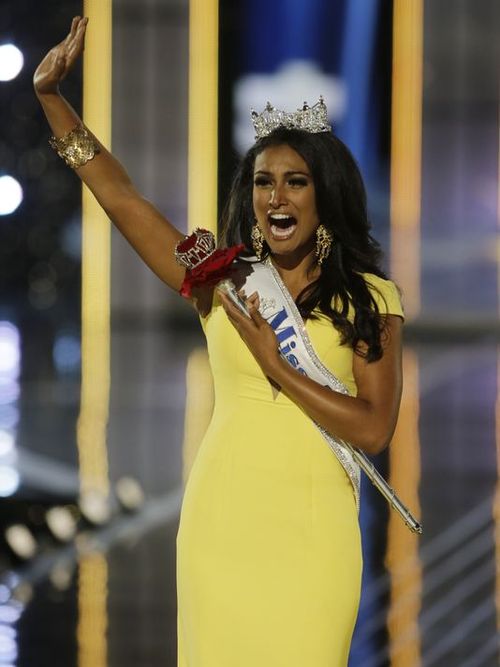
Hmmm..is it unfair to point out that tweeters who called the 2013 Miss America a terrorist and "not American enough" because of the color of her skin are bigoted morons? Let me think...

Hmmm..is it unfair to point out that tweeters who called the 2013 Miss America a terrorist and “not American enough” because of the color of her skin are bigoted morons? Let me think…

Popehat virtuoso Ken White has posed what we would call on Ethics Alarms an ethics quiz on the topic of web shaming. Is it ethical to post the embarrassing tweets of non-celebrities and public figures for the purpose widespread and national ridicule? Ken lays out the Pros and Cons thusly (these are direct quotes):

Pro:

1. It’s entertaining. Human frailty is the oldest and most consistent funny subject. People who are constantly incensed at brown people and can’t tell Arabs from Muslims from Indians are foolish and foolishness is amusing.

2. It’s whistling past the graveyard. Bigotry exists; ridiculing bigots is a mild act of defiance.

3. It’s supportive. Bigots exist; ridiculing and calling them out tells people subject to bigotry that we support them.

4. It’s a pressure release. The ability to ridicule bigots publicly reduces pressure to make the government regulate speech.

5. It’s socially transformative. Ridiculing bigots causes people to rethink being bigots.

6. It’s Darwinian. Twitter and Facebook, aided by Google, help those of us who hire employees distinguish between morons and people of normal intelligence.

Con: Continue reading