Post Script: Rant Sports And Its “Top 25 Athletes Turned Actors of All Time” vs. The Ethics Alarms List

Suprise!

Surprise!

This topic isn’t really worth two posts, I know, but after some commenters mentioned other obvious examples of distinguished athletes turned actors the Rant Sports  incompetent post ignored, I did some additional research myself.

The first thing I discovered was that Renae Juska’s list was about 90% lifted from other similar web lists that had appeared on various sites over the past three years. These lists were almost as incompetent as hers, though one of them included Johnny Weismuller, and another included Esther Williams. For the most part, however, all included the same basic group of athlete-actors, clearly serving as the basis for the next blogger looking for a cheap post.

This is how bad or misleading information gets stuck in the public mind and discourse, and the process occurs regarding topics and issues that matter, not just gratuitous lists.. This is why politicians still talk about women only earning 78 cents for every dollar earned by a man, and how 50% of marriages end in divorce. This how rumors and mistaken beliefs take hold and spread, changing the results of elections and the course of history…lazy writers cribbing dubious facts, unsubstantiated stats and lazy compilations of data from other lazy writers. The phenomenon feeds itself. Take the current case: someone asking themselves the question, “Gee, I wonder who the most prominent actors who were also accomplished athletes are?” will google the question and check four or five sites, read virtually the same names on all of them, and think the topic has been accurately researched. That will be an illusion, and soon there will be another post, confirming the earlier ones, and further validating informational garbage.

I also checked the biographies of actors whom I knew had athletic backgrounds, and the performing credits of prominent athletes whom I knew worked in TV, stage and films. I also considered some of the candidates, omitted by Juska, that various commenters had suggested. The result is this list of 30 athlete/actors who were ignored by Juska and Rant Sports, every one of whom is beyond question more deserving of a place on an “all-time” list of “Top 25 Athletes Turned Actors” than many of the choices on the Rant Sports list, and quite a few of which—Robson, Williams, Henie, Rigby, Weismuller, Crabbe, Norris, Beradino, and others—should rank near the top. Continue reading
Unethical Website and Post Of The Month: Rant Sports And Its “Top 25 Athletes Turned Actors of All Time.”

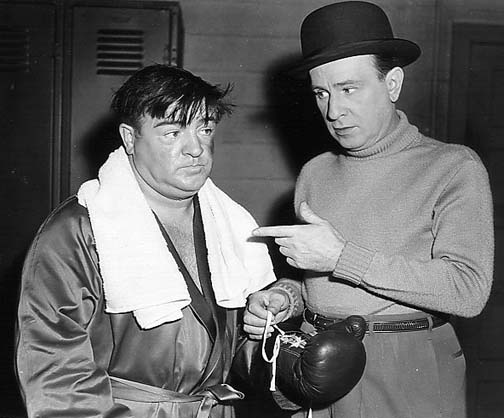
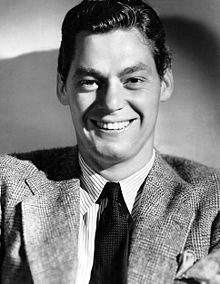
Maybe #1---but that would take some research.

Maybe #1—but that would take some research.

It is true that you cannot trust everything, indeed most things, that you read on the web, and thus should approach all supposedly factual statements with skepticism and ready access to Google. That does not excuse websites that recklessly and irresponsibly spread misinformation however, or that through their own laziness and ignorance spread ignorance among others.

A slick sports website called Rant Sports provided a particularly galling example this week, when it presumed to post a list it called “Top 25 Athletes Turned Actors of All Time.” All the sports sites draw traffic with this kind of trivia-mongering, but even trivia-mongering demands a modicum of research, care, and fact. This may be an opinion piece, but it isn’t the opinions that are problematical. Renae Juska, the fraud who created the list, obviously engaged in no research at all, so her”Top 25″ really was “First 25 I was able to jot down on a piece of paper.” As I will now demonstrate, Juska, on a site dedicated to sports, made an assertion that is demonstrably and objectively false, and under color of authority, misleading readers but just as wrongly, unfairly neglecting many athletes who would have to be ranked on any such list that was given the amount of research expected of a seventh-grader’s term paper.

Here are some examples of how misleading and poorly researched the list is:

  • To begin with, all but one of the “top athletes” are male. Wrong. One of the greatest athletes-turned actresses died just last month, the great Esther Williams, a record-setting competitive swimmer who was unable to compete in the Olympics because of World War II. She was an athlete IN her movies, the most famous of which were aquacade spectaculars featuring Williams swimming, diving, doing what was later called synchronized swimming (she is credited with helping to create the sport), all while smiling and looking drop-dead gorgeous in a one-piece bathing suit. Does Williams qualify as a “Top Actor” over Number 16 on Juska’s idiotic list, the immortal Stacy Keibler, the only woman he deems worthy? Here are her credentials, as Juska cites them: “She began acting in 1998 and was a professional wrestler from 1999-2006. Her most well-known appearances have been in WWE Judgement Day, Summerslam and WrestleMania XX. She has also had guest appearances on How I Met Your Mother, Mayne Street and Samurai Girl.”  Esther’s credits are here, and you can see her in action here:

To say there is no contest is not an opinion, it is fact. Of course, Juska probably never heard of Esther Williams, which means that she has no business making this list at all.

Believe it or not, it gets worse… Continue reading

Ethics Quote Of The Day: Lou Gehrig, July 4, 1939

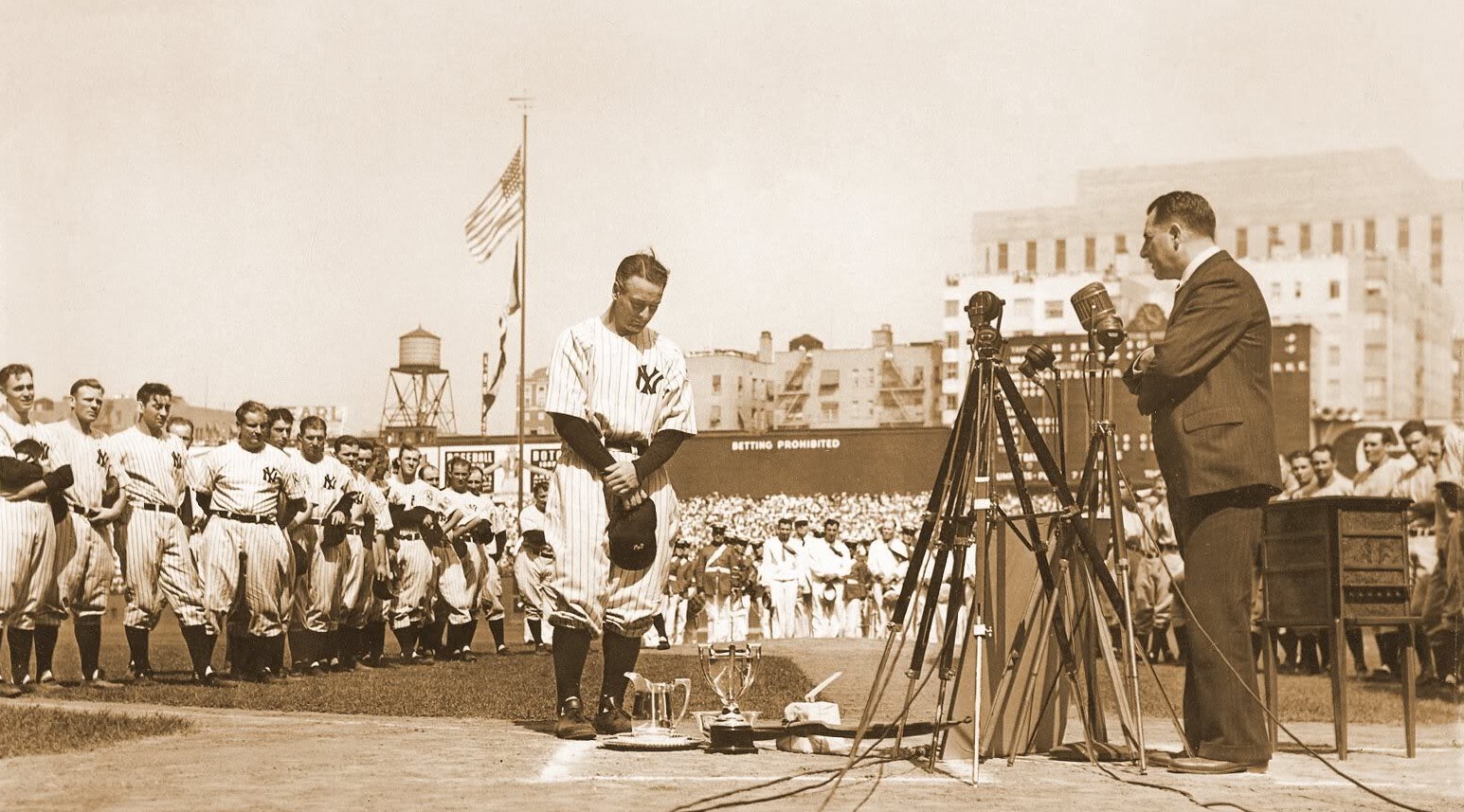
“Fans, for the past two weeks you have been reading about the bad break I got. Yet today I consider myself the luckiest man on the face of this earth.”

—-Baseball great Lou Gehrig, beginning his farewell speech to Yankee fans on July 4, 1939, as they filled Yankee stadium to say farewell to “the Iron Horse,” who was retiring from the game after being diagnosed with the incurable disease, amyotrophic lateral sclerosis (ALS), known forever after as “Lou Gehrig’s Disease.”

Lous Farewell

Lou Gehrig was only 36 years old when he learned that he was dying. ALS is a terrible wasting disease that has no cure, and in 1939 there was little treatment or assistance that could be offered to a victim as his body slowly ceased to function. It is an especially cruel disease for a professional athlete to face, and even more so one, like Gehrig, who was renowned for his endurance and seemingly indestructible body. When the progress of the illness, still then undiagnosed, caused Gehrig to remove himself from the New York Yankees line-up on May 1, 1939, it ended his amazing streak of 2,130 consecutive games, a baseball record that stood until broken by Cal Ripken, 56 years later.

Gehrig’s speech was from his heart. He was an educated and articulate man, but he had not planned on speaking at the moving ceremony to bid him farewell, as current former team mates, some of the greatest players ever to take the field, gathered to pay their respects. But the Yankee Stadium crowd of more than 60,000 began chanting his name, and after initially refusing, Gehrig moved to the microphone. Continue reading

“How Not To Be A Hero” by Edward Snowden

“If his motives are as he has represented them-–“I understand that I will be made to suffer for my actions,” but “I will be satisfied if the federation of secret law, unequal pardon and irresistible executive powers that rule the world that I love are revealed even for an instant,” he wrote in a note accompanying his first set of leaked documents—-then he acted courageously and selflessly.”

—- Ethics Alarms, June 10, 2013, referring to the conduct and statements of Edward Snowden, NSA “whistleblower.”

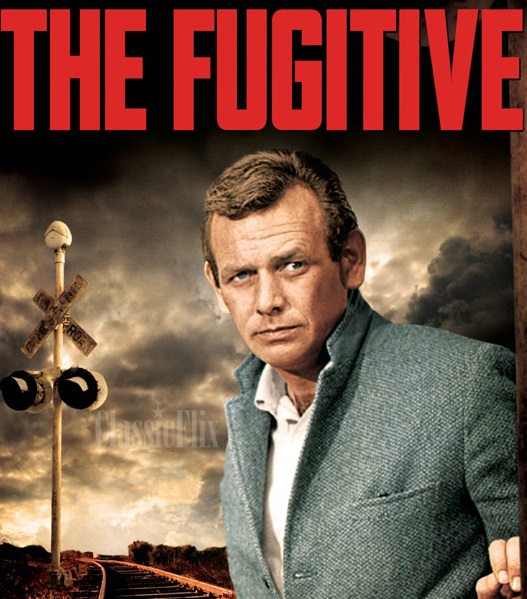
That's outrageous! They are collecting our phone records and our...hey, "The Fugitive!" I LOVED that show!!

That’s outrageous! They are collecting our phone records and our…hey, “The Fugitive!” I LOVED that show!!

Now we know that his motives are not as he represented them. From his statement that I quoted, I assumed that Snowden’s intent was to make himself available to U.S. authorities, and to prompt debate regarding the government’s widespread intrusions into the private communications of presumed-to-be-innocent citizens, as well as to ensure that the issue did not get drowned out, superseded and swept aside by distractions, as so many vital issues are. This was an indispensable second step, though I did not begrudge him some time to prepare for it. It would be the action of a one engaged in classic civil disobedience; it would demonstrate sincerity, public-mindedness and courage, and it would avoid his exploitation by the many around the world, and domestically, who wish the U.S. ill.

Instead, Snowden decided to run. Continue reading

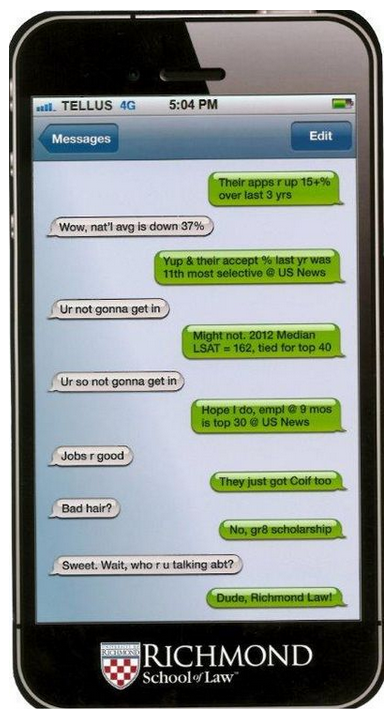
Ethics Quiz! Richmond Law School’s “Cool” Ad: Lame, Deceitful…Or Just Advertising?

Richmond ad Richmond-Law-ad

So, what do you think? Such esteemed legal commentators as TaxProf Blog and Above the Law have mocked and condemned the above Richmond Law School ad directed at law school applicants deciding where to plant their hopes. “The clubhouse leader for the lamest law school ad of 2013” snarked the former. “Calling it “lame” or “uncool” or “hackneyed” or any of the other words in the English language that denote a distinct inability to appear genuine or interesting doesn’t do the ad justice,” declared the latter. Then there is the little matter of puffery, which usually means deceit, spin, or exaggeration, except that in advertising such lies (for that is what they are) are mostly accepted as part of standard practice. That employment within nine months stat cited is dubious in the judgment of those who feel only legal jobs should count–apparently Richmond Law includes jobs where a JD is considered an asset, but the graduates are not working as lawyers. (On the other hand, almost every  job I’ve had since I graduated from laws school has been in the “JD advantage” category, and I’m satisfied with the results.) Continue reading

July 3: A Day To Honor Custer’s FIRST Stand, At Gettysburg… And Reflect On How Our Greatest Strengths Can Be Our Fatal Flaws

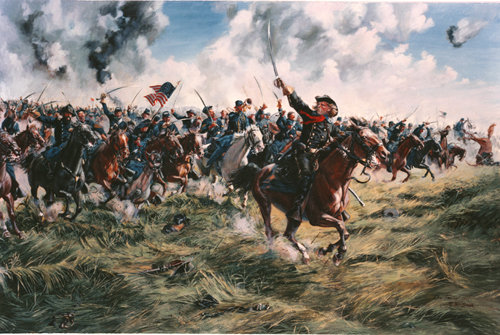
custercharge

I wrote this post two years ago, concerning my favorite neglected episode of the Civil War, when young George Armstrong Custer shocked Confederate J.E.B. Stuart with his unexpected and furious resistance to Stuart’s attempt at disrupting the Union flank while Gen. Meade’s army defended itself against Pickett’s Charge. As with the First Minnesota’s suicidal stand on the second day of the Battle of Gettysburg, Custer’s crucial moment of truth has been largely neglected in the assembly of the battle’s heroes; I don’t think it has ever been depicted in a Civil War film, for example, though there is at least one book about it.

The incident is especially fascinating to me because of the its multiple ironies. Custer succeeded when his nation needed him most because of the exact same qualities that led him to doom at the Little Big Horn years later. Moreover, this man who for decades was wrongly celebrated in popular culture as an American hero for a shameful botched command that was the culmination of a series of genocidal atrocities actually was an American hero in an earlier, pivotal moment in our history, and almost nobody knows about it.

Thus it is that among the brave soldiers of the Blue and Gray who should be remembered on this 150th anniversary of the greatest battle ever fought on this continent is a figure whose reputation has sunk to the depths, a figure of derision and ridicule, a symbol of America’s mistreatment of its native population. Had George Armstrong Custer perished on July 3, 1863, he might well have become an iconic figure in Gettysburg history. The ethics verdict on a lifetime, however, is never settled until the final heartbeat. His story also commands us to realize this disturbing truth: whether we engage in admirable conduct or wrongful deeds is often less a consequence of our character than of the context in which that character is tested.

Here is the post, slightly lengthened:

July 3, 1863 was the date of Pickett’s Charge, when Confederate General Robert E. Lee ordered a desperate Napoleonic advance against the Union line at Gettysburg in what has come to be a cautionary tale in human bravery and military hubris. The same day marked the zenith of the career of George Armstrong Custer, the head-strong, dashing cavalry officer who would later achieve both martyrdom and infamy as the unwitting architect of the massacre known as Custer’s Last Stand. Continue reading

The Persecution Of Justin Carter And The Consequences Of Fear-Mongering: If This Doesn’t Make You Angry, Something’s The Matter With You

strike

Here I was, naively thinking that the threatened jailing of a student for resisting a teacher’s efforts to make him remove his T-shirt with the image of a rifle on it was the most shocking proof of how imperiled free thought and expression are in today’s fearful, dim-witted and child abuse-rationalizing America. Then this jaw-dropping story came across my screen, and I realized that the situation is far worse than I imagined or could imagine—and I have a pretty good imagination.

Now the question is, I think, this: what are we going to do about it?

Nineteen-year-old Justin Carter has been in prison since March. You will not believe why, or perhaps, being both paranoid and right,  you will. A Facebook friend and video game pal described him in an exchange as “crazy” and “messed up in the head,” and Carter replied, with sarcasm detectable by anyone who isn’t an SS officer. “Oh yeah, I’m real messed up in the head, I’m going to go shoot up a school full of kids and eat their still, beating hearts. lol. jk.” A Canadian busybody read the exchange, and decided to report Justin to the Austin police, who then arrested him–he was 18 at the time—searched his family’s house, and charged him with making a “terroristic threat.” Continue reading

July 2, 1863: When 262 Minnesotans Saved The United States Of America

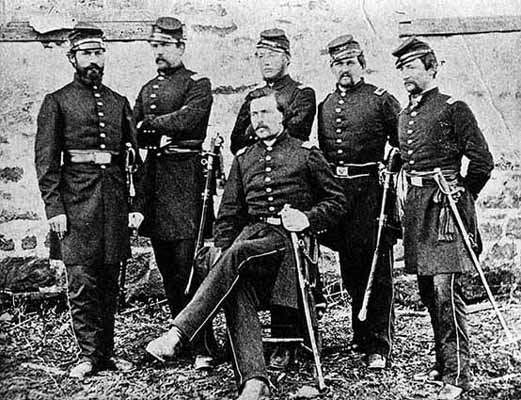
Officers of the First Minnesota Volunteer Regiment

Officers of the First Minnesota Volunteer Regiment

For the last two years, I have posted here about the courage and sacrifice of the men of the First Minnesota Volunteer Regiment at the Battle of Gettysburg. There was more than enough of those qualities, on both sides, to go around that day, and unless you are in the vicinity of that lovely and unbearably sad little Pennsylvania town, it isn’t just the brave Minnesotans who are neglected, but all of the participants. Yesterday was July 1, the anniversary of the beginning of the battle in 1863, and there was scant mention of it in the media. After all, there is the Zimmerman trial, and outrage over Jennifer Lopez accepting a million dollars to sing “Happy Birthday” for a brutal dictator, and whether movie viewers will flock to see Johnny Depp play Tonto. One of the few excellent acknowledgements of the date and its significance was by CBS, which also featured the famous feature on the battle published years ago by the Saturday Evening Post. 

In an ambitious mood, I once resolved to find a different group of battlefield heroes from that day to feature every July 2, the messiest, most important pivotal of the battle that itself has been overshadowed by the tragedy of suicidal Pickett’s Charge on July 3. But I have neither the historical research skills nor time to do justice to such a task, though the injustice of so many forgotten heroes is great. It is best to allow the First Minnesota Volunteer Regiment, who obeyed a desperate order to fill a breach in the Union line, knowing that it meant almost certain death,  “to gain a few minutes’ time and save the position and probably the battlefield,” to stand for all of them.

As for me, I’m going to watch, once again, Ted Turner’s excellent film Gettysburg, and play its soaring score in my home and my car. We have a duty to remember, and honor, every moment of those three days in July, 150 years ago. Continue reading

Trayvon Martin Ethics Trainwreck Update: The Cameras And Reporters Should Be Kicked Out Of The Zimmerman Courtroom

From Mediaite:

CNN“While carrying the George Zimmerman murder trial live this afternoon, CNN accidentally broadcast the defendant’s full social security number, home address, and phone number on national television.

“Sanford police detective Doris Singleton was in the midst of testifying about her interview with Zimmerman following his detention when the prosecuting lawyer pulled up a copy of the “narrative report” for the court to view. The court video feed then showed, in close-up, as the lawyer zoomed in on Zimmerman’s personal information.”

Unbelievable.

Sorry, sensational trail fans, but that should be it. Our careless, incompetent news media can’t be trusted to place cameras in the courtroom and protect the rights of the participants and the integrity of the justice system. Vigilantes and crazies mean to harm George Zimmerman and maybe anyone who dares to support him. Within minutes of CNN’s mistake, Twitter was alive with nasty tweets from many of these hateful and ignorant people, and there surely are many more. That CNN would blunder this badly is proof that the news media can’t be trusted.

The next best response by the judge would be to toss just CNN out, but realistically that network is no less trustworthy than any other. There should have been protocols and fail-safe measures in place to prevent a breach of Zimmerman’s privacy to this extent. Broadcasting a defendant’s social security information is strike one, two and three. The news media is unprofessional and negligent.

Kick them all out.

___________________________

Facts: Mediaite


ARRRGH! Outrageous Ethics Malpractice By “The Ethicist”!!!!

Well, you did it again, Chuck..you made my head explode. But now I have a place to keep my keys...

Well, you did it again, Chuck..you made my head explode. But now I have a place to keep my keys…

It’s time for Chuck Klosterman, the New York Times’ designated amateur who now handles “The Ethicist” advice column, to hang it up, and let some randomly chosen unemployed New Yorker take a shot at the job. Since assuming his post, Chuck has had good moments and bad, but this botch is embarrassing, and signature significance—no one who isn’t a bona fide Ethics Dunce could make such a terrible call.

Get this: Klosterman was asked whether surreptitiously taking cuttings from plants owned by a shopping center was unethical:

“…While walking through our local shopping center, we noticed a particular plant that we both liked and decided to get it for our patio….My wife thought she could grow it from cuttings, so we went back and took about three or four cuttings from one of the many plants that were scattered around the shopping center. The plant was not hurt or damaged in any manner or form, but my gut instinct told me that this was wrong. Was it?”

Does this question really need asking? Apparently, because the fraud masquerading as an ethicist at the Times thinks it’s a “thorny” question (Chuck likes puns…maybe the column should be called “The Punster”) about an “unethical act that has a positive impact.” ( Helpful hint to Chuck: the issue is stealing.Klosterman then embarked on a rationalization orgy: Continue reading