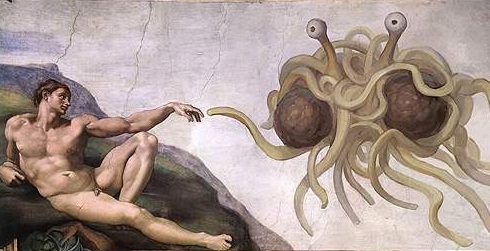
Aaron Williams practices Pastafarianism (The Church of the Flying Spaghetti Monster) , which is not a religion, but a joke, a parody of religion created to mock the advocates of “intelligent design.” It’s a good joke, but like any joke, it becomes an annoyance when it stops being funny.When it has stopped being funny and it is inflicted on an audience without good reason or its consent, it is irresponsible conduct. Continue reading
Year: 2013
Picking Through The Wreckage of An Ethics Tesla Wreck
There was questionable ethical conduct galore in the recently-stilled ethics wreck sparked by a New York Times review of the new Tesla electric car, the Model S. Times reporter John Broder test drove the car from Washington, D.C., to Boston, using the charging stations Tesla has opened along the way. Broder’s Tesla ran out of juice, and the article concluded with a sad photo of the highly-anticipated Model S on a tow truck. In short, it was not a positive review.
In response to the review, Tesla’s CEO Elon Musk called it a “fake” on Twitter, then wrote a rebuttal using the data logs of the vehicle Broder tested. Broder wrote a rebuttal to the rebuttal, and eventually the Times “public editor” (others would call her its ombudsman), Margaret Sullivan, was drawn into the battle, performing an investigation and concluding that…
“…I am convinced that [Broder] took on the test drive in good faith, and told the story as he experienced it. Did he use good judgment along the way? Not especially. In particular, decisions he made at a crucial juncture – when he recharged the Model S in Norwich, Conn., a stop forced by the unexpected loss of charge overnight – were certainly instrumental in this saga’s high-drama ending. In addition, Mr. Broder left himself open to valid criticism by taking what seem to be casual and imprecise notes along the journey, unaware that his every move was being monitored. A little red notebook in the front seat is no match for digitally recorded driving logs, which Mr. Musk has used, in the most damaging (and sometimes quite misleading) ways possible, as he defended his vehicle’s reputation…People will go on contesting these points – and insisting that they know what they prove — and that’s understandable. In the matter of the Tesla Model S and its now infamous test drive, there is still plenty to argue about and few conclusions that are unassailable.”
Perhaps realizing that his vigorous defense of his car had triggered the Streisand Effect, Musk took to Twitter again, this time saying that the ombudsmadam’s article was “thoughtful” and that his faith in the Times was hereby restored. This put a nicely disingenuous spin on the whole episode.
Here is the final ethics tally: Continue reading
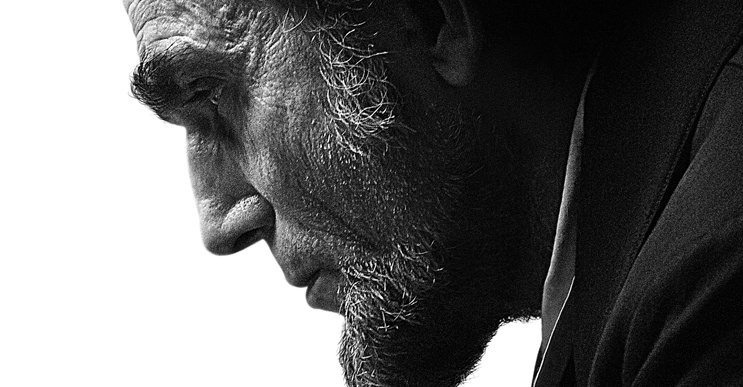
More “Lincoln” Criticism: What Does Spielberg’s Film and Ethics Alarms Have In Common?
I won’t hold you in suspense, and no, it’s not that I expect or deserve any awards. What Steven Spielberg’s justly acclaimed historical drama and this blog have in common is being unfairly peppered with a presumptuous breed of complaint that nears the top of my all time “Unfair Criticisms List.”
Here, the complaint usually takes this form: “Why are you writing about Chex Mix labeling when [Pick ONE:] a) we’re about to give up our sovereignty and let anyone just break the law to come across the border? b) Fox news lies to the public every day? c) there are unethical things going on that I care about more ?” Regarding Lincoln, the favorite criticism in the media and on the web of late has been that in the process of showing the sausage-making and political maneuvers that allowed the 13th Amendment to become the law of the land, Spielberg neglected to show the evils of slavery, which, of course, if he were to do without risking the criticism (which he would get anyway) that he did so in a perfunctory and inadequate way, would require either lengthening the film to an unwatchable length, or cutting out significant portions of the story he chose to tell. This obnoxious complaint was brought to a full-throated crescendo by Tony Gittens, director of the Washington, D.C., International Film Festival, in today’s Washington Post. He writes:
“Steven Spielberg’s film “Lincoln” will probably walk away with this year’s Academy Award for best picture, and that would be unfortunate. As Post film critic Ann Hornaday pointed out , “Enslaved people and the terror they endured in the 19th-century South are never portrayed” in the film. Mr. Spielberg did not shy away from depicting the extent of man’s institutionalized cruelty in his moving “Schindler’s List.” Why not in “Lincoln”? Worse, the film ignores the contributions African Americans made toward their own liberation. Instead, they are portrayed as loyal Union soldiers and observers from the balcony as Congress debates their fate. This was simply not the case. From the moment they were brought to these shores, African Americans resisted their enslavement, spawning leaders such as Harriet Tubman and Frederick Douglass. In fact, at the time “Lincoln” takes place, Washington had a significant free black population, many of whom walked the streets in front of the White House. But this is not portrayed. “Lincoln” concludes with stalwart abolitionist Thaddeus Stevens, a white man, in bed with his compliant African American housekeeper. All of the dramatic political maneuvering we had just witnessed on the screen, the struggle of lawmakers to come to grips with how to help make right years of unjust legalized oppression — all of this is reduced to the conjugal relationship between two disparate individuals. Here, once again, “Lincoln” misses the point.”
No, Mr. Gittens misses the point, and it should be a hard point to miss. Continue reading
Ethics Dunce: Columbia University
A Columbia professor charged with teaching his students the bewildering topic of quantum physics chose to employ performance art to send the message that conventional assumptions would be an impediment to their learning. Using projections, music, and himself as a performer (he stripped to his boxers and ate a banana before curling into a fetal position), Professor Emlyn Hughes got his students’ attention and tried an innovative approach to teaching. Now the university says it is “reviewing” his methods, with a spokesman saying that “Universities should have a climate of academic freedom though classes should stick to the subject matter.”
Translation: “Columbia gives lip service to ‘academic freedom,’ but it is perfectly happy to do what it can to discourage creative and controversial teaching experiments by publicly announcing an investigation whenever that likes of Gawker starts making fun of us, and the university certainly is hyper-sensitive to breaches of political correctness, since Professor Hughes employed gratuitous violence in his performance by having Ninjas impale stuffed animals.” Continue reading
When The Going Gets Tough, The Tough Get Unethical, As A School Board Ponders The Profits of Child Labor
We learn about how seriously our institutions take their ethics when money gets scarce. States suddenly decided that ol’ devil gambling wasn’t so bad after all, once they realized that lots and lots of poor, desperate people without a lot of mathematical skills would fork over billions they needed to buy food with or save to move out of the ghetto in the hope of becoming a tycoon. I’m sure as soon as states realize that their legislators don’t have the guts to make the wealthy and powerful pay for lousy schools, more and more of them will get into the drug dealing business, like Colorado, and let the lives, families and businesses destroyed by the inevitable results of legal pot and cocaine become collateral damage.
Somewhere in between those irresponsible and cynical policy decisions way come ideas like this one, from the Prince George’s County Board of Education (in Maryland.) There is a new proposed policy in the perpetually corrupt Washington D.C. neighbor to make all work products created by teachers or students the intellectual property of the County, not the individual who created it: Continue reading
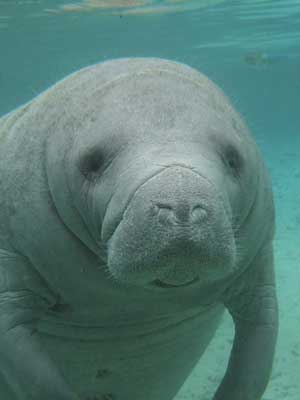
Manatee Reflections: How Can We Tell Right From Wrong When We Can’t Think Straight At All?
I think the greatest impediment to building an ethical culture is the relentless dumbing down of the culture, a process now driven as much by political factors as educational ones and Honey Boo-Boo. The last election showed that ours politicians fhave decisied that they only benefit from misleading and frightening the ignorant and logically impaired among us—all the better to persuade them to elect leaders not much smarter than they are, but probably more ruthless and dishonest. In so many corners of our society, there are no consequences for demonstrated intellectual incompetence.
The news media is a prime example. CNN’s Deborah Feyeric actually asked, on the air, whether the approaching asteroid last week was “the effect of, perhaps, global warming.” She is too ignorant to be on television: this is signature significance. I know science isn’t her usual beat, but nobody this incapable of basic logic should be interpreting news on the airwaves about anything. If she had announced the moon was made of cheese, or asked if anyone had ever found that pot of gold at the end of the rainbow, it could not have been any worse. CNN doesn’t care: she still has a job. Being jaw-droppingly stupid—the worse kind of stupid, so stupid you don’t even know how stupid you are—is no longer a bar to permanent employment in national media, in teaching, in business, in government. Probably Feyeric’s bosses thought she asked a reasonable question. Continue reading
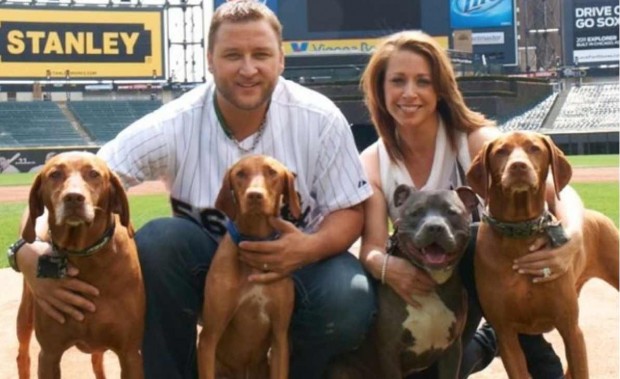
Dog Owner Ethics: The Suicide and the Pitcher

Does one of these nice creatures not belong in this picture? Ontario says yes. The correct answer is no.
Our life-changing events often become crises for our canine companions. In the news today: ethical and unethical responses in such circumstances, by two individuals in the public eye.
The Unethical
Mindy McReady, the troubled country music star, committed suicide Sunday on the front porch of the home she shared with her boyfriend, who had recently committed suicide there as well. She apparently killed the couple’s dog before taking her own life. McReady’s friends insist that she didn’t kill the dog out of malice, but because she didn’t want to leave the dog alone. Granted, McReady deserves consideration and compassion, since her actions that day were not those dictated by a healthy or fully functioning mind. Still, I read of dog owners doing this a lot, and I’ve known a few—not committing suicide, but killing their dogs when they knew they wouldn’t be able to keep them any more, on the theory that the dog would be happier dead than with new owners. Continue reading
Ethics Dunce: Any South Carolinian Who Votes For Disgraced Ex-Governor Mark Sanford
When Mark Sanford was last entrusted with high elected office in South Carolina, he…
- Carried on a clandestine adulterous affair with a South American “soul mate” when he was supposed to be serving as the governor of the state,
- Went AWOL from the state and his duties, telling aides that he was “hiking” in South America when he was really doing something very different in Argentina,
- Used official funds to pay for his personal affair,
- Lied about it,
- Humiliated his wife and family while embarrassing South Carolina and his party, and
- Was censored by the state legislature.
Now, displaying a level of gall only politicians and Hollywood actors can achieve, Sanford is back seeking office in South Carolina, running for the open seat in its 1st Congressional District. His strategy appears to be that old stand-by of the habitual miscreant, evoking the virtue of forgiveness and redemption, as well as suggesting that God wouldn’t rule out voting for him. In his first TV ad, Sanford says that he has learned about a “God of second chances.” Continue reading
Being Clear on Pete Rose and the Hall of Fame
Last week, I raised the greasy topic of Pete Rose, in fact defending Pete against the unethical efforts by Topps to avoid invoking his name on their cards, as if he were baseball’s Voldemort. Somehow, the comments morphed into debate about whether Pete deserves to be in the Hall of Fame, and I fear that my position regarding Pete’s qualifications was muddled in the various exchanges.
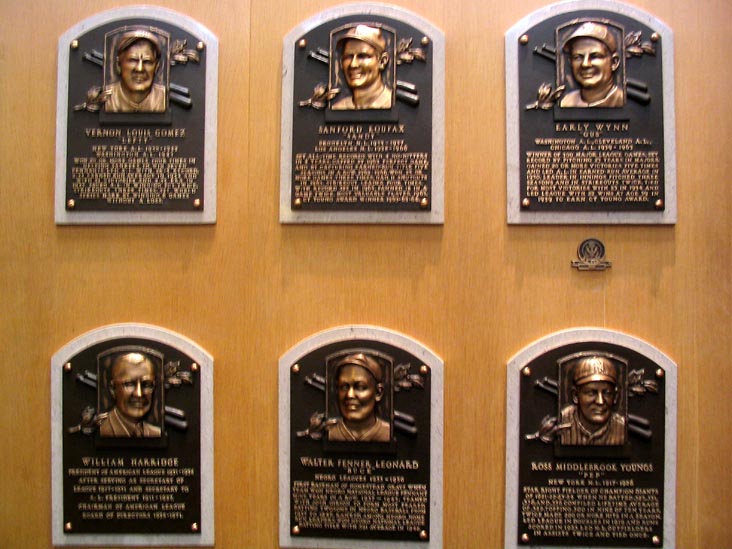
No, Pete doesn’t deserve to be in the Hall of Fame, for two very clear reasons. His conduct in betting on baseball games, including his own team’s games, while he was a Major League manager requires that he be banned from baseball for life under Rule 21 of Major League Baseball’s official rules, and the Major League Baseball Hall of Fame in Cooperstown has its own rule that makes any player so banned ineligible for enshrinement. Rose is prevented from admission to the Hall by those rules, which were in place when his conduct brought them into play. He doesn’t deserve to be in the Hall, because the rules say so. Pete Rose broke a cardinal rule that potential Hall candidates cannot break. The ethical reason he should not be in the Hall is accountability, or as Tony Baretta used to say on the old TV show, “Don’t do the crime, if you can’t do the time.”
Is there anything at all about Rose’s career record as a player that doesn’t qualify him for the Hall, indeed, over-qualify him? No. Unlike Barry Bonds or Mark McGwire, his statistics are beyond challenge or criticism. He didn’t cheat. He was a great and admirable player in every way.
Was there anything in his conduct as a player on the field, as a player off the field, or off the field as a retired player, that constituted such egregious misconduct that it would justify refusing his admission the Hall of Fame under its so-called character clause? [ “Voting shall be based upon the player’s record, playing ability, integrity, sportsmanship, character and contribution to the team(s) on which the player played.”]
Here is where I want to clarify my position. My answer to this is “No.” Continue reading
Artistic License, History, and Lincoln’s Green Socks
Several well-placed critics are taking “Lincoln” screenwriter Tony Kushner to task for what they believe are unethical misrepresentations of fact in the much-praised, and supposedly scrupulously accurate film. He, on the other hand, is annoyed. Kushner counters that unlike in history books where a historian gives a well-researched “a blow-by-blow account,” it is reasonable and ethical for a screenwriter to “manipulate a small detail in the service of a greater historical truth. History doesn’t always organize itself according to the rules of drama. It’s ridiculous. It’s like saying that Lincoln didn’t have green socks, he had blue socks.”
I’m going to spare Kushner lawyerly word-parsing and not hold him to “a greater historical truth,” though I suspect that in his hands (he is a skilled political propagandist as well as writer), we would not be pleased with what that license would bring. A politically sympatico film director named Oliver Stone, for example, thought it served a greater historical truth to present completely fictional evidence that Lyndon Johnson was complicit in John F. Kennedy’s assassination, even though Stone’s vehicle, “JFK,” was marketed as a veritable documentary on the “truth” of the Kennedy assassination. Let’s just say that Kushner feels that in a work of entertainment and drama, strictly accurate representation of all historical facts is impossible and unreasonable to expect or require.
I agree. But there is a big, big difference between the ethics of showing Lincoln wearing the wrong color socks, and representing a highly dubious story as fact to denigrate the reputation of a probable hero, as James Cameron did in “Titanic” when he showed First Officer William Murdoch taking a bribe to let a passenger on a lifeboat ( fantasy), shooting a passenger (pure speculation), and committing suicide (denied by a fellow officer under oath at the inquest). Continue reading