Ethical Quote Of The Week: Equality Kansas

“If the reports of Fred Phelps’ declining health are accurate, then his family and friends are certainly saying their good-byes and preparing to mourn his loss. We ask that everyone understand the solemnity of the occasion, and honor the right of his family and friends to remember and mourn his loss in private without interruption or unseemly celebration.”

— Sandra Meade, chairwoman of Equality Kansas, quoted in the group’s press release regarding the reported imminent death of Fred Phelps, whose Westboro Baptist Church specialized in harassing the private funerals of military veterans while hurling any gay slurs.

Protest At Ground ZeroExactly. Seldom has the temptation to yield to tit-for-tat tactics been more powerful. Seldom has the ethical duty to reject that temptation been more clear. Continue reading
Ethics Hero: Dick Masten—When Ethics Trumps Law

A heroic and ethical snack...

A heroic and ethical snack…

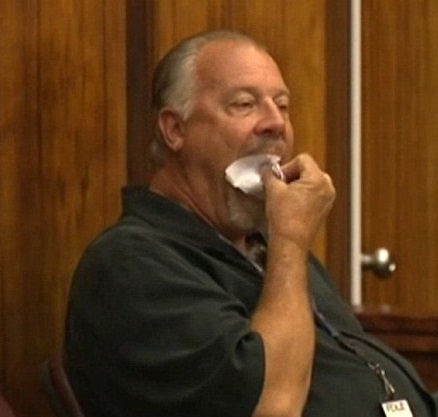
One way I can always start an argument on Ethics Alarms is to state my position that willfully breaking the law is per se unethical as a breach of citizenship. Like all rules, however, this one has exceptions. Dick Masten, the Director of Miami-Dade Crime Stoppers, recently demonstrated one of them.

The former police chief was ordered by Judge Victoria Brennan to reveal the name of a tipster in a cocaine possession case, State vs. Lissette Alvarez. Alvarez was arrested in 2013 and charged with cocaine possession. Brennan called for Masten to come into court and confer with her in chambers regarding the case. Miami-Dade Crime Stoppers sparked the eventual arrest after getting information from a tipster who was assured anonymity. Alvarez’s attorney insists that the tipster’s information is part of the evidence against his client, saying, “Ms. Alvarez, in this case, has every right to confront her accusers. But more particularly in this case, it’s not the accuser, but the evidence that the State will use against her.”

Ordered by the judge to reveal the name of the tipster, Masten, insisted that he couldn’t divulge information to be reviewed in closed court that might be discoverable as evidence. “There is a possibility that looking at certain documents, a defendant could work that case backwards and put the tipster at peril, and I’m not gonna let that happen,” he said. In a dramatic touch, Masten swallowed  a slip of paper that held the tipster’s name. “What is personal to me, is the promise,” Masten said before his ethical snack. “Some of these tipsters could end up dead. Not on my watch.” Continue reading

“My Little Pony” Ethics, Blaming the Victim, and the Dilemma Of The Bully Magnet

Rainbow Dash...awwww!

Rainbow Dash…awwww!

Nine-year-old Grayson Bruce likes “My Little Pony,” a long-running animated children’s TV show that has a cult following in the gay community. He decided to show his affection for the show by carrying his lunch in a “Rainbow Dash” themed bag featuring a popular equine character. Now some of Grayson’s fellow male students at the Buncombe County (North Carolina) elementary school he attends have stepped up their harassment of the boy as a reaction to his tastes in entertainment and accessories.

“They’re taking it a little too far, with punching me, pushing me down, calling me horrible names, stuff that really shouldn’t happen,” Grayson says. It’s not like he doesn’t understand why. “Most of the characters in the show are girls, and most of the people put it toward girls,” he notes. His mother complained to the school, and it says it is taking appropriate measures to deal with the bullies and bullying in general. It also told Grayson to leave Rainbow Dash at home, caliming that it is a “trigger for bullying” and a distraction. Mom, Noreen Bruce, objects. Continue reading

Ethics Dunce: CNN’s Chris Cuomo

Bob BarkerCNN morning anchor Chris Cuomo is a fascinating study in modern broadcast journalism. Handsome, engaging, obviously intelligent and wearing his New York liberal Democrat family’s brand for all to see, he will either become an annoying MSNBC-style left-wing media scold (like his dim predecessor Soledad O’Brien), manage to walk the perilous tightrope between fair newscaster and openly liberal commentator, or (my prediction) go into the Cuomo clan business and run for office. Lately, however, his adventures have me wondering if his ego will swallow his judgement, setting him on a trajectory for MSNBC itself.

On Wednesday’s New Day, Cuomo couldn’t hide his obvious disappointment over Florida Republican David Jolly’s victory in the much-watched Florida special Congressional election. He  noted that The Price Is Right theme music was played Jolly’s  victory rally on Tuesday, and expressed disgust: “What a metaphor for what politics has become – that they are playing the theme song of The Price Is Right when they celebrate a victory, because it’s about the money! It makes me sick.”

The impression Cuomo left was indeed disgusting, that Republicans were celebrating the triumph of their big money campaign over the Democrat’s similarly obscenely funded campaign, calling attention to their victory in what had become, due to its presumed bellweather status, a local race that had attracted support from deep-pocket king-makers from both parties. Ironically, Democrat Sink outspent the Republican Jolly, who won, making Cuomo’s indictment an example of selective prosecution. His indignation that the Republicans would be mocking the role of money in politics, however, seemed to justify his making them out to be villains. Continue reading

“Can The Democrats Find The Right Message On Obamacare?” You Mean Other Than, “We Lied To You And Gave You A Law That Doesn’t Work Right But You Should Still Trust Us To Fix It”?

One more time....

One more time….

“Can Democrats find the right message on Obamacare?” asks the Washington Post’s “Wonkbook,” as it reviews various strategic options for threatened Democrats after the party’s “fix Obamacare” candidate lost a winnable Congressional race in Florida. The question, objectively interpreted, really means “Can Democrats fool voters into trusting them one more time?” That’s a good question, and the answer is far from certain. The use of the word “right,” however, is cynical.  The Post means “effective.” The right message, as in the ethical and honest one, would have to be based on these undeniable and unpleasant facts: Continue reading

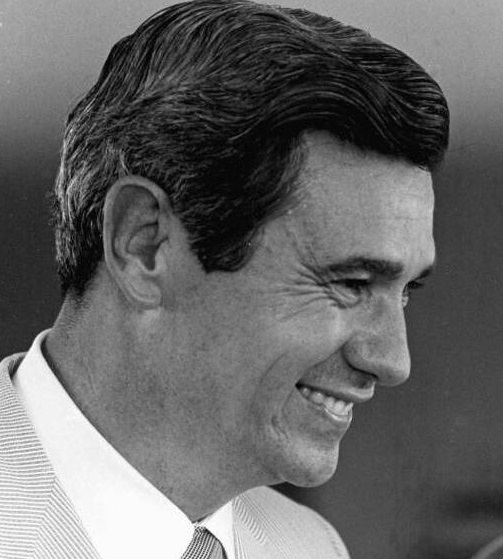
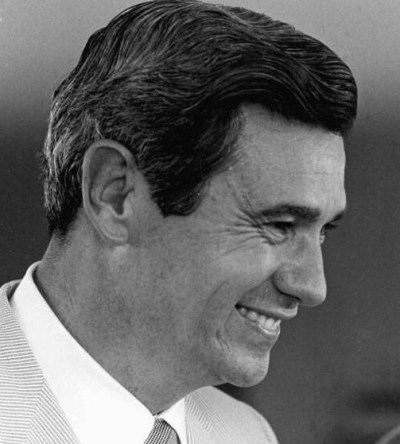
Ethics Hero Emeritus: Reubin Askew ( 1928-2014)

Askew

In a better United States where only character, demonstrated skill, experience and leadership ability were necessary to become President, Reubin Askew would have been one. Unfortunately looks, luck, money and timing are important too. Askew had the looks, all right; he just missed the other three.

Never mind. Reubin Askew, who died yesterday, did all right.

His father was an alcoholic, and soon his mother had divorced him and was supporting Reubin and his five siblings as a single mother in Pensacola, Florida. She worked as a waitress, seamstress and hotel maid, while Reubin shined shoes, bagged groceries, delivered newspapers and sold his mother’s homemade pies door to door to do his part to support the family. After graduating from high school in Pensacola,  Askew served two years in the Army and, thanks to the G.I. Bill, graduated from Florida State in Tallahassee, where he was elected student body president. He was an Air Force officer during the Korean War, and in 1956 graduated from the University of Florida law school. That same year he joined a Pensacola law firm, and married Donna Lou Harper, who remained his wife for 57 years, until he died.

Askew ran for Florida’s House of Representatives in 1958, and won. After four years in the House, and eight more as a state senator, he ran for governor.  He was already nicknamed  “Reubin the Good,” and his opponent, Republican Claude Kirk, ridiculed the well-publicized fact that Askew, a devout Christian, never drank, smoked or used curse words by referring to him as a “mama’s boy,” not tough enough for high office. Askew’s rebuttal: “I love my mama.”  He won easily. Continue reading

When The Truth Hurts, But A Lie Will Hurt More

see_no_evil_hear_no_evil_speak_no_evil

In the early stages of the  Monica Lewinsky scandal, President Bill Clinton infamously asked his then advisor-polster Dick Morris to research whether a lie or the truth would best serve Clinton’s purposes.  (Morris’s recommendation based on his polling data: “Lie your head off.“) The attitude that truth is just a conduct option with no more or less to recommend in it than various versions of spin, deceit, obfuscation, misrepresentation, fabrication and denial is endemic to politics, which is not to say that it is necessary or healthy. Lies can be justifiable tools of the trade in the utilitarian world of politics and government, but if there isn’t an accepted recognition that they are inherently harmful, lazy, undermine trust and tend to become addicting (See: Dick Morris and Bill Clinton), then the cure becomes worse than the disease.

The Presidency of Barack Obama should be remembered as a stark lesson in the danger of avoiding unpleasant truths. What focused my attention on this was an interview that featured journalist Geraldo Rivera opining that describing President Obama’s performance in the wake of the Ukrainian incursion “weak” was “unhelpful,” “borderline patriotic” and “accomplishes absolutely nothing but scoring cheap political points in the near future.” At the same time, this morning’s Washington Post is filled with commentators struggling with the Democratic Party’s Obamacare problem, following the disheartening defeat of Alex Sink in a special Congressional election in Florida. Some of those commentators argue that beleaguered Democrats should aggressively make the case that the Affordable Care Act is a roaring success. Or as Dick Morris would put it, “Lie your head off.” Continue reading

Family Ethics: The Rachel Canning Saga, Continued.

Rachel, pouting but loved.

Rachel, pouting but loved.

The latest turn of the bizarre Rachel Canning saga should have all parents asking themselves. “What would we do?”

Presumably, the answer is, “Exactly what Sean and Elizabeth Canning are doing.” Yes, even after filing a law suit against her mother and father demanding that they continue to support her after she defied their authority and moved out of their home…even after accusing her father of vague inappropriate behavior and her mother of cruelty…Rachel asked to move back into her childhood home. And her parents said, “Yes.”

Why? Because that’s how ethical families behave. Because it is the right thing to do. Because children…and she is still a child, though the law now treats her as an adult…screw up, say and do reckless, irresponsible and hurtful things, act ungrateful and spoiled, and then come crawling back, asking for forgiveness, because they know they will get it. Continue reading

50 Years After Kitty Genovese, Inhumans On A Bus

The title describes the public transit riders who watched this disturbing scene unfold on a Philadelphia bus, and did nothing:

2014 is the 50th anniversary of the infamous Kitty Genovese case, and dueling books on the incident either recount the accepted version that 38 people in an apartment building heard the 28 year-old woman’s screams as she was being stabbed to death but “didn’t want to be involved” and let her die, or adopt the revisionist theory that the apathy of bystanders was unfairly and inaccurately hyped by the news media. The incident on the Philadelphia bus tells me that the revisionists have a burden of proof that will be hard to meet. There was plenty of evidence already, like here, or here, or here, or here, or more recently here, that Kitty Genovese might not fare any better today. Continue reading

Ethics, Justice and Punishment: The Don Collins-Robert Middleton Case

Collins

Several readers sent me this case, which is as odd as it is horrible. In 1998, Don Willburn Collins allegedly attacked, possibly raped, and set on fire an 8 year-old boy named Robby Middleton when Collins was 13, and Middleton was only 8. Collins spent several months in juvenile detention but was released when prosecutors decided they did not have enough evidence to convict him. Middleton survived, permanently scarred and maimed, his health ruined. In 2011 he died of skin cancer, which doctors attributed to his burns. Shortly before he perished, he gave a video deposition accusing Collins of the crime.

Now a judge has ruled that Collins can be prosecuted for Middleton’s murder, since he died as a direct consequence of the attack 13 years earlier. Moreover, the judge said, he can be charged as an adult, though he was a juvenile when the attack took place.

The case raises many legal issues, and I am neither prepared nor interested in exploring those. I suspect that the task facing prosecutors is insuperable, given the time that has passed, issues of proof and law, and the gut feeling many jurors will harbor that such a conviction would be unfair.

I will render this ethics verdict, however: If Collins was the attacker, I believe it would be fair, just and ethical for him to be punished for it now as an adult, for that is what he is. Continue reading