The Academy’s “In Memoriam” Snubs: Much Better This Year—Thanks, Oscar

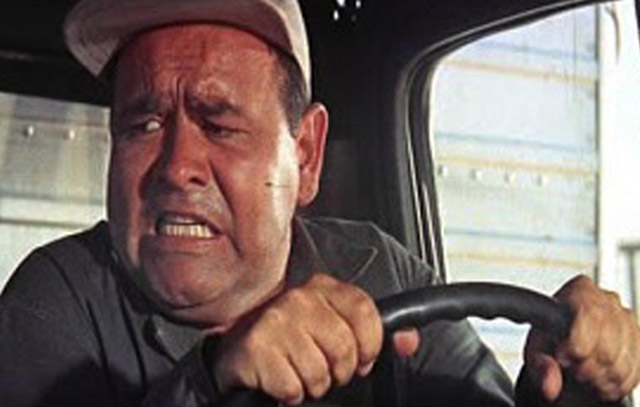
The great Jonathan Winters in the not-so-great "It's a Mad, Mad, Mad, Mad World"

The great Jonathan Winters in the not-so-great “It’s a Mad, Mad, Mad, Mad World”

In past years I have taken the Academy of Motion Picture Arts and Sciences to task for the ethical breach of ingratitude and disrespect, as the honor roll of the year’s deceased film notables have omitted important figures who deserved their final bows. Omissions are inevitable, I suppose, but some of the past examples were unforgivable—last year alone, for example, the Academy snubbed Ann Rutherford, Andy Griffith, R.G. Armstrong, Russell Means, Harry Carey, Jr., and Susan Tyrell. 2012 was worse.

2013, however, shows that the Academy is being more careful, and Oscar deserves credit for cleaning up its act. I have ethical and historical objections to bestowing the prestigious final slot on actor Phillip Seymour Hoffman, dead prematurely of self-inflicted drug abuse, when a genuine, bona fide Hollywood legend, Shirley Temple, was on the list. I understand the thinking: Hoffman had friends and colleagues in the room, and Temple is of another generation; his premature death was a tragedy, and she lived a long and productive life. Still, the priorities and relative values such a choice exemplifies is disturbing. Great actor that he was, Hoffman was a criminal, an addict, and left his children fatherless. Shirley was the greatest child star who ever will be, a ray of sunshine in the dark days of the Depression, a one-of-a kind talent and icon, and later a lifetime public servant who raised a family. She represented the best of Hollywood and the profession; Hoffman represents its dark side. Naturally, he’s the one who received the greatest recognition. I will suppress my dark suspicions that Shirley was docked because she was a Republican. A  Facebook friend actually wrote that Shirley deserved to be penalized because some of her movies were racist. My response to this slur was not friendly. Continue reading

Ethics Quote Of The Week: Matthew McConaughey

Matthew-McConaughey

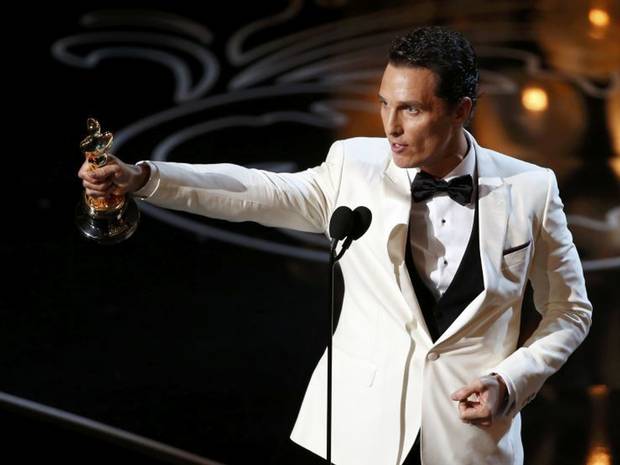
It happens but rarely: an Oscar acceptance speech with something of substance to communicate, other than a list of thank-yous. Yet last night was one of those rare occasions, as actor Matthew McConaughey used his well-deserved award for Best Actor to express his views on how to lead an ethical life:

Here is the text of his speech—much thanks to reader Phil Kraemer, who located it:

Thank you. Thank you, thank you, thank you, thank you to the Academy for this—all 6,000 members. Thank you to the other nominees. All these performances were impeccable in my opinion. I didn’t see a false note anywhere. I want to thank Jean-Marc Vallée, our director. Want to thank Jared Leto, Jennifer Garner, who I worked with daily.

There’s a few things, about three things to my account that I need each day. One of them is something to look up to, another is something to look forward to, and another is someone to chase. Now, first off, I want to thank God. ‘Cause that’s who I look up to. He has graced my life with opportunities that I know are not of my hand or any other human hand. He has shown me that it’s a scientific fact that gratitude reciprocates. In the words of the late Charlie Laughton, who said, “When you’ve got God, you got a friend. And that friend is you.”

To my family, that who and what I look forward to. To my father who, I know he’s up there right now with a big pot of gumbo. He’s got a lemon meringue pie over there. He’s probably in his underwear. And he’s got a cold can of Miller Lite and he’s dancing right now. To you, Dad, you taught me what it means to be a man. To my mother who’s here tonight, who taught me and my two older brothers… demanded that we respect ourselves. And what we in turn learned was that we were then better able to respect others. Thank you for that, Mama. To my wife, Camila, and my kids Levi, Vida and Mr. Stone, the courage and significance you give me every day I go out the door is unparalleled. You are the four people in my life that I want to make the most proud of me. Thank you.

And to my hero. That’s who I chase. Now when I was 15 years old, I had a very important person in my life come to me and say “who’s your hero?” And I said, “I don’t know, I gotta think about that. Give me a couple of weeks.” I come back two weeks later, this person comes up and says “who’s your hero?” I said, “I thought about it. You know who it is? It’s me in 10 years.” So I turned 25. Ten years later, that same person comes to me and says, “So, are you a hero?” And I was like, “not even close. No, no, no.” She said, “Why?” I said, “Because my hero’s me at 35.” So you see every day, every week, every month and every year of my life, my hero’s always 10 years away. I’m never gonna be my hero. I’m not gonna attain that. I know I’m not, and that’s just fine with me because that keeps me with somebody to keep on chasing.

So, to any of us, whatever those things are, whatever it is we look up to, whatever it is we look forward to, and whoever it is we’re chasing, to that I say, “Amen.” To that I say, “Alright, alright, alright.” To that I say “just keep living.” Thank you.

You have to wonder about the various tweeters and pundits who objected to McConaughey’s candor about his inner compass as “bizarre” (Time) or egomaniacal (several). Yes, by nature and necessity actors are unusually self-absorbed; the latter complaint is akin to faulting a dog show winner as inarticulate. What was admirable and inspiring about  McConaughey’s speech was his exuberant explanation of how his personal hero is always who he will be in the next ten years.

I doubt that this is an original formula, but I have never heard it before, and it is the essence of ethics: we strive to keep learning, getting better, and aspiring to be the best people we can be, or life is pointless. Ironically, this was also the lesson of “Groundhog Day,” the comedy masterpiece of the late writer-director Harold Ramis, whose name and career were evoked more than one during the Academy Awards broadcast. Having other people as heroes doesn’t accomplish much, unless we aspire to and learn from their values and conduct, and eventually  capable of similar heroism ourselves.

As for all those who are criticizing the actor for his religious sentiments: back off. Religion has played a major role in minting some good and remarkable human beings, and McConaughey seems to be one of them. If he chooses to thank God in his moment of exhilaration and triumph, that should be beyond reproach.
Ethics Blindness: The Pro-Abortion Ethical Disconnect

To anyone who is capable of compassion and objectivity, the abortion controversy represents a classic ethics conflict: two ethically defensible positions based upon undeniable ethical principles that are in opposition. Both factions have their absolutist wings which would deny the other side’s interests, holding that either the life of the unborn ( abortion opponents) or a woman’s autonomy (abortion advocates)  is such a societal priority  that nothing should be permitted to compromise its primacy in any way. Yet the best solution to most ethics conflicts, if possible, is balancing, resulting in acceptance of a  reasonable middle position that acknowledges the validity of both interests.

Recent comments from prominent pro-abortion advocates are ethically troubling, because they suggest a complete denial that any valid interests on the other side exist at all. This signals a retreat from reason and fairness into zealotry and fanaticism, and it makes balancing not merely more difficult, but unimaginable.
In an interview on the cable station Fusion, Planned Parenthood president Cecile Richards had this revealing exchange (video above): Continue reading

The Comfort Women Memorial Lawsuit: A “Disgusting” Legal Argument, Perhaps…Unethical, No

The Glendale Comfort Women Memorial

The Glendale Comfort Women Memorial

The large and respected law firm Mayer Brown has taken the ugly case of some Japanese-American clients who want the city of Glendale, California to remove a memorial to World War II “comfort women” from a public park. In doing so, and in the way it is proceeding, the firm has inspired harsh condemnation from two estimable legal commentators, both First Amendment champions: Marc Randazza, and Ken White. Their objections, which caused Randazza to call the firm “the least honorable law firm in the world,”and White to conclude, “This lawsuit is thoroughly contemptible. It should fail, and everyone involved should face severe social consequences,” are heartfelt, but, I think, misguided. Their argument, beside arguing that the lawsuit is frivolous, is best articulated by Randazza: Continue reading

Comment Of The Day: “It’s Time To Play The Exciting New Broadcast Media Ethics Game…”

pop-gun

Steve-O-in NJ, commenting on the post about President Obama’s weak response to the invasion of the Ukraine by an emboldened Russia. raises the broader ethical point of America’s duty to be militarily strong, one of the persistent areas of disagreement between liberals and conservatives, and one area where the right has it right, and the left is out in left field. It should be noted, however, that this problem is a direct consequence of the even greater one hanging over us: the relentlessly expanding National Debt, and the irresponsible lack of political courage and resolve to do anything about it other than let it get worse. This was most recently demonstrated by what we have learned about the President’s new budget proposal, which raised the ethical question, “Did Obama ever mean what he said about entitlement reform and serious debt reduction?”

Wrote Washington Post editorial chief Fred Hiatt—a liberal Democrat, like virtually all of his colleagues— last week:

It’s a relatively small thing, really, a fix to the calculation of cost-of-living benefits that would have helped save Social Security. But President Obama’s decision to drop the reform from his proposed budget hints at a bigger question: What does he believe in enough to really fight for?

To hear him in 2009, you would have thought that safeguarding Social Security was one such goal. “To preserve our long-term fiscal health, we must also address the growing costs in Medicare and Social Security,” he said. In 2010, he was even more determined: “Now, even after paying for what we spent on my watch, we’ll still face the massive deficit we had when I took office. More importantly, the cost of Medicare, Medicaid and Social Security will continue to skyrocket. . . . I refuse to pass this problem on to another generation of Americans.” Now the winds have shifted — his party wants to woo older voters by promising richer benefits, not reform — and Obama has moved on, too. Someone else will have to fix Social Security.

His turnabout on foreign policy has been even more dizzying. Three years ago, he was promising to support democracy movements throughout the Middle East and protect their advocates from government violence.

Hiatt, whom I generally respect, seems to be uncharacteristically slow on the uptake here. Many of us figured out way back in 2008 that Obama was a politician who would use whatever soaring rhetoric he thought would please the maximum number of voters, and that he had no idea how or whether to make his words reality….and does not yet.  Meanwhile, the Post’s fairest and most astute conservative pundit, Robert Samuelson, explained why Obama’s inaction on entitlements guarantees weakness in the world:

We are spending more and getting less, and — unless present trends are reversed — this will continue for years. It threatens the end of government as we know it.

The cause is no mystery. An aging population and higher health spending automatically increase budget outlays, which induce the president and Congress to curb spending on almost everything else, from defense to food stamps. Over the next decade, all the government’s projected program growth stems from Social Security and health care, including the Affordable Care Act. By 2024, everything else will represent only 7.4 percent of national income (gross domestic product), the lowest share since at least 1940, says Douglas Elmendorf, head of the Congressional Budget Office.

This is the central budget story, and it’s largely missed — or ignored — by political leaders, the media, political scientists and the public. The welfare state is taking over government. It’s strangling government’s ability to respond to other national problems and priorities, because the constituencies for welfare benefits, led by Social Security’s 57 million, are more numerous and powerful than their competitors for federal support. Politicians of both parties are loath to challenge these large, expectant and generally sympathetic groups.

With this as the depressing backdrop, here is Steve O’s excellent Comment of the Day on the post, It’s Time To Play The Exciting New Broadcast Media Ethics Game, “Biased, Lazy, or Incompetent!”: Continue reading

Ethics Dunce: Howard Kurtz…One Way Or The Other

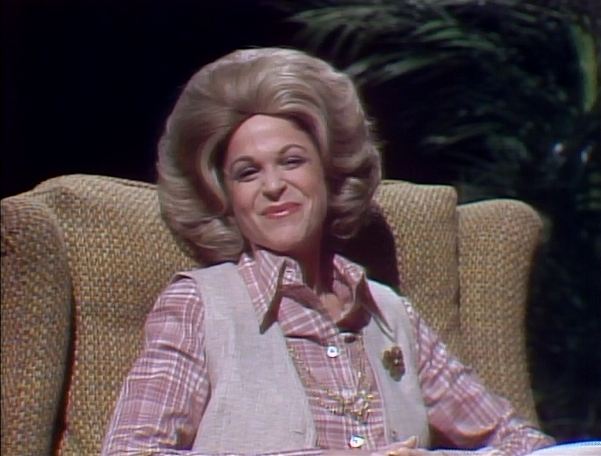
Radner as "Baba Wawa." Walters, oddly, never felt the need to respond...

Radner as “Baba Wawa.” Walters, oddly, never felt the need to respond…

Maybe the ethics component in the title is gilding the lily in this case. Fox’s Kurtz, in attacking what he perceives as the unfairness of Stephen Colbert’s barbs, certainly misunderstands the ethics of Colbert’s craft, but what he primarily proves is that he’s a dunce…what kind of dunce, it’s difficult to tell. Is he the kind of dunce who can’t take a joke? Or is he the kind of  dunce who doesn’t realize he should leave the gags to professionals?

The former media ethics watchdog for the Washington Post, CNN and the Daily Beast, now playing that role for Fox News (all oxymoron jokes gratefully accepted), says that he has finally had his fill of being mocked by Colbert, the Comedy Central satirist whose gimmick is playing a conservative fool in order to ridicule real ones.

“It’s about time someone took on Stephen Colbert,” Kurtz wrote in what is either  serious piece on Fox News Insider, or a criminally inept attempt at ironic humor. “This guy—a fake anchor if ever there was one—has been maligning hard-working journalists for too long. Journalists like me. In an effort to get a few cheap laughs, this Comedy Central clown took my work out of context and, worse, engaged in selective editing. It was nothing less than a deliberate attempt to mislead viewers.”

Uh, Howie? Continue reading

LEGO Ethics: When Political Correctness Doesn’t Hold Up To Reality

LEGO is under fire from gender equality activists for offering a feminine-oriented version of the brightly-colored construction blocks, dubbed the Friends line, that is aimed to appeal to the tastes of little girls. This special  version of plastic bricks and mini-figures was launched in 2011:

“Unlike the bright primary colors of the regular Lego sets, the Friends colors tend toward pink and purple and soft pastels. The comical mini-figures of the regular Lego lines have been replaced by five slender and stylish plastic tweens of various ethnicities, each with her own narrative story, along with puppies, kitties, “My Little Pony”-style horsies and baby animals ranging from penguins to lions. Little girls are encouraged to build things, all right: patios, cozy kitchens, cafes, beauty shops, doghouses for the puppies, stalls for the horses, all characterized by a level of decorative detail unknown in the regular Lego universe.”

And guess what? Girls like it! LEGO had found that its market was 90% male, so it came up with LEGOS that indeed do engage little girls more than the traditional sets.  Friends ended 2012 as LEGO’s fourth-best-selling product line. The number of girls playing with and enjoying LEGOs tripled. Continue reading

It’s Time To Play The Exciting New Broadcast Media Ethics Game, “Biased, Lazy, or Incompetent!”

Time to play

Ready to play, contestants?

All right! For your first test, consider President Obama’s recent statement in response to signs that Russia is preparing to invade Crimea in the Ukraine as an opportunistic territory grab made possible by the collapse of the Ukrainian government. He said in part…

” …we are now deeply concerned by reports of military movements taken by the Russian Federation inside of the Ukraine. Any violation of Ukraine’s sovereignty and territorial integrity would be deeply destabilizing, which is not in the interests of Ukraine, Russia, or Europe… The United States will stand with the international community in affirming that there will be costs for any military intervention in Ukraine.”

For background in answering this question, President Obama has often made sweeping threats regarding foreign oppression and military adventurism, but has established a pattern of doing little or nothing when the actions he warned other governments against taking occurred anyway. His “red line” warning about Syria was the most egregious example, but there have been others. Reporting on the most recent “warning” by the President, CBS stated that his credibility in such situations was “somewhat shaken” by the Syria debacle. [LAUGH SIGN FLASHES] I know, that’s a good one, isn’t it? “Somewhat” shaken! Elsewhere, conservative columnist Charles Krauthammer pronounced Obama’s statement as flagrantly weak: Continue reading

KABOOM! “Discrimination In Portugal,” The Sequel

exploding_head

First I checked, double-checked and triple-checked to see if this was a hoax. Then, once I was confident that it was true, I allowed my head to explode.

The headline to today’s head-blasting post requires a bit of explanation.

As a senior at Arlington High School (Massachusetts), I was editorial editor of the school newspaper, The Arlington High Chronicle. I had to choose, edit and publish the best of the submissions from the staff, and usually wrote the lead editorial myself. Well, one week I was up against a deadline and had nothing to fill an empty space on the page except a dog’s breakfast of miserably written options. Desperate, I decided to turn the crisis into an opportunity. I took the worst of the articles, cut out each line, mixed them up in a bowl and picked them out at random. Then I retyped the incomprehensible result, adding capitals and punctuation, and headlined it “Discrimination in Portugal.” That was how it was published. I always suspected that nobody read the editorials; this was my chance to find out if my suspicions were correct.

Nobody said a word. The paper got one letter from a student saying that he disagreed with the piece, but other than that, there was no evidence that anyone noticed that one of the editorials was complete gibberish.

Now this, from Nature:

“The publishers Springer and IEEE are removing more than 120 papers from their subscription services after a French researcher discovered that the works were computer-generated nonsense.

“Over the past two years, computer scientist Cyril Labbé of Joseph Fourier University in Grenoble, France, has catalogued computer-generated papers that made it into more than 30 published conference proceedings between 2008 and 2013. Sixteen appeared in publications by Springer, which is headquartered in Heidelberg, Germany, and more than 100 were published by the Institute of Electrical and Electronic Engineers (IEEE), based in New York. Both publishers, which were privately informed by Labbé, say that they are now removing the papers.” Continue reading