Ethical Quote Of The Week: Andrew Sullivan

You are dead to me, Firefox. Tell your mama.

You are dead to me, Firefox. Tell your mama.

“Will he now be forced to walk through the streets in shame? Why not the stocks? The whole episode disgusts me – as it should disgust anyone interested in a tolerant and diverse society. If this is the gay rights movement today – hounding our opponents with a fanaticism more like the religious right than anyone else – then count me out. If we are about intimidating the free speech of others, we are no better than the anti-gay bullies who came before us”

—-Blogging pioneer and gay rights advocate Andrew Sullivan, writing yesterday about Mozilla’s craven capitulation to gay rights bullies who demanded the removal of new CEO Brendan Eich “who had the gall to express his First Amendment rights and favor Prop 8 in California by donating $1,000.”

Corporations, as the Duck Dynasty flap depressingly illustrated, tend to be spineless, irresolute and principle-free. This instance of that tendency, however, is more alarming and harmful than most. Capitulating to arrogant, self-righteous, power-hungry forces on the left or right only makes them more voracious: we will know who to thank first when boycotts abound demanding that anyone who questioned Al Gore’s climate change hysteria be sacked.

Thank you, Mozilla.

Continue reading

Unethical Website of the Month: “I Love Dogs”

This isn't the puppy in the post, but I've been looking for an excuse use this photo...

This isn’t the puppy in the post, but I’ve been looking for an excuse use this photo…

I love dogs too, but encouraging people to beat alleged animal abusers to the verge of death just doesn’t seem right to me. I’m funny that way.

Indeed, I wonder about the values and mental stability of those who think this is a rational and ethical response to the perpetrator of any kind of crime, not just animal abuse.

“I Love Dogs” has sent into the web a virtual “Wanted Poster” with a photo of a real human being, ostensibly a canine abuser who “nearly beat this pup”—also pictured—“to death.” The poster suggests that readers should share the poster if they “believe that he deserves the same.”

Sure enough, many do. The post has gleaned many thousands of likes, about 5000 shares, and a wave of comments like those that follow here. I’ve included the names of the posters, who obviously didn’t think their comments were anything to be ashamed of. I wish I could include the thousands more like them, but there is too much anonymity in crowds. Posting the commenters’ names that appear below is a public service. I suggest avoiding them. Also proofreading their work, as they all appear to have dropped out of the third grade…

Continue reading

Ethics Dunce: Belmont Law School

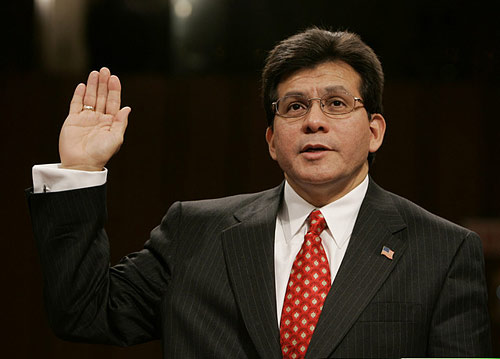
Gonzalez

Belmont Law School, in Tennessee, has appointed former Bush Attorney General Alberto Gonzalez as its new dean.

Unbelievable.

Here is law professor/blogger Jonathan Turley’s reaction, in part. I concur completely, and cannot improve on it:

“Gonzales is widely blamed for politicizing the Justice Department, destroying its credibility, appointing substandard officials, and turning a blind eye to egregious violations like the torture and surveillance programs. …For many, this appointment looks like a provisional law school accepting an equally provisional lawyer as dean. Gonzales will not help the law school’s reputation. The school defines itself as “Belmont University is a student-centered Christian community providing an academically challenging education that empowers men and women of diverse backgrounds to engage and transform the world with disciplined intelligence, compassion, courage and faith.” Gonzales has declared that he is committed “to make Belmont the greatest law school that it can be.” Given the fact that Gonzales took a department with a stellar reputation and devastated both its professionalism and reputation, that statement is rather chilling.”

If that weren’t enough, the appointment also means that there is now a precedent for appointing Eric Holder as a law school dean some day.


Further Thoughts On “The Vampire Candidate”

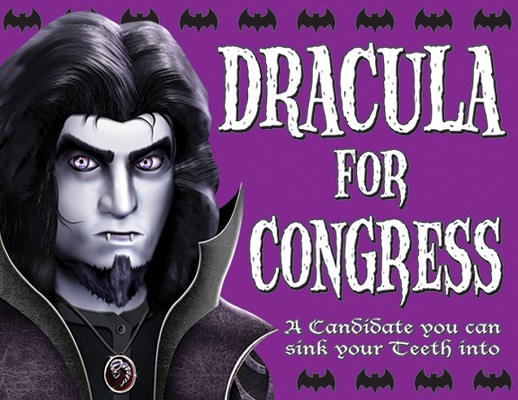
dracula for congress

I don’t want to make this Vampire Day, but after reading the comments so far on today’s Ethics Quiz involving Florida Congressional candidate/ fantasy vampire role-play enthusiast Jake Rush, I realize that the original post omitted some important points and queries. Here, in no particular order, are my further thoughts:

  • The Ick Factor? Both conservative and liberal commentators are ridiculing Rush, essentially concluding that his hobby disqualifies him as a serious candidate. The most quoted source referred to the images embraced by Rush’s role-playing group as “disturbing,” “bizarre,” and “unsettling.” Do these reactions signal a rejection of Rush’s values, or is this a clear-cut example of the “Ick Factor,” which is often mistaken for unethical conduct? Strange does not mean wrong or unethical.
  • Trust. When we elect leaders, we must trust them. “Strange” by definition suggests unpredictability; if we don’t understand why people do what they do, it is hard for us to know how they will behave, and if we don’t know how they will behave, we can’t rationally trust them.
  • Integrity. I should have raised the issue of integrity, for it is critical to the problem. Integrity is essential to trust, and a candidate like Rush raises the question: “Who, or what, is this guy?” Is he a “straight-shooting” conservative who likes to play vampire in his spare time, just like some politicians like to play poker or watch synchronized swimming (now that’s what I call weird), or is he a wannabe creature of the night who is just playing a conservative Republican in the daytime to conform to the expectations of conventional society? If there is doubt about that, then his integrity is in question.

Continue reading

Ethics Quiz: Trust and the Vampire Candidate

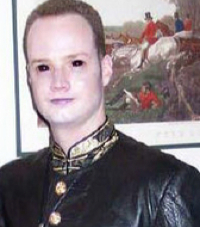
jake-rushConservative Republican candidate Jacob A. Rush, a 35-year-old attorney, has begun a campaign in Florida’s 3rd Congressional District to win the primary against incumbent U.S. Rep. Ted Yoho, a Tea Party stalwart seeking a second term. Rush’s campaign website portrays  him  as a “conservative straight shooter,”and he may indeed be that. A Florida blog uncovered the fact that Rush is also, however, a long-time member of the Mind’s Eye Society,  “a nationwide community of gothic-punk role-players who take on the personas of vampires and other supernatural beings” for fantasy battles “against their own bestial natures, hunters, and each other.”

It’s all fun and games with improvisational theater tossed in, though with a decidedly adult set of themes. Rush liked ( likes?) to play a character named “van de Winst”, a lusty vampire, and photos of the lawyer were found on the web showing him and/or members of his club, playing vampire,  burning books, aiming shotguns at dogs, pretending to be demons, displaying Satanic symbols, being chained and gagged…you know, that kind of thing. Fun stuff.

After this all came out—how could he think it would not?—Rush explained in a press release:

“All my life, I’ve been blessed with a vivid imagination from playing George Washington in elementary school to dressing up as a super hero last Halloween for trick or treaters. Any cursory review of the Internet will show that I have played heroes and villains…. I have never hid nor shied away from disclosing my hobby activities. When I was hired at the Sheriff’s office, I fully disclosed my gaming and theatre background on the application, and these hobbies posed absolutely no problem or raised any flags. In fact, when applying for undercover work, these hobbies were considered an advantage, so much so my shift lieutenant nicknamed me ‘Shakespeare.'”

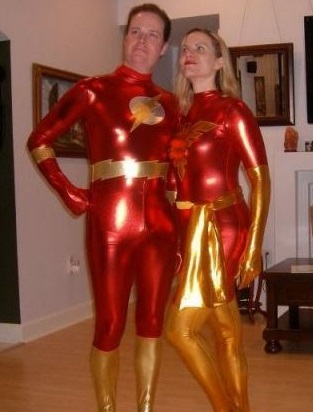
And he included this photo of him and his wife…

Rush and wife

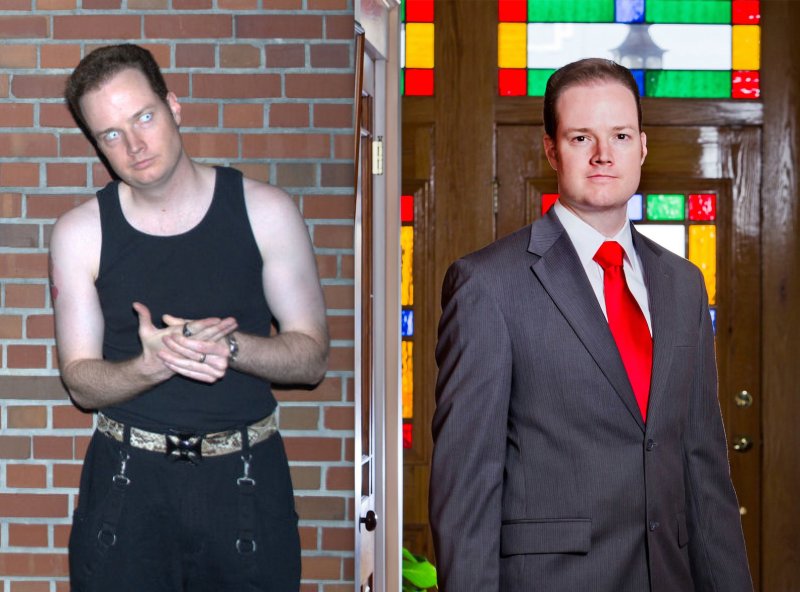
…wisely choosing not to send this one:

Rush vanpire

WOW.

And thus your Ethics Alarms Ethics Quiz for today is….

Is it  Jacob Rush’s unusual personal hobby relevant to his ability to serve in Congress?

Continue reading

Correction: Incompetent Elected Official Of The Month, Maricopa, Arizona Vice-Mayor Ed Farrell, Is A DEMOCRAT, Not A Republican. Why Didn’t I know That?

So THIS would be a Democrat,  then. Right?

So THIS would be a Democrat, then. Right?

A helpful reader writes:

“I am a proud Arizonan who has enjoyed seeing all of the coverage on Mr. Farrell. However you as well as most of the publications that have highlighted his gaff have mistakenly called him Republican.  Mr. Farrell as well as his entire farming and school administrating family are long time Dems. Fact checking on that tidbit went unnoticed by several. Funny how the idiots are always Republican through a liberal eye. Eager to see your correction.”
And here it is. I plead guilty to stereotyping, although Mr. Farrell’s central malady, being bewildered by homosexuality, is certainly far more common on the Republican side of the aisle than the Democratic. His other malady—he appears to be an idiot–is not the exclusive characteristic of members of either party.  Since I don’t have a “liberal eye,” that is not what led me to misidentify him. I swear, I looked. The news reports I found didn’t give his party, and being reluctant to spend too much time on a vice-mayor,  I finally concluded that the odds overwhelmingly favored him being on the Red Team.
I should have looked a little harder and better, obviously, but I am now officially annoyed.

Continue reading

Now THIS Is An Unethical Sentence!

This time, it's the Judge who has "affluenza"...

This time, it’s the Judge who has “affluenza”…

He’s not a juvenile. He’s a middle-aged man, and a DuPont heir, living off of his trust fund. He’s also a child rapist, and the child he raped was his daughter, who was three.

Nonetheless, Delaware Judge Jan Jurden sentenced Robert H. Richards IV to treatment rather than jail.

Continue reading

Hope Lives! D.C. Votes For Ethics

Time for a new fish head in the District of Columbia.

Time for a new fish head in the District of Columbia.

A continuing battle on Ethics Alarms, one that bursts into flame when elections loom, is whether it is responsible to vote for an unethical candidate for office because he or she supports policies the voter favors. I resolutely vote “no” on that proposition, believing that in the long run, government and society are better served by plodding but trustworthy public servants than wily and corrupt ones. The ideal, of course, is to find candidates who are competent, trustworthy, dedicated and who pursue effective policies. Good luck.

Few cities have embraced the opposite of the Ethics Alarms approach more consistently than the District of Columbia. The nation’s most liberal region has traditionally chosen to ignore corrupt city officials, and has paid a high price. A culture of corruption has been festering in the District for decades, spear-headed by the smug, machine-politics reign of Marion Barry, elected both before and after a prison sentence for possessing crack (in the midst of an anti-drug campaign for schoolchildren, naturally). Barry still pollutes D.C. government as a city councilman, but his legacy is complete: the whole government is an ethics sewer.

In 2013, more than thirty D.C. employees were arrested, indicted, pleaded guilty or were sent to jail from  such diverse cesspools as the D.C. Department of Employment Services, the Department of Human Services, the Children and Youth Investment Trust Corp., a city-owned hospital, the Office of Campaign Finance, D.C. Medicaid, the Corrections Department, a charter school and Medicare. The tally of money embezzled, accepted in bribes, defrauded or spent on illegal political campaign contributions was about $19 million. Former D.C. Council member Harry Thomas Jr. pleaded guilty to stealing $350,000 in taxpayer money meant to benefit children. Former council chairman Kwame Brown pleaded guilty to a felony bank fraud charge; and former council member Michael A. Brown confessed to an illegal bribery scheme. Colbert King, the Washington Post’s city beat columnist who tirelessly urges the city to clean up its act cataloged the extent of D.C.’s corruption last year. He pointed out:

Continue reading

Unethical Quote of the Month: OkCupid

Not OK...

Not OK…

“Hello there, Mozilla Firefox user. Pardon this interruption of your OkCupid experience. Mozilla’s new CEO, Brendan Eich, is an opponent of equal rights for gay couples. We would therefore prefer that our users not use Mozilla software to access OkCupid. Politics is normally not the business of a website, and we all know there’s a lot more wrong with the world than misguided CEOs. So you might wonder why we’re asserting ourselves today. This is why: we’ve devoted the last ten years to bringing people—all people—together. If individuals like Mr. Eich had their way, then roughly 8% of the relationships we’ve worked so hard to bring about would be illegal. Equality for gay relationships is personally important to many of us here at OkCupid. But it’s professionally important to the entire company. OkCupid is for creating love. Those who seek to deny love and instead enforce misery, shame, and frustration are our enemies, and we wish them nothing but failure.”

—Dating website OkCupid, calling for a boycott of Mozilla, including Firefox, its webserving software, because of the past political/social/religious views of Mozilla CEO Brendan Eich

Full disclosure: 1) I use Firefox. 2) I detest boycotts,and 3) I am biased against them by nature, because they are almost always coercive, extortive, and unfair.

This statement, however, has more wrong with it than just its advocacy of a boycott.

Continue reading

Comment of the Day: “Ethics Rant: Here Is The Smoking Gun Proof That The Government Doesn’t Care How Much Money…”

Whatever anyone might think of Ethics Alarms, it can’t be accused of not being eclectic. Today’s Comment of the Day illustrates the point, with an impressive  and informative debut by new commenter Dave on the cost savings to be had based on choice of  printing fonts, and more. The original post used a sixth-graders science project conclusion that our federal and state governments could save hundreds of millions of dollars by simply conserving ink as a departure point for a general critique of government diligence, responsibility, and competence.

Here is his exposition, inspired by the post, Ethics Rant: Here Is The Smoking Gun Proof That The Government Doesn’t Care How Much Money It Wastes, Or, In The Alternative, That It Isn’t Run By Sufficiently Competent People To Be Trusted To Spend What It Does:

The most important aspect of the 14 year old’s study is valid. You can save money with a better font. How you get there is not important. So I support the hypothesis of the study. Of course, as in almost all studies, it requires more study. Adding paper to the mix makes it more hopeful.

I like his study for three reasons:

1. It puts ink and paper into the public discussion
2. It illustrates that really large numbers times really small numbers equals a big number.
3. It moves us ahead in our quest to the use of something other than Times New Roman. It’s a newspaper font!

First off, names are useless in discussing typefaces as they were trashed by the patent/copyright office many years ago. Garamond is one of dozens of great type families. Each has it’s unique features but most do not perform optimally in all applications. The criticism of using Garamond in the testing misses the point entirely. Successfully curtailing the weight of an optimized font, versus a newspaper font, to image on bond paper is likely. Let’s move on from nitpicking Garamond. 

Ink is measured in dimes with inkjet, nickels with toner and pennies with printer’s ink. Breaking down the imaging techniques of all government documents is a massive effort, census like. But, for now, let’s address word processed documents. This is probably the largest population of original documents. (We’re not going to make much headway in savings attacking the professional typeset material that is printed in the millions.)

Given we tune a font for ink/toner use, one of the last considerations influencing legibility and readability of a word processed document is typeface. Because MS Word is used exhaustively for this application, I would order the priorities leading to better legibility and readability as follows:

1. Word Spacing. You can see in the example used to trash the study (3rd line of Garamond) It’s like talking to someone who says “uh” every other word.

2. Serifs v. Sans Serif. This choice is more of a readability thing than a legibility thing.  I choose sans-serif for heads (eliminating the need for bold italic serif fonts) and serif for text  when I create a typical Word doc. Generally, type really doesn’t have to be serif if the document is short but the longer it gets….

3. Line Measure. This goes together with word spacing, the longer the measure the worse word spacing becomes with MS Word. And personally I have attention issues so I need a break more often.

4. Body leading. Otherwise known as line spacing in the world of glorified type writers; it’s like word spacing only in the vertical direction.

5. Letter-spacing. This is font design dependent but not typeface dependent. They can screw this up no matter how the the letters look. It’s one of MS Times New Roman most nasty offenses. It’s not only looks awful, it wastes paper.

6. Hyphenation and Justification (H&J). Justified type is lined up on both sides of the page. Word Processors are not good at this, MS is particularly bad at both H&J.  It’s an old requirement with setting type, but it helps readability with long documents. It generally saves paper to boot but it’s not worth botching up word spacing to get these advantages. (It’s not as critical with 1-2 page documents so that’s why it’s 6th on the list.)

7. Type Style. If we excel at all of the above, like professional design software, then the particular type design is a factor. Because we are focused on text, the theory is if we significantly adjust the design for 12 point and with word processing in mind we can do well here in ink savings.

8. Paper color. Office paper is very good here.

9. Type color. Anything other than black type can’t be discussed here but it is realistic to discuss grey. I exclusively  use draft mode on my inkjet printer and nobody notices.

10 . Room light. Using serifs or not and setting an appropriate type size is about wearing out your eyes with too little or too much light. Serifs on text cut back on light, while size impacts detail helping legibility. Sans serif type in headlines are not an issue because they are short and it provides contrast with the text.

So, the student’s focus on the smaller, most used type is appropriate. The focus on weight relative to ink usage is also appropriate. A focus on more sophisticated typography than MS offers today would significantly impact paper usage, even without using two sided features we have today.

TrueType, GX stuff, et al were all awesome in 1996, a big accomplishment. They are still relevant for designers, but here we are stuck with MS Word; Opentype features are wasted. Moving to a maybe more primitive technology but optimized for both savings and readability would be a good start towards the $400 million goal.

We are in a transition period, so it may be awhile. Saving money along the way to fully electronic isn’t a bad thing. These no valid reason to make trade offs during the transition. It will be complicated but in step with the transition. All ideas are worthwhile, there is no reason not to implement all of them.


Continue reading