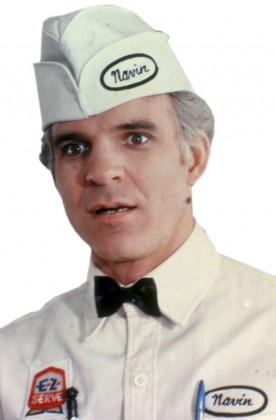
Actually, no. The OTHER kind…
In Aeon Magazine last month, philosophy professor Eric Schwitzgebel provided a serious essay on the nature of “jerkitude.” It is also an excellent essay, and useful. “Jerk” is a designation that I have occasion to use frequently on Ethics Alarms, and for the most part, Schwitzgebel convinced me that I have been using it properly. Some excerpts…
- “Over time, however, ‘jerk’ shifted from being primarily a class-based insult to its second, now dominant, sense as a term of moral condemnation. Such linguistic drift from class-based contempt to moral deprecation is a common pattern across languages, as observed by Friedrich Nietzsche in On the Genealogy of Morality (1887). (In English, consider ‘rude’, ‘villain’, ‘ignoble’.) And it is the immoral jerk who concerns me here.”
- “I want to extract that morally important thing, to isolate the core phenomenon towards which I think the word is groping. Precedents for this type of work include the Princeton philosopher Harry Frankfurt’s essay ‘On Bullshit’ (2005) and, closer to my target, the Irvine philosopher Aaron James’s book Assholes (2012). Our taste in vulgarity reveals our values.”
- “I submit that the unifying core, the essence of jerkitude in the moral sense, is this: the jerk culpably fails to appreciate the perspectives of others around him, treating them as tools to be manipulated or idiots to be dealt with rather than as moral and epistemic peers. This failure has both an intellectual dimension and an emotional dimension, and it has these two dimensions on both sides of the relationship. The jerk himself is both intellectually and emotionally defective, and what he defectively fails to appreciate is both the intellectual and emotional perspectives of the people around him. He can’t appreciate how he might be wrong and others right about some matter of fact; and what other people want or value doesn’t register as of interest to him, except derivatively upon his own interests. The bumpkin ignorance captured in the earlier use of ‘jerk’ has changed into a type of moral ignorance.”
- “The opposite of the jerk is the sweetheart. The sweetheart sees others around him, even strangers, as individually distinctive people with valuable perspectives, whose desires and opinions, interests and goals are worthy of attention and respect. The sweetheart yields his place in line to the hurried shopper, stops to help the person who dropped her papers, calls an acquaintance with an embarrassed apology after having been unintentionally rude. In a debate, the sweetheart sees how he might be wrong and the other person right.”
- “The moral and emotional failure of the jerk is obvious. The intellectual failure is obvious, too: no one is as right about everything as the jerk thinks he is. He would learn by listening. And one of the things he might learn is the true scope of his jerkitude – a fact about which, as I will explain shortly, the all-out jerk is inevitably ignorant. Which brings me to the other great benefit of a theory of jerks: it might help you figure out if you yourself are one.”
The rest is equally provocative, enlightening, and accurate.
______________________
Source: Aeon
 Ethics Alarms
I like the Wikipedia definition of a jerk as “a contemptibly obnoxious person.” The distinction of acting like a jerk vs. predictably being a jerk is important. All of us with the possible exception of saints (if they exist) probably act like jerks at times. However, those that are jerks have some deep seated problems with narcissism, entitlement, and possible sociopathic behavior. I have a suspicion that there are less jerks in small towns and in some countries as other people residing in these places will call them on it.