“Boobs on the Ground” Ethics

"we have met the boob, and it is me."

“We have met the boob, and it is me.”

I was going to make this an Ethics Quiz, but that dignifies Eric Bolling’s crude and disrespectful comment on Fox’s “The Five” more than it deserves. Would I accept such a sophomoric “quip” at a dinner party of close friends, at a bachelor party, in a group of women who knew me and could tell when I was intentionally tweaking them, in a setting where groans and objects thrown at my head were appropriate?  Oh, probably. I’ve made worse jokes myself, knowing how bad they were, knowing they were offensive, knowing that I had the good will of my companions and that they would take them the right way. But as a presenter in a seminar? As a panel member? In an auditorium? Over the radio? On TV? Never.

Any statement is defined to some extent by the audience it was intended for (See: Sterling, Donald) For a supposed broadcast professional to say what Bolling said about the United Arab Emirates‘s first female pilot who served as the flight leader during air strikes in Syria (“Would that be considered boobs on the ground, or no?”) can’t be excused or justified: Continue reading

Ethics Hero: American League Batting Champion Jose Altuve

Altuve

There was another baseball Ethics Hero who emerged on the last day of the regular season yesterday. File it under “Sportsmanship.”

Houston Astros secondbaseman  Jose Altuve (at less than 5′ 5″, the shortest athlete in a major professional sport) began the day hitting .340, three points ahead of the Tigers’ Victor Martinez, who was at .337. Even with all the new stats and metrics showing that batting average alone is not the best measure of a baseball player’s offensive value, a league batting championship remains the most prestigious of individual titles, putting a player in the record books with the likes of Ty Cobb, Ted Williams, Rogers Hornsby, George Brett, Ichiro Suzuki and Tony Gwynn. It’s still a big deal. If Altuve didn’t play in Houston’s meaningless last game, Martinez would have to go 3-for-3 to pass him, giving the DH a narrow .3407 average compared with Altuve’s .3399. By playing, Altuve would risk lowering his average, providing Martinez with a better chance of passing him.

Many players in the past have sat out their final game or games to “back in” to the batting championship, rather than give the fans a chance to watch a head to head battle injecting some much-needed drama to the expiring season. ESPN blogger David Schoenfield recounts some of those episodes here.

Altuve, however, gave Martinez his shot. He played the whole game, had two hits in his four at-bats, and won the American League batting title the right way—on the field, not on the bench.  (Martinez was hitless in three at bats.)

The conduct, simple as it was, embodied fairness, integrity, courage, respect for an opponent, and most of all, respect for the game.

Sportsmanship lives.

Dear Political Blogs: Be As Partisan As You Like, But Don’t Make Your Readers Stupid

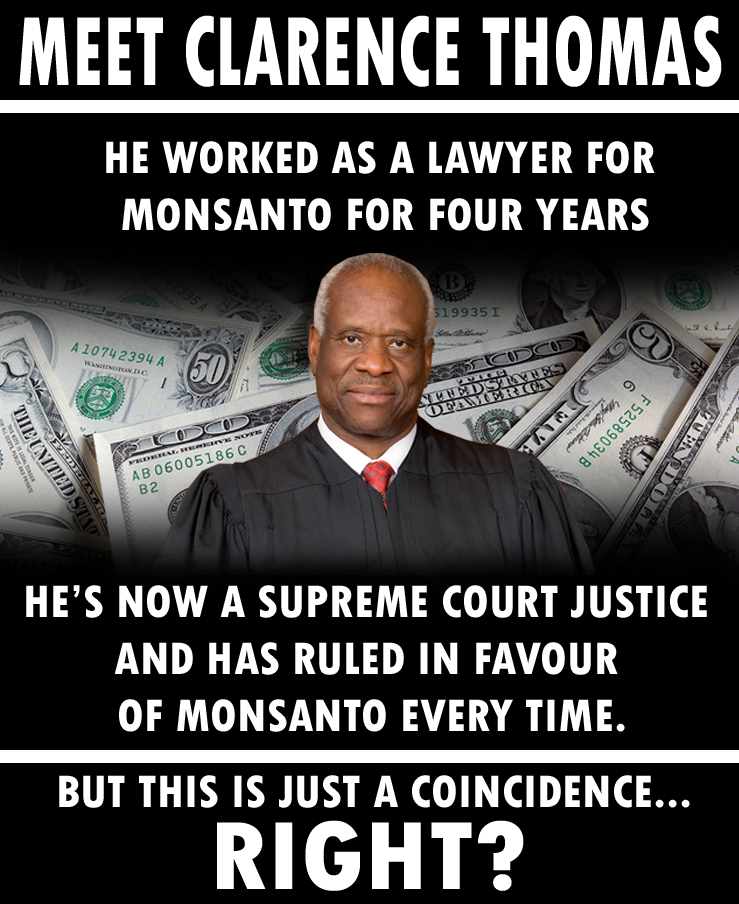
It's a coincidence that Monsanto had the better legal argument each time, yes. Is that what you mean?

It’s a coincidence that Monsanto had the better legal argument each time, yes. Is that what you mean?

It pains me greatly when a Facebook friend (and real friend too) posts something from a right-wing or left-wing website that is ignorant and misleading, as if she has something enlightening to share. Then I am forced to point out that 1) the post was written by someone pretending to have knowledge he did not; 2) those agreeing with him and assuming he had a valid point are hanging out with like-minded partisans who reinforce each others’ happy misconceptions, and 3) that the lawyers who cheer on conclusions that can only be explained by the fact that the concluder can’t spell law, much less under stand it. This typically loses two to ten names off my Facebook friends list. Well, too bad. They should be ashamed of themselves.

The case I have in mind: a site called “Forward Progressive: Forward Thinking for Progressive Action”—hmmm, I think it is a progressive site!—attacked Clarence Thomas for his participation in the recent SCOTUS decision in Bowman v. Monsanto. The Court ruled for Monsanto in a patent case against farmers in a matter involving the reproduction of products whose patents have expired. To Dyssa Fuchs, the writer for Forward Progressive in this case, Thomas had a clear conflict of interest and should have recused himself.

She cites the judicial code, she cites the U.S. statutes, she–of course—cites her belief that Monsanto is evil, and of course, like all good progressives, she hates Thomas, who has the effrontery to be both a hard-core conservative and black. The fact is, however, that she has no idea what she is talking about. Thomas had no conflict of interest in this case, nor does he have an “appearance of impropriety” problem because someone determined to prove that he is corrupt doesn’t understand what improprieties or judicial conflicts are, or for that matter, what lawyers do. Continue reading

In England, Art Designed To Show The Ugliness Of Racism Exposes The Ugliness Of Political Correctness And Censorship Instead

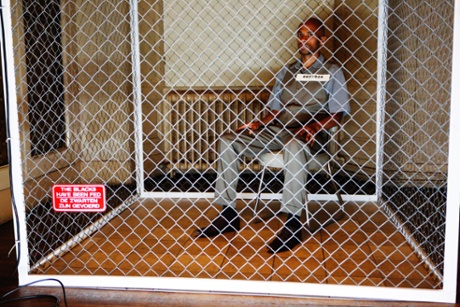
Human zoo

Then the question is: would this happen here?

The performance art piece “Exhibit B” evokes the spectacle of “human zoo,”in which Africans were put on show for the entertainment and gawking curiosity the 19th and early 20th Century Americans and Europeans. Visitors tour a room in which black actors portray the human exhibits as well as portrayals of what modern-day equivalents would might be like. Created by white South African theatre-maker Brett Bailey,  “Exhibit B” has recieved rave reviews in several venues.  In Edinburgh, The Guardian’s theatre critic Lyn Gardner saw the results as “both unbearable and essential”:

“Creator Brett Bailey has been fearlessly uncompromising in his approach. The experience in the exhibition hall is entirely without comfort. Confronting us with the appalling realities of Europe’s colonial past – the stuff I definitely wasn’t taught at school – isn’t just some kind of guilt trip. It reminds us that most history is hidden from view; it reminds that Britain’s 21st-century ways of seeing are still strongly skewed by 18th-, 19th- and 20th-century colonial attitudes. The masterstroke comes at the end: the pictures and the biographies of the ordinary black Edinburgh men and women who are taking part. Tomorrow, history will look a little different.”

Never mind: Sara Myers, as well as others, don’t want to see it, so they have conspired to stop the work from being seen, at least in England, by anyone else. In her petition at Change.org, she writes: Continue reading

Advice Column Ethics: The Case Of The Anxious Godmother

"look, I'll take your 8 kids if anything happens to you, but I really think you should stop juggling chainsaws..."

“Look, I’ll take your 8 kids if anything happens to you, but I really think you should stop juggling chainsaws…”

The best of all advice columnists, Carolyn Hax, found herself confronted with a tough question this weekend, and uncharacteristically flailed at an answer.

I’m going to try to help her out.

The question came from husband who was trying to decide how to deal with the anxiety of his wife, godmother to two teenagers being raised alone by her brother. The brother, it seems, has decided to take up race car driving as a new hobby, and sister, the wife of Hax’s correspondent, is terrified that this risky pursuit might eventually place the teens in her care. “The kids have been raised in a way that neither of us agrees with, and if they were to come under our care, it would be very difficult for everyone involved,” he writes. What should he do?

Maybe Hax’s reply helps the potential adoptive parent, but I sure found it stuttering, overly equivocal and confusing. It’s not surprising: the issues are difficult, full of ethical conflicts.

Here is my analysis:

1. If one agrees to be the designated guardian of a child or children, one is ethically obligated to be ready to accept the duties of the job. “I’ll take care of your kids happily as long as it’s not your fault that you can’t” just isn’t good enough. Too many people, perhaps most, accept this crucial responsibility as an honor rather than as a very serious commitment, and first and foremost, it is a commitment to the children. If a godmother (or, in a non-religious setting, a guardian) is terrified of the reality of fulfilling the duties of the job, she should give them up, so they can be accepted by someone who is not so reluctant. It shouldn’t matter if the parent is an amateur snake handler or a couch potato.

2. It is reckless, selfish and irresponsible for the sole parent of children to not take this fact into consideration regarding his lifestyle and other choices. Two children depend on him: he is duty bound to do what he can to stay alive, healthy, and capable of supporting them. Taking on unquestionably risky hobby like race car driving, or storm chasing, or being a volunteer human subject for the ebola vaccine, is irrational and wrong. It is right for the potential successor guadians to make this point to him, for the children, for a family intervention, for his friends, for anyone. And they should. He is not free to act as if he has complete autonomy, not with two children who depend on him.

3. If his thinking is “it’s OK to risk my life, because I have two foster parents on the hook,” that is similarly unethical, and he needs to be told that, too. But he should be told it by  guardians/godparents who are still committed to being loving parents should the worst occur, not by a couple that accepted the responsibility assuming they would never actually have to deliver.

The bottom line:

  • The inquirer and his wife should withdraw as guardians.
  • The father should grow up.
  • The next guardian couple should be informed of the father’s irresponsible proclivities, and make his promise to take reasonable efforts to remains capable of raising the children as a condition of their accepting the role.

And, of course, if the worst happens and the father ends up a victim of Dead Man’s Curve without having found a suitable guardian, the sister and her husband may be obligated to raise the orphaned teens anyway.

Because that’s what families are for.

Is that what Carolyn says? I’m not sure. If it is, it wasn’t clear enough.

Ethics Hero: Minnesota Twins Pitcher Phil Hughes

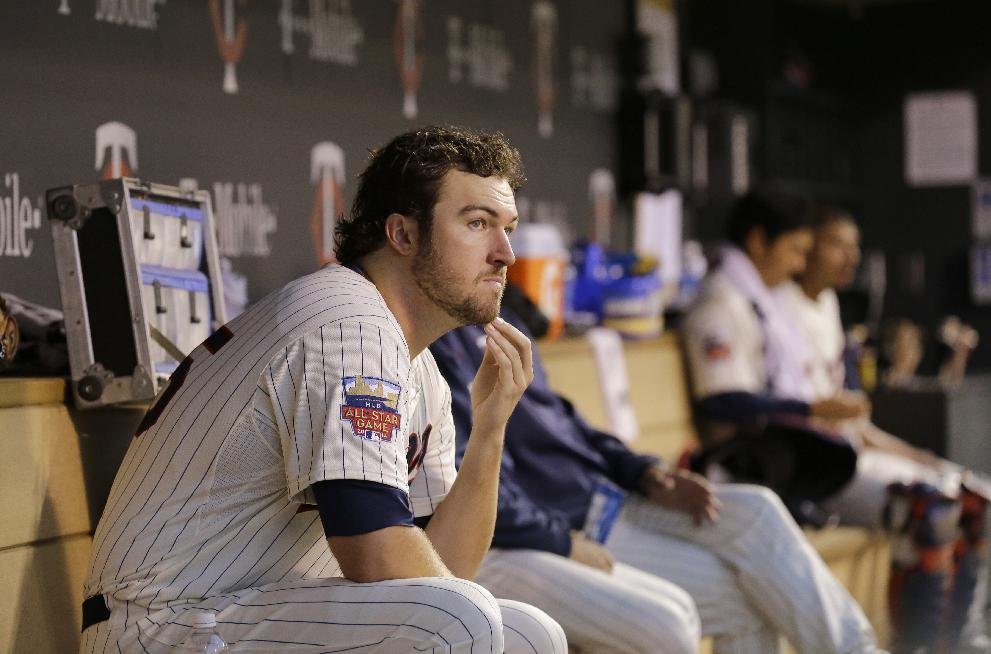
Phil Hughes

This is the final day of the regular baseball season, and an appropriate time to salute a major league player who placed principle over cash….even if I disagree with him

Phil Hughes was a bargain pick-up during the off-season for the Twins, a failed pitching phenom for the Yankees widely viewed to be on a fast slope to oblivion. He surprised everyone with a wonderful season for the otherwise woeful Minnesota team this season, potentially setting the all-time strikeout-to-walk ratio record, and began his final start of the campaign needing to throw eight and a third innings to reach 210 and trigger a $500,000 bonus in his contract.He would have made it, too, pitching eight dominant innings against the Diamondbacks and allowing just one run.  Then there was a downpour, with Hughes needing one more out to get the  extra $500,000.

After more than an hour’s rain delay, the game was resumed, but as is the practice in baseball, Hughes did not return to pitch: too long a delay, his arm too cold, too much risk of injury, especially after throwing so many pitches.  Hughes accepted the bad luck without complaint or rancor, saying that “some things aren’t meant to be.” Continue reading

Evil On The Internet…Unethical Website Of The Month: 4Chan

It's Ebola Chan! Isn't she hilarious?

It’s Ebola Chan! Isn’t she hilarious?

In Ethics Alarms’ continuing effort to bring to you depressing news of awful things you may never otherwise hear about if you are normal, I bring you 4Chan. Maybe you are as late to this sick party as I am.

I was vaguely aware that the site, which essentially hosts anonymous shock posts and hoaxes—meaning that it is a magnet for unethical conduct and the people who think its cool—was behind the initial hacking and posting of those nude celebrity photos earlier this month. It is much worse than that, however. Take this, for example, reported by The Daily Dot…

The absolutely terrible #cutforbieber hashtag became a worldwide trending topic on Twitter on Monday, an unfortunate truth that owes its existence to the perpetually scheming deviants on 4chan.

Long known for their affinity for disturbing, often sexually graphic or violent content, 4chan users schemed the hashtag this morning, when an anonymous poster wrote on notorious Web forum /b/ that community members should “start a cut yourself for bieber campaign.”

“Tweet a bunch of pics of people cutting themselves and claim we did it because bieber was smoking weed,” he or she wrote. “See if we can get some little girls to cut themselves.”


Continue reading

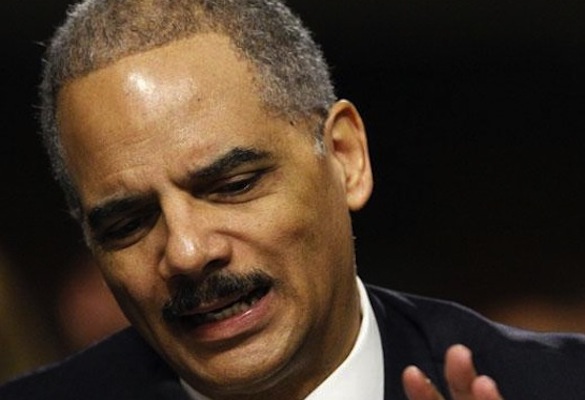
If Someone Praises The Job Eric Holder Did As Attorney General, That Tells You All You Need To Know

eric_holder_ap1

Eric Holder was the most political, biased, inept and undemocratic U.S. Attorney General  in at least 70 years, with the  exception of Nixon’s AG, John Mitchell, who went to jail. And the Attorney Generals have been uniformly terrible in this period; being one of the two worst takes talent, determination, broken ethics alarms and wretched judgement.

Those who praise Holder either are doing so without any idea about his record, or because they want the justice system in the United States to be racially and ideologically biased. The results of the latter, which is Holder’s real legacy, can be seen in the rising distrust between races, and the frequent description of Holder as being Obama’s “scandal goalie.”  The latter isn’t completely fair, because the news media has also been the President’s scandal goalie. The proof: few of the mainstream media retrospectives on Holder’s tenure mentioned the Justice Department’s refusal to hold a thorough and open investigation of the still unfolding I.R.S. scandal, which should have, and under any Republican administration, would have, included an independent prosecutor, because the news media would be screaming for one. This abdication of duty and naked partisanship by Holder alone condemns him. Unfortunately, there is a lot more.

You can begin with the “inside baseball” reports that Justice, under his administration, is a confused mess. That’s hardly surprising, for since the President eschews management and oversight, this is the tendency up and down the system. Without well-regulated policies and oversight, partisan meddling flourishes.

I have neither the time nor the energy to detail each and every example of Holder’s toxic racial and partisan biases, or his flat out ineptitude; there are too many to list, and I am sure I don’t know about some whoppers. Never mind: a fraction of the list would have made the resignation of any other Attorney General mandatory and beyond debate.  Holder is black, and this guaranteed that short of setting fire to the Supreme Court, he would only leave when he was ready. That alone is disgusting.

Here are some other Holder achievements:

1. “If Holder had his way, Khalid Sheikh Mohammed, the mastermind of the Sept. 11 terrorist attacks, might now be on death row,” says ABC. This is the media spinning for Holder: his efforts to have the terrorist tried in New York City was when I first realized how out of his depth he was.

In the contentious Congressional hearings on the matter, Holder told the nation that“Failure is not an option. These are cases that have to be won.” “That have to be won”? Failure, as in acquittal, is “not an option”? This was a confession of the muddled, simultaneously alpha and omega false logic that would become a hallmark of Obama World. Holder proclaimed that the world had to see the United States give its enemies a fair trial, then told Congress that the “fair trial” he was proposing was a show trial,  a kangaroo court, in which justice meant a guilty verdict. It was a stupid, stupid thing for any lawyer, much less an Attorney general to say. Tragically, it was no aberration.

2. Holder refused to defend the Defense of Marriage Act, though it was a law passed by Congress and signed  by a Democratic President. I think he should have been impeached for that. Slate, among others, says that he was “vindicated” because the Supreme Court held the law unconstitutional. They didn’t vindicate his refusing to do his job. It is not the prosecutor’s duty to veto laws duly passed by the legislature and signed into law, nor should he have the power to do so. Holder’s precedent took a bite out of the rule of law, and stood for stunning arrogance. He viewed DOMA as a civil rights incursion: gee, what other laws don’t you like, sir? We found out: he didn’t like drug laws, because he sympathized with the poor, black criminals that tended to violate them. His solution? Minimize the penalties, and send the message that abusing illegal drugs was no big deal. Democrats wanted to curry favor with the Hispanic-American voting bloc? Holder was eager to assist by not enforcing the Federal laws, and by doing everything he could to prevent the states from policing illegal immigrants as well. In a system of laws, favoring authorities that pick and choose which to enforce according to their political beliefs is endorsing obstruction over process, and politics over justice.

3. When acting unconstitutionally suited Holder’s partisan masters, however, he would do it. In 2013, the Justice Department  seized Associated Press phone records, and monitored Fox News reporter James Rosen following a story he published in 2009 on Iran.

4. Holder oversaw specious and intellectually dishonest justifications for the U.S. policy of assassinating suspected terrorists without providing them with a trial, and or any evidence that they were planning imminent attacks. By defining the word imminent in the broadest possible way, this advocacy for the elimination of due process equaled the worst deceits of the Bush Torture Memos, the only difference being an official pass from the Obama-enabling press. The policy, basically a license to murder, ensured that assassinations could be carried out against anyone who the U.S. government feared if the person was located on foreign soil and could not be captured.

5. Then there is Operation Fast & Furious, the proof positive that Holder was going to get away with anything and everything. The Bureau of Alcohol, Tobacco, Firearms and Explosives lost an estimated 1,400 weapons in Mexico, among them: two guns that were used to kill U.S. Border Patrol agent Brian Terry in December 2010.  Holder is the supervisor of the ATF, but testified before the House Judiciary Committee that he had only known about the sting named “Operation Fast & Furious,” for a few weeks. Then investigators uncovered memos on Fast & Furious sent to Holder in July 2010. A reasonable conclusion was that Holder had lied under oath. Oh, no, Holder “explained,” he never read the memos. He was incompetent, not culpable. Despite all evidence to the contrary, Holder indignantly denied a DOJ cover-up, saying that“This operation was flawed in concept, as well as in execution,”  and refusing to be held accountable for his own department’s deadly botch. Bolstered by Obama’s assertion of executive privilege, which prevented future prosecution, Holder refused to turn over documents related to the fiasco. Congress held Holder in contempt in June 2012, and he thoroughly deserved it, because the American people had a right to know the extent of the bungling in the highest reaches of the Obama Administration.

6. Although the supporters of Holder claim that his legacy was built on a dedication to civil rights, this was only in the narrow areas where the Democratic Party saw political advantage. He was not concerned, for example, in the civil rights of Americans when the government wanted to use modern surveillance technologies to spy on them. In the 2012 Supreme Court case U.S. v. Jones, Holder’s Justice Department argued that the police did not violate the Fourth Amendment by attaching  GPS devices to cars so they could know where they were going and where they had been, with that evidence used to acquire evidence. incriminate, try and imprison.  The Supreme Court rejected that position unanimously, because it was a mark of a burgeoning police state.

7. When Democrats wanted to create racial divisions, however, to rile up the base, Holder reported for duty. He assisted the unconscionable effort, still ongoing, by Democrats to characterize a responsible and necessary protection of the integrity of the voting process—photo IDs—as a racist plot, though the measure had long ago been approved by liberals, and only recently became stigmatized as “voter suppression.”

8. Holder’s major wound that he inflicted on the nation was his clear intention to project the image of a black Attorney General whose concern was minorities, whose assumption was that whites were the enemy, and whose biases were front and center. An early cue was his department’s abandonment of charges against two New Black Panthers who stood armed outside a Philadelphia polling place. The controversy, assisted by the media, devolved into an argument over whether this was an example of Justice receiving orders from the political Machiavellis in the White House, or just a lousy, bigoted example of “discretion.” A long official investigation found the latter, but either way, the message sent to white Americans was that this Justice Department was not especially interested in protecting their rights. In the Trayvon Martin shooting and the Ferguson episode, two local issues that should not have been his concern, Holder made statements, engaged in gestures and took actions that signaled his allegiance to the black victims, and opposition to the white (or “white Hispanic”) individual accused. He repeatedly spoke collaboratively before Sharpton’s followers, endorsing their diagnoses of a racist nation, and, by extension, a white population aligned against African Americans. Especially revolting was his repeated attempts to duck legitimate accountability for, you know, being terrible at his job, by race-baiting, such as when he explained Congressional criticism of his handling of Fast & Furious—a career-ender for any white Attorney General, or an appointee of any President who believed in accountability, by saying in 2011…

“This is a way to get at the president because of the way I can be identified with him, both due to the nature of our relationship and, you know, the fact that we’re both African-American.”

It shouldn’t have to be said, but I’ll say it anyway: the job of Attorney General, like the job of President, must be, and must be seen as being, absolutely neutral regarding race. Holder intentionally projected himself as an AG who cared more about minorities than non-minorities, increasing distrust, undermining respect in the justice system, and dividing the nation.

9. Not that he wasn’t feckless and incompetent too: for example, Holder’s Justice Department, almost certainly to ensure later campaign support, allowed multiple corporate criminals to escape serious punishment. For example, the Justice Deportment made a ridiculous plea deal to allow Halliburton executives to avoid jail time after they destroyed evidence of their culpability in the Deepwater Horizon oil spill. The company agreed to pay the maximum allowable fine of $200,000, accepted  a three-year probation;  continued its cooperation with the government’s criminal investigation (which it had to anyway), and  made a voluntary contribution of $55 million to the National Fish and Wildlife Foundation to clean off those oil-covered sea birds and otters. It could do this with the confidence that hard-core Democrats, being total hypocrites, would still attack the Republican party as a cadre of soulless corporate fat cats and insist that any criticism of Holder’s Justice Department and his boss’s administration was rooted in racism.

And again, the amazing thing is: That’s not all.

Any politician, elected official, pundit, columnist, civil rights leader or President who declares that Eric Holder was a wonderful public servant and a great American is telling you one of three things, or all of them:

  • They are liars.
  • They don’t know anything about Eric Holder, or
  • They believe the integrity of the nation’s laws should be warped and the public trust should be forfeited for a race-based, partisan agenda.

I don’t know about you, but I’ll be taking names.

Comment of the Day: “Three Breasted Ethics”

Alexander Cheezem contributed an informative and well-argued comment challenging my ethical conclusions in the case of “Jasmine Tridevil,” who supposedly had a surgically constructed third breast attached between her two natural ones in an effort to become a reality TV star. Her story turned out to be a scam, but the ethical analysis is still worthy of consideration. Ethics Alarms doesn’t have many medical ethics dilemmas to ponder, and it is a fascinating area. As I considered  Jasmine’s titillation, I suspected it might be a hoax, but from the standpoint of honing ethics alarms, it doesn’t matter. I’m kind of relieved, frankly. Continue reading

Ethics Hero: Derek Jeter

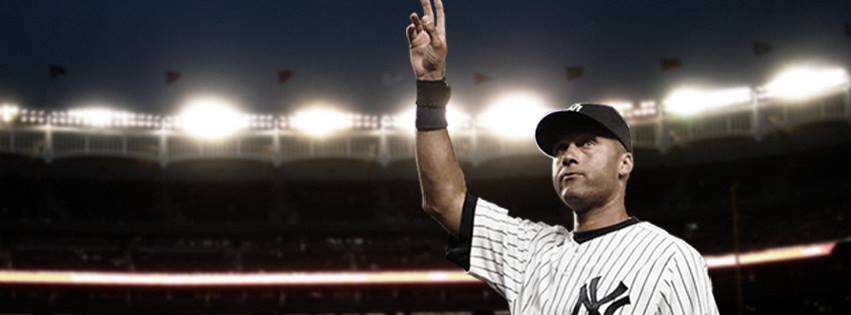
Jeter Farewell

Once upon a time, there were three young shortstops.

They arrived in the majors nearly at the same time, completely different in style and skills, but each carrying the promise of greatness. Nomar Garciaparra, with the Red Sox, was the flashy and charismatic one. Alex Rodriquez was the youngest, and held the most potential. Derek Jeter, of the New York Yankees, was a finished player from the moment he stepped on a major league field: poised, purposeful, and a winner.

While once it seemed certain that all three would meet at the Hall of Fame, it was not to be. Garciaparra won two batting titles, but his aggressive moves and spidery form made him injury prone. His reign as an elite shortstop ended prematurely, and so did his career. Rodriquez, as he matured, went from The Kid to A-Rod to A-Fraud, his reputation and life scarred by controversies, illegal steroids, lies and the habits of a sociopath. He sat out this season, at a time in his career when he had been expected (and paid) to be chasing the all-time home run record, with a humiliating suspension. He is the most unpopular player in baseball, and one of the most reviled of all time.

So then there was one shortstop, Jeter, and his life on and off the baseball field has been extraordinary enough to make up for the disappointments left us by his former shortstop colleagues. Last night, at the age of 40, he played his final home game at the position for the Yankees. His career statistics show no batting or home run titles, it is true, but shine brilliantly nonetheless: a .309 lifetime average, 3461 hits (3000 makes a player a lock for the Hall of Fame even if he doesn’t play the most difficult position on the field, as Jeter has ), just short of 2000 runs scored (10th all-time), twelve All-Star games, five Golden Gloves (as the American League’s best fielding shortstop), five Silver Sluggers (as the best hitter at his position), and most of all, seven World Series, five of them on World Champions.

Apart from the stats, awards and titles, Jeter was just as exemplary. He played in an era when it is impossible to hide as a celebrity: if you are a jerk, everyone will know it. He wasn’t a jerk. He was, in fact, the personification of the perfect sports hero. Jeter has been a leader and teacher by example to his team mates and his admirers, though his one-time friend, Rodriguez, would not absorb the lessons. He has had no personal drama, no tawdry sexual episodes, no bastard children. He was never arrested or suspected of using drugs, performance-enhancing or recreational. There were no DUI charges or petulant interviews. Derek Jeter never had to ask “Do you know who I am?” because he never acted as if he was special, because he made himself special by never acting that way, and because everyone did know who he was. In every way imaginable, from his public comportment to his ability to rise to the occasion under the pressure of a national audience, a rich contract and the hopes of millions, Derek Jeter has embodied the ideal of the athletic hero. Continue reading