Can’t Win, Can’t Break Even: If You Need To Apologize For Saying “All Lives Matter,” Why Not Apologize For Resolving To Challenge Racism?

We have a reverse Smith in Pittsburgh.

You will recall that Smith College president Kathleen McCartney attempted to  show support for her students  protesting racism and police brutality by sending a campus-wide email titled, “All Lives Matter, ” and came under fire by campus activists because the protest slogan was “black lives matter.” She quickly apologized,  saying that she didn’t intend for “all lives matter” to be interpreted as rebuttal to “black lives matter.”

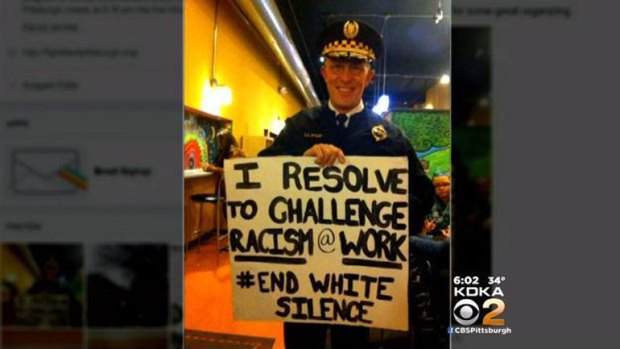
Now, in Pittsburgh, the Chief of Police is being attacked by his own officers who say that this photograph, posted on Facebook…

mclaybanner

…accuses them of being racists.

Touchy, touchy….?

The problem is that the Chief is endorsing a slogan of a group called Fight Back Pittsburgh, which has engaged in anti-police rhetoric in the past and carried signs saying “End White Silence” in protest marches.  It describes itself as a Pittsburgh-based collective (I would call it a Marxist group) with the mission of creating a world that is free of destructive white privilege and oppression. OK, Fight Back Pittsburgh sounds like a group of racists to me. But the message of the sign is hard to take offense at. Who isn’t obligated to challenge racism at work? Continue reading

Palin’s Trap: Is Baiting Critics To Expose Their Double Standards And Hypocrisy Ethical?

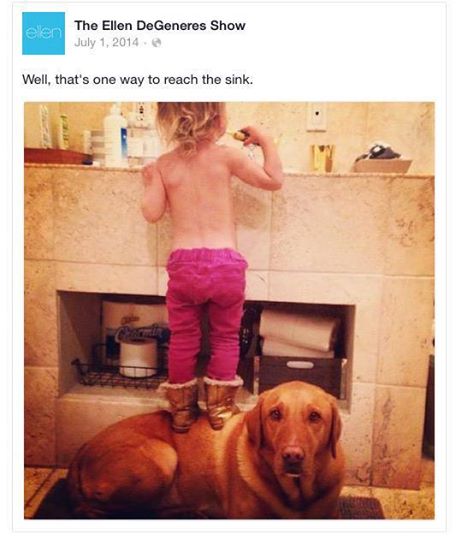
1618609_10153003604393588_4015203188305261638_nWell, well, well!

It seems that Sarah Palin had a ready response to the critics, including PETA, who attacked her for her Facebook post featuring son Trig using the family dog as a stepping stool. She immediately posted a photo tweeted by darling of the left, gay comic Ellen DeGeneres. last summer. Amazingly, PETA, which made Ellen its 2009 Person of the Year, and the others who were horrified at Trig’s actions and his mother’s endorsement of them, didn’t find DeGeneres’s photo sinister in the least.

Imagine that!

I agree with those who believe that Palin set up her enemies for this smoking gun proof of their hypocrisy and double standards. Palin and Rush Limbaugh are more skilled at baiting liberals than any public figure since William F. Buckley.

Was it unethical for Palin to set this trap? Emphatically no, and not because Palin has been the victim of more vicious and unfair double-standard bias than any political figure within memory. Exposing hypocrites is a public service.

Well played, Sarah.

Next time, though, try to avoid having to step on the dog to make your point.

__________________________

Pointer: Althouse

Abortion, “The Fly” and the Ethics Incompleteness Theorem

"AWWW! He looks just like his father!"

“AWWW! He looks just like his father!”

The most interesting aspect of ethics is at the margins, those situations where absolutists are challenged to hold to their principles because of unforseen variations that no general analysis could anticipate. The absolute ban on torture as unethical becomes shaky under the “hidden nuclear bomb” scenario.  Capital punishment opponents find that their compassion evaporates when asked whether Hitler or bin Laden deserved execution.

This is the Ethics Incompleteness problem, which I last wrote about at length in March of 2014:

“The human language is not sufficiently precise to define a rule that will achieve its desired effects, that is work, in every instance. There are always anomalies around the periphery of every normative system, no matter how sound or well articulated. If one responds to an anomaly by trying to amend the rule or system to accommodate it, the integrity of the rule or system is disturbed, and perhaps ruined. Yet if one stubbornly applies the rule or system without amendment to the anomaly anyway, one may reach an absurd conclusion or an unjust result. The Ethics Incompleteness Principle suggests that when a system or rule doesn’t seem to work well when applied to an unexpected or unusual situation, the wise response is to temporarily abandon the system or rule and return to basic principles to find the solution. No system or rule is going to work equally well with every possible scenario, which is why committing to a single system is folly, and why it is important to keep basic ethical values in mind in case a pre-determined formula for determining what is right breaks down.”

I was watching the Jeff Goldblum remake of “The Fly” (written and directed by David Cronenberg) last night, and rather than being properly horrified by Geena Davis’s nightmare of giving birth to a yard long fly larva, I found myself wondering how anti-abortion absolutists would handle her unusual dilemma. The film follows the tragedy of scientist Seth Brundle (Goldblum ) who has developed a means of teleportation. The process involves a computer breaking down a body, then transmitting the atoms electronically to a receiving “pod,” and reassembling them there. Unfortunately, when Seth tests the device on himself, an unnoticed fly gets into the sending pod, and the result is a version of Brundle that has fly DNA mixed in. (In the memorably campy Vincent Price original, what arrived in the receiving pod was a man with a giant fly head and a fly with a tiny human head.) Gradually Brundle mutates in form and mind into a monstrous hybrid, but before he knows what has happened to him, he impregnates girl friend Davis. Soon she realizes that something with insect DNA is gestating inside of her, though all tests show a healthy human embryo. Not surprisingly, she wants an abortion.

Would those who argue that abortion is murder maintain that she shouldn’t be able to have one, or that aborting the fetus is wrong? Let’s make the problem harder: let’s say she only learns that she has a fly-baby in the third trimester, when our laws wil not permit abortions unless the mother’s life is in peril. Some questions: Continue reading

The Estefanía Isaías Scandal: See, This Stuff Shows The Ethics Rot In Our Government, And We Don’t Even Notice It

You have no idea who this woman is, do you?

You have no idea who this woman is, do you?

On December 4, the New York Times reported this:

MIAMI — The Obama administration overturned a ban preventing a wealthy, politically connected Ecuadorean woman from entering the United States after her family gave tens of thousands of dollars to Democratic campaigns, according to finance records and government officials.

The woman, Estefanía Isaías, had been barred from coming to the United States after being caught fraudulently obtaining visas for her maids. But the ban was lifted at the request of the State Department under former Secretary of State Hillary Rodham Clinton so that Ms. Isaías could work for an Obama fund-raiser with close ties to the administration.

It was one of several favorable decisions the Obama administration made in recent years involving the Isaías family, which the government of Ecuador accuses of buying protection from Washington and living comfortably in Miami off the profits of a looted bank in Ecuador.

The family, which has been investigated by federal law enforcement agencies on suspicion of money laundering and immigration fraud, has made hundreds of thousands of dollars in contributions to American political campaigns in recent years. During that time, it has repeatedly received favorable treatment from the highest levels of the American government, including from New Jersey’s senior senator and the State Department.

Amidst the swirling controversies over police shootings, grand jury decisions, race-baiting, fake rape allegations, Obama’s unilateral reversal of U.S. Cuba policy, ISIS, the Sony hack, Jonathan Gruber and more, not to mention the holidays, this story received almost no dissemination, yet in its own, slimy way is more important than any of the rest. For it is the quietly growing tumor of government corruption, allowing money to confer special privileges on the wealthy and policy that undermines the rule of law, that saps the nation of its public trust, and that creates the cynicism that eats away at our democracy’s vitality and strength.

Why did this story avoid media and public attention? It was a perfect storm of factors that make a news story unattractive to journalists and unfathomable to the public: Continue reading

Comment of the Day: Prosecutor Ethics, “What The Hell Were You Thinking?” Dept: Dog-Whistling “Dixie” To The Jury

Dixie

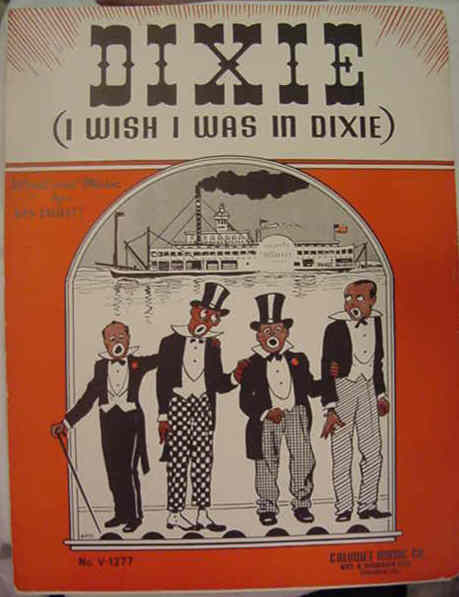
I will introduce this fascinating Comment of the Day by one of the blog’s masters of the long form comment, Chris Marschner,  by saying that I think it is only tangentially related to the post, though he would disagree. Chris is writing about the history of “Dixie” and why it should not be associated with racism. Whether I agree with that analysis or not, the fact is that the public does overwhelmingly associate the song with a longing for the simplicities of the Old South, when the darkies were singing in the cotton fields and those Northern folks weren’t sticking in their noses where they don’t belong. This is the basis of an Idaho court’s decision to overturn the conviction of a black defendant after the prosecutor gratuitously and needlessly quoted the lyrics of the song in her closing argument.  That decision was correct, because the issue is whether the comment could reasonably have been an appeal, or seemed like an appeal, or have had the effect of an appeal, to racial bias. I don’t think that conclusion is arguable.

Here is Chris’s Comment of the Day on the post, Prosecutor Ethics, “What The Hell Were You Thinking?” Dept: Dog-Whistling “Dixie” To The Jury:

The prosecutor failed her client – the people- not because she used the words of an 19th century song but because she failed to come to understand that history and culture of the US has been so bastardized that even an appellate court has no understanding and context of the origins of the song and the history and culture of the south. And, because of its misunderstanding believes the lyrics to be racially prejudicial.

“Maybe Erica is so young, color blind and historically ignorant that she had no idea that “Dixie” has been played at Klan rallies and used as the campaign theme for states rights, segregationist, white supremacy candidates since the Civil War. Maybe she didn’t recognize the cotton reference as racial.”

This song was written by a northerner named Daniel Decatur Emmett and performed in New York in an 1859 minstrel show by Emmitt in blackface. The reference to cotton is geographic in nature because cotton represented the primary agricultural commodity and wealth creator of the southern states – nothing more unless one is predisposed to finding anything related to the antebellum south as racist

Many songs have been coopted by various groups but to suggest that lyrics of Dixie are inherently racial because they are used by White supremacists is faulty logic. If a white supremacist adopted the image of Leonardo D’Vinci’s David or Venus d’ Milo or other classical work of art on their flag that would not mean that any such depiction suggests racial superiority. Continue reading

Sarah Palin, The Animal Gene, and Some New Year’s Inspiration

Trig on dog

Gandhi famously said that the greatness of a nation can be judged by the way its animals are treated. I’m not sure that’s true, but it certainly is true that respect for the lives and welfare of animals is a useful symptom to diagnose sound ethical values, and the tendency toward animal cruelty is signature significance for a human being that I would not turn my back to in the dark.

The issue is complicated by the divergence of humans into “animal people” and “non-animal people,” with the latter claiming, with some justification, that they are not cruel or callous toward animals, just willing to recognize that they are, well, animals. These are the people who cannot understand someone wanting to take a sick day to mourn the passing of a cat. On the other hand, they are also clear-eyed about those animal lovers who dress their parrots in elaborate costumes and who hold birthday parties for their dogs. Those who live in the country or on farms are an interesting case: they are not prone to sentimentalize of anthropomorphize animals like city folk. Dogs and cats sleep outdoors unless there’s a freeze on, and they have jobs to do. My wife’s sister sold the family horse to a dog food company, and the two didn’t speak for months.

Sarah Palin blundered into this divide this week when she posted pictures (above) of her son Trig standing on the family dog in an inspirational post about overcoming obstacles. Now she’s being attacked for promoting cruelty to animals. Some points on this:

1. Many are always looking for justification to vilify Palin. This time, she gave them legitimate ammunition.

2. The sequence looks staged to me: otherwise, why was anyone taking photos of this?

3. If so, then this just wasn’t an innocent but mistaken choice by a special needs child, but the directive of someone who should know better.

4. Of course one doesn’t ever sit or stand on a dog, or allow or encourage a child to do so, unless we’re talking about a very small child.

5. We don’t know that Palin didn’t admonish Trig after the fact, while saluting his ingenuity.

6. It was still an irresponsible choice for the point she was making.

7. Assuming the dog isn’t ill, drugged of dead, however, he doesn’t seem in distress. One thing about dogs: if you are hurting or ignoring them, they aren’t shy about letting you know.

8. Trig is developmentally disabled. Animals, particularly dogs, have incredible tolerance and intuitive kindness in such situations. That was the real lesson of the photos.

Now, to wipe those images out of your mind, here are a group of photos showing normal, non-celebrity, non-Palin, human beings here and elsewhere demonstrating the kind of kindness and compassion for animals that we all should aspire to. Continue reading

Ethics Quote Of The Month: Washington Post Film Critic Ann Hornaday on “Selma”

selma-movie

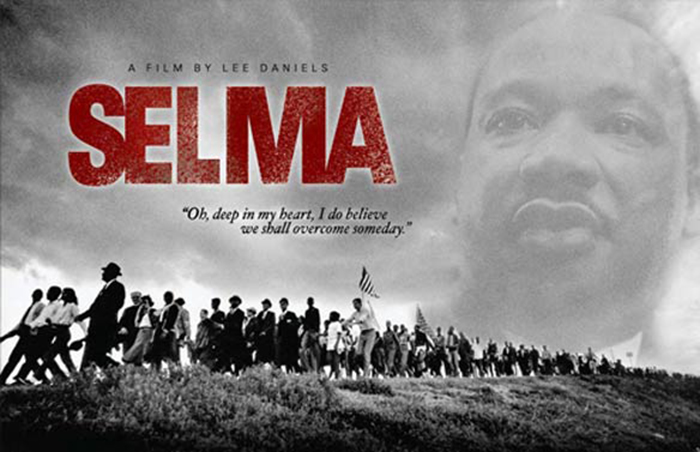
“How to reconcile facts and feelings, art and fealty to the truth? When filmmakers recall with pride about the deep reporting and research they’ve done for their projects, then they deserve to be held accountable for their projects. For fact-based films, accuracy becomes a formal element, along with acting, design and cinematography. It’s up to each viewer to identify the threshold where artistic license compromises the integrity of the entire endeavor. Cinema has more responsibility in this regard precisely because of its heightened realism, its ability to burrow into our collective consciousness and memory, where the myth has a tendency to overpower settled fact. But viewers have responsibilities, too. If accuracy has become a formal element of historical dramas, then the ensuing fact-checks have become just as integral a part of how we view them. That means it’s incumbent on audiences to engage in a mode of spectatorship that, rather than decide who’s right, can listen to and respect expert critiques, and still open themselves up to a piece of filmed entertainment that speaks to less literal, more universal truths.”

—–Ann Hornaday, Washington Post film critic, on the controversy regarding the counter-factual treatment of President Lydon Johnson in the new film, “Selma.”

The question of whether film makers have an ethical obligation to fairly represent history, and particularly individual historical figures, in their movies has been a topic visited frequently at Ethics Alarms, and I’m not going to re-hash conclusions that have been thoroughly discussed before, such as

…here, regarding the casting of “The Impossible” with a gleamingly light-skinned central family and the changing of the real life heroine from Spanish to British

…here,  discussing complaints that a fictional event was not portrayed accurately in “Noah”

…here, exploring the many falsehoods, some quite despicable, in James Cameron’s “Titanic”

…here, regarding unfair criticism of “Argo”

and here, discussing “Lincoln” screenwriter, playwright Tony Kushner’s inexcusable choice to represent a real life former Congressman voting against the Thirteenth Amendment abolishing slavery when in fact he voted for it.

The conclusion of that last one sums up the lessons of the rest, I think. Kushner’s defense against criticism of the collateral damage his invented facts wreaked was to argue that they were legitimate tactics in the pursuit of drama and “greater truths.” He then compared smearing the reputation of a Congressman, to the detriment of his descendants, to misrepresenting the kinds of socks Lincoln wore. (Kushner can be a brilliant writer, but his ideological utilitarianism is repellant.) I wrote:
Continue reading

KABOOM! Harper Collins Tries To Wipe Israel Off The Map

No Israel

The integrity vacuum of some corporations defies the imagination. At least my imagination: this story triggered my first cranial explosion of 2015. ( For an explanation of the KABOOM! category, go here.)

US-based HarperCollins Publishers is is a subsidiary of News Corp, whose executive chairman, media tycoon Rupert Murdoch, is a vocal supporter of Israel. But its British subsidiary, Collins Bartholomew, omitted Israel from the “Collins Primary Geography Atlas For The Middle East,” citing “local preferences.”

Local preferences! Continue reading

Prosecutor Ethics, “What The Hell Were You Thinking?” Dept: Dog-Whistling “Dixie” To The Jury

"Wait...WHAT did you just say??"

“Wait…WHAT did you just say??”

Canyon County Deputy Prosecutor Erica Kallin wanted to make the point that the defense attorney for the African American defendant, James D. Kirk, was trying to lead the jury to ignore the evidence that pointed to his guilt in his trial for lewd conduct with a 17-year-old girl and sexual battery of a 13-year-old girl—making them, in effect,”look away” from the truth. How could she make that argument in a vivid way? Clarence Darrow used to use poems in his famous closing arguments; was there a memorable poem that used the phrase, “look away”?

“Eureka!” Erica thought. She found it! So she said to jury deliberating on the case:

“‘Oh I wish I was in the land of cotton. Good times not forgotten. Look away. Look away. Look away,’ And isn’t that really what you’ve kind of been asked to do? Look away from the two eyewitnesses. Look away from the two victims. Look away from the nurse and her medical opinion. Look away. Look away.”

The jury convicted Kirk, on both counts; the evidence against him was indeed strong. He was sentenced to 20 years in prison. Continue reading

The Wall Street Journal Steals From A Blogging Lawyer…Luckily For Them, A Nice One

A lawyer asks: Will Google Cars put me out of business? The Wall Street Journal  asks: Why shouldn't we make money off your answer?

A lawyer asks: Will Google Cars put me out of business? The Wall Street Journal asks: Why shouldn’t we make money off your answer?

I always do a double-take when I see that someone has “re-blogged” a piece from Ethics Alarms. Unless there is something in my WordPress agreement that allows other bloggers to lift my work and publish it as their content without my permission—oh, who knows, there probably is—this is a copyright violation, but worse than that, it’s wrong. Apparently they think that if they give attribution, that makes everything fine. Why would they think that? I’m writing for my blog, not anyone else’s. If a blogger wants to reprint all, most or some of my commentary in order to critique it, that’s fine ( WindyPundit is doing this right now). But lifting all or most of my work to fill space on your website, without my permission? Not fair, and not ethical.

This just happened to personal injury lawyer and estimable blogger Eric Turkewitz, but the culprit wasn’t a blogger, it was the Wall Street Journal. It took his post about Google Cars and just slapped it into the print and online editions of the paper. “Lawyer Eric Turkewitz writes that self-driving cars will hurt the business of many personal-injury attorneys,” said the sub-head under “Notable and Quotable.” Hmmm. Usually a writer gets paid to write features for a newspaper. I guess just lifting copy without permission is “Fair Use.”

No, First Amendment expert Marc Randazza points out in his typically irreverent way, it isn’t:

In this case, the Wall Street Journal used 44% of Turkewitz’ post, with no additional commentary, criticism, or discussion.  The WSJ could have called Turkewitz a moron for his views, and quoted the whole thing (theoretically).  Or, the WSJ could have given approval, more discussion, or turned the article into piece of art, with spray painted Che Guevaras and stencils of Paris Hilton, as a commentary on Turkewitz, tomato soup, and golf, or whatever.  But, they didn’t do any of that.  

So lets look at the §107 [Fair Use]factors

(1) the purpose and character of the use, including whether such use is of a commercial nature or is for nonprofit educational purposes;
(2) the nature of the copyrighted work;
(3) the amount and substantiality of the portion used in relation to the copyrighted work as a whole; and
(4) the effect of the use upon the potential market for or value of the copyrighted work.

The purpose and character of the use is certainly commercial and for profit. The WSJ sold its newspaper with Turkewitz’ work in it, and even put it behind its paywall online. Same exact use, except WSJ took what Turkewitz distributes for free, gathered it, and sold it.

The nature of the copyrighted work was Turkewitz’ original opinions and thoughts.

The amount and substantiality of the portion used? 44%. Pretty substantial. Remember, this is not dispositive, but if you used almost half of an original work, you better have a good reason.

The effect of the use on the potential market for the value of the copyrighted work? That’s sorta iffy. It isn’t as if Turkewitz sells his work. But, that is not a requirement. Turkewitz’ blog currency is readership. If you do some quick online searches for some of the content, sometimes the WSJ version comes up above Turkewtiz’ version. Not cool. Ultimately, the WSJ blew it here because they didn’t add anything to the original — they just lifted it and reposted it….

So the verdict? The Wall Street Journal is definitely guilty of copyright infringement for lifting a bloggers’ work without any justification.

It’s worse than that, however. Continue reading