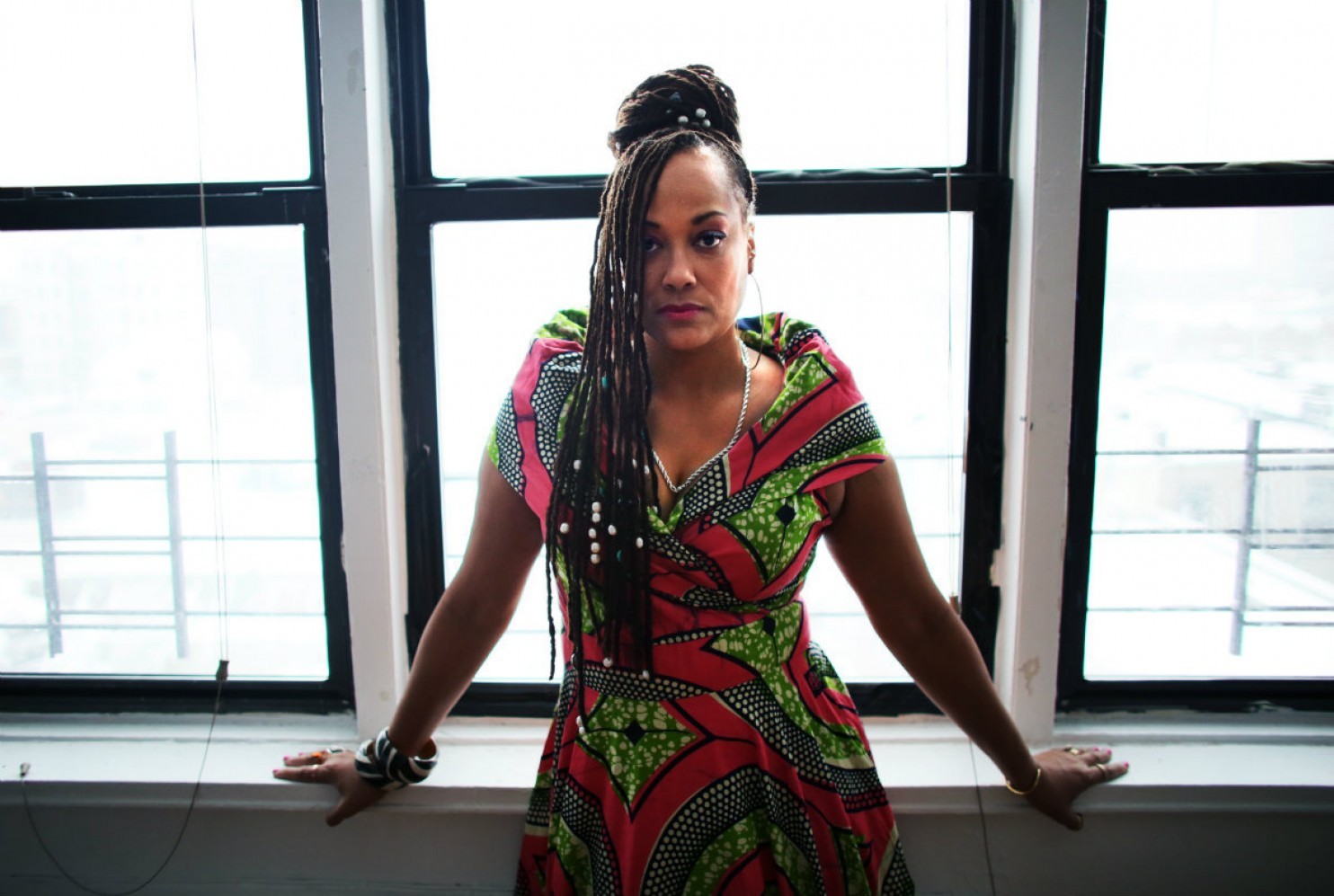
The thirty or so declared victims of sexual assault by Bill Cosby (sorry: when we get into double figures, “alleged” is misleading) have given various reasons for not reporting the crimes against them: fear of Cosby’s power, fear of retribution from the entertainment industry, fear of publicity, fear of not being believed, fear of humiliation. A recent addition to the list, however, has given an unequivocally unethical explanation for her 20 year silence in a Washington Post op-ed that has been called “courageous.” Jewell Allison’s confession is not courageous. It is disturbing and ominous. It shows what the trauma of the black experience in the United States has done to some African Americans, causing them to place group identification above reason, decency, good citizenship, compassion and common sense.
She writes:
“When I first heard Andrea Constand and Tamara Green publicly tell their stories about being drugged and assaulted by Cosby, I wasn’t relieved; I was terrified. I knew these women weren’t fabricating stories and conspiring to destroy America’s favorite dad, but I did not want to see yet another African American man vilified in the media. As I debated whether to come forward, I struggled with where my allegiances should lie – with the women who were sexually victimized or with black America, which had been systemically victimized.”
This makes no ethical sense or rational sense. She knew the women were not fabricating stories, and she knew, through her own experience, that Cosby was a serial sexual predator. If he was not stopped, apprehended and prosecuted, more women were certain to experience assault, sexual abuse or rape. She did not want to see another black man vilified in the media, even a black villain. She felt it was more important to protect the image of a black icon than reveal that he was a false icon and a criminal, thus allowing black males to look up to an icon who is a rapist. What kind of warped ethics analysis can reach such a result? Would this apply to all crimes committed by black celebrities, or just the minor crime of rape? If she had witnessed O.J. slaughtering Nicole and Ron, would she apply the same ethical calculus? Why not?
What if white victims of crime protected white rapists with such logic? How does not reporting a violent crime by an unapologetic black icon show allegiance to black America? It is Cosby who is harming black America by betraying those who trust him. Allowing him to continue to breach that trust while he is incidentally drugging and raping women harms everyone: current victims, future victims, those deceived by Cosby, and the black community. Is this how the black community thinks it can improve its reputation—not by taking measures to reduce black on black crime, but by covering up for black criminals?
Is this why so many black activists refuse to accept that Mike Brown was not a harmless innocent, but prompted his own demise by charging a police officer? Can intelligent, thoughtful, educated black Americans believe that the way to destroy a negative stereotype is to create another: the African American who will never allow another African American to be criticized or face personal accountability even for the most heinous misconduct?
True, by the end of her op-ed, Allison acknowledges that she made the wrong choice. Twenty years of a wrong choices, in fact: I am not encouraged. She is a writer and an educator, yet she analyzed the situation and her assessment of the right thing to do was to allow a serial sexual predator to keep hurting women, because protecting a black criminal somehow prevented innocent black men from being stereotyped.
The black culture in the United States may have been damaged so deeply that African American capacity for ethical thought is at risk.
 Ethics Alarms
They’ve just had this racial hogwash pushed into their heads from all sides since they popped out of mommy. Naturally they think this way. What’s remarkable is that as many have broken out of the mental lockbox as have. Those who have done so now rate among our leading thinkers and businessmen. How much better for America if these young people had been brought up in the values of their grandparents and had striven to reach their honest potential? What a crime against us all!
I should have mentioned that Jewell’s reasoning tracks very closely to that of the Catholic priests who allowed child abusers to continue to molest, and the theory that exposing them to the criminal process would be bad for the image of the church, and that the inevitable harm to innocent children was a necessary cost.
Completely agree with you on this point by the way
ABSOLUTELY…THIS IS IN MOST PEOPLE’S SUB CONSCIENCE. IT’S NEITHER RIGHT NOR WRONG…
I’d get that caps lock problem fixed. You’ll never be able to quote e.e. cummings.
What do you mean, “it’s neither right nor wrong”??
Jack, you’re half right, and I’m not going to try and untangle it all except for a mistake that you and many others continue making all the time when it comes to race.
Let’s call it the “equivalency” argument.
It goes like this. “If a white person said/did what this black person said/did, everything would be different,” or “How would you feel if a white person did/said what that black person did/said.”
In this case, your version of it is “What if white victims of crime protected white rapists with such logic?”
If a white victims protected white rapists – NOBODY WOULD COMMENT ON THE FACT THAT THEY WERE WHITE. There is no equivalency. It is not the same thing. It is a syllogism with a false premise, which means you can’t logically draw the conclusion.
And all those arguments are a horrible form of false premise. The act of a minority person in a majority culture is INHERENTLY different from the act of a majority person in that same majority culture.
The essence of being a minority culture discriminated against is that they are NOTICED as being minority. And that makes all the difference in the world.
–A man saying something gender-related in a room full of women is inherently different from a woman saying the same thing in the same room full of women – because the issue at hand is the issue that separates majority and minority in the room, and it becomes noticeable in only one version – the minority-speaking version.
–An Arab saying something religion-related in a room full of Israelis is inherently different from an Israeli saying the same thing in the same room full of Israelis – because the issue at hand is the issue that separates majority and minority in the room, and it becomes noticeable in only one version – the minority-speaking version.
–A child saying something humorous in a room full of adults is inherently different from an adult saying the same thing in the same room full adults – because the issue at hand is the issue that separates majority and minority, and it becomes noticeable in only one version – the minority-speaking version.
You’re not alone: John Roberts commits the same blind mistake, arguing that the road to non-discrimination is simply not to discriminate. In a pie-in-the-sky utopia where no one unconsciously thinks of race, that would be true.
But in this real world – a world where college kids sing racist songs on buses and then are horrified to discover that the world actually sees them as racist – we need to be far more realistic.
We need to hold people to adult standards of behavior, fully recognizing that our socially acculturated minds are constantly driving us in fear-based, tribal directions.
There’s not a white person reading this (OK, anyone over the age of 8) who doesn’t take semi-conscious note, upon seeing a black person, of that person’s race. That’s just the truth.
How many studies does it take to prove to people who believe in equivalence that it’s’a lie? You’ve seen tests of “black” names and “white” names submitted for job applications; bank loan applications; assessments of threat, perceived danger, etc. They all show persistent, unconscious, bias. We simply do not separate the message from the messenger, and the theoretical claim of equivalency is a dangerous piece of rhetoric that tries to deny it.
Racism is very real, and the fact that it rarely shows up as conscious and overt doesn’t alter that fact. But trying to pretend that the same words uttered by a minority and a majority culture person amount to a denial of that fact.
Sorry for the rant, but this is an issue I know a little bit about, having been in an interracial marriage. I can never again believe that white Americans are capable of separating the race of the speaker from the content of what is said. I know that because I, myself, am not capable of it, and never was (though I used to think I was).
TL;DR, but what I gathered is one giant ad hominem logical fallacy.
If the argument is fallacious, it’s not because it’s ad hominem.
“An Arab saying something religion-related in a room full of Israelis is inherently different from an Israeli saying the same thing in the same room full of Israelis – because the issue at hand is the issue that separates majority and minority in the room, and it becomes noticeable in only one version – the minority-speaking version. ”
This was one of multiple examples where one minority and one majority person hypothetically make the exact same argument and are treated differently solely because of who they are, not because of the logic of their argument. The different treatment is an ad hominem attack.
You’re using the fact that, ‘ The act of a minority person in a majority culture is INHERENTLY different from the act of a majority person in that same majority culture.’, which is itself based on an ad hominem falacy, to make the case that Jack’s original argument is based on a false premise. It’s your arguement that’s flawed here.
Brian, an ad hominem argument is a concept in logic. My point was not about logic, but about socio-logic. Sociology, if you will.
An example. I go to London and hang out in a pub with my (English) brother-in-law and his mates. After a few pints of conviviality and their tales of revelry, I say, “Wow, you Brits are really crazy!” They laugh and raise their pints to me.
The next day I have an audience with the Queen, along with a dozen other people. Passing down the line, she says a few words to each person. To me she says, “I hope you’re enjoying your visit over here.” To which I reply, “Wow, you Brits are really crazy!”
Do you think she would respond the same way as did the boys the night before? Of course not. The same words have completely different meanings in different contexts. Beyond just intonation, there is situation, there is the person speaking, there are varying rules of etiquette – these are all basic, but very hard and real, rules of social interaction.
They are not “logical” rules. The words I speak are logically identical in each case, but the meaning varies completely.
That was my point to Jack, and I think he would agree: if my black friend, in a conversation with another black friend of his, refers to him affectionately as “my n-word,” that’s one thing. It would be another thing entirely, I assure you, if I were to refer to his friend the same way. Or even to him. This is what I meant by the “Fallacy of Equivalency.” It’s not a logical fallacy, it’s a social fallacy.
Context matters. The notion of an ad hominem argument has nothing to do with this. An ad hominem argument would be if I said, “Brian is completely wrong on this point, because Brian is a jerk and Brian is always wrong.” That would be trying to evade the logical truth of your statement by deflecting the discussion away to you as a person (ad hominem), rather than respecting the argument itself.
But that’s an entirely different issue. That’s about logic. My point here was about sociology, manners, etiquette, social interactions. And I argue anyone who doesn’t understand context in social interactions is bound to run into some very uncomfortable social situations.
Wouldn’t you agree?
Uh, if you really think the “you brits are crazy to guys in the pub vs you brits are crazy to the queen at an event” is even remotely analogous to “a black guy calling his buds my niggas vs a white guy calling his buds my niggas”, you’ve got some work to do.
Now, THAT would be an ad hominem argument!
Thanks for the object example, Tex.
Actually, it isn’t.
But it is good to know that, like brian, you have no idea what an ad hominem is either.
by the way, my analogy was not to a white guy calling his buds my niggas, but to a white guy saying that to a black guy. If you don’t see the difference, I suggest you do some empirical research, and let us know how it works out for you.
Yeah, I was being generous, since your analogy has flaws on many levels, I tried to make it look like it was only flawed on one level. My mistake.
Here are a few of the issues with your commentary and your call for some “empirical research”:
1) I can understand if a close-knit cluster of comrades who have developed nick names or insulting terms of endearment are irritated by a “non-initiate” coming in a using one of the internally accepted terms for a member of the group. Hey, you aren’t part of our circle of friends, you don’t have the familiarity or bonding experience we had, you don’t get to address us as one of us.
No issues there.
But that isn’t what “nigga” is, is it?
2) For your test to be fair, a white guy who is completely included in a circle of friends who is predominantly black, can get away with calling them “his niggas”.
Otherwise, your argument is special pleading.
A circle of predominantly ANY COLOR can get away with calling members of it’s group “my nigga”, if all it is is a term of endearment within peer groups.
But that isn’t what “nigga” is, is it?
“A circle of predominantly ANY COLOR can get away with calling members of it’s group “my nigga”, if all it is is a term of endearment within peer groups.”
But that’s obviously NOT all that it is. Have you heard the term “whigger?” It refers to white people acting like black people by using terms like “my nigga,” in the mistaken belief that the word has the same meaning outside the original racial context. It clearly doesn’t.
You seem to have two beliefs:
1. the world is an idealistic utopian place where no real racial differences actually exist,
and
2. people who believe the contrary – mainly black people – are self-deluded.
1) Strawman. But go ahead and grasp for them chuck. You look like a drowning rat right now.
2) Strawman #2.
Gosh, this is the Chuck Green Amateur Fallacy Hour today. Re-runs this afternoon.
Your commentary obviously demonstrates an incapacity for understanding tightknit and small social group settings. If 5 white guys, hell Asian guys…if 5 Asians guys all grew up together and in their circle wanted to call each other “my nigga” within their circles, who are you to stop them? But a do gooder busy body.
If you really claim that “nigga” or “nigger” is a word only black people can use to refer to other black people, you are to insurmountably blind to see the Special Pleading on one hand or the Double Standard on another.
Your incompetence is astounding.
I see your point, but think it’s weak. Of course we code switch based on the audience we are talking too, but the arguement you are conveying with those words should not be based on the audience. I read your point as two different people making the same argument, not necessary using the exact same sentence…
However, in regards to Jake’s ‘if a white person…’ argument I disagree that it’s a false equivalent as the question at hand, sexual predation, does not have any sticky historical race based connotations. So argument by equivalence works here for me.
“sexual predation, does not have any sticky historical race based connotations.”
It’s tangential to the point here, but I would suggest that, quite to the contrary, sexual predation is one of the most heavily race-connotative subjects you could think of. Read any history of slavery and you encounter not only the destruction of families and miscegenation by rape, but deeply powerful sexual mythologies and memes, which can still be seen alive and well today on any pornographic website you might care to visit.
Not a good example at all.
You have to explain this whole comment. What is “TL; DR”, and what ad hominem logical fallacy–hers, mine, Charles’? I see none, anywhere. You better not mean me: Saying someone’s conduct is unethical and why is never an ad hominem fallacy. I’m really sick of the term being misused as a lazy way to rebut an argument commenters can’t rebut. It’s not as if I haven’t explained the term a hundred times.
In your previous comment you said “I for one would welcome a resurgence in the use of Latin.” You might want to reconsider if that’s how you use “ad hominem.”
TL:DR is “Too Long, Didn’t Read”
I’ll contribute more Monday. This weekend is busy in San Antonio with an annual pilgrimage to the Alamo.
Tex, please give a salute to Jim, Davy, Almeron, Bill, Bonham and the rest of the guys. I was going to do an Alamo post on March 6th, and didn’t I don’t know why.
Don’t blame yourself on that score, Jack. I was so busy that I missed February 23. I try to observe that plus the 2nd and 6th of March religiously!
Absolutely!
I just learned that the DRT is losing custodianship of the Alamo this summer. Apparantly they aren’t doing enough to preserve it and it is deteriorating faster than expected.
This is going to be one angry Texan if the new custodians charge entry.
I am pretty certain Brian was responding to Charles’ argument, calling it “too long” and flawed. I won’t defend it any further, as it did not substantially contribute to the discussion.
Brian also called it “ad hominem,” which as Jack pointed out is meaningless here and demonstrates his (Brian’s) ignorance of the point, as well as his willingness to nonetheless lead with that ignorance.
Except no one who wasn’t on peyote would call Charles’ comment ad hominem. But I do get to add to my disfavored word and initials list: “dude,” LOL, “lighten up” and now TL; DR.
I know what it means, it’s when you respond to an argument from a person based on their character instead of their logic. That’s the whole point of Charles post, two different people can make the same argument, but they are treated differently based on their inclusion in a minority/majority group. That’s about as well as you can state the fallacy.
If it’s anything, it is Special Pleading.
This comment:
“The act of a minority person in a majority culture is INHERENTLY different from the act of a majority person in that same majority culture. ”
Followed by his three examples:
“The essence of being a minority culture discriminated against is that they are NOTICED as being minority. And that makes all the difference in the world.
–A man saying something gender-related in a room full of women is inherently different from a woman saying the same thing in the same room full of women – because the issue at hand is the issue that separates majority and minority in the room, and it becomes noticeable in only one version – the minority-speaking version.
–An Arab saying something religion-related in a room full of Israelis is inherently different from an Israeli saying the same thing in the same room full of Israelis – because the issue at hand is the issue that separates majority and minority in the room, and it becomes noticeable in only one version – the minority-speaking version.
–A child saying something humorous in a room full of adults is inherently different from an adult saying the same thing in the same room full adults – because the issue at hand is the issue that separates majority and minority, and it becomes noticeable in only one version – the minority-speaking version.”
Special Pleading.
A man, in a room full of women, says “the statistic that claims women are paid 77% less than men, has not been substantiated” and a woman, in the same room, saying the same thing, IS NOT DIFFERENT in terms of what was said.
The statement is true. How the statement is perceived or reacted to may be different, but it doesn’t undermine the statement.
Charlesgreen, by pointing this line of reasoning out, makes us assume he thinks perception of commentary matters in regards to it’s accuracy. It doesn’t.
Whether or not a White person WOULD say “I didn’t accuse him because he’s white” is immaterial. IF a white person did say that, it would be wrong, just as it is for the black person to say that about a black person. Or any person about any person…in fact, the argument itself is another instance of special pleading. Person X has characteristic Y which means he doesn’t need to be treated like other people who Person X has conducted himself similarly too, never mind that characteristic Y is immaterial to the conduct.
Special Pleading
And this:
“Sorry for the rant, but this is an issue I know a little bit about, having been in an interracial marriage. I can never again believe that white Americans are capable of separating the race of the speaker from the content of what is said. I know that because I, myself, am not capable of it, and never was (though I used to think I was).”
is known as an appeal to authority, conveniently in this case, Charles himself is the authority to which he appeals.
What he thinks is a claim to inner knowledge is closer to an admission of bias. You see, we all tend to take more sympathetic views of the opinions of those who keep our beds warm at night, so it’s safe to assume his biases lay there.
Texagg, you are of course quite right that one source of bias is to be too close to the subject at hand, and I’m sure that’s at least partly true in my case.
But another source of bias is ignorance.
So the relevant question is: under what conditions is familiarity a more important source of bias, and under what conditions is ignorance a more important source of bias?
I’ll suggest one type of case: any issue that has to do with differing perspectives of minority and majority populations is going to be more heavily biased by ignorance on the part of the majority.
A simple thought exercise: who knows more about the other – the majority population about the minority, or the minority population about the majority?
A few simple examples might help.
* In the US, Jews are more likely to know the dates and the meaning of Christmas and Easter than are Christians to know the dates and the meaning of Rosh Hashanna and Yom Kippur.
* In the US, Catholics are more likely to understand Protestant traditions than the reverse.
* And, the clincher, in the US, black people are more likely to understand white culture than white people are to understand black culture.
It’s simple math: if you’re a minority surrounded all day long by a majority culture, there is no escaping the fact that you are different, and you can’t help but notice the majority culture’s mores and norms.
But if you’re a majority culture person, your (mathematically correct) perception is that, pretty much, everyone thinks like you do.
There are a gazillion differences of culture that white people are not attuned to in the way black people are just because of this simple mathematical fact. Most are just interesting or funny (for example, next time you see it, check the race of people who put their feet up on the dashboard of the car in the front passenger seat).
But these differences get really important when it comes to discrimination. Every solid scientific study around proves what black people know viscerally – that white on black discrimination, conscious or otherwise, is real. Yet white people – because they have no reason to see otherwise – don’t notice it. In fact, what I find really scary is that we find higher and higher numbers of white people lately who feel the real racism is coming from black people.
This, I suggest, is pure ignorance. Go read the studies. Go read the stats. And by the way, talk to a few black people about their own personal experiences, then compare them to your own.
The fact is that the average black person has 8 white friends. The average white person has less than one black friend. That’s the math; it’s hardly surprising. But it definitely leads to ignorance, which feeds bias.
Race relations are one case where the bias that comes from being too close to the subject is nowhere near the level of bias that comes from being insulated in a majority culture, and having the daily luxury of not even having to pay attention to what’s really going on the minority world.
Ignorance is bliss.
“Texagg, you are of course quite right that one source of bias is to be too close to the subject at hand”
That’s actually not what I said. I said your marriage to your wife will undoubtedly cause you to lean your opinions in her favor, even if her opinions are grossly flawed. Your marriage relationship will inevitably skew you to see her worldview in a much more sympathetic light, even if it is flawed, and you will tend not to see flaws or to outright ignore the flaws.
“But another source of bias is ignorance.”
So it’s a good thing the world doesn’t fall into one of those two categories. This isn’t an argument that bolsters your position, lest you believe in a false dichotomy.
“There are a gazillion differences of culture that white people are not attuned to in the way black people are just because of this simple mathematical fact.”
To the crux of your argument. What exactly is “white culture”? What exactly is “black culture”?
You see, try as I might, and pressed as they are, you Leftists who claim this can’t ever seem to define what those are. “White culture” is not monolithic or homogenous, and I guarantee you, the average “black person” is just as ignorant about all the various “subsets” of “white culture” as one “white person” is about the various “subsets” of the rest of American culture.
But even then, can you define for me, “black culture”?
Strong family values? Strong work ethic? Patriotism? Frugality and resourcefulness?
Damn…that sounds alot like “white culture” also. Guess they aren’t all that different. Of course, when pressed, if you really want to define “black culture” or “white culture”, you either discover that there is no monolithic type OR you go down a dark road that no one wants to go down.
“In fact, what I find really scary is that we find higher and higher numbers of white people lately who feel the real racism is coming from black people.”
A meaningless statement. If your flawed worldview is accurate, then this may be concerning. If your worldview is as flawed as it seems, then this is actually a fair observation by “white people”.
It’s a nonsense statement.
“And by the way, talk to a few black people about their own personal experiences, then compare them to your own.”
He said/she said arguments are meaningless. If black people have been convinced their whole lives to take a victim role, they will view everything through that lense and communicate every experience as though they’ve been victimized. Doesn’t mean they have. And considering an entire ideology in this country has been devoted to convincing them that they are victims, I don’t blame them for espousing that opinion of themselves.
“Race relations are one case where the bias that comes from being too close to the subject is nowhere near the level of bias that comes from being insulated in a majority culture, and having the daily luxury of not even having to pay attention to what’s really going on the minority world.
Ignorance is bliss.”
It is safe to assume then that you do believe in the false dichotomy. Spiffy.
“I guarantee you, the average “black person” is just as ignorant about all the various “subsets” of “white culture” as one “white person” is about the various “subsets” of the rest of American culture.”
If you really believe that, your ignorance is exceeded only by your arrogance.
“…black people have been convinced their whole lives to take a victim role, they will view everything through that lense [sic] and communicate every experience as though they’ve been victimized. Doesn’t mean they have.”
If I understand you rightly, “racism” in the US is just paranoia fueled by ideology. Let’s try denying the Holocaust while we’re at it.
While this may be a purely theoretical exercise, may I suggest you ask three of your closest black friends to read this thread and give you their opinion. Oh wait…
To continue to assert that “white culture” is some monolithic and homogeneous thing shared by all white folk pretty much demonstrates your abject incompetence on this topic. And you must assert that to continue your line of “reasoning”.
I really don’t think we can have a good faith discussion if you insist on maintaining demonstrably and on-their-face ignorant premises…
“If I understand you rightly, “racism” in the US is just paranoia fueled by ideology. Let’s try denying the Holocaust while we’re at it. “
Along with your incapacity for nuance or deeper analysis on this topic, you insist on rhetorical tricks and logical fallacies (which by the way, in another thread, you demonstrate that you don’t even know what a fallacy is).
Of course there is still racism. I didn’t say there wasn’t. I have said there is far less than you America-haters would insist, I have also said there is a cultural idea promulgated in the African American community by your kind of ideologues that actually works against them. Denying this is, at this point, the same as lying.
But, true to Charlesgreen form, when backed onto the ropes, we gotta pull out all the fallacies.
Denying the Holocaust. With that comment you’ve demonstrated your infantile mindset. While you are at it, go take the [sic] and shove it up your ass. People make typos you abject boob.
YIKES! This is uncharacteristic. Have you been possessed by the Demon Meatshield? What does it feel like when the old head spins around? (I always wondered that.)
But you have given me a good idea for a post, probably when I land in Nashville. The typo attack is a kind of ad hominem that says, “you can’t type/spell/proofread so your analysis must be flawed.” We need a name for this. An ad honimem maybe? Too cute? What’s Latin for “To literacy”?
“may I suggest you ask three of your closest black friends to read this thread and give you their opinion. Oh wait…”
As for that little gem, you can shove off, moron. You don’t know me or my friends.
An interesting data point as follow-up about the source of ignorance:
“The average black person’s friend network is eight percent white, but the average white person’s network is only one percent black. To put it another way: Blacks have ten times as many black friends as white friends. But white Americans have an astonishing 91 times as many white friends as black friends.”
http://www.washingtonpost.com/blogs/wonkblog/wp/2014/08/25/three-quarters-of-whites-dont-have-any-non-white-friends/
Someone can check my math, Charles, but since there are 13% blacks in the nation, those ratios aren’t all that different, are they? The white % is about 80 percent.
I was going to do a thorough statistical analysis of this later. Irresponsible stats have been used often on this topic.
Among = going to.
Dang autocorrect.
Do it. I don’t think the difference is attributed to anything but opportunity.
Jack, that’s EXACTLY my point! It’s simple math. Nothing fancy, no statistical skulduggery here.
It is simple math that in a majority/minority situation, the opportunities for cross-cultural experiences lie far more with the minorities. In simple terms, that means blacks understand whites a lot more than the reverse. How could it be otherwise, given the math?
Texagg can do all he wants to “check the data” but the fundamental point is in-your-face simple, given the ratios.
Well, I don’t need to do a thorough statistical analysis since Charles claims as a strength the weakness of the survey. So this will be a summary:
What Charles is leaving out, is that the survey reveals next to nothing.
75% of “white people” have only white friends. ~65% of “black people” only have black friends. I’d say that’s more concerning than “black people have 8 times as many white friends as white people have black friends”. Especially when given the fact that we’re talking about 1% vs 8%….not like 12% vs 96%…. a considerable problem when arguing percentages in ratio to each other.
Amusingly, the flawed article entitles the chart “
SomeHardly Any of My Best Friends Are Black”. Then goes on to show ratios out of a circle of 100 friends. No person has 100 best friends. Also, the title “SomeHardly Any of My Friends Are White” would be apt as well.What Charles would have us believe, is that because Black people have 8% White Friends they are vastly more educated about White people than White people are. Again comparing percentages as a ratio is an error when the percentages are minuscule to begin with.
But, that which undermines EVERYTHING Charles asserts about “black people” understanding “white culture” far better than “white people” understanding “black culture” is that there is NO ubiquitous monolithic and homogeneous culture that can be called “White”…likewise there is none that can be called “black”. Not without abstracting cultural characteristics to a point of meaninglessness or to a point to which no one wants to go.
As soon as I saw in the “report” Charles linked to that they were comparing tiny percentages that are already gleaned from unimportant numbers, I knew it was bunk.
Here’s what Charles should take away from this, if he really thinks his line of reasoning is accurate:
1) Only ~35% of the black population has at least 1 white friend & only 25% of the white population has at least 1 black friend.
2) Of those percentages, in “mixed race friendships”, blacks only have 8% white friends, and whites only have 1% black friends.
3) That applied to the US population, there is an irrelevantly small number of white people who can say they are befriended by blacks and an irrelevantly small number of black people who can say they are befriended by whites when it comes to the assertions Charles wishes to make.
There aren’t enough breadcrumbs to walk back all the fallacies here: I’ll just deal with one.
“..there is NO ubiquitous monolithic and homogeneous culture that can be called “White”…likewise there is none that can be called “black”.
First, here’s the relevant dictionary definition of ‘culture’:
–6. Culture, Anthropology: the sum total of ways of living built up by a group of human beings and transmitted from one generation to another.
Second, try this test.
1. Close your eyes.
2. Have a friend turn on FOX TV for 60 seconds.
3. Have the friend switch to BET for 60 seconds.
Make a wild-ass guess as to which channel you were listening to was which.
I have faith in you: I believe you’ll be able to tell the difference.
Asinine.
Copy pasting the definition does nothing but makes me assume you are finally on the same page as I am with terminology, but based on your commentary, I’d submit you didn’t even read the definition.
High school tactics.
Try again.
Yes, I’ll do the experiment later…I’ll take what I assume to be, in your racist minds-eye to be “white” news and compare it to “black” entertainment and music with some news. Apples and oranges for evaluating culture, but we’ll do it anyway, because ole Chuck seems to think it a valid comparison.
I think all of this is correct—and not a rant— but an explanation isn’t an excuse. Which of my arguments that it’s unethical and irrational to do what Jewell did doesn’t apply to black person? Her logic makes no sense. Correct me if I’m wrong, but all you have done is explicate my last sentence. There isn’t one logic for whites and another for blacks, just different biases.
Jack, I agree it’s not an excuse. I have no disagreement with your conclusion, and none with your critique of her logic.
What I AM trying to point out is bad argumentation by use of what i called “equivalence,” even if the point reached happens to be true.
In cases of minority and majority populations, you cannot assume equivalence of words. You cannot separate the speaker from the spoken. That’s not a logical point, it’s a sociological point.
I am quite in agreement with you about the faultiness of her logic, and of her conclusion. But that doesn’t pardon you using faulty sociologic to get there.
I still don’t understand, Charles. This is the “I understand” why African Americans think that Zimmerman should have been convicted. Experience doesn’t suspend the rules of English or the principles of justice. “I understand” seems, in that context, condescending, like saying to a child “you’ll understand some day.” It’s the “your truth” and “my truth” stuff–we all have to agree on basic concepts, or we’re stuck in Roshomon.
Work with me on this one. We have no disagreement about logic, about the rules of English, or the principles of justice. Nor do we disagree about condescension, nor the rules of law.
What we may disagree about lies outside the law, logic and English. It has to do with unconscious bias that human beings place on in-groups and out-groups.
A Japanese person in a room of Japanese people can make a snide comment about their shared Japanese culture. The same words, exactly, if uttered by a gaijin in the same room of Japanese, will be perceived completely differently. I am pretty sure you would agree with me on that? It’s how people respond differently to comments made by members of their own in-group vs. the same words uttered by someone from an out-group.
And yet that fairly banal observation gets denied when we get into arguments about race. Suddenly, lots of people like to say, “Hey if I were to say as a white person what that black person said, it would be rude – so it’s bad for them too, because there shouldn’t be any difference.”
Except there is. See paragraph 3 above. We take into account our relationship to the speaker when we evaluate what they say. There are mountains, tons, loads of experiments demonstrating unconscious bias – usually across divides of power, or of majority/minority, or racial lines. We as protein-based emotional humanoids do not operate anywhere near solely on the basis of logic.
So while I agree with every point you’ve made about the incorrectness of Ms. Allison’s logic, and her conclusion, nonetheless YOU chose to throw in a taste of the Faulty Argument of Equivalency along the way. You used the line “What if white victims of crime protected white rapists with such logic?” That’s the Equivalency Fallacy.
You don’t need to use the Fallacy to prove your point. Your using it only detracts from your larger (correct) point. And if you started avoiding that fallacy, you’d influence other people.
People who don’t notice or believe in the Fallacy actually allow themselves to think there IS no difference between speakers, despite the fairly obvious social examples all around us. And that tends to make us blind to unconscious racism, because we allow ourselves to pretend it’s only the words that matter, not the unconscious context.
You don’t need to use the Equivalency Fallacy to make your point. And if you were to eschew it, a lot of intellectually lazier people will be a little more careful about jumping to conclusions.
What is ironic, though, is that I made the statement you were focusing on for exactly the opposite reason you think. White readers have been calling that op-ed powerful and perceptive. My point is that they would not be doing so with a white victim and a white racist, nor should they in this case. I think your point is an important one, but I still don’t think this post was the ideal context for it. Still a valuable point, Charles.
Jack, to quote someone, “you go to comment with the material you’re given.” I agree with you, not the ideal context for the point. No worries, more opportunities will arise for it, I’ve no doubt.
I wasn’t concerned about comments or perception. The question is: would it be any worse for a white victim to protect a white rapist because he was white than what Jewell did? The answer, I hope we can agree, is “No.”
“In this case, your version of it is “What if white victims of crime protected white rapists with such logic?
If a white victims protected white rapists – NOBODY WOULD COMMENT ON THE FACT THAT THEY WERE WHITE. There is no equivalency. It is not the same thing. It is a syllogism with a false premise, which means you can’t logically draw the conclusion.”
What you miss here is what Jack was referring to when he mentioned “such logic.” The logic here wasn’t just a black victim of crime protecting a black rapist, but a black victim of crime protecting a black rapist expressly because he was black. A white victim protecting a white rapist expressly because he was white would universally be derided. People wouldn’t have the option to not comment on race because it would be central to the story. This seems to be because intentional group identification among whites is perceived as racist, whereas group identification among blacks, under identical circumstances – at least as shown by the article’s reception – is considered courageous.
Looks like I jumped on this a little late, I think Jack already covered this. Carry on.
Ryan, I completely agree with you. And with Jack. On the point you raise, that is.
Which is NOT THE POINT I RAISED.
I was pointing simply to the form of argumentation that Jack used in passing to make his broader point. That form was what I called “false equivalency.” That form was not crucial to his conclusion, nor did I claim it was; and again, to be clear, I don’t disagree with him or with you re the conclusion.
As Jack himself noted, this may not have been the right context for me to have raised a point which was not central to his thesis. Nonetheless, when I see arguments of the form “If a [majority] person had done what a [minority] person did,” I have a hard time resisting the temptation to point out – what looks like a logical point here is fundamentally not true from a sociological viewpoint.
Furthermore, it’s a fallacy typically made by majority people, who after all see what is the average, majority, plurality view point – not incorrectly. But the majority eyes are not tuned to seeing things from the minority perspective; from that perspective, you always see two realities, not one. And the same words, the same proposition, the same situation, varies widely depending on your perspective. It just isn’t the same thing, in the real world, despite the apparent logical parallel.
And just as before, this still is Special Pleading.
Renaming it as a claim of “False Equivalency” or whatever clever title you gave it doesn’t change that it is a fallacious argument itself and undermines your assertion.
Restating error doesn’t fix the error.
Again, you’re half-right. I didn’t bother defending the half that is right, you’ve done a fine job of that part and I agree with it. I’m just focusing above on part of them [flawed] logic that you used to get to a [generally right] conclusion.
“(sorry: when we get into double figures, “alleged” is misleading)”
Shouldn’t the size of the denominator count for something? If it should turn out that Cosby had consensual weirdo sex with 5,000 women over 50 years, doesn’t “alleged” become appropriate again?
How do you figure? If one women says Cosby raped her, he’s an alleged rapist. If 30 do, he’s rapist who hasn’t been caught and punished.
I think that we intuitively assume that false allegations are a rough function of several factors, including how many people are aware the person exists, how many people have strong opinions about the person, how many people actually know the person, and (with respect to sex allegations) how many people had sex or degrading sex with the person. I think that when you say “when we get into double figures, ‘alleged’ is misleading,” you’re concluding that the function can’t spit out a number of false allegations that’s above ten. I just wouldn’t be surprised if that’s wrong, and that the sheer numbers of women Cosby has “met” with over fifty years actually could produce 30 or more false allegations.
Why would they, though?
Why would they? Same reasons as any other false rape perpetrators do and in that mess of accusers are a bunch who were raped, or think they were (unconscious), so unscrupulous, unstable or desperate women have little to fear about joining them in their accusations against a very wealthy and famous guy.
I’m not a mind reader, of course. One problem with your question is that it presumes that there’s a common reason why they would, and that might not be correct.
I enjoy watching ideas waft through this website. This comment is the bookend to the discussion (which I can’t find) about the guy (whose name I can’t recall) blabbing about incarceration rates (but not really) at the Oscars. This woman’s thinking led that guy to say there are too many black guys in trouble with the law, change the law.
As a matter of law does it matter how many people “allege” a wrong. None of these allegations have yet to be proven in a court of law. Therefore, the opening sentence is bothersome to me.
AS I have pointed out before, the legal standard of guilt is not binding on human logic. If I SEE ISIS cut off someone’s head, the killer is still innocent in the eyes of the law. That doesn’t mean I have to pretend not to know what I know. John Wilkes Booth is still an “alleged assassin” in the eyes of the law: he was never tried. Is it bothersome if I say he killed Lincoln?
A lot of people love to say what they would have done in Jewel’s or anyone else’s position, but the fact is Cosby, especially at the height of his fame was extremely powerful. It’s fascinating to me that there is all this contempt and rage at a victim, who, for whatever reason, didn’t feel safe speaking out, but there doesn’t seem to be rage against the man who actually perpetrated the crimes, or a question about why we have created a society where a person would feel the need to choose between race and speaking out.
I think it is pretty obvious that if 30 people have come forward there are probably sixty or more out there who may never come forward. But instead of listening and asking question, we want to judge the victim’s motive. I makes me sick.
She didn’t say she didn’t feel safe coming out. I have written repeatedly that there was every reason for Cosby’s victims not to feel safe; that in fact, without knowing how many other women were also victimized, they had every reason to believe that their claims would be rejected and attacked, and not believed.
THIS victim says she didn’t come forward because she didn’t want to take down a black icon and give ammunition to racists who denigrate black men. Did you read the post?
Yes, good rebuttal to an argument that didn’t appear anywhere in it.
You look like a fool when you write a comment like this. THAT should make you sick.
Did you detect the subtle hint in Max’s comment of the “you aren’t writing about what I want you to write about” line of argument.
He’d rather you write about Cosby himself: ” It’s fascinating to me that there is all this contempt and rage at a victim, who, for whatever reason, didn’t feel safe speaking out, but there doesn’t seem to be rage against the man who actually perpetrated the crimes” or about racial relations in America: “why we have created a society where a person would feel the need to choose between race and speaking out”
Both of which you’ve written extensively about.
Black culture? Product of black culture? Disapproved by black culture?
http://www.mediaite.com/online/rapper-azealia-banks-to-playboy-i-hate-everything-about-this-country/
What should I think about anyone, people, a community, that agrees with or approves of this? Respect? Contempt? Pity? Sympathy? Amusement? If this is mainstream black culture, then the culture is ill. Accountability is calling…