“Good Luck In Hell”: Jury Abuse Ethics

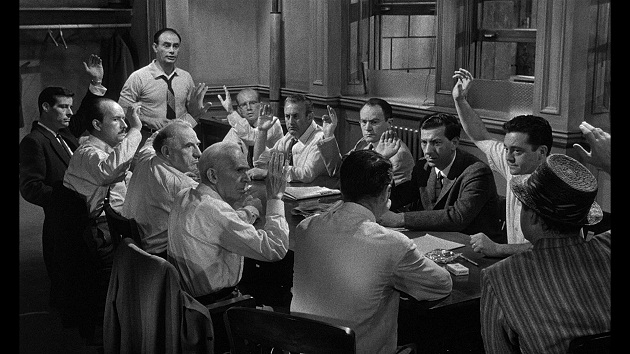
12 angry men

 It’s not nice to be mean to juries.

More than that, it’s democracy self-abuse. Juries are the fractals of true democracy, played a crucial role in the intellectual germination of our founding documents  and are as important to the United States’ ideals and core beliefs as any institution.  Citizens contribute their time—okay, some need a little persuading—to take on the massive responsibility of life altering decisions, and despite their fallibility (and look at the rest of the government!) jurors deserve honor and respect.

For lawyers and judges to behave otherwise is not just foolish, it is prohibited by their respective professional ethics rules. Charles Guiteau, who shot President Garfield, was briefly a lawyer. He used to climb into the jury box to yell at jurors. That got him kicked out of the profession, so he moved on to shooting Presidents, which he was better at.

It’s even unethical to berate a former juror, as small firm New York attorney Frank Panetta of Massimo & Panetta  discovered when all of his ethics alarms malfunctioned simultaneously and he sent off the following masterpiece to Lauren Curry, the senior partner in another firm. Panetta is still steamed about a case he lost when a jury found against his client four years ago, and he blames Curry,  who served as his jury’s foreperson. He wrote in an Guiteau-like e-mail, and I swear, I’m not making this up: Continue reading

The Unethical Cosby Victim: Jewel Allison

accuser

The thirty or so declared victims of sexual assault by Bill Cosby (sorry: when we get into double figures, “alleged” is misleading) have given various reasons for not reporting the crimes against them: fear of Cosby’s power, fear of retribution from the entertainment industry, fear of publicity, fear of not being believed, fear of humiliation. A recent addition to the list, however, has given an unequivocally unethical explanation for her 20 year silence in a Washington Post op-ed that has been called “courageous.” Jewell Allison’s confession is not courageous. It is disturbing and ominous. It shows what the trauma of the black experience in the United States has done to some African Americans, causing them to place group identification above reason, decency, good citizenship, compassion and common sense.

She writes:

“When I first heard Andrea Constand and Tamara Green publicly tell their stories about being drugged and assaulted by Cosby, I wasn’t relieved; I was terrified. I knew these women weren’t fabricating stories and conspiring to destroy America’s favorite dad, but I did not want to see yet another African American man vilified in the media. As I debated whether to come forward, I struggled with where my allegiances should lie – with the women who were sexually victimized or with black America, which had been systemically victimized.”

This makes no ethical sense or rational sense. Continue reading

Ethics Alarms On The Air!

onair

I have been on the radio a lot recently. The opinions expressed there will not surprise anyone who is a regular reader of Ethics Alarms, but for those curious about whether I speak with a British accent or a bi-lateral lisp, or those who are aurally inclined, below are links to three radio shows that had me as a guest of late, and one that interviewed me as background, and included some of my comments.

Here you go:

1. This is WGAN’s examination of the Hillary Clinton e-mails scandal, delivered by me while in shock after listening to Karen Finney spin herself sick on CNN, ably hosted as always by Arthur King…

2. Here is national host for the Local Job Network, Tim Muma, a terrific interviewer, on a podcast chatting with me about the “Ick!” and “Awww!” Factors and their relationship to ethics.

3. Tim again, this time cross-examining me about the Brian Williams mess and related issues.

4. Finally, NPR reporter Hawes Spencer’s report on the Sweet Briar closing.

Transgender Ethics: Epic Trailblazer Malpractice In New Hampshire

Ex-N.H. state legislator, Stacy Laughton, a.k.a Barry Laughton.

Ex-N.H. state legislator Stacie Laughton, a.k.a  felon Barry Laughton.

Trailblazers have an ethical obligation when they presume to break a social or occupational barrier to a marginalized group’s participation and equal treatment. Simply put, their duty is to make the bias that has created the barrier and necessitated the “trail” look ignorant, cruel, foolish and unfair. A trailblazer does not have to be a shining star, though it helps, but must be capable of at least doing a solid, average, generally acceptable job., even in the grudging judgment of bigots.

This is because a trailblazer who does a poor job or displays character traits that are objectively inadequate for a role model, which a trailblazer inevitably becomes, risks adding to the barrier he or she just breached for those who follow behind them. The ethical requirement for trailblazers is the same as the traditional edict for doctors “First do no harm.” Being a trailblazer, however, is not easy, and since failure is catastrophic for the group a trailblazer represents, there is a duty not to attempt such a high-risk, high-profile cultural role unless the trailblazer is first, reasonably convinced that he or she the resources of talent, ability, fortitude, character and courage to succeed, and second, willing to accept and overcome the added stress of relentless attention and criticism.

There have been excellent trailblazers, cultural heroes all. Jackie Robinson, the first black Major League baseball player to break the color barrier is the template, but there are many other successes: Justice Thurgood Marshall, John F. Kennedy, the first Catholic President of the U.S., Amelia Earhart, Diane Crump, the first female jockey, the late Ed Brooke, the first black U.S. Senator since reconstruction, and too many more to mention. There have also been some miserable failures. The worst trailblazer was probably Shannon Faulkner, who fought in the courts for two years to force The Citadel to accept female cadets, then, after she was victorious, showed up fat and unprepared, and washed out in just one week as millions of dubious vets said, “See? What did we tell you?” Then there was Carol Moseley Braun, the charismatic, promising African-American Democrat whon Illinois voters elected as the nation’s first black female Senator, only to turn out to be thoroughly corrupt.

More recently, we have seen other trailblazers fall short, like Michael Sam, the first openly gay player drafted by the NFL.  Is there a celebrity gay marriage that has not ended in a quick divorce? Most have been failures, reinforcing the belief that gays are promiscuous and unsuited for a real marriage. Most vividly of all in the realm of trailblazer malpractice, we are reminded of the disheartening and tragic examples of Barack Obama, and Eric Holder every day.

Still, in the annals of epic trailblazer fiascoes, it would be hard to top the story of Stacie Laughton, New Hampshire’s first openly transgender state legislator, who was elected in 2012 as one of three House members for Ward 4 in Nashua. Continue reading

Unethical App: Yik Yak

The cute Yik Yak mascot, hanging out at a fraternity, where ethics go to die.

The cute Yik Yak mascot, hanging out at a fraternity, where ethics go to die.

Yik Yak is a suddenly surging social media app that is running viral on college campuses. The app allows users to post anonymous messages (“yaks”) that only appear to users within a 1.5-mile radius. The New York Times called it “ a virtual community bulletin boardor maybe a virtual bathroom wall at the student union.”

Yik Yak is unethical.

There.

Yik Yak was created in late 2013 by Tyler Droll and Brooks Buffington, fraternity brothers (and based on their names, escapees from a Dickens novel) who came up with the idea after seeing that there were only a handful of popular Twitter accounts at Furman College, where they were frat brothers, almost all belonging to campus big shots and athletes. With Yik Yak, they say, they hoped to create a more “democratic social media network” where users didn’t need a large number of followers or friends to have one’s thoughts read widely. Continue reading

Unethical…But Funny!

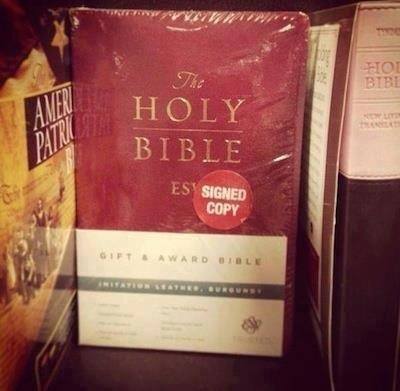
Signed Copy

How this is unethical, however, is a matter of dispute:

  • It might be a hoax. The guy who put it on Facebook swears he saw it in a book store. If not, he’s lying.
  • If this was done by a book store staff member as a gag, it’s disrespectful to the book’s market. Such irony is misplaced in a book store, when a religious book is the prop. I’d call it a firing offense.
  • If this is false advertising, that is also unethical.

And if someone slapped the sticker on the wrong book and isn’t educated enough to realize that this is one book that can’t have a signed copy, that’s unethical incompetence and ignorance for a book store employee.

Unethical Quote of the Week: Sen. John McCain, and also “WHAT????”

U.S. Senator John McCain gestures as he arrives to address the third session of the Republican National Convention in Tampa

“It was kind of a very rapid process. Everybody was looking forward to getting out of town because of the snowstorm. I think we probably should have had more discussion about it, given the blowback that there is.”

—- Sen. John McCain (R-Az) to Politico, explaining and making excuses for 47 Republican Senators injecting themselves into sensitive U.S. negotiations with Iran over nuclear weapon development..

1. I am speechless. Luckily, I can type.

Well, sort of.

2. The silver lining: at least the Senator just made those regretting President Obama’s election in 2008 feel better. We were spared embarrassing moments like that of President McCain, asked why he sent missiles to destroy Toronto, explaining, “Yeah, I was watching “Family Feud,” had to run to the can, and was distracted. Hey, it happens.” Continue reading

Hillary’s Defense: An Ethics Mess

  • I’m going to go rely heavily on links here. I have written a lot about this story already, and there are many other issues to cover. I’ll summarize the content in the pieces linked to, but the thrust is this: Hillary’s explanation in her 20 minute press conference was deceitful, dishonest, and unbelievable. Of course it was.
  • I would declare Hillary’s e-mail fiasco an Ethics Train Wreck, and still might, except that so many are refusing to buy a ticket. Even Bill is afraid to go near the tracks.
  • There are a few who are disgracing themselves—I don’t count paid Clinton cleaners like Lanny Davis, or Media Matters—but one head-exploding performance I saw today was that of Van Jones, the former White House Czar turned CNN pundit, in a “New Day” discussion this morning paired with CNN’s resident conservative pundit—because heaven forbid we examine Clinton’s conduct based on truth, honesty, and principles rather than as political gamesmanship. The two (Ann Navarro for some reason is the only Republican CNN can usually find in the morning) were asked about the phony “Colin Powell did it!” defense dreamed up in the Clinton bunker. Navarro, like anyone else who has examined that argument, found it to be bunkum, simply because the use of e-mail, its regulation in government and what we know about e-mail security has changed so much since Powell referred to it as “new-fangled.” Here’s what Jones said, after first saying that he couldn’t argue with Navarro on her reasoning, emphasis mine:

“Again, she’s playing to the heartland. If you say, listen, I did what Colin Powell did. I’m trying to do a good job. I want convenience. You know, the average person in the heartland, if you hate the Clintons, no answer is good enough. But if you’re — if you’re an honest person, well, geez, maybe this makes sense. I actually do agree, though, that we are in a different world from the Colin Powell days. I think the Colin Powell excuse sounds really good from a press point of view. I hope she keeps saying it. But I do think that, at the end of the day, we are in a different world.”

That’s Jones; that’s the Democratic spin machine, that’s the “the ends justify the means” crowd, and that’s who the networks are asking for analysis: ‘Yes, it’s just designed to confuse the yokels, and it’s not true, but it works,and I hope she keeps saying it.’

Kaboom.

Exploding head

There goes the old skull, exploding again.

Have I ever heard such an open, shameless admission that politicians not only do deceive the public, but that these horrible people like Jones think it’s fine if they do? Fire him. Continue reading

Comment of the Day: “Why The Sweet Briar College Fight Matters”

Sweet Briar2

Ethics Alarms has been graced with a wave of new commenters, prompted by this post and its predecessor, “The Sweet Briar Betrayal.” The issue is the ethics of a college board surrendering to adversity without a fight, with millions in the bank, a beautiful campus, and an important mission, and doing so before fully informing and involving the larger college community, especially alumnae. I opined that the board had an ethical duty to both  mission and the school itself not to euthanize Sweet Briar College prematurely, at very least, not before a last ditch capital fundraising campaign.

Thousands of readers seemed to agree, and my posts on the looming Sweet Brier closing have become part of the effort to promote and coordinating a growing movement by concerned alumnae and others to reverse the board’s decision. A few, in contrast, accused me of being unfair to the board, arguing that it has taken an unpopular but responsible course, and was courageous to do so. SBCFan2000, a new  commenter who arrived in the crowd of Sweet Briar supporters, reinforces my assumptions in this revealing Comment of the Day: Continue reading

Fair vs Fair: Ethics and the “No-Tip” Restaurant

You know, this looks like a place that would believe that dishwashers deserve as much pay as waiters...or as bankers, for that matter.

You know, this looks like a place that would believe that dishwashers deserve as much pay as waiters…or as bankers, for that matter.

William Street Common is a new restaurant in Philadelphia, and is getting publicity for, we are told, experimenting with a different and (maybe?) fairer compensation model. Owner Avram Hornik  pays all of its employees, from the servers to the dishwashers, at least $15 an hour plus paid sick leave and health insurance benefits. There is a 20 percent service charge for drinks, and that goes into a common fund that makes that  $15 an hour wage affordable. Money left over at the end of a pay period is divided up among employees based on a point system related to various factors.

Hornik came up with this structure, he says, to deal with the well-debated problems of tipping. “Some people just tip the same amount, but some people base it on how quickly the food was there, whether we were out of something, whether the server was there when they wanted them to be,” he says. “So much of that is out of the control of the individual server… So why would it be fair for the service employee to be responsible for the poor decisions of management?”

Hornik argues that his model “essentially creates a guaranteed floor. But we’re also capping the ceiling,” he points out, because the tipping gets shared equally with all employees. “We didn’t think it was fair [that] in some places you have dishwashers earning 10 dollars an hour and the bartender earning 30 dollars an hour.” He also is convinced that the customers will benefit.  “That atmosphere among the employees, a sense of community and empowerment and happiness with the job, is going to translate into a better environment for customers,” he said. “By having happy staff customers are going to be happier too.”

Is this system really fairer than the current one? Progressives are cheering it, because it represents a “living wage,” or at least something close to it. OK, but it would be nice not to feel hyped: ThinkProgress, for example, had headlines that the William Street Common “got rid of tipping” and writes “tips aren’t mandatory.”

Inept reporting or lies, take your pick. A 20% “service charge” is a mandatory tip, so tips ARE mandatory. The reports don’t explain how voluntary tipping has been eliminated, or whether a server would be prohibited from keeping a ten-dollar bill that a diner hands him, saying, “You know, the food was lousy, but you were so gracious and accommodating that you single-handedly made the evening bearable. Thank you. If I ever come back, it will be because of you.” If so, is that fair?  I don’t think so. In fact, it’s exactly as unfair as a diner not rewarding excellent service, and tipping a dime. Continue reading