(Commenters complained that the last quiz was too easy. This one is not.)
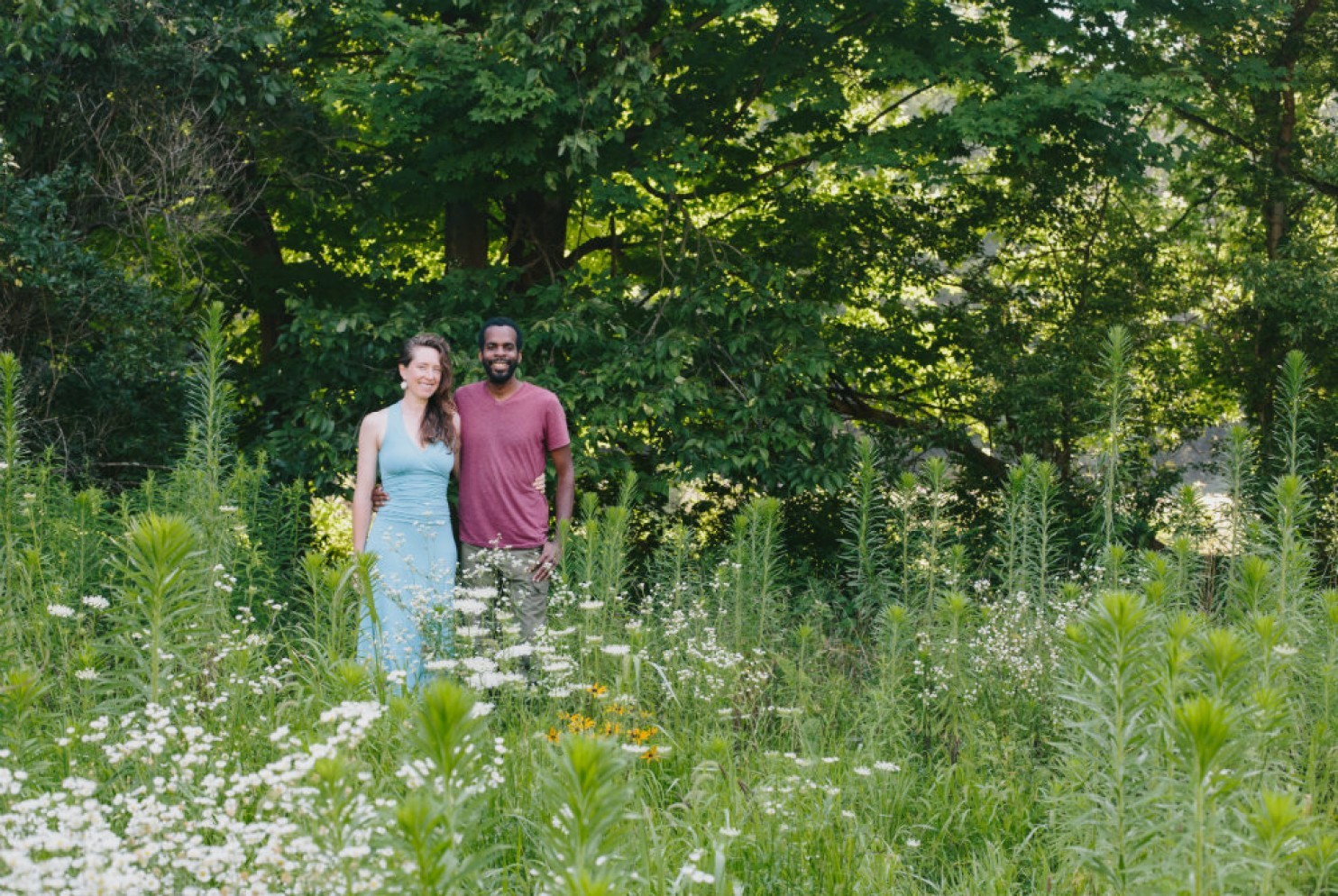
In the St. Albans Township, outside of Alexandria, Ohio, Sarah Baker and her partner violated the local ordinance and stopped mowing their one acre of property. “A potpourri of plants began to flourish, and a rich assortment of insects and animals followed. I had essentially grown a working ecosystem, one that had been waiting for the chance to emerge,” she wrote in the Washington Post. The first time the couple tried this, they were fined a thousand dollars but capitulated and mowed their lawn. Now, though they have been found to turn their property into a “public nuisance” due to neglect, they are defying the town and certain that they are in the right. Baker writes in part:
” About 95 percent of the natural landscape in the lower 48 states has been developed into cities, suburbs and farmland. Meanwhile, the global population of vertebrate animals, from birds to fish, has been cut in half during the past four decades. Honey bees, on which we depend to pollinate our fruits and other crops, have been dying off at an unsustainable rate. Because one in three bites of food you take requires a pollinating insect to produce it, their rapid decline is a threat to humanity. Monarch butterflies have been even more affected, with their numbers dropping 90 percent since the 1990s. Butterflies are an important part of the food chain, so ecologists have long used them to measure the health of ecosystems.
Nature preserves and parks are not enough to fix the problem; much of wildlife is migratory and needs continuous habitat to thrive. Natural yards can act as bridges between the larger natural spaces…[M]aintaining a mowed and fertilized lawn also pollutes the air, water and soil. The emissions from lawnmowers and other garden equipment are responsible for more than 5 percent of urban air pollution. An hour of gas-powered lawn mowing produces as much pollution as four hours of driving a car. Americans use 800 million gallons of gas every year for lawn equipment, and 17 million gallons are spilled while refueling mowers — more than was leaked by the Exxon Valdez oil spill in 1989. Homeowners use up to 10 times more chemical pesticides per acre on their lawns than farmers use on crops, chemicals that can end up in drinking water and waterways…I’m not alone. Homeowners across the country have latched on to the natural lawn and “no mow” movement.
… If we allow ourselves to see a mowed lawn for what it is — a green desert that provides no food or shelter for wildlife — we can recondition ourselves to take pride in not mowing.”
Your Ethics Alarms Ethics Quiz of the Day is...
Is Baker’s unmown, natural lawn in defiance of the town ordinance ethical?
My view: close call.
I’m torn.
Assuming that she and her partner are willing to accept the consequences of defying the law to make a public issue out of “natural lawns,” she is within the boundaries of civil disobedience. She deserves respect for that. Based on the photo above, her property looks attractive. (There is property that closely resembles that picture near my home, in Alexandria, Virginia. It’s been like that for a while: apparently our definition of “nuisance” is a little more forgiving.) Her motives are admirable; she’s sincere. It is her property. Her argument reminds me of George Carlin’s rant against golf courses: she essentially embodies the hippie environmentalist view that mankind is a blight on creation generally, and unless we live in caves, go nude, walk everywhere, eat nuts and berries and return to the Stone Age, we have signed the death warrant of the planet. Not surprisingly, she works at a greenhouse.
In the end, though, I have to conclude that this is a classic example of Rationalization #30. The Prospective Repeal: “It’s a bad law/stupid rule,” which falsely identifies the unethical as ethical because…
Citizenship, an ethical value, requires obeying the law, but a lot of people convince themselves that that laws are voluntary, and that it is somehow ethical to violate “bad” ones, defined, of course, as those that are inconvenient, burdensome, or that stop you from doing what you want to do. Laws embody the ethical values of society, and if one of them seems wrong to you, you are nonetheless obligated to follow it as part of the social contract. To do otherwise is unethical. Your options are limited: write and speak in opposition to the law (or rule), in hopes of changing the societal consensus; work within the system and with others to change the law; find a legal and ethical way around it; or violate it openly as a matter of conscience, and accept the penalty—civil disobedience. It isn’t ethical to violate what you think is a bad law while it is still a law, because this creates an obvious breach of the Rule of Universality: if everyone followed that course, we would have chaos and anarchy. There are bad rules and laws, no doubt about it. It must be the group—society, the culture—that decides when one of them needs to be amended or eliminated. The individual who does this unilaterally is threatening the stability of society, and that’s unethical no matter what the law is.
Moreover, this is not a bad law. I don’t know how a community can draw the line between Baker’s Little Eden and Billy Bob who wants to store old tires in his unmowed lawn. What if the natural lawn attracts rats and poisonous snakes? If it lowers the values of neighboring property, which it will, that is something that is a legitimate object of regulation. OK: these people don’t care what kind of community their fellow citizens want to live in, because they just know their values are superior. They may be right, but they can’t be right there unless they can get the community to adopt their values. If they can’t, they have no right to a single family veto over everyone else’s values. In the end, what I heard in the Post article was arrogance.
It gave me flashbacks to the Sixties. I had to deal with a lot of people like that. I remember the time I was called in to take over the direction of a college musical, and one of the female chorus members refused to shave her armpits because it wasn’t natural. I told her she could register her protest somewhere other than on stage in my show: shave or leave.
The options for Baker and her partner are to convince the community to go along with their assessment of what a neighbor hood should look like, or find one that will.
 Ethics Alarms
There is nothing more hilarious than then the various town ordinances. In the town I live in there is one against using “Silly-String” and an attempt was made to have a no swearing one. Plenty more.
Unfortunately Susan Baker is faced with the same nonsense that keeps me as far away as possible from gated communities. My sister-in-law lives in one in Florida when you can’t have a flag pole, a clothesline, only a certain type of lawn grass, no gardens and on and on. They hit her with fines of $25+ over some of the most absurd chicks!!t stuff imaginable.
Now were I live Baker could do any damn thing she wanted to her front, back and side yard as long as it didn’t represent a hazard. So, Susan, pack up and leave since they ain’t gonna change where you are. And, yes, I’ve seen a few lawns that have gone Au Natural and it is no big deal.
This town reminds me of the Groucho Marx line about joining a country club.
In essence how does this differ from southwestern homes that return yards to sand and rock? I know from personal experience that my mowed grass with trimmed shrubs can also harbor poisonous snakes, foxes, and other creatures I don’t want living there. There is a difference between indigenous wild flowers and a pickup on cinder blocks. One occurs without intervention the other requires placement by a human being. I’d prefer the flowers. Now excuse me while I shave my legs with my cruelty free, hemp oiled, home sharpened stone.
Right on!
But culture is everything. What is appropriate in one region may be a slum in another.
If she moved to that community knowing what restrictions there were, and if she is sincere and is engaging in civil disobedience because she believes it’s right and she wants the ordinances to change, she has to accept the consequences of her actions until such time that the community shifts over to her side. And then, she can just do it again. And again. And a-…. You get the picture. Or she can capitulate and move to a more eco-friendly neighborhood. Or countryside.
So, I guess I don’t find her actions unethical. I see no evidence that she has not accepted the consequences of her actions. I do see that she has, as you suggest she should, written in support of her position.
You mention civil disobedience as being against the social contract. I don’t know. Civil disobedience runs along a spectrum. This is a harmless example of it. She’s just channeling Henry David Thoreau. Humans need laws, yes, and most find comfort and an agreeable structure in them. I don’t believe that random acts of civil disobedience will ever become so attractive that the human race will devolve into chaos and anarchy. But then, of course, there’s the Capital Beltway, so what do I know?
That lawn would look fine at Walden.
Yes. This is it. Exactly what I was thinking (and probably said better than I would’ve said it).
I view it as unethical. Ordinances are in place, for better or worse, because the community has agreed on certain precepts. As long as those precepts don’t deny others of their human rights – their HUMAN rights, not their perceived rights – such ordinances are perfectly reasonable. You don’t like ’em, you can leave.
This couple chose to move into a neighborhood in which everyone had a nicely mown lawn, said “gee, this is nice,” bought in and then decided to do it their way.
I hate mowing too, and vastly prefer a wild meadow to a lawn, but this pair gets no love from me. This is essentially the same thing as buying a house near an airport and then complaining about the noise.
Just saw Blade Runner: Final Cut so my worldview is somewhat somber anyway but I notice that it IS going that way (against Baker & partner), at least in terms of the supposed comfort of “unnatural” community living situations overriding the annoyances and supposed (and actual) dangers of “nature.” This, apart from my belief that lawns are silly, sort of cheap(cheap-looking, if financially the opposite) costume jewelry adorning the tummy or rump of a house, making the whole appear even more out-of-place in any other environment. Homeowners and people with real estate interests back the ordinances out of a natural (or “natural”) desire to extend their own environment further, at the expense of what they call Nature … except when mowing lawns manually (like shoveling snow and raking leaves) provides pocket money for little Billy down the street … oh, sorry, had my head in another century.
There’s nothing to be done about that.
Changing the ordinances couldn’t happen unless there were many more examples of this couple’s interest. It would take long-range law-breaking by several backyard breeders to prove — or disprove — any advanges to allowing wild growth inside the city limits. [We know what happens when untamed areas are left in city parks, even with groomed-to-a-blade surroundings … All sing: “If you go down to the woods today you’re in for a big surprise.”] In fact, Susan brings up the rats and snakes herself: “The unmowed plants in our yard attract plant-eating bugs and rodents, which in turn attract birds, bats, toads and garter snakes that eat them. Then hawks fly in to eat the snakes… all this life … in just one growing season.” Yikes! This is NIMBY time with a vengeance. All kinds of squirmy, winged and crawly things that some people can’t even stand watching on television, that only a four-year-old could love — which is why you always check a child’s pockets after they’ve been playing in Billy’s back yard.
You don’t sleep in a tent at home, after all, nor cook your giraffe-steaks over a campfire, nor wake up in the middle of the night with a hot fetid breath on your neck of a bear trying to snaffle the Snickers in your backpack. So why put up with anything rustic? That’s for long vacations and second homes, not real life. Get a lawn and be free.
One Baker doth not an ordinance break. Not even an ordinance permitting scary gardens that except old tires and other non-organics. Seriously, it ain’t gonna happen, so it’s not a very good ethical alarm.
However, walking everywhere – or as where as possible — and eating lots of nuts and berries are not “hippie” ideas, and not bad ideas either. Going nude in this country is an affront to most citizens so it is not permitted, but it should not be associated with denigrating money-saving exercise and a diet that includes colorectally healthy fiber. Besides, outdoor nudity leads to skin cancer which is a strain on the healthcare system.
Susan and partner ought to move to where Rick M. lives. And enjoy their wildergarden, until . . . .
This ain’t the comment of the day. It’s the comment of the month. It’s gonna take me at least that long to diagram SamePenn’s sentences.
Sorry Maine-man. Got tangled in the undergrowth.
I haven’t read the comments yet so someone may have already said this:
But it is less about ticks, ants, snakes, rats and pretty manicured lawns…
The first wildfire that sweeps through a “natural” community and the cities will be back to their ordinances.
But I’m cool with not mowing but once or twice a month.
Totally cool with that.
This is a moot point in California at present.
If they were wise, they’d create a pond in the middle of their property and have the EPA declare it a wetland. That would stave off the town ordinance! In fact, the two nature nuts would even be forbidden to mow or in any way develop their property via federal regulation. That would leave them free to play Tarzan & Jane to their hearts’ content. I just hope no one tells them that a “wild garden” is nearly indistinguishable from a “jungle”. In the Jungle, its stay alert or die!
If they have restored the prairie, that is protected too.
They might transplant an endangered species there just to clinch the matter! Black maned lions, perhaps? And a big sign saying, “No Dentists Allowed”. Bill Gates might send them a grant.
I consider this woman a Fick. A very comely one, but a Fick none the less. What an annoying, passive-aggressive twerp.
I think a valid case can be made.
Good.
Bill/Jack,
I’m not really sure people who advocate views that are unconventional are necessarily passive-aggressive or ficks. After all, lawns require a huge amount of time and effort to maintain and, for what? An stunted environment that looks serene, but is otherwise lifeless? She’s also not overly preachy about it. Her and her husband stopped mowing, they explained their thinking when confronted, have paid the resulting consequences, and continue to advocate their position. Nothing about this comes off with an air of “my shit smells more natural than yours.” It’s more like a “what if?”
I’m not advocating we all return to natural lawns, but I don’t know that someone who does is a twerp. Looked at in one sense, it amounts to an added tax on home ownership. A small one, perhaps, but one that’s nonetheless inconvenient enough that a growing number of people resent having to pay it.
So many laws which are passed in the name of “public health” amount to little more than an irrational fear of the natural world. When did we get so afraid of snakes?
Sincerely,
Neil
I examine the problem via your published ethical toolkit, but instead of stepping through that, let’s distill it down to the three ethical questions you place after the decision process:
Are you treating others as you would want to be treated? Clearly, this woman is ignoring the Golden Rule, refusing to comply with the local ordinances which represent, absent evidence to the contrary, a description of the way her neighbors would want to be treated. She is potentially reducing the value of their land and their investment.
Would you be comfortable if your reasoning and decision were to be publicized? Apparently, the answer to this is “yes.”
Would you be comfortable if your children were observing you? This is also an apparent “yes.”
So she passes two of the three ethical questions, both of which have to do with self-evaluation of one’s action through the eyes of others, and both of which can be contaminated by selfish narrow-mindedness. But she fails the more objective test of considering her neighbors, which in this instance seems to be the overarching concern and the heart of the problem. Taking principled stances who’s perhaps unintended but undeniable effects include injury to others is prima facia ethically questionable.
It is not at all clear that she has taken the feelings of either her neighbors or the town council into consideration in any way. It does not appear that she has formulated any alternatives to her plan that might be less offensive to the town, such as confining the natural areas to parts of her property that are more secluded, or attempting to negotiate a variance with the town council.
Instead, she is engaging not just in civil disobedience, if we couch it in the light most favorable to her, but in complete indifference to the possible negative effects here decision might have on other people. Mitigating that is her conviction that it is healthier to the earth, and by extension to other people including her neighbors, but she seems not to actually enter that into her calculus. Consider:
Whether or not this is accurate, she seems unqualified to make this judgment and especially to inflict that judgment on others with no attempt at due process. Were she a scientist or other nature professional, her conclusion might have more force. Whether or not that would be enough to outweigh its shortcomings is a question I need not reach.
My verdict is that she is callously indifferent to the effect of her actions on her neighbors and her community, and that her hubris has caused her to reject the Golden Rule as operative without a clearly rational justification, and with no attempt at utilizing the lawful processes of her community to convince them to sanction her action. Therefore, her actions are unethical, in my opinion.
I have to analyze this based on “what if everyone did this? It fails that test miserably. I have seen places where people don’t have to mow their yards and it is not ‘Eden’, it is a slum. There are actual, real health concerns about such results, not just the fact that it looks bad.
Lots of people just seem fed up with overly intrusive regulations and I understand that. Not all rebellion against regulations fails this test. What if everyone put up fences? What If everyone bought whatever mailbox they wanted? What if people painted their houses whatever color they wanted? Don’t fail the test the way ‘what if everyone stopped mowing their lawn?’ does. Remember, you can’t write a regulation that distinguishes what she did from an abandoned lot.
We all should be going natural. I live in an HOA so I can’t do it, but my next home will have a natural landscape.
Poisonous snakes Jack? In Ohio? Maybe a few rattlesnakes — and that’s incredibly doubtful.
I have rat snakes in my yard — best creatures on the planet — not a vole, mole, or mouse around.
City regulations need to be changed on this issue — across the board.
All you have to do, Beth, is get a majority of the city councils to agree with you.
Good luck with that.
Jack,
Minor note: Her name is Sarah, not Susan, Baker. Otherwise, great article.
Sincerely,
Neil
Oops. I think I know a Susan Baker. Will fix.
Hmmm. I knew a Susan Baker. We should compare notes.
I was torn myself. We have a lot right next to ours, in a rural setting and the owner mows twice a year…after the spring and fall wildflower shows. I don’t have a problem with it. I have had a problem verifying her statistics. Apparently some are not as accurate as she believes. So, I’m going to go with unethical. If you are going to use statistics to back-up a controversial decision, you owe it to supporters and detractors alike to be certain the numbers are accurate.
Even if people want lawns, they have to be feasible for the particular climate. My grass is very green — but I admit that I do water it occasionally. I also live in a State that doesn’t have a water problem so it doesn’t keep me up at night. I refuse to fertilize however — I wish I had the time and space to compost, but I don’t. There is no good that comes from lawn fertilizer. While I don’t believe in banning it, I do believe that we should stop using it.
My relatives in TX have a different grass than me that is far more drought-tolerant. I’m okay with that too. I’m not okay with lawns in cities like Las Vegas and Los Angeles.
I lived in the Los Angeles area for a time, during a time when a popular type of suburban lawn was a thatch of a kind of weed called dichondra – almost surrealistically beautiful, when nurtured into a thick carpet, but expensive to maintain (as I understood, from hearing neighbors talk about it) and, I am sure, ecologically disastrous in terms of chemical additives required for those perfect carpets (I was young, and only learned the name of the stuff after enjoying its cool cushioning under my bare hippie feet).
I agree with Arthur on this Ohio case. I could agree with turning the whole lawn area into a carefully tended flower garden, with native plants, all kinds of nectar for pollinators, and natural food sources supportive of a wildlife food chain. But, if you live in close proximity to other humans and have contiguous plant-growing spaces, you owe your neighbors some active control over what you grow, out of consideration for what the neighbors do (and don’t) grow and for what they expect to see meandering across their property. I’m lazy, and I like “naturescapes,” but in typical American suburbia, ethically you can have only a puny little of both – or, time-consuming, expensive, low-quality imitations of both – at most.
In El Paso, where there’s a long standing water problem, a lot of homes opt for a front lawn of colored pebbles. No watering required!