“Where I think political correctness got in the way of what we all knew as reporters and didn’t fully deliver was how hated the Clintons were in the heartland. And I think it was a fear of, ‘Oh, is it going to look like it’s sexist, anti-woman if we say that?’… I think we underplayed it a little bit out of political correctness fears… No member of the press corps wants to look like they’re singling out a group and making a group feel bad…. If we sort of were straight-up honest and blunt about hey do we understand the level of hatred that’s out there and you know, all the Hillary for Prison signs that are out there, we certainly would have at least made the viewer know, hey, you know, she’s not well-liked in some places in this country in ways that’s times 10 when it comes to Trump…. What do I think we did wrong in this election? The biggest thing is we didn’t tell the stories of all Americans. We told the stories of coastal Americans. And ultimately, that’s like the larger trust issue. We were more likely to do a story about the Dreamer that might get deported with new policies than we were about the 19-year-old opioid addict who feels hopeless in Rolla, Missouri. And, I’m not, I don’t pick on Rolla, Missouri, it’s, my point is that we just, we did not equally tell those stories very well, right, and, we were not, that is an out-of-touch issue.”
—“Meet the Press” host Chuck Todd last week being interviewed by former Bush White House press secretary Ari Fleischer in his “1947” podcast.
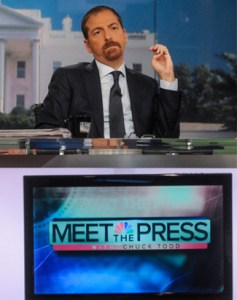 1. I suspect this quote, from a podcast I had never heard of before, may end up being quite famous. It should be.”Meet the Press,” by pedigree and habit if no longer on merit, is the flagship of theoretically tough, objective broadcast journalism. Its host, right here, in this quote, admits that he, his colleagues and industry, “we,” were and are biased and partisan. Equally remarkable, he didn’t seem to understand the significance of what he was saying.
This isn’t an ethical quote, for in its phrasing and the unethical mindset it reveals, it is quite horrifying. It’s an ethics quote, because it reveals something important and useful about ethics, specifically the wretched ethics and complete lack of trustworthiness that now infects most of American journalism. One should not be able to read Todd’s comments and express disapproval of the Trump administration’s hostility to the press. The news media deserves hostility. Its conduct has forfeited the right to be believed or respected. If it could be believed or trusted, Chuck Todd wouldn’t have said this.
2. In this statement, Todd’s candor provides a smoking gun example of one of Ethics Alarms’ mantras, “Bias makes you stupid.”
3. Todd’s equivocations, euphemisms and minimizing verbiage are as provocative as they are infuriating. “Didn’t fully deliver… underplayed it a little bit …If we sort of were straight-up honest…. we certainly would have at least made the viewer know….we did not equally tell those stories very well. Todd is admitting bias and deliberate misreporting, but using Hillary Clinton’s “it wasn’t the best choice” rhetoric (Rationalization 19A, The Insidious Confession) to imply only that it was kind of, sort of, not exactly the best thing to do in retrospect. The weasel-words are as damning as what Todd is admitting to.
4. The context of Todd’s navel-gazing and that of many of his colleagues is “What did we do wrong that helped elect Donald Trump?” and not, as it should be, “How was our journalism unethical and how can we be more ethical going forward?” We already know, or should know, why Todd and his colleagues’ work was unethical: they were 100% committed to defeating Donald Trump, and just as committed to shaping the narrative of the campaign according to how the Democratic Party and Hillary Clinton wanted it shaped: Hillary’s election was inevitable. Continue reading

 Ethics Alarms