Incompetent Elected Official Of The Month: President Barack Obama

Yesterday’s U.S.  missile attack on Syria prompted by Assad’s use of chemical weapons against Syrian civilians clarifies just how inept and feckless President Obama’s handling of foreign policy was.

In an article today in the reliably progressive and Democratic Party-boosting The Atlantic, Jeffrey Goldberg writes,

“President Obama’s foreign policy doctrine, like many foreign policy doctrines, was contradictory at times, and it sometimes lacked coherence.”

1. At times?

2. Sometimes lacked coherence?

3. Notice the obligatory “like many foreign policy doctrines” to cushion the blow. Journalists are in permanent denial over just how epically awful the first black President’s administration was.

Goldberg eventually gets around to Obama’s “decision, in 2013, to go back on his promise to punish the regime of Syrian president Bashar al-Assad for using chemical weapons on civilians. Early in the Syrian civil war, Obama publicly drew a red line concerning Assad’s behavior, but later decided to forgo military strikes, even after being presented with near-definitive proof that Assad had crossed the red line in grotesque fashion. “  This inadequate description intentionally leaves out the dispiriting details of that fiasco. Here is what Obama said in August of 2013 when the first “red line” appeared:

“We cannot have a situation where chemical or biological weapons are falling into the hands of the wrong people. We have been very clear to the Assad regime — but also to other players on the ground — that a red line for us is we start seeing a whole bunch of chemical weapons moving around or being utilized. That would change my calculus; that would change my equation….We have communicated in no uncertain terms with every player in the region that that’s a red line for us and that there would be enormous consequences if we start seeing movement on the chemical weapons front or the use of chemical weapons.” 

Ethics Alarms:

Now, lawyers and grammarians may argue over what “a red line” means, what constitutes “use” and “a whole bunch,” and what the President considers “enormous consequences.” None of that matters. What matters is what the statement was understood to mean around the world, and it was widely understood to mean this: If chemical weapons are used against the Syrian people by Assad, the United States will act decisively. Last week, reliable evidence indicated that indeed chemical weapons had been used, and that the “red line” had been crossed.

Obama’s response? Double-talk, backtracking and word-parsing:

  • The President to reporters Friday with Jordan’s King Abdullah in the Oval Office:  “What we have right now is an intelligence assessment. And as I said, knowing that potentially chemical weapons have been used inside of Syria doesn’t tell us when they were used, how they were used. Obtaining confirmation and strong evidence, all of those things we have to make sure that we work on with the international community. And we ourselves are going to be putting a lot of resources into focusing on this. And I think that, in many ways, a line has been crossed when we see tens of thousands of innocent people being killed by a regime. But the use of chemical weapons and the dangers that poses to the international community, to neighbors of Syria, the potential for chemical weapons to get into the hands of terrorists — all of those things add increased urgency to what is already a significant security problem and humanitarian problem in the region. So we’re going to be working with countries like Jordan to try to obtain more direct evidence and confirmation of this potential use. In the meantime, I’ve been very clear publicly, but also privately, that for the Syrian government to utilize chemical weapons on its people crosses a line that will change my calculus and how the United States approaches these issues. So this is not an on or off switch.”
  • A White House official to reporters Thursday: “I think what the Assad regime needs to know is that we are watching this incredibly closely. Were he to undertake any additional use [of chemical weapons], he would be doing so under very careful monitoring from us and the international community. There should be no mistaking our determination not just to get to the bottom of these reports, but to send a message … that Bashar al-Assad and his regime will be held accountable for these types of actions. We’re going to be methodical, rigorous and relentless … so we can establish exactly what happened…all options are on the table in terms of our response…If we reach a definitive determination that the red line has been crossed … what we will be doing is consulting closely with out friends and allies … to determine what the best course of action is.”

So those “enormous consequences ” of the “red line” being crossed is that the United States will start consulting with friends and allies?

Well, yes, in a word. Continue reading

Unethical Quote Of The Month: President Trump

“I think he shouldn’t have settled; personally I think he shouldn’t have settled. Because you should have taken it all the way. I don’t think Bill did anything wrong. I think he’s a person I know well — he is a good person.”

President Trump to the New York Times , speaking of the sexual harassment allegations intensifying around star Fox News Bloviator Bill O’Reilly.

Now President Trump is acting like President Obama. The President of the United States abuses his power and position by ever commenting upon or registering an opinion about matters that do not involve the national welfare or his direct responsibilities. These include local law enforcement episodes (Trayvon Martin, the arrest of an African-American professor in Cambridge by a white cop), employment matters, private lawsuits, pending criminal trials, TV shows (Saturday Night Live), media coverage (don’t get me started), legal business decisions and sports controversies (Colin Kaepernick). Obama never learned this (among other leadership basics, a problem fagged as “flat learning curve” on Ethics Alarms), and, not surprisingly, Trump is going to be even worse. Continue reading

In Kansas, A High School Ethics Train Wreck: An Unqualified Principal, Unethical Students, And A False And Dangerous Lesson About Consequentialism

Why are these students smiling sweetly? Because they sent the message to their teachers to be wary; after all, there’s a lot of dirt on the internet…

Ugh.

Seemingly every one is cheering the Pittsburg High School (Kansas) students on the school paper who investigated their newly hired principal, found her credentials to be dubious, and forced her to resigned from her $93,000-a-year job. You can read the story here and here.

For the purposes of Ethics Alarms, I’m not interested in the principal at all. What matters here is that journalists, teachers, TV talking heads and everyone else commenting on the story are proving themselves ignorant of basic ethical principles, like the fact that conduct that happens to result in something desirable doesn’t make the conduct appropriate if it wasn’t ethical at the outset, aka “consequentialism leads to bad lessons and bad ethics,” and “the ends justifies the means.”

From the article:

“Pittsburg journalism adviser Emily Smith said she is “very proud” of her students. “They were not out to get anyone to resign or to get anyone fired. They worked very hard to uncover the truth.”

Emily Smith is too incompetent and ethically confused to advise aspiring student journalists or any other students. The students “wanted be assured that she was qualified and had the proper credentials,” according to the student editor of the paper. That’s not their job, their duty, or their business. They aren’t journalists; they are students learning about journalism. Determining if the new principal was qualified was entirely the responsibility of the the Pittsburg Board of Education, which botched its job and approved hiring the principal at its meeting March 6. That the students did the due diligence the Board failed to do is being used as cover by the Board: Everything worked out because of these great students, who we have educated so well!

Wrong. Unbelievably wrong. Dangerously wrong.

What’s going on here? Continue reading

Comment of the Day: “Ethics Quiz: Is This Question Easy?”

I intensely disagree with some of this comment regarding illegal immigration and the laws surrounding it, but it is still thoughtful and provocative. I’ll be back at the end.

Here is slickwilly’s Comment of the Day on the post, “Ethics Quiz: Is This Question Easy?”

“But sometimes the law itself is evil.

Agreed, and a good observation. Laws are made by men, many times men with hidden agendas who stand to profit from those laws. What I think Glenn is getting at is that ‘illegal’ is seen as equal to ‘immoral,’ which many equate with ‘bad.’ Is it immoral to disobey a law? In the strict sense, by the definitions involved, I think so. In practice, I am not so certain. What if the ‘law’ is written by an un-elected bureaucrat who has no effective over site from lawful entities? When petty rules have the enforcement power of law, democracy falls into tyranny.

Of course, immigration laws are a necessary evil. We have to have them. But we need to get more serious about whether the ones we have now are ethical, sensible, and productive.

Many of the laws we have now benefit those in power, or those who paid them to make the law a certain way. This is generally bad for everybody else, taken as a whole. Immigration laws do not punish those who create the situation for corporate (and private) greed, and even when they do provide punishment for such as these they are not enforced. The first thing that must change is that this class starts suffering for their crimes by lawful enforcement and new laws to address that situation.

I will agree that MOST immigration laws (including ‘how one becomes a legal resident’) are unethical, nonsensible, and unproductive. To those, I will add unfair to all involved but those that crafted them. Continue reading

Dead President Ethics: The Post Mortem Odyssey Of James K. Polk

James K. Polk is one of my favorite Presidents, in part because he has never received his due for being spectacularly effective, if unwavering ruthless in achieving his goals. By the standards of fulfilling his own stated objectives, a President can’t be more successful than Polk. He pledged to expand U.S. territory to the West, Southwest and North, and did so, then served only one term, as he had promised. Polk also wrote a fascinating diary, essentially an autobiography.

His relative obscurity arises in part because he was a one term President, but primarily because he existed in the shadow of his fellow Tennessean, Andrew Jackson, who was more flamboyant, more influential on more political fronts, and had far more than four years in the spotlight. He was also much taller. Poor Polk lived just three months after leaving office, dying of cholera in 1849, in Nashville. Tennessee. The laws of the time held that those who died of that dread disease be buried within 24 hours to prevent epidemics, so the former President of the United States was  laid to rest in a mass grave less than a year after leaving the White House.

A year later, Polk was removed from the mass grave and buried on the grounds of his Nashville home, Polk Place, in accordance with the will he drew up five months before his death. Polk, a lawyer, stipulated that his body and that of his wife be buried there, and that after his death and his wife’s, the property should be held in trust by the state, which would be bound allow a blood relative to live there. Unfortunately for the dead Polks, the ex-President made a tyro’s drafting gaffe. After Polk’s widow Sarah died in 1891, a court voided the terms of the will because it violated the common-law Rule Against Perpetuities: a property owner can’t bequeath property to unborn future generations. So Polk Place was sold to private interests, eventually razed, and today there is a boutique hotel on the property. On Sept. 19, 1893, Polk’s body and Sarah’s were moved again, to the Nashville grounds of the Capitol.

On a small patch of grass within a stone’s thrwo of the Capitol, the Polks’ grave is lies in a modest but attractive classical monument framed by Greek columns, with an inscription declaring  that Polk “planted the laws of the American union on the shores of the Pacific.” It was designed by William Strickland, the architect who also designed the Capitol itself and George Washington’s sarcophagus at Mount Vernon in Virginia. But Polk’s Jackson problem continues: his gravesite is dwarfed by a nearby equestrian statue of Old Hickory, and tourists virtually ignore it. And while Jackson’s grave at the Hermitage, his family plantation, is a major tourist draw in Nashville, Polk remains—that is Polk’s remains remain—an afterthought. When President Trump visited Nashville last month, he laid a wreath on Jackson’s tomb, and saluted him in a speech. As for the perpetually dissed 11th President, the campaign jeer of the Whig Party running against the first Dark Horse candidate in 1844 apparently remains appropriate: “Who is Polk?”
Continue reading

Yes, Black Lives Matters Is A Racist Organization (Racism Is Unethical)

Black Lives Matter has banned whites from attending an upcoming event in Philadelphia, designating it as  “black only.”

The April 15 meeting will plan  projects and initiatives for the upcoming year as well as serving as a “black only space”  for people—well, those who are the right color— to “meet, strategize and organize.” Whites are explicitly banned from the meeting, according to the organization’s Facebook event page.

When criticism began coming over Twitter, Black Lives Matter Philly explained that their meetings are “black centered.”

Oh.

Racist.

As Ethics Alarms has stated repeatedly.

While reminding all that the Democratic Party still officially endorses BLM and thus its hypocritical anti-white racism as well, there is this: Continue reading

How Do We Know The Democrats Can’t Find Any Ethical Reason Not To Confirm Judge Gorsuch? Because They Searched And Searched, And The Best They Could Come Up With Was THIS [UPDATED]

Pathetic. Desperate.

Typical.

“And it’s a HAIL MARY PASS!!!!!!!”

Today headlines screamed—do mark the journalists and news organizations, for they exemplify Prof. Glenn Reynold’s jibe, “Democratic operatives with  bylines”—that Supreme Court nominee Neil Gorsuch had committed plagiarism in four passages of his 2006 book “The Future of Assisted Suicide and Euthanasia,” which was based on his 2004 Oxford dissertation, before he became a judge.

That’s a stretch, and more than that, making this a major new story now indicates bias.

In the most egregious of the passages cited, Gorsuch included a description of the famous “Infant Doe” case that tracks closely with the description in a 1984 law-review article by Abigail Lawlis Kuzma. Both versions primarily quote from the court opinion: Kuzma’s article tracks equally closely to the original opinion, a 1982 Indiana court ruling that was later sealed, a  pediatrics textbook, “Rudolph’s Pediatrics,” and a 1983 article in the Bloomington Sunday Herald. Gorsuch cited all of these, but did not cite Kuzma’s article.

He should have. That’s a citation error, but probably not plagiarism. Several the sentences in the book and the article are identical or close to it, and Gorsuch should have used quotation marks. However none of the sentences involved anything but factual  and technical descriptions. For example,the article states that “Esophageal atresia with tracheoesophageal fistula indicates that the esophageal passage from the mouth to the stomach ends in a pouch, with an abnormal connection between the trachea and the esophagus,” and Gorsuch wrote, “Esophageal atresia with tracheoesophageal fistula means that the esophageal passage from the mouth to the stomach ends in a pouch, with an abnormal connection between the trachea and the esophagus.” 

Now, if I were writing about esophageal atresia, about which I know nothing, in the course of an analysis of a larger issue, I would probably re-phrase that passage, perhaps writing, “When the esophageal passage from the mouth to the stomach ends in a pouch, with an abnormal connection between the trachea and the esophagus, this is the condition called esophageal atresia with tracheoesophageal fistula.” I haven’t added anything original, though. There are no new thoughts or content. My re-phrasing would just dodge the accusation of plagiarism. When I wrote my thesis, which involved reviewing multiple biographies of every U.S. President, it was not uncommon for me to find paragraphs in the earliest materials that were worked over and re-phrased again and again, with no quotes but citations.

The National Review, a conservative publication, so its position will be discounted as biased and partisan, tracked down Kuzma, who waved off the plagiarism charges:

“These passages are factual, not analytical in nature, framing both the technical legal and medical circumstances of the “Baby/Infant Doe” case that occurred in 1982. Given that these passages both describe the basic facts of the case, it would have been awkward and difficult for Judge Gorsuch to have used different language.”

Weeell, that’s laying it on a bit thick. Gorsuch certainly could have done a more academically acceptable job of re-stating the substance of what she wrote; it’s not THAT “awkward and difficult.”

Continue reading

Ethics Hero: CNN’s John King

Things are pretty bad in the profession of journalism when a reporter can be an Ethics Hero by simply staying objective and stating the obvious, but such is the wretched state of journalism ethics in 2017.

As mentioned in the earlier post, CNN immediately avoided journalism and defaulted to partisan Obama Administration defense mode when it was revealed that Obama National Security Advisor Susan Rice “unmasked” Trump campaign personnel whose conversations were inadvertently picked up in security surveillance. Rather than examining the story, objectively, factually, CNN anchors Don Lemon and Chris Cuomo declared the story, respectively, a Trump-manufactured  diversion and “fake news.” (The New York Times did its part by burying the Rice story on page A-11.)

CNN’s John King, however, bravely eschewed the company line, that line being “partisan spin.” Showing a video from last month, King began…

“This is Susan Rice a short time ago on the PBS Newshour with Judy Woodruff. When asked at first, her name was not involved at first in the conversation at this point. When asked at first the House Intelligence Committee chairman Devin Nunes says there was unmasking done by Obama administration officials.”

Now he runs the tape…Woodruff’s question was, ” I began by asking about the allegations leveled today by House Intelligence Committee Chairman Devin Nunes that Trump transition officials, including the president, may have been swept up in surveillance of foreigners at the end of the Obama administration.”

SUSAN RICE: I know nothing about this. I was surprised to see reports from Chairman Nunes on that count today. I really don’t know to what Chairman Nunes was referring. But he said that whatever he was referring to was a legal lawful surveillance and that it was potentially incidental collection on American citizens.

The clip ends.

KING: Uh, remember the beginning of that. “I know nothing about this.” This is the same Susan Rice moments ago on MSNBC.

He runs the second clip.

RICE: There occasions when I would receive a report in which a U.S. person was referred to. Name not provided. Just U.S. person. And sometimes in that context in order to understand the importance of the report and assess its significance it was necessary to find out or request the information as to who that U.S. official was.

The clip ends.

KING: Not to be a jerk here but will the real Susan Rice please stand up?

Added guest Yahoo! News chief Washington correspondent Olivier Knox:

KNOX: The second part of that on MSNBC there a perfectly logical explanation on how unmasking works but the problem is the previous comment in which she denies any knowledge of it so she can’t in the same breath…

KING: Welcome to the witness list.

KNOX: Yeah, I mean, come on!

Translation: If what Rice did was innocent and unremarkable, why did she initially deny she did it? Continue reading

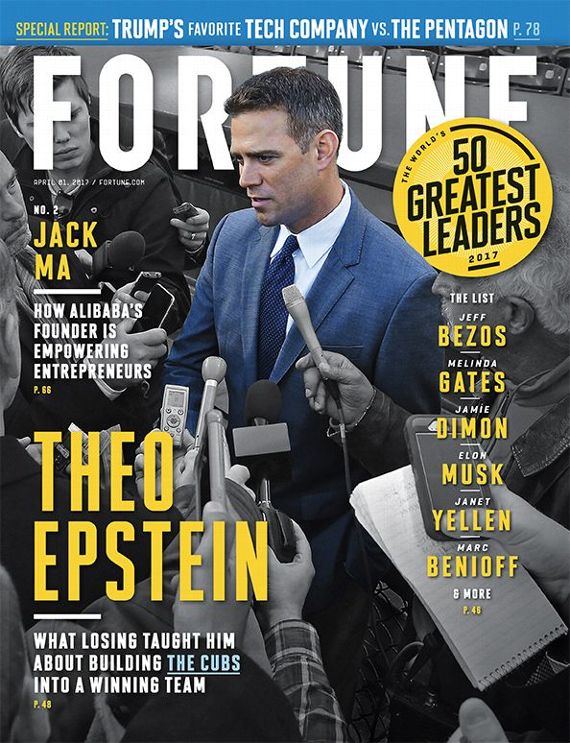
Ethics Quote Of The Month: Chicago Cubs President Theo Epstein

“That is ridiculous. The whole thing is patently ridiculous. It’s baseball–a pastime involving a lot of chance. If [Ben] Zobrist’s ball is three inches farther off the line, I’m on the hot seat for a failed five-year plan.”

—-Theo Epstein, president of the Major League Baseball’s 2016 World Champion Chicago Cubs, upon learning that Fortune Magazine had chosen him #1 among “The World’s Greatest Leaders” in a click-bait list released last week.

Thank-you, Theo, for explaining moral luck and the perils of consequentialism to the public. When it came down to the final innings of Game 7 in last year’s World Series, it looked for a while like Cubs manager Joe Maddon was about to blow the chance to win an elusive title after over a century of frustration by keeping his clearly gassed closer on the game. That his risky decision didn’t make Maddon a goat for the ages and Epstein one more name in the long list of Cubs saviors was pure moral luck—the element of chance that often distinguished heroes from villains. winners from losers and geniuses from fools in the public’s mind—and gross consequentialism, judging decisions by their uncontrollable results rather than their objectively judged wisdom and ethics at the time they were made.

If the Cleveland Indians had won that crucial game in extra-inning, no matter how, Epstein might have made Fortune’s list (I doubt it), but he would have been nowhere near the top. Continue reading

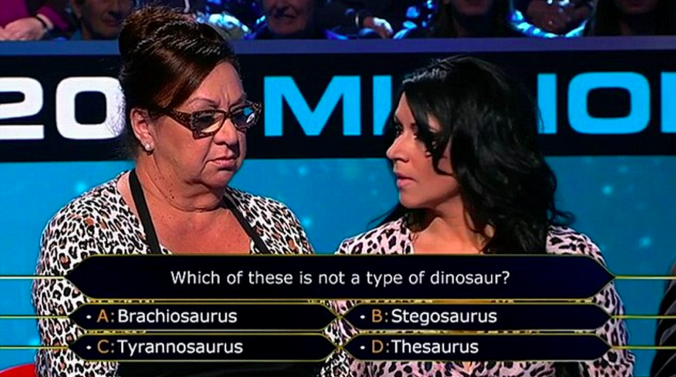
Ethics Quiz: Is This Question Easy?

No, not THAT one.

This:

News Item:

“Illegal immigration across the U.S.-Mexico border has continued to fall under President Trump, dropping 67 percent through the end of March, the former border commissioner told Congress on Tuesday. That’s even bigger than the drop reported for February, when the number of illegal immigrants caught — a yardstick for the overall flow — dropped by 40 percent.

“It’s actually up to 67 percent drop compared to last year,” David V. Aguilar, a former chief of the Border Patrol and former acting commissioner of U.S. Customs and Border Protection, told the Senate Homeland Security Committee.”

Your  Ethics Alarms This-Should-Be-EasyBut-I’m-Dying-To-Hear-The-Reasoning-Of-Those-Who-Don’t-Think-So Ethics Quiz of the Day:

Is there any ethical response to this other than “GOOD!”?