I wouldn’t cross the street to watch over-the-top, beautiful but annoyingly nasal pop singer Nicki Minaj perform, but I’d walk miles to shake her hand.
Over the weekend, the mega-star answered Twitter questions about a lip syncing contest using her “Regret in Your Tears” music video. One audacious follower asked if the singer would pay for her college tuition. It never hurts to ask, right? Minaj not only agreed but offered to pay the tuition for other fans, tweeting,
Show me straight A’s that I can verify w/ur school and I’ll pay it. Who wants to join THAT contest?!?!
Dead serious. Shld I set it up?
And she did set it up. Requests came in from all quarters, containing transcripts and student loan balances.
“U want to go to college but can’t? How much do u need to get u in school? Is that the only thing stopping u?” Minaj asked an immigrant fan who said she could not afford classes. Minaj sent the money. She also assisted a single mother who needed $500 for her remaining tuition, and sent $6,000 to cover the fall semester for another Twitter follower, including his room and board, courses and meal plan.
Yes, I am keeping my fingers crossed that Minaj’s spontaneous outburst of kindness and charity isn’t exploited by scammers. She’s certainly laying herself wide open to be misled. Yet one cannot be generous and compassionate and not be vulnerable to the worst in society. I’m sure Nicki knows that. To her credit, she is willing to court the risk to change some lives for the better.
She’s a deserving Ethics Hero, and boy, I needed one today.
_____________________
Pointer: Alexander Cheezem


 Ethics Alarms
By fortune’s smiles, I was able to finally meet Charlie last week face to face, as he kindly alerted me that he would be passing through my neighborhood. Finally having personal contact with an Ethics Alarms reader is always a revealing and enjoyable experience, and this time especially so. I think you would all enjoy Charlie; I certainly did. Maybe I need to hold an Ethics Alarms convention.
Here is his Comment of the Day on the post, Comment Of The Day: “No, Insurance Companies Treating People With Pre-Existing Conditions Differently From Other Customers Is Not ‘Discrimination’.”
…The claim that “a free market system” and “freedom of choice” is the solution to all that ails us is a mindless mantra that is only occasionally true, but not always.
It’s important to be clear about when free market solutions are good, and when they are not. It’s not all that hard to sort out. Basically:
Free market solutions ought to be the presumptive default. Unless there is good reason to the contrary, they ought to be the rule.
1. Exception Number 1: Natural monopolies. It makes no sense to have competition for municipal water supplies; airports; multiple-gauge railroads; fishing grounds; groundwater; or police departments. The basic reason is the putative economic benefit is either simply not there, or is absurdly overwhelmed by the social confusion engendered by multiple suppliers.
In these cases, a form of regulated monopoly is desirable. (By the way, the airline industry at a national level is precisely this kind of market; we do not have too little competition there, but too little regulation).
2. Exception Number 2a: Wallet-driven market power monopolies. It’s strategy 101 in business schools that the way to be successful is to be #1 or #2, and the best way to do that is to get more market share than your competition, so you can drive them out of business. The one guaranteed way to do that is to cut prices so low that no one else can compete. Think Walmart. Think Amazon. Think Japanese in the 60s and 70s in any industry.
The reason we have anti-monopoly laws is to reset the playing field when a competitor dominates the market too strongly.
3. Exception Number 2b: Product-driven market power monopolies. Where the product is so obscure, expensive, infinitely variable, and difficult to understand that the producers are de facto in control, because it is too confusing and too dangerous to challenge them.
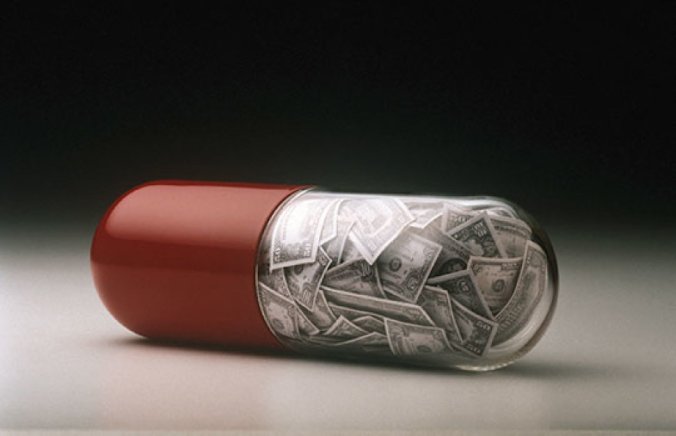
Drug prescriptions are an interesting example. The ‘free market solution’ to high drug prices was (partly) to let drug companies advertise, and to loosen up the definition of what constituted a ‘new’ drug. What did we get? New diseases like RLS, new definitions of ‘new’ (moving ‘off label’ to ‘on label’) and even higher drug company profits. Because who’s still going to argue with your doc? Especially when he or she gets side benefits from giving in to the latest DTC ads on network news programs?
Continue reading →