Morning Ethics Warm-Up, 11/25/2017: NPR, Spin Cycle, A Mother Bugs A Classroom, and a Jumbo!


Good Morning, Black Saturday!

1 Self promotion Dept. I’m going to be back on NPR (WBUR, D.C.) in what I think is a live panel discussion (“Barbershop” is the show—I wonder what a ‘barbershop” is? ) hosted at 5: 30 pm, EST by the estimable Michel Martin. The topic is The Harvey Weinstein Ethics Train Wreck, though that’s not what they’ll be calling it.

2. “For every time, Spin Spin Spin, there is a season..” I may mention this New Republic article, or at least be ready to torch a fellow panelist who cites it favorably. The tortured reasoning of writer David Dayen led him to assert that the “sexual harassment crisis” resulted from ” a broken justice system.” Let me summarize it for you: men harass women in the workplace because it’s too hard to convict people and put them in jail. When did liberals start being the ones who want to dispense with civil rights protections and due process assurances in court?

“But we should identify the real culprit for this state of affairs: the long, slow abandonment of the rule of law in America. The reason adjudicating sexual misconduct claims has been left to the media and the crowd is that people have no expectation that the legal system will adjudicate those claims fairly. How can anyone blame them? They have witnessed endless instances of powerful people, mostly wealthy men, getting away with criminality and deception, in every context imaginable. When you don’t have a working justice system, you get a kind of vigilantism as a result. The problem isn’t the vigilantism—it’s the broken framework that leads desperate people to take matters into their own hands. That powerful people face little sanction for misbehavior is an old story, as true in gender as it is in class. But brazen impunity for the powerful is a hallmark of our era. The worst financial crisis in America in nearly a century led to practically no convictions for those whose actions facilitated the meltdown. The Catholic Church shuttled around sex-abusing priests for decades with little reckoning. Cops shoot black people and go back on the job….”

None of this has much to do with sexual harassment, which isn’t a crime, and the three examples cherry-picked by Dayen don’t support his stated argument. The Wall Street wheeler-dealers operated primarily within loopholes and gray areas in the laws and regulations. There were few convictions because it was hard to prove that laws were broken. When the molesting priests were identified, still living, and in the U.S., many were sent to prison. (That the Catholic Church behaved abysmally doesn’t show that the U.S. justice system is broken, obviously). And “Cops shoot black people and go back on the job” is deceitful, simple-minded agitprop. Colin Kaepernick, is that you?

The article is a desperate and clumsy attempt at ethics jujitsu, with the recent exposure of progressive hypocrites as sexual predators being flipped to pivot to the talking point that “everything is rigged against the poor, blacks and women.” What Dayen ends up arguing is that we need to make it easier to prove criminal guilt when we just know the defendants are bad dudes (white, male and rich) —shouldn’t that be enough?— and all the “beyond a reasonable doubt” stuff should be junked…except when black “non-violent drug offenders” are involved.

3.  It’s still illegal. Fark.com called this story “a woman being arrested for mothering while black.” Nice. David Dayen, is that you? Continue reading
Ethics Dunce: The Walter Cronkite School of Journalism and Mass Communication

The Walter Cronkite School of Journalism and Mass Communication has boarded the Harvey Weinstein Ethics Train Wreck.

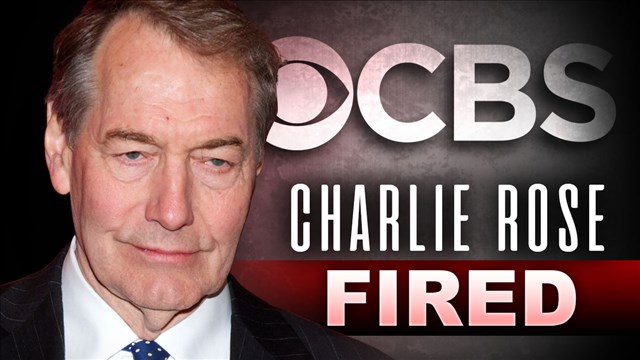
Is the body of Charlie Rose’s work as a journalist less impressive, valuable, expert, enlightening and professional because we have learned that he is an abusive, sexist, gross, harassing pig? Of course not.

That being the case, why is The Walter Cronkite School of Journalism and Mass Communication revoking the Walter Cronkite Award for Excellence in Journalism it bestowed on him in 2015? Let’s have the school’s explanation, shall we?

In the words of Dean Christopher Callahan:

We give the award each year based on the knowledge we have of a recipient at that time. When new information about a recipient surfaces, the question we ask is not whether the award would be given again with a new set of facts, but whether the transgressions are so egregious that they demand nothing less than a reversal of history.

I believe Mr. Rose’s actions of sexual misconduct reported by The Washington Post and other media outlets, which are largely unrefuted, rise to that level. The damage caused by Mr. Rose’s actions extends far beyond the news organizations for which he worked. The actions victimized young women much like those who make up the overwhelming majority of Cronkite students – young women who deserve to enter workplaces that reward them for their hard work, intelligence and creativity and where they do not have to fear for their safety or dignity. In rescinding this award, we hope to send an unequivocal message that what Mr. Rose did is unacceptable, and that such behavior – far too common in not just media companies but many organizations – must stop.

So now you know why. The school, and its dean, and everyone else involved in this decision, is craven, hell-bent on virtue-signalling, bereft of integrity, hypocritical, and intellectually dishonest. The school has never withdrawn an award or honor: are we really supposed to believe that there is an established procedure for considering whether or not one should be revoked in an instance of “new information” that has nothing whatsoever to do with the reason the honor was bestowed? Rose’s shame hardly did any lasting harm to the news organizations he worked for beyond the inconvenience of replacing him. He discriminated against women? Being the biggest cheese in William Paley’s all-male news room, Walter Cronkite’s treatment of women during the “Mad Men” error probably wouldn’t pass muster today, though I can’t picture Uncle Walter parading naked in front of female colleagues. (Fortunately I can’t picture Charlie doing that either). If Walter’s Juanita Broaddrick, reading about the slap-down of Rose, comes out with a credible accusation against the icon, will the Arizona State-based institution change its name to the Dan Rather sch…no, it can’t do that. Continue reading

This Explains A Lot, I Guess…

Here’s another planned post from those lost notes on a Sunday Times I just found from two weeks ago:

In  the New York Times Magazine,  the Times announced the results of an online poll of 2, 903 subscribers by its research-and-analytics  department. 72% Times loyalists would prefer to have done something horrible that only they knew about than to have everyone think they did a horrible thing that they really didn’t do.

Wait…what?

See, if you did a secret horrible thing, there really was someone hurt by your conduct. If people just think you did a horrible thing, you in fact hurt nobody, and did nothing wrong. This was a sneaky way of asking, “Are you a selfish and unethical human being, or not?”  Well, sneaky assuming that Times subscribers are incapable of thought, or that they let their 12-year-old kids answer Times research questions. About 3/4 answered, “Oh, I’m completely unethical!”

For the sake of clarity, let’s assume that both sides of the question involve the same horrible act, agreed? After all, if the real act is setting an orphanage on fire, and the wrongly believed act is farting loudly during a funeral service, or vice versa, the question is ridiculously easy.

So…72% of Times subscribers would rather have murdered a child than have everyone wrongly think they murdered a child? Molested a child? Broiled and eaten a child? Committed adultery? Spousal abuse? Spousal torture? Buried a spouse alive? Keeping a spouse locked in a dungeon? Locking a spouse in a dungeon with rabid wolverines?

What does this poll result tell the Times? What were they trying to learns? What does it tell us?

I guess it might explain the continued presence of the likes of Charles Blow, Thomas Friedman and Paul Krugman on the Times op-ed pages.

Or maybe their presence explains why Times subscribers reason as they do.

Unethical Quote Of The Week: Emily Linden

Funny, she doesn’t LOOK like Chairman Mao…

“If some innocent men’s reputations have to take a hit in the process of undoing the patriarchy, that is a price I am absolutely willing to pay.”

Feminist writer Emily Linden, in the most unethical portion of an unethical twitter screed. After it was roundly attacked as the despicable, sexist, Left- facist, “by any means necessary” mind poison that it is, she hid her Twitter account. But of course.

Here is her whole yuck-pooie! rant:

“Here’s an unpopular opinion: I’m actually not at all concerned about innocent men losing their jobs over false sexual assault/harassment allegations…false allegations VERY rarely happen, so even bringing it up borders on a derailment tactic. It’s a microscopic risk in comparison to the issue at hand (worldwide, systemic oppression of half the population)…The benefit of all of us getting to finally tell the truth + the impact on victims FAR outweigh the loss of any one man’s reputation..If some innocent men’s reputations have to take a hit in the process of undoing the patriarchy, that is a price I am absolutely willing to pay.”

Yes, Emily is absolutely willing to pay a price that involves devastating harm to someone else. This woman is allegedly a writer, and yet delivered a rhetorical punch to he own jaw like that. Wow. Continue reading

“Next Time”… Our Thanksgiving Ethics Botch

Yesterday, faced with the prospect of a tiny Thanksgiving, which I find only reminds me of the former table-mates lost forever, and having the extra excuse of our wedding anniversary, Grace and I decided to take our increasingly otherwise occupied son and have Thanksgiving dinner at the Prime Rib, a ridiculously expensive restaurant. The meal was lovely and low stress for a holiday dinner, a feature especially welcome right now.

The restaurant was filled with family groups without kids, many in gowns and formal wear. Also filling the air was happy banter of the sort that holidays typically inspire. Over to my right, however, sat a well-dressed man in his late 60s or seventies, dining alone. I found myself thinking about him throughout the meal. What a lonely, solitary, depressing way to celebrate Thanksgiving, I thought. If I get to the state where I am so bereft of family and friends that I find myself in a five-star restaurant dining alone on Thanksgiving, just hit me over the head with cinder block. He looked a little like Alan Greenspan, and I still felt terrible for him.

After dinner, and he had left the restaurant, I mentioned all of this to my wife.

“I was thinking the same thing,” she said. “We should have invited him to join us.”

Ugh. I had considered that. But our family gets the opportunity to eat together so seldom, and this was an anniversary celebration too. My son also has a tendency to clam up around strangers, and he seemed relaxed and happy for a change. I had quickly talked myself out of even raising the possibility of inviting a fourth to our Thanksgiving/ 37th Anniversary table.

Yet of course that’s what we should have done, isn’t it? Isn’t it? Maybe the man was having a great time by himself. Maybe we would have embarrassed him. Heck, I don’t know. It’s also possible that he would have jumped at the chance. Who knows? All I do know is that I would have appreciated the offer, and will, unless someone gets behind me with the cinder block before I have the chance. It was still the kind, considerate, compassionate, ethical thing to do.

“Next time, let’s make sure we invite someone like that,” Grace said. I agreed.

Sure.

Next time.

Morning Ethics Warm-Up, 11/24/2017: The Infuriating Clinton Enabler Flip-Flops, And Ominous Messages From The Times

Good Morning After…

1 Damn First Amendment! I’m hoping that everyone was watching the Macy’s Thanksgiving Day Parade and missed it, but yesterady’s New York Time front page had very strange headline above the fold: “Using Freedom To Lead Attack On Gay Rights.” The online version was more descriptive of te tone of the article: “Fighting Gay Rights and Abortion With the First Amendment.” The article seeks to paint the Alliance Defending Freedom, which opposes policies that its members believe infringe on their right to live according to their religious beliefs, as sinister. By emphasizing the fact fact that the guarantees of the First Amendment aid and abet the dastardly objcetives of these horrible people, the Times appears—to me, anyway–to be questioning the First Amendment itself. Don’t all advocacy groups “use freedom” to argue for their positions? Doesn’t the New York Times fight the Republican Party and Donald Trump “with the First Amendment”? Yes, we have free speech in this country, at least until progressives acquire sufficient power to limit it, as their rhetoric increasingly portends. Where is the Times headline, “Progressive Use Freedom to Lead Attack on Liberty”?

From the article:

“We think that in a free society people who believe that marriage is between a man and a woman shouldn’t be coerced by the government to promote a different view of marriage,” said Jeremy Tedesco, a senior counsel and vice president of United States advocacy for the group, which is based in Scottsdale, Ariz. “We have to figure out how to live in a society with pluralistic and diverse views.”

But civil liberties groups and gay rights advocates say that Alliance Defending Freedom’s arguments about religious liberty and free expression mask another motivation: a deep-seated belief that gay people are immoral and that no one should be forced to recognize them as ordinary members of society.

Oh, no doubt, the civil liberty groups are correct about that, but so what? Motives have never been the criteria whereby legitimate use of the First Amendment is measured and limited.  Whether religious groups believe that LGBT individuals should not have the same rights as other citizens because they have been condemned by God, or whether they just think they are inherently icky, or whether they are inherently icky because they have been condemned by God, or whether they have been condemned by God because God thinks thet thinks they are inherently icky, part of the First Amendment states that they have a right to their beliefs, and another part says that they have a right to argue for those beliefs without government interference. Yup: they are dead wrong about gays (though not necessarily about abortion), just as the Times is wrong about many, many things. But implicating the First Amendment while attacking Alliance Defending Freedom’s positions is a dangerous game, and one more bit of evidence that a large swathe of the ideological Left regards the nation’s core principles of freedom or speech and religion as problems rather than blessings. Continue reading

Comment Of The Day: “Thanksgiving Ethics Quiz: The Girl Scouts Anti-Hug Campaign”

Now and then I see an issue and immediately think, “Now THIS should get the comments flowing.” So it was when I caught a mention of the Girl Scouts’ anti-hugging screed on CNN’s Headline News. Sure enough, the resulting ethics quiz not only sparked a lot of comments, but a lot of excellent ones. This, by Emily, was a standout.

Here is her Comment of the Day on the post, Thanksgiving Ethics Quiz: The Girl Scouts Anti-Hug Campaign.

Oh goodness, do I have thoughts on this. It isn’t new to me at all; my Facebook page is full of young moms who share this stuff (it’s been going around for years) and it drives me nuts.

First of all, we all show affection at different times when maybe we don’t totally want to. You give a friend or spouse or family member a hug because they’re feeling down, or they’re leaving for a six month trip to Japan, or you want to show you’re glad to see them, even if they need a shower or a breath mint or you don’t feel like getting out if your comfy chair. This is part of the give and take of personal relationships; you’d feel insulted if they didn’t offer your preferred form of affection or support when you need it.

Children need to be taught this, or we’re going to raise a generation who think their comfort is the only thing that matters, even in personal relationships and within their family. Continue reading

Thanksgiving Morning Ethics Warm-Up, 11/23/17: All About Turkeys, Metaphorically Speaking

It’s Thanksgiving Morning!

1 It’s also my wedding anniversary. I am very thankful , and proud, frankly, that I am one of the very few people among my pretty large and diverse community of friends, acquaintances and colleagues still married (after 37 years…yes, I married at 13) to the same person I pledged to make a life with “til death do us part.” It’s not easy, for anyone, and determination and commitment, forgiveness and contrition, are a large, crucial, indispensable part of it. A lot of the journey is based on ethics, in other words.

2. Surprise! More accusers of both Rep. John Conyers and Senator Franken surfaced yesterday. Conyers’ new alleged victim is Melanie Sloan, formerly the head of CREW, the left-wing D.C. ethics watchdog that somehow manages to see unethical conduct by Republicans about five times more often than it fingers Democrats. Sloan says she was not sexually harassed, but alleges that Conyers called him into his office to verbally abuse her while being dressed in his underwear. Uh, Melanie? If your boss is ever berating you in his underwear, that is per se sexual harassment. This is a hostile work environment; I don’t care if your superior is built like Batman…well, like his costume.

The predictable proliferation of accusers was why, in the hypothetical apology I authored for Alternate Universe Al, I included the part about mistreating other women. It was a sure thing; harassers harass, and if you are going to pretend that the first accuser was “just a mistake,” you might as well skip it and head for George Bailey’s bridge. In the sexual harassment training field, nothing is more certain than the fact that with the real harassers and predators, if there’s one victim, there are many. This is why the narrative about Anita Hill amounts to a Left-driven, media-driven smear of Clarence Thomas for the crime of being a black conservative.

An unanticipated horrible consequence of this leg of the Harvey Weinstein Ethics Train Wreck, which also includes new allegations about the Democratic Party’s keynote speaker when it was accusing conservatives of a “war on women,” as well the revelation that the GOP President who selected Thomas emulates his favorite magician, “David Cop-a-Feel,” is that it very well might elect Roy Moore, who is worse than any of them. Meanwhile, most analysts think that both Franken and Conyers will have to resign. ( I would eagerly vote for a mad scientist-make hybrid of Conyers and Franken—Frankenconyers!—before I would even shake Roy Moore’s grubby hand…and really, who knows where it’s been?)

Republicans have been incredibly lucky with their choices of foes, luckier than they deserve. Continue reading

It’s Thanksgiving, And Time For The Complete “It’s A Wonderful Life” Ethics Guide [Updated And With A New Introduction For 2017 ]


Last year (to the day) when I posted the Ethics Alarms ethics guide to Frank Capra’s 1946 masterpiece “It’s A Wonderful Life,” one of the great ethics movies of all time, as this blog’s official welcome to the holiday season, I wrote, “I suspect we need it more in 2016 than usual.”  As it turned out, we need it even more in 2017.

Multiple forces have been hard at work for a full year now, roiling the nation, painting the future as dire and the present as unbearable, trying to divide us and even to encourage discord and conflict during this special time when we are supposed to remember what is most important in life. In case you have been infected, it’s not politics and not partisan agendas, but love, family, community, kindness, and friends. The simple message of Frank Capra’s masterpiece—it has aged far better than his other films, including, and maybe especially, “Mister Smith Goes To Washington”—that no one is a failure who has friends, is vital to recall when so many are rejecting friends because they don’t conform to some ideological talking point. This is madness, and watching and heeding “It’s A Wonderful Life” is a better remedy than Thorazine.

Senate Minority Leader Chuck Schumer actually told his Twitter followers this week to bring a chart prepared by a  think tank to attack the Republican tax plan during Thanksgiving dinner. This is part of the effort to politicize everything in our lives, by zealots who value power over humanity, country, and spirituality. They belong with Mr. Potter, not George and Clarence.

I need this movie more in 2017 than usual for other reasons. It has been a year in which I have lost many peers and cherished friends, and listened to too many of the living bemoan the passage of time and looming mortality.  I don’t think like that—a lifetime gift from my brave and fatalist father—but I can’t pretend that the game clock isn’t running out, or not face the fact that I have not sunk anywhere near the baskets I could have and should have. Fortunately, what I wrote in an earlier year introducing this post still resonates…

Everyone’s life does touch many others, and everyone has played a part in the chaotic ordering of random occurrences for good. Think about the children who have been born because you somehow were involved in the chain of events that linked their parents. And if you can’t think of something in your life that has a positive impact on someone–although there has to have been one, and probably many—then do something now. It doesn’t take much; sometimes a smile and a kind word is enough. Remembering the lessons of “It’s a Wonderful Life” really can make life more wonderful, and not just for you.

Have a terrific Thanksgiving, everyone.

And here we go:

1. “If It’s About Ethics, God Must Be Involved”

The movie begins in heaven, represented by twinkling stars. There is no way around this, as divine intervention is at the core of the fantasy. Heaven and angels were big in Hollywood in the Forties. The framing of the tale seems to advance the anti-ethical idea, central to many religions, that good behavior on earth will be rewarded in the hereafter, bolstering the theory that without God and eternal rewards, doing good is pointless.

Yet in the end, it is an ethics movie, not a religious one. George lives an ethical live, not out of any religious conviction, but because step by step, crisis after crisis, he chooses to place the welfare of others, especially his community and family, above his own needs and desires. No reward is promised to him, and he momentarily forgets why we act ethically, until he is reminded. Living ethically is its own reward.

We are introduced to George Bailey, who, we are told, is in trouble and has prayed for help. One has to wonder about people like George, who resort to prayer as a last resort, but they don’t seem to hold it against him in Heaven. The heavenly authorities assign an Angel 2nd Class, Clarence Oddbody, to handle the case..He is, we learn later, something of a second rate angel as well as a 2nd Class one, so it is interesting that whether or not George is in fact saved will be entrusted to less than Heaven’s best. Some lack of commitment, there— perhaps because George has not been “a praying man.” This will teach him—sub-par service!

2. Extra Credit for Moral Luck

George’s first ethical act is saving his brother, Harry, from drowning, an early exhibition of courage, caring and sacrifice. The sacrifice part is that the childhood episode costs George the hearing in one ear. He doesn’t really deserve extra credit for this, as it was not a conscious trade of his hearing for Harry’s young life, but he gets it anyway, just as soldiers who are wounded in battle receive more admiration and accolades than those who are not. Yet this is only moral luck. A wounded hero is no more heroic than a unwounded one, and may be less competent as well as less lucky.

3.  The Confusing Drug Store Incident

George Bailey’s next ethical act is when he saves the life of another child by not delivering a bottle of pills that had been inadvertently poisoned by his boss, the druggist, Mr. Gower. This is nothing to get too excited over, really—if George had knowingly delivered poisoned pills, he would have been more guilty than the druggist, who was only careless. What do we call someone who intentionally delivers poison that he knows will be mistaken for medication? A murderer, that’s what.  We’re supposed to admire George for not committing murder.

Mr. Gower, at worst, would be guilty of negligent homicide. George saves him from that fate when he saves the child, but if he really wanted to show exemplary ethics, he should have reported the incident to authorities. Mr. Gower is not a trustworthy pharmacist—he was also the beneficiary of moral luck. He poisoned a child’s pills through inattentiveness. If his customers knew that, would they keep getting their drugs from him? Should they? A professional whose errors are potentially deadly must not dare the fates by working when his or her faculties are impaired by illness, sleeplessness or, in Gower’s case, grief and alcohol.

4. The Uncle Billy Problem

As George grows up, we see that he is loyal and respectful to his father. That’s admirable. What is not admirable is that George’s father, who has fiduciary duties as the head of a Building and Loan, has placed his brother Billy in a position of responsibility. As we soon learn, Billy is a souse, a fool and an incompetent. This is a breach of fiscal and business ethics by the elder Bailey, and one that George engages in as well, to his eventual sorrow.

5. George’s Speech

Continue reading

Finally! The Naked Congressman Principle!

Thoughts: 1) What woman wouldn’t be turned on by THAT? 2) Ew. 3) Weiner’s selfie was better 4) EW!

I’m sure Democrats will be thankful for this. Ultra-conservative Texas Congressman Joe Barton, in his fourth decade in the House, has a nude selfie circulating on the web. As I note above, ew. There are some material distinctions from the Weiner debacle: Joe was separated when he sent them; he wasn’t showing his man-things to cyber-pal he he had never met, and most important of all, he didn’t lie about it, immediately confirming that the selfie was indeed his. which, unfortunately, means that he is also copping to sexting the message “I want u soo bad. Right now.Deep and Hard.”  The details don’t matter, though. Barton has provided the perfect template for the Naked Congressman Principle, which is so similar to the Ethics Alarms Naked Teacher Principle that not much elaboration is required.

The Naked Teacher Principle states that a secondary school teacher or administrator (or other role model for children) who allows pictures of himself or herself to be widely publicized, as on the web, showing the teacher naked or engaging in sexually provocative poses, cannot complain when he or she is dismissed by the school as a result.

A tweak here, a word changed there, and Voila! Naked Congressman Principle! Hence,

A member of the House of Representatives or the U.S. Senate who allows pictures of himself or herself to be widely publicized, as on the web, showing the elected official naked or engaging in sexually provocative poses, cannot complain when he or she is required to vacate his or her high office.

Continue reading