Here Is Why Baseball Fans, And Almost Everyone Else, Are Ignorant Of How The Law Works…

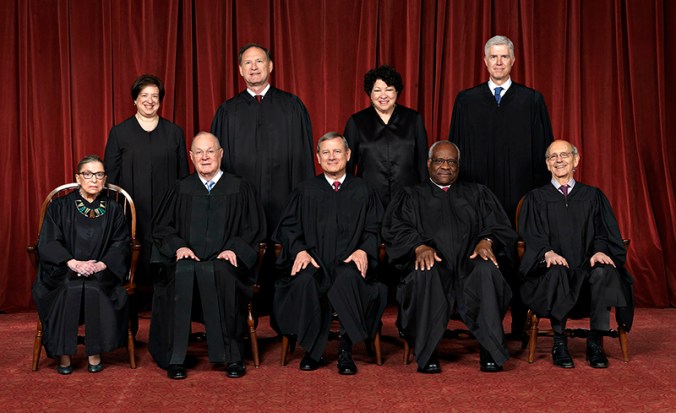
Last night, while I was watching a lousy Red Sox loss to the Oakland A’s, the Boston broadcasters announced their mid-game poll: “Do you agree with the Supreme Court decision on sports betting?” Viewers were supposed to text one number for yes, another for no. It was quite clear that the Sox announcers themselves had no clue what the decision was, however, as Jerry Remy and Dave O’Brien began debating the pros and cons of legalizing sports betting. The debate was edifying, but had nothing to do with the Court’s decision in Murphy v. National Collegiate Athletic Association whatsoever.

They and thousands of Red Sox fans had no clue what the decision was, and their ignorance didn’t stop them from voting on what they thought it was. What they thought it was came from second and third hand social media posts, and misleading headlines (“Supreme Court Strikes Down Anti-Sports Betting Law”) as well as brain-dead reports on the meaning of the majority ruling. (“Today the Supreme Court opened the door to legalized sports betting by declaring the federal law banning it unconstitutional…”). On a local news channel in the D.C. area, a reporter was dispatched to “investigate” if the reporting on the decision was accurate. “We began by reading the decision itself,” he said,

Wow! What a concept! Read the opinion rather than depend on ignorant reporters who don’t know the Constitution from “Hiawatha” to explain it based on what they think they know, which is not remotely like knowing anything!

Quoting again from ScotusBlog, here’s what “the decision on sports betting” was…

The 10th Amendment provides that, if the Constitution does not either give a power to the federal government or take that power away from the states, that power is reserved for the states or the people themselves. The Supreme Court has long interpreted this provision to bar the federal government from “commandeering” the states to enforce federal laws or policies. [The] justices ruled that a federal law that bars states from legalizing sports betting violates the anti-commandeering doctrine…

…In a decision by Justice Samuel Alito, the court began by explaining that the “anticommandeering doctrine may sound arcane, but it is simply the expression of a fundamental structural decision incorporated into the Constitution” – “the decision to withhold from Congress the power to issue orders directly to the States.” And that, the majority continued, is exactly the problem with the provision of PASPA that the state challenged, which bars states from authorizing sports gambling: It “unequivocally dictates what a state legislature may and may not do.” “It is as if,” the majority suggested, “federal officers were installed in state legislative chambers and were armed with the authority to stop legislators from voting on any offending proposals. A more direct affront to state sovereignty,” Alito concluded, “is not easy to imagine.”

Later on, Alito makes it clear that the decision isn’t pro-sports betting or anti-sports betting. The decision is anti-the federal government telling the states that they can’t pass certain kinds of laws, and the subject matter of those laws are irrelevant to that principle. The decision in Murphy v. National Collegiate Athletic Association  no more approves legalized sports betting than it approves speed limits over 90 or letting felons vote in state elections. The decision says that while the federal government can pass its own laws, it can’t order the states not to pass laws.

Never mind! Thousands of Red Sox fans had opinions based on misunderstanding the decision, just as many bloggers and online commenters worked themselves into a frenzy about the evils or benefits of sports betting, aided by journalists who literally, not figuratively, didn’t know what they were writing about, and didn’t have the integrity or common sense to find out.

Good job, everybody!

 

Rare Species, Previously Believed Extinct, Sighted: A Balanced Analysis Of The Iran Nuclear Deal

On a matter of as much significance and complexity as the Iran nuclear deal, it is depressing to see that almost all commentary in the news media begins with a partisan bias, a “team” mentality, and the typical talking-point orientation that makes genuine public understanding unattainable today. People choose the position that already aligns with their friends and their loyalties, and adopt it uncritically. As a result, public discourse is useless.

This is no way to run a democracy.

Elliot Cohen is a prominent Never-Trump neo-con and foreign policy scholar, writing in the Atlantic, a generally “resistance”-favorable progressive publication. His analysis of the current contretemps involving the Iran deal is the closest I have seen yet to a fair and balanced one. That doesn’t mean I think he is right on all counts, especially ethically. The second half of this statement, for example is as  troubling as the first half is refreshing:

“The Iran deal was, in truth, a very bad one. It did nothing to inhibit Iranian behavior in the broader Middle East, did nothing to stop its ballistic programs, and opened the path for a resumption of the nuclear-weapons program in a decade or so. Some of us said so at the time. Walking away from it, however, will make matters worse not only because success is unlikely, but because this shredding of an earlier presidential agreement further undermines the qualities that those who look to American leadership have come to value—predictability, steadiness, and continuity. Even when American allies have doubted the superpower’s wisdom, they usually felt they could count on its constancy.”

They also have to be able to count on its competence, courage, and ability to change course when a current course is disastrous. It is unethical to make policies that are careless, expedient and dangerous in a setting where there is no recourse once the course is set.  Leaders have to undo mistakes and take new directions even when it means future distrust and present anger.  The previous President took unseemly joy in declaring previous Presidential policies wrong-headed, and reversing them forthwith. True: this is a bad habit, and all leaders should respect previous decisions and commitments by their predecessors, except in extraordinary circumstances. The standard should be similar to the Supreme Court’s rule of stare decisus, which means that previous SCOTUS rulings have the presumption of permanence, unless they are sufficiently bad for law and the nation. I am satisfied to move the Iran debate from the Obama-Kerry mythology to “it’s a bad deal.” The question is then whether it is sufficiently bad to justify a variance from the general rule that Presidents ought to leave agreements made before their election stand if at all possible.

To his credit, Cohen displays almost equal contempt for the Obama administration and President Trump. Some notable excerpts: Continue reading

Morning Ethics Warm-Up, 5/16/ 2018: The Fake Moussaka Edition

Gooood morning Pyongyang!

…and everyone else too, of course.

1. ” Winning.” How many in “the resistance” and the news media are rooting, secretly or openly, for the North Korean talks to fail? Based on the tone of some premature gloating on social media and news reports after North Korea threatened to pull out of talks, I think “many” is the fair answer. Other recent headlines and news stories also point in this direction, like “Improving Economy A Problem For Democrats.” (No, an improving economy is not a problem for any Americans, unless they care about their own power more than their country.)

This is especially revolting ( and hypocritical) from the same people who 1)  falsely attributed Rush Limbaugh’s indefensible statement in 2008 that he wanted Obama to fail to the entire Republican Party (I condemned Limbaugh’s statement at the time) and 2) used it to feed the narrative that conservatives who opposed that Presidents left-ward policies were doing so out of personal and racial antipathy.

A President’s success–as in “being proved correct” or “getting lucky,” it doesn’t matter which— makes it more likely that policies you don’t like will be continued? Suck it up and cheer like the good citizen you are. His accomplishments make it less likely that your favorite politician will get elected? Cry me a river: your duty is to care about your nation and fellow citizens first. That you are on record that—okay, still think that—this Presdent has crap for brains and you wouldn’t shake his hand without gloves makes you look less wise and prescient than you would have if he fell flat on his face? Cue the world’s smallest violin, have some integrity, and grow the hell up.

2. Ken Burns ethics, and FDR. In this post earlier this year, I scored documentary whiz Ken Burns for the hagiography of Franklin Roosevelt that marred his otherwise superb “The Roosevelts.”  “The smoking gun for me,” I wrote, “is that despite ten and half hours, Burns somehow never found time to highlight FDR’s internment of American citizens solely because they were of Japanese ancestry. The civil rights outrage is only alluded to in passing, as part of a list from a biographer preceding the nostrum, ‘All great leaders make mistakes.’” That critique stands, but it is slightly unfair, I subsequently discovered. Burns covered the internment of Japanese Americans extensively in an earlier, also excellent, PBS series, 2007′ s “The War.”  Even that section, however, avoided laying proper accountability for the debacle at President Roosevelt’s feet.  I watched the documentary over the past two days, and the deceit is really extraordinary.  The narration keeps referring to Executive Order 9066, without specifically saying whose order it was, like the thing appeared on its own. Here, Ken, let me fix this for you:

President Franklin D. Roosevelt ordered the imprisonment of tens of thousands of American citizens of Japanese ancestry and resident aliens from Japan in concentration camps (“internment” is a euphemism and a cover word, like “pro-choice”) with towers and guards with loaded rifles. Though some German-Americans and Italian-Americans were imprisoned as well, far fewer were taken. The risk they posed was not considered as great, because they were white.’

Executive Order 9066 wasn’t rescinded, incredibly, until February 19, 1976, by President Ford. The Supreme Court decision upholding the order, Korematsu v. United States, 323 U.S. 214 (1944),has never been overturned. In that case’s 6–3 decision approving the abrogation of American citizen rights with fear as the justification, six of FDR’s eight appointees—you know, the liberals—  sided with Roosevelt, and against the Bill of Rights. Continue reading

Morning Ethics Warm-Up Overstock, 5/15/ 2018: It’s Use Them Or Lose them…

This is perplexing. I have a backlog of ethics stories and issues that I feel are better mentioned in the Warm-Up format, then that post run long, and the items in my basket of deplorable often get superseded by new issues, and are never seen here at all. The collective approach saves amazing amounts of time, so if I have to post each of the leftovers individually, that will preclude doing the work necessary on potentially more significant issues.

Well, today, at least, I’m posting on some of the morning issues that didn’t make the cut.

And this is why Royals used to avoid marrying commoners.

What an Ethics Dunce, and worse,  soon-to-be Royal father-in-law Thomas Markle is! Your daughter is unexpectedly in the middle of a world event (not that it should be that), and she is approaching the most exciting day of her life. One of your two duties is to be on hand to walk her down the aisle, and your other duty is not to screw things up for her and embarrass her. Markle couldn’t do either, because, it is evident, he is a low-life, the real equivalent of  Eliza Doolittle’s father in “My Fair Lady,” who after years of neglect has to try to cash in on his daughter’s good fortune.

The father of the soon-to-be royal bride couldn’t resist cashing in, doing several photoshoots with a paparazzi agency ahead of the wedding. The news reports of this provoked a negative reaction, predictably, except Tommy Boy was too greedy or dumb to predict it, and now he says that he will not attend because he does not want to embarrass Meghan or the royal family.

Too late!

Are there really people who think this is legitimate criticism?

I suppose there are, but wow.  A politically active genealogist named Jennifer Mendelsohn—she’s an idiot, by the way—spends her time digging into the ancestry of critics of illegal immigration and illegal immigrants to prove they are hypocrites, or something. Her latest target is Fox News’s Tomi Lahren (I am not a fan) and Mendelsahn really seems to think she has uncovered a “gotcha!,” tweeting…

Except the 1930 census says Tomi’s 3x great-grandmother had been here for 41 years and still spoke German. Her 2nd great-grandmother had been here for 10 yrs. Spoke no English. Her great-grandfather’s 1895 baptism from MN? Recorded in Norwegian…But as long as people like Lahren continue to push a specious agenda that suggests today’s immigrants are somehow wholly different from previous ones, I’ll keep showing just how alike they really are.

I really do think the wretched quality of thought here is more characteristic of most illegal immigration activists than people are willing to admit. I’m sure you can do this analysis yourself, but…

  • Illegal immigrants are not the same as legal immigrants. That what was once legal is no longer doesn’t make what the legal immigrants did in 1900 wrong, or what illegal immigrants doing now right.
  • There is nothing hypocritical about a citizen with immigrants in their lineage condemning illegal immigration. Indeed, there would be nothing wrong with someone with illegal immigrants in their family doing the same. If my great, great grandfather was a pirate, I can still oppose piracy. If I exist because my great-grandmother was raped, there is nothing wrong with my opposing rapists.
  • Did I mention that Mendelsohn is an idiot?

Just wanted to make sure.

Best rejoinder to her tweet: “Now do Elizabeth Warren!” Continue reading

Ethics Observations On The Homeless Hero

Perhaps you have seen this video:

Apparently both the Brooklyn attacker and the man who took him down were homeless.

Observations:

  • I thought the “knock-out game” was 1) over with and 2) an urban myth. This sure looks like the “game” to me.

I can’t find a single report that notes that, however.

  • I also can’t find the name of the man who tackled the assailant and held him until police arrived.

Why hasn’t such a good citizen been recognized?

  • Many of the headlines on this story are like CBS’s, which reads, “Homeless Good Samaritan Saves 2 Elderly Women Attacked By Homeless Man.” That’s fake news. Can’t these hacks get any story right? Watch the video. Yes, the man attacks the the attacker of the two women, but the bad homeless man was trying to leave. The damage to the women he punched was done. By no interpretation of that video can it be said that the “good Samaritan” saved  the victims. Indeed, he didn’t interact with them at all.

The video accompanies the headline, and yet the headline is still false!

Tell me again, ye Defenders of the News Media, why we are supposed to trust these irresponsible, undependable, incompetent hacks, much less respect them.

  • Would you do what the Good Samaritan did here? If not, why not?

Morning Ethics Warm-Up, 5/15/2018: Alito Gets One Right, Ellison Deceived, And An Ancient, Unethical Tactic Works Once Again…

To a glorious morning, Ethics-Lovers!

1. Bad Alito, Good Alito.  As I briefly noted yesterday (and hopefully will do in detail today), Justice Alito authored an unethical and embarrassing dissent defending a lawyer who deliberately betrayed his client by telling the jury that he had killed someone his client denied killing. Bad Alito. However, the arch-conservative jurist also authored the majority opinion in Murphy v. National Collegiate Athletic Association, in which the SCOTUS majority struck down a virtuous but unconstitutional law, and did so clearly and well.

These are, I think, my favorite Supreme Court opinions, where the Court ignores the motives and objectives of a law and simply rules whether the legislature is allowed to behave like that. I don’t know, but I would guess that most of the majority feel the way I do about organized sports gambling: nothing good can come of it, and a lot of harm is inevitable. One they get the green light, I’m sure that as many states will take over sports gambling for its easy revenue as now prey on its poor, desperate and stupid with their state lottery scams. Everyone involved–sports, fans, athletes, states, the public’s ethical compass—is going to be corrupted by letting the sports betting genie out of its bottle: just watch.

Nevertheless, the Professional and Amateur Sports Protection Act, a 1992  law known as PASPA, should have been struck down decades ago; I’d love to know why it took so long. No, it did NOT ban sports betting, though this is what far too many news reports tell you. Congress can ban sports betting directly if it chooses to, as it is interstate commerce. This isn’t in dispute. What it did in 1992, however, was to order states not to pass laws states have a constitutional right to pass. The distinction matters. From SCOTUS Blog, which is usually the best source for analysis of these things:

The 10th Amendment provides that, if the Constitution does not either give a power to the federal government or take that power away from the states, that power is reserved for the states or the people themselves. The Supreme Court has long interpreted this provision to bar the federal government from “commandeering” the states to enforce federal laws or policies. [The] justices ruled that a federal law that bars states from legalizing sports betting violates the anti-commandeering doctrine…

…In a decision by Justice Samuel Alito, the court began by explaining that the “anticommandeering doctrine may sound arcane, but it is simply the expression of a fundamental structural decision incorporated into the Constitution” – “the decision to withhold from Congress the power to issue orders directly to the States.” And that, the majority continued, is exactly the problem with the provision of PASPA that the state challenged, which bars states from authorizing sports gambling: It “unequivocally dictates what a state legislature may and may not do.” “It is as if,” the majority suggested, “federal officers were installed in state legislative chambers and were armed with the authority to stop legislators from voting on any offending proposals. A more direct affront to state sovereignty,” Alito concluded, “is not easy to imagine.”

…The court also rejected the argument, made by the leagues and the federal government, that the PASPA provision barring states from authorizing sports betting does not “commandeer” the states, but instead merely supersedes any state laws that conflict with the provision – a legal doctrine known as pre-emption. Pre-emption, the majority explained, “is based on a federal law that regulates the conduct of private actors,” but here “there is simply no way to understand the provision prohibiting state authorization as anything other than a direct command to the States,” which “is exactly what the anticommandeering rule does not allow.”

Got it.

Good decision. Continue reading

McCoy v. Louisiana

Today the Supreme Court ruled in favor of Robert LeRoy McCoy, who was convicted of three counts of murder after his lawyer refused to follow his instruction and plead not guilty as he directed. I had predicted that his convictions would be over-ruled; I also wrote,

“If the Supreme Court does anything but overrule Louisiana in this case by a 9-0 vote, I may turn in my law license in exchange for a free Whopper at Burger King.”

Well, the vote wasn’t 9-0. I think instead of turning in my license, I’m going to turn in my respect for the so-called conservative wing of the Court. The majority opinion was authored by Justice Ginsberg, with Kagan, Sotomayor, Breyer, Roberts, and Kennedy concurring. Two of the conservatives concurred in a dissent authored by Alito: Gorsuch and thomas.

I haven’t had time to read it as carefully as I have to to do a thorough analysis, but I read it well enough to flag it as an embarrassing collection of rationalizations. While the majority opinion interprets a straightforward case according to what is significant about it—a lawyer pleaded guilty for him when his client demanded that he plead non guilty, thus making the conclusion unavoidable, Alito resorts to desperate excuses. Well, this kind of case isn’t likely to happen again. So what? A man was robbed of his Sixth Amendment rights! His story was ridiculous. So what? If that’s his story, he has the right to tell it. The lawyer was placed in a tough situation by a client whose claims were unbelievable. The jury decides who to believe, and a defendant has the right to let them do that. McCoy’s lawyer didn’t believe him. So what? Welcome to criminal defense work. McCoy was going to be convicted anyway.

What????

I can’t believe a Supreme Court Justice is making these arguments. So what? The principle of the rule of law is that it is vital that the defendant, if he is convicted, is convicted the right way, constitutionally. The conduct of McCoy’s lawyer was indefensible under the ethics rules, and the Constitution.

Reading the whole opinion and the dissent is revealing, and not in a good way. The majority opinion shows us that the Supreme Court can’t say the sky is blue without making the case in the mots turgid way possible. This opinion should have been a few pages at most.

The dissent lets us know that Justices Alito, Gorsuch and Thomas look for minuscule fragments of justifications to avoid doing the right thing.


Morning Ethics Warm-Up, 5/14/2018: Another Rushing Around In A Hotel Room Getting Ready For A Seminar Edition…

Good morning from Boston...

…where I always feel at home! I’m here for the morning, talking to young, newly minted Massachusetts lawyers about ethics.

1. This is a big deal, though only lawyers will care. Finally, California has ditched its confusing, multi-source (some ethics rules were laws, some were regulations), antiquated legal ethics rules, and became the last of the jurisdictions, including D.C., to adopt the American Bar Association’s template for legal ethics guidance. Yes, in one area, if not the most important ones, California is moving closer to the rest of the country! There is hope!

2. Ally’s lament. Ally Sheedy, whom you might recall from “War Games” and “The Breakfast Club,” is one of Hollywood’s more articulate and thoughtful performers. She recently penned a post condemning Hollywood sexism, and its effect on her career. Essentially the essay amounts to a complaint that Hollywood is obsessed with appearances and, with women, sex appeal.

I like Sheedy, and I was pre-inclined to respect her observations (which are certainly accurate), but I have to admit that unsympathetic blogger Amy Alkon has a point. She writes,

“..professional actress Ally Sheedy takes it upon herself to lament the looks-driven reality of Hollywood — which is kind of like lamenting how in professional baseball, somebody’s always throwing a ball your way. …This is the movies, dear, not the genetics lab. Her entire essay is an example of intrasexual competition — criticizing and trying to change the standards of female competition by one who falls a bit short of them.Because so many people are so ignorant of our evolved psychology and in denial of biological sex differences (and the psychological sex differences that come out of them), they don’t get that there is pressure on men, too, to meet women’s differing mating priorities.As for those differing priorities, well…you don’t see men writing essays about how rotten it is that you can’t get a hot girlfriend (or probably any girlfriend) while unemployed and sleeping on a couch in your grandma’s basement.”

Yikes. And they say I’m tough… Continue reading

Althouse’s Commenters Delineate A Trend

Is something in the etho-cultural air? I wonder. Suddenly hints that patience with the resistance/progressive/Democratic/mainstream media assault on the Presidency, democracy, fairness, honesty, civic discourse and the rule of law is running out even with typically left-leaning citizens are turning up in multiple venues all at once. This is, of course, gratifying here at Ethics Alarms, since I have regarded this as an ethics crisis since 2016.

Fascinating evidence can be found in the comments to a recent post by Ann Althouse, in which she pointed to a res ipsa loquitur piece in Politico, “‘What Happened to Alan Dershowitz?’,  which I would summarize as “Whatever could have possessed Alan Dershowitz to make him opt for objectivity, principles and integrity at a time like this?” Ann, as she frequently does, didn’t comment substantively on the essay, deciding instead to make an arch observation while pointing the way for her readers. She flagged what she called “the most obvious quote” in the essay: “Maybe the question isn’t what happened to Alan Dershowitz. Maybe it’s what happened to everyone else.” Of course, nothing happened to Dershowitz. He’s doing what a lawyer, an analyst and a trustworthy pundit is supposed to do: apply the same standards to everybody; not let emotion rule reason, and when all around him are losing their heads and blaming it on him, keeping his own despite temptations to follow the mob.

Ann’s readers distinguished themselves in their reactions. I wonder if the Democrats are paying attention. They are fools if they don’t.

Read as many as you can. Here’s a representative sample: Continue reading

An Ethics Riddle: What Do Starbucks And The University Of Virginia Have In Common?

They both called the cops on someone who was violating a policy. Only one of them, however, was accused of racism.

Bruce Kothmann, a University of Virginia alumnus, read aloud from his Bible on the steps of the school’s Rotunda this week, so university police came make him stop. He did stop, because he didn’t want to be arrested. For such public speech is no longer allowed at the public university. The Rotunda is not one of the places the university has designated for public speech by outsiders. Kothmann was on to campus because his daughter had just finished her sophomore year, but was reading from his  Bible with him to challenge the school’s  policy limiting speech on campus.

A terse reader comment on the story said, “This is basically what happened at Starbucks.” The comment is correct.

Would UVA have sent the police to silence a black parent? My guess: no, and if it had, the school would be grovelling in the dust right now, begging for forgiveness. Unless the school could quickly point to a white transgressor who got the cops called on him, a charge of race bias would be devastating, and, of course, effective.

You recall the Starbucks episode: I covered it here. Two African Americans were informed of a Starbucks policy that required those using the facilities to be customers. The men refused, the manager called the police claiming trespass, and the rest is ugly, race-baiting history. The two men could have left just as Mr. Kothmann agreed to stop reading, but that’s just moral luck. The reader was right: the episodes were the same….except for the race of the violator involved.

The Ethics Alarms position is that both policies, that of the university and the old Starbucks policy, are reasonable, with the Starbucks policy being the more  defensible, since UVA is a public university and has the First Amendment to contend with. Never mind: the news media and the social justice social media mob have little interest in a white man being stopped by police from reading that old rag, The Bible, but if two black men violating a private business’s reasonable policy have that policy enforced against them, that’s intolerable.

We have the birth of a new racial privilege, now extending beyond police shootings (a white cop can safety shoot a threatening white suspect, but not a black one) to other forms of previously justifiable conduct. Continue reading