Big Data Ethics: The Facebook-Cambridge Analytica Affair

This is supposedly the big ethics story of the past ten days. There are ethics elements involved, but the main ethics stories are how the facts are being spun to try to make this yet another example of sinister doings by the Trump campaign, and how incredibly incompetent and naive social media users are.

In 2016, the Trump presidential campaign paid about $6 million to a firm called Cambridge Analytica to put together a voter database with profiles to allow targeted messaging. Global Science Research was hired by the firm, and reportedly paid Facebook to post a personality quiz and an app that 270,000 Facebook users ultimately consented to. The app allowed the firm to harvest personal likes, attitudes and preferences from 50 million Americans through access to the consenting users Facebook friends. Originally we were told that Cambridge Analytica had used all of that data to target voters during the 2016 presidential election, but that claim seems increasingly dubious. The Trump campaign ended its relationship with the firm well before the election.

Facebook claims it was lied to, and has now banned the firm, which could be fairly classified as misdirection. Facebook, as it has done before on its own, permitted its platform to be used to gather psychological profiles on its users without full disclosure regarding what the data would be used for.  Now Facebook stock is plunging in the U.S., Facebook advertisers are leaving, some users are leaving too, and Congress wants hearings.

What’s going on here?

  • If, in fact, Facebook was deceived into allowing the quiz, that was unethical. Gathering data through such means is not illegal, however, and the ethics of Big Data gathering and analytics are murky at best. The legal profession, for example, has no clear regulation of it or guidance from bar associations.

Facebook did not inform users whose data had been harvested, and that could violate laws in Britain and some  states.

  • The tenor of much of the news reporting and punditry, however, has been  pure fear-mongering and hyperbole. That Cambridge Analytica was evil is presumed, I gather, from the fact that Steve Bannon was one of the founders. The New York Times in various articles described the data gathering as an invasion of “private information,” which is an inflammatory and misleading description, and described “misuse” of the information, as if such use isn’t routine in 21st Century commercial marketing. Here’s the Times, for example,

“The researcher hired by Cambridge Analytica, Alexandr Kogan, told Facebook and his app’s users that he was collecting information for academic purposes, not for a political data firm owned by a wealthy conservative. Facebook did nothing to verify how the information was being used.”

Ah…if it’s for a firm owned by a wealthy conservative, that makes the data gathering sinister, I guess.

  • It is unethical not to let people know why their preferences are being requested, and how they might be used, except that a strong argument could be raised that anyone who didn’t know they were creating a Big Data-base for Facebook is too naive to be allowed on the web without a leash.  Facebook isn’t free: providing data is one of the ways users pay for it. There has certainly been plenty of publicity about this, and it’s not just Facebook. Google, Amazon, Twitter: this is what these companies do.

If it were possible to feel sorry for Mark Zuckerberg (it isn’t) one could conclude that the massive backlash he is receiving is contrived and unfair.

  • The episode is also being called a “breach,” as if there was hacking, or information was stolen.

There was no “breach.” Continue reading
Morning Ethics Warm-Up, 3/24/18: Ethics Musings While Not Marching [UPDATED]

A Good Saturday Morning To All!

[If you had a speech impediment and lisped your “s’s”, would you choose this song as your only solo among the repertoire of your singing group? Why didn’t Karen tell her bother? This has mystified me for decades…]

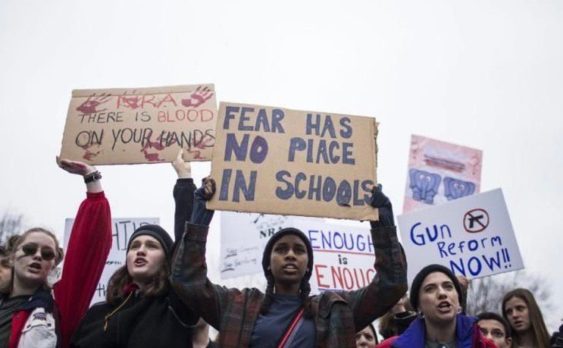
1  It’s irrational and pointless fury day in D.C. Today hundreds of thousands of intellectually dishonest, ignorant or purely emotional citizens will be doing the equivalent of screaming at the sky to call for “something” to be done about gun violence., because “think of the children.” Yes, I think that’s a fair characterization.

Given the chance to suggest actual measures that would stop the equivalent of the Parkland shooting, one of my usually rational but currently virtue-signalling-to beat-the-band friends really made this pathetic argument in response to a Facebook post that was a shorter, gentler version of what I just posted on Ethics Alarms: ‘Where is your empathy? Would you feel this way if your son had been killed in the Parkland shooting?”

Can you believe that? “How would you feel if you were so emotionally ruined, angry and despairing that you couldn’t think straight?” Why, I believe that I would be so emotionally ruined, angry and despairing that I couldn’t think straight—and thus useless to any serious and objective public policy discussion. As I told my friend, when “Why can’t you be irrationally and emotionally biased like the rest of us?” is your reflex rebuttal, you’ve got nothin.

2. Related: YouTube is banning gun instructional videos. This a part of a growing trend in the online platform world to attempt to constrict information and discourse according to ideology and partisan preferences. There is no more justification for banning how-to videos about guns than there is for banning how-to videos for chain-saws. The social media companies are going to have to be regulated as common carriers, or the right of free speech and access to information will be slowly strangled by these left-wing, high-tech, useful idiots.

3. From the ” Tragic Misunderstandings of the Cognitive Dissonance Scale” files. Lindsay Lohan is the new spokesperson for Lawyer.com. What, O.J. wasn’t available? Continue reading

Unethical Website Of The Month, “March For Our Lives” Edition: Change.Org

This page, the petition for gun control to “save our children” is what earns the “honor.” I see many Facebook friends, many on whom are genuinely gifted intellectually, surrendering to emotion and signing this junk, as junk it is. The petition neatly encapsulates the serial intellectual dishonestly,  misleading rhetoric and appeal to emotion that we will see bloviated all over the National Mall this weekend: I guess that has some value for historical purposes. Otherwise, it is an engine of ignorance designed to either attract the ignorant, make the less ignorant more so, or deceive.

Let’s look at this mess, shall we?

In the tragic wake of the seventeen lives brutally cut short in Florida, politicians are telling us that now is not the time to talk about guns. March For Our Lives believes the time is now. Created by, inspired by, and led by students across the country, we will no longer risk our lives waiting for someone else to take action to stop the epidemic of mass school shootings that has become all too familiar.

Nobody is saying that “now is not the time to talk about guns.” Who has said that? The statement is straw man. Agreed: now is a good time to talk about anything: guns, pangolins, acne, cabbages and kings. We have a First Amendment as well as a Second, something those Other Civilized Nations that are always being extolled in the gun debate don’t have.

Created by, inspired by, and led by students across the country, we …

Not to be pedantic, but a serious petition should be written by someone  who can speak the language. Signers are created by students? It’s bad enough that they are being led by students, who are after all, students. They do not know enough, either through knowledge or experience, to be seriously participating in a complex policy debate, much less leading it.  “We, the undersigned adults who are duty-bound to be teaching and leading our rising generation, are allowing them to dictate to us.” Good plan. How can anyone sign such a petition and not hide their head under a bag?

…will no longer risk our lives waiting for someone else to take action to stop the epidemic of mass school shootings that has become all too familiar.

This is pure appeal to emotion rather than reality. The existence of the right to own guns no more “risks lives” than the existence of anything else that is dangerous when misused. There are 10.6 deaths per 100,000 U.S. citizens due to guns according to latest statistics, including those of suicides and those killed by law enforcement. Three times that many die in alcohol-related automobile accidents. Nobody argues that we risk our lives because “someone” hasn’t taken “action” (aka, “do something,” “make it go away” “make us feel safe when nobody in a free society is ever safe”, aka. “ban and confiscate guns.”) regarding that risk we accept as part of living in a free society that includes jackasses, fools and criminals, and that’s just one of many.

There is no “epidemic” of school shootings. Students in school are safe; if they don’t feel safe, it’s because of fear -mongering from activists and the news media.

“We support the right of law-abiding Americans to keep and bear arms, as set forth in the United States Constitution.”

No, you obviously don’t. This is a pure lie (or inexcusable stupidity.) A movement called “Never Again” is either lying in its title by implying that any public policy, laws or regulations will guarantee no more gun deaths, in schools or anywhere else, or it is telling us its real purpose in the name, while lying about the movement’s real intent.

Many, many, if not most mass shooters were “law-abiding” until they started shooting. This statement either endorses pre-crime measures, profiling citizens to decide if they are a risk to eventually abuse gun rights—unconstitutional—is magical thinking, or is, again, a lie. The statement—and while it is always a fine time to talk about guns, it is never a fine time to resuscitate this zombie tautology that the NRA has been knocking down for decades—is self-rebutting.  Laws only affect law-abiding people, as long as they obey laws. Restrictive gun laws are violated by criminals, because they don’t obey laws. Nobody has ever explained how a law will not infringe “ the right of law-abiding Americans to keep and bear arms” while somehow keeping the same kinds of arms out of the hands of those who are not law-abiding. This is because it’s impossible.

“But with that right comes responsibility.”

As an ethicist, I object to a cynical use of the language of ethics to deceive, which is what this is. If the topic is responsibility, then we are talking about law-abiding citizens again, as well as ethical ones. They usually don’t use guns irresponsibly, or if they do (like killing themselves), such irresponsible use is not addressed by the measures proposed here. If I am a law-abiding citizen, I won’t be more likely to abuse my gun ownership whether I have had a background check or not. Irresponsible gun ownership includes not keeping guns where children—you know, citizens the age of the people “leading” those who sign the petition—can find them and hurt themselves and others. It includes not learning how to use a gun safely and appropriately. This petition isn’t about promoting responsible gun ownership. It’s about replacing the right to own guns responsibly with the right to own sling-shots.

We call on all the adults in Congress elected to represent us, to pass legislation that will protect and save children from gun violence.

There it is: “Think of the children!” A pure, unadulterated, inexcusable appeal to emotion over facts and reason. Continue reading

Baseball’s Intrusive Domestic Abuse Policy

Last year I wrote about Major League Baseball’s domestic abuse policy, which is, pardon the pun, bats. Here is another example.

Red Sox knckcle-baller Steven Wright has been suspended for 15 games under the MLB-MLBPA Joint Domestic Violence, Sexual Assault and Child Abuse Policy. Fifteen games is a lot: that’s three starts for a starting pitcher like Wright, and almost 10% of a player’s salary. Wright’s salary is about a million dollars for the upcoming season, and unlike an established star, he isn’t a multi-millionaire. Losing about a hundred grand will hurt, and not just him, but his whole family.

The suspension relates to a mid-December incident in Tennessee in which Wright was arrested and charged with domestic assault and prevention of a 911 call.  Wright was not charged with physical abuse to his wife or any other household members; this was apparently “verbal abuse”—the pitcher’s conduct was so emotional and threatening that his wife was frightened. A plea deal has the charges on the road to being discharged if Wright does not commit any infractions in the next year. He has told reporters that he and his wife are being counseled.

Never mind: Baseball Commissioner Rob Manfred suspended him anyway, under this policy: Continue reading

Comment Of The Day: “Morning Ethics Warm-Up, 3/22/18: Nanoo Nanoo, And The Oxford Comma”[Item #3]

Observations:

1. I love it when I am out of the office all day and return to find that my desperately rushed post in the morning spawned multiple donnybrooks.

2.  If this were baseball, Mrs. Q would be leading the Ethics Alarms League in batting average. Her Comment of the Day/Comments average leads the pack.

3. This quote…

“If someone were to ask me “what do you want most from our society today?” I’d answer, to have people mind their own business, not assume I’m needing a leg up, and honor those who honor family, faith, and free thought.”

…is as smart, powerful and profound a statement as any that have appeared on Ethics Alarms in nine years.

Here is Mrs. Q’s Comment of the Day on #3 in the post, Morning Ethics Warm-Up, 3/22/18: Nanoo Nanoo, And The Oxford Comma: 

How do we as a society make things more fair for a variety of minorities, based on a history of unnecessary biases?

I don’t think it’s possible to make everything equal for everyone forever and always. It’s a nice idea but I’m called to remember the book “The Lathe of Heaven” where the therapist manipulates his patient into “making the world a better place” with disastrous results. For example in trying to solve overpopulation, millions die. In another, an attempt at solving racism turns everyone grey.

The song by Tears for Fears, “Everybody Wants to Rule the World” highlights another dilemma in attempting to make things as we wish:

“All for freedom and for pleasure
Nothing ever lasts forever”

There is simply no way to obliterate prejudice. There will always be poor folks, enslaved folks, downtrodden folks, and people who get treated like crap for one reason or another. Obviously this doesn’t mean we stop caring or making effort to be kinder people, which includes examining institutional racism, homophobia, etc. However any “peace” we make won’t last in the next generation or the one after that because some other disparity will always present itself. This is the way of life and the evidence of history from the Egyptians to the Jews to women today being trafficked. So how do we balance the scales for minorities here in the US? Continue reading

Morning Ethics Warm-Up, 3/23/18: The All-Disposable Edition…Legal Ethics, Budgets, And Grocery Bags

Good Morning…

1. More Professionals Behaving Badly: The news media has widely reported that Ted Olson of the law firm Gibson Dunn refused Donald Trump’s request for his legal services. Olson, who is best know for arguing  the Bush side of Bush v. Gore that ended the 2000 Florida recount,  had declined to comment on this to the media but a partner in the firm Gibson Dunn’s “global co-chair” issued a tweet that Olson was not going to be representing the President. This is a straight-up violation of an attorney’s ethical duty  of confidentiality to a prospective client.

In other Trump lawyer news, the media is also widely reporting that John Dowd resigned from the President’s legal team over the President’s refusal to accept Dowd’s advice that he not agree to give testimony to the Special Prosecutor. Telling the news media that—telling anyone that—would also be a breach of confidentiality on Dowd’s part.

2. Per se legislative incompetence. Once again the Senate and the House passed a huge bill with massive implications and consequences without reading it. The legislation funds the federal government for the remainder of the 2018 budget year, through Sept. 30, directing $700 billion toward the military and $591 billion to domestic agencies. The military spending is a $66 billion increase over the 2017 level, and the non-defense spending is $52 billion more than last year. It also further explodes the deficit and the debt that bring the United States one step closer to a ruinous financial reckoning. The Democrats have been happily on this path for the entire 8 years of the Obama administration, but the Republicans rode to power in part because the public recognizes how insane this is. The GOP couldn’t even muster a cut in the arts spending that it has been promising since the Reagan administration, or to finally cut ties with public television, though Big Bird fled the nest years ago. Continue reading

Morning Ethics Warm-Up, 3/22/18: Nanoo Nanoo, And The Oxford Comma

Good Morning!

1 . From the “Oh, Come on!” files. As I have mentioned here several times, Georgetown Law professor Professor Paul Butler decided to ambush me with a cheap shot on NPR last year, interjecting “Oh come on!” as I was explaining how a celebrity or prominent man’s inappropriate sexual advances could be initially welcome to a female subordinate, and then later, after, say, the same celebrity is regarded as toxic by that woman’s peer group, what were originally “welcome” (or not unwelcome) attentions could become retroactively unwelcome, prompting an accusation of sexual harassment. I was 100% correct. Last month, in an email exchange on ten topic with the NPR host, I was told that both she and the professor thought I was making excuses for Donald Trump.

Thus does Trump hate and bias make intelligent discourse increasingly difficult. If I had used Al Franken as my example instead of the President, I presume my commentary would not have been kneecapped. But I digress…

In jaw-dropping revelations in a new book coming out in May, actress Pam Dawber and others describe how co-star Robin Williams often treated her and other actresses on the set of “Mork and Mindy.” The book discusses Williams’ “improvisations”…

[M]any of these additions were sexual and directed at the women in the cast, such as when he goosed the actress who played Mindy’s grandmother with a cane.

[Director Howard] Storm said: ‘I’m standing there watching this and I’m thinking, “oh my god” and I just laughed. I thought she was going to turn and say: “How dare you stick a cane in a woman’s ass?” That sweet old lady.’There was nothing lascivious about it, in his mind. It was just Robin being Robin, and he thought it would be funny. He could get away with murder.’

Other times Williams would grab Dawber’s bottom or her breasts simply because he was ‘bored.’ 

‘He’d be doing a paragraph and in the middle of it he would just turn and grab her ass. Or grab a breast. And we’d start again. I’d say, “Robin, there’s nothing in the script that says you grab Pam’s ass.” And he’d say: “Oh, ok,”‘ Storm added.  

Garry Marshall, the producer of the show, said: ‘He would take all his clothes off, he would be standing there totally naked and she was trying to act. His aim in life was to make Pam Dawber blush.’

But Dawber remained unfazed, she admits: ‘I had the grossest things done to me – by him. And I never took offense. I mean I was flashed, humped, bumped, grabbed. I think he probably did it to a lot of people…but it was so much fun.

‘Somehow he had that magic. If you put it on paper you would be appalled. But somehow he had this guileless little thing that he would do – those sparkly eyes. He’d look at you, really playful, like a puppy, all of a sudden. And then he’d grab your tits and then run away. And somehow he could get away with it. It was the Seventies, after all’.

Wait: if it was the 70’s, does that mean that in the parallel universe where Robin Williams has conquered his demons and is running for the U.S. Senate as a Republican (those parallel universes are funky, let me tell you), Dawber couldn’t come out and destroy his candidacy by describing his outrageous behavior? Does it mean everyone would say that she was being unfair, and that she wouldn’t be lionized as another #MeToo hero?

Continue reading

Ethics Hero: John Gunn

John Gunn, the father of a 12-year-old, went to his son’s school to register his objection to his son’s class being allowed to participate in the National Walk-out to Protest Gun Laws That Had Nothing To Do With the Valentine’s Day Massacre in Parkland, Florida. He videoed the exchange with principal Barbara Boggio, and posted the confrontation on the Ventura Unified School District Facebook page.

Gunn (great name, by the way!): “I want to know who authorized these kids to go out and leave the class when I wasn’t even notified about it.”

Boggio: “As our school planned for who and what, we anticipated something…”

Gunn:  “6th graders? 6th graders? When do 6th graders make decisions?…When do 12-year-olds make decisions? You’re an adult, you’re the school, you’re supposed to teach my child. You don’t influence my child in any which way. Democrat, liberal, Republican, whatever it is. I want it out of the school system. So why did my son have to sit in that class — because he didn’t leave — but why wasn’t I notified?”

Boggio: “If the student chose to leave, that’s their choice.”

Gunn: “What do you mean that’s their choice? They’re 6th graders!…If this wasn’t a protest and this wasn’t happening, you would let the kid leave?”  Continue reading

Comment Of The Day: “When Ethics Alarms Don’t Ring: Snapchat Approves A Domestic Abuse Game Ad”

Video games and their effect on societal violence have been mentioned in the comment threads of several recent posts of late, so Michael West’s essay on the topic is especially timely (even if my posting of it is tardy). I am dubious about claims that forms of entertainment warp healthy minds, as I am old enough to have seen a series of modes and genres be condemned from various sides of the political spectrum as turning children into violence-prone monsters. Even the Three Stooges once were fingered as making kids unfeeling sociopaths. I’m also historically astute enough to know dime-novels about bloody Wild Bill Hickock shootouts, pulp novels with half-naked blondes on the cover and  EC comics about shambling, face-eating corpses were similarly accused. My son played “The Godfather” video game, and five earlier versions of the “10 Violent Video Games” the Parenting website says to avoid, all with my blessing.

When my son was 18, he bought a gun, too. I’m not worried. He has many friends, a strong peer group, he has strong ethical values and character, and is kind and thoughtful. That is not to say that every new social influence is different, and that attention must be paid.

Here is Michael West’s Comment of the Day on the post, When Ethics Alarms Don’t Ring: Snapchat Approves A Domestic Abuse Game Ad

Video games have been out nationally for quite a while. Even video games that have abstract versions of violence…like Mario Brothers or Donkey Kong…and I mean old school versions of those games like I used to play on Apple IIe. But for us to seriously contemplate capital V, capital G, capital V Video Game Violence as a force affecting the acculturation of our youths, we ought to fast forward in time specifically to “realistic” video game violence. An estimate that will be off plus or minus a few years, the *mid* 1990s is when our culture saw First Person Shooters enter the market, with early favorites like “Doom” and “Wolfenstein 3D” for desktop computers and ultimately entering the console market. In other words, Video Game Violence is still a young force in our society. This makes measuring its effects a bit problematic.

As we raise our young, they are acculturated through several INPUTS…all of which communicate to some level or another the values that the culture espouses OR worse, inadvertently communicates values the culture notionally DOES NOT espouse, but accidentally promote. In a manner of speaking, “we are what we eat”. My personal take up front is that YES, video game violence, as a subset of ALL informational inputs DOES affect each individual’s acculturation. The real questions are, “how much” and “are it’s effects mitigated by other inputs”?

I would think that for video game violence to start acculturating the young towards violence, they would need to be inundated by it and have few effective counter-acculturating forces in their lives teaching them that wanton and purposeless violence is bad. For the first 20 years of video game violence, my gut tells me we can explain away its effects as having been minimally noticeable without deeply searching each individual or practically non-existent. Children of the early years of video games had plenty of other inputs in their lives as well as outlets for their minds at a vastly greater ratio than the violence int he games…first and foremost active and attentive parents.

That leaves us really with only about 15 years of any generation that could be said to be inundated by truly graphic depictions of limitless violence…most of those age cohorts are still too young to see how they turn out as adults. Again, my gut says that you’d see actual correlations, if they exist, in about another decade. And even then, I don’t think we’ll find a direct causal effect between video game violence and individuals acting on violent tendencies *except in marginal cases*. Continue reading

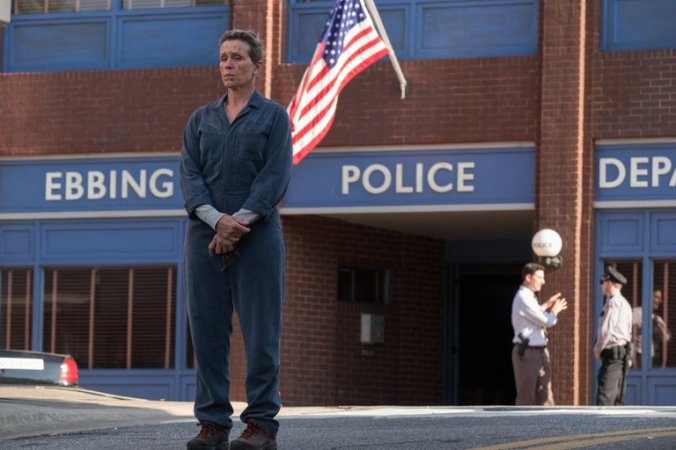
Ethics Review: “Three Billboards Outside Ebbing, Missouri”

I watched last year’s “Three Billboards Outside Ebbing, Missouri,” twice, just to make sure it was the profound ethics movie I thought it was. It is. None of the reviews described it that way, of course. Here is the New York Times:

“The movie opens on low boil with Mildred behind the wheel of her station wagon near three derelict billboards…she uses the billboards to announce her crusade … a way to get things jumping (the investigators, the tale) and splash some foreboding on an outwardly pacific scene. Much of the story involves the ripples of outrage, confusion and buffoonery that the billboards inspire and that soon envelop almost everyone Mildred knows. Months after her daughter’s death, grief has walled her in; isolating and seemingly impenetrable, it is inscribed in the hardness of her gaze and in her grim new identity as a mother of a dead girl. The billboards turn that grief into a weapon, a means of taking on the law and assorted men — a threatening stranger, a vigilante dentist and an abusive ex (John Hawkes) — who collectively suggest another wall that has closed Mildred in….”

None of which addresses what is remarkable about the film, which is that it shows what causes our ethics alarms not to ring—Frances McDormand as Mildred and Sam Rockwell as Dixon, a racist and vicious deputy, in particular demonstrate  what it is like to be driven by non-ethical considerations of the darkest and most passionate sort—and more important, what causes them to start ringing again. Most reviewers described this as a dark and depressing film. The ethics alarms are mostly off again as the film ends, and that is ominous, but its main ethics message is uplifting in many ways. “Three Billboards” teaches us that even broken, ignorant, alienated human beings have the capacity to access their innate instincts for compassion, justice, forgiveness, selflessness and kindness, and even when our ethical selves seem permanently overcome and decisively defeated, they can burst out again, in control, salvaging what’s best about the species.

There is a moment early in “Three Billboards” that signals that it is not only going to show us what monsters anger and grief can transform us into, but also that what George Washington’s list of 110 Rules called “that little spark of celestial fire called conscience” is remarkably resilient.  A sheriff—the ethics compass of the story, played by Woody Harrelson— visits Mildred after her billboard messages embarrass him and roil the town. She is hard and cold as marble as he tries to explain his failure to find her daughter’s rapist/killer, even after he reminds her that he is dying of cancer. Suddenly the sheriff has a violent  spasm: he coughs up blood on himself and Mildred. And we see her fury evaporate in an instant. The compassionate and caring mother she once was emerges, if only for a few moments. ( McDormand is such a superb actress that she pulls off the sudden transition convincingly and movingly: you believe it, though it is like watching Mr. Hyde turn into Dr. Jekyll in the snap of a finger.) Later, when again her fury has been aroused, we see the same woman firebomb the police station and watch implacably as her nemesis deputy burns. A warning: just because the ethics alarms can ring doesn’t mean they are working well enough.

Sam Rockwell’s character also reveals surprisingly that his ethics spark has not been entirely extinguished, again thanks to a catalyst supplied by the sheriff. This transformation caused considerable  criticism of the film among critics and artists in Hollywood, and some attribute the film’s failure to win the Best Picture Oscar to the fact that a racist is redeemed and revealed to have an ethical core. But except for the sociopaths and psychopaths among us, admittedly a disturbingly large group, we all have that ethical core. We have the ethics alarms too, ready to be re-activated, even if they aren’t in perfect working order. Yes, this is  even true of racists. So much of our current political discourse is driven by the false construct that a single belief or a single lapse of reason marks an individual as irredeemable. Its easier to marginalize and demonize them that way. But it isn’t true.

Indeed Ethics Alarms often declares certain conduct and words as signature significance, proving that an individual is unethical because such actions and thoughts are alien to ethical human beings. “Three Billboards Outside Ebbing, Missouri” reminded me that people may be unethical–Mildred and Dixon, the deputy, could never be called ethical, for ethical people don’t set police stations on fire or throw young men out of second story windows, as Dixon does—but that even unethical individuals can find their ethics if you give them a chance.

And if they can find their ethics, so can all of us, and so can society. There is hope.

________________________

Addendum: I cannot leave “Three Billboards” without a salute to one of its most powerful scenes, when Mildred tells a priest why she doesn’t care what he has to say when he comes to her home to admonish her for the messages on the billboards:

Bingo.