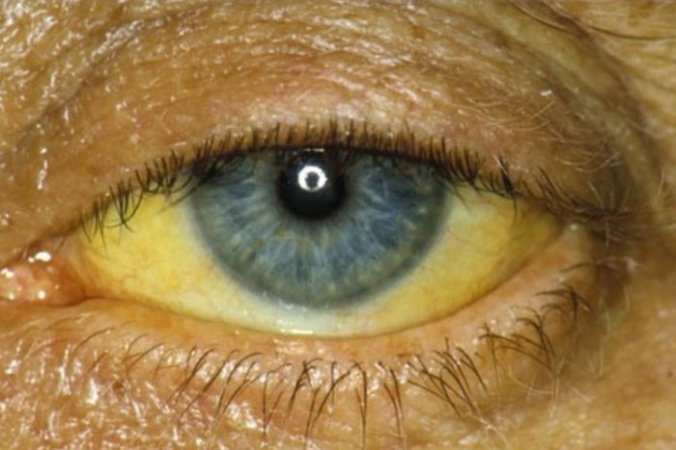
All looks yellow to the jaundiced eye.
Conservative writer John Hawkins published a post called “7 Brutal Truths That Will Make Your Life Better If You Accept Them.”
If I were as cynical as he is, I might say that a better title would be “How to Rationalize Being a Jerk,” but I’m not.
However, his post does demand some ethical perspective. Most, though not all, of his truths are really constructs to justify unethical conduct. Let’s examine them:
1. The average person cares more about what he eats for lunch than whether you live or die.
Maybe, and so what? That doesn’t mean that you should emulate them. To begin with, there is no “average person.” There are individual people, good, bad and in-between. Hawkins writes,
“You tell the average person that doesn’t know you very well that you have a fatal disease and he’ll say, “I’m so sorry to hear that.” Then he’ll forget about it in five minutes while he debates with his friends whether they’re going to Chili’s or the Mexican restaurant down the street. What that means is that everything you want out of life, you better prepare to earn without getting a lot of favors on the way. If you fall, you have to be the one to pick yourself up off the ground, brush yourself off and get your life back on track. You care. They don’t. So it’s up to you.”
But the a stranger doesn’t always react that way. Sometimes he gives you his kidney. Hawkins is supplying an excuse to be callous based on a Golden Rule Distortion: “Do Unto Others As They Would Do Unto You.” Don’t listen to him. Care about other people, and don’t hesitate to ask for help. People are better than you think: they will surprise you. In the meantime, it is your job to be as good as you would like them to be.
2. Life is not and will never be fair
I’ve written about this recently: fairness is a vague and broad concept in ethics. Life isn’t “fair” because life is often random, and nobody is tending the fairness meter. Systems either are fair or are not depending on your point of view. The mainstream conservative view about fairness is that one should play the cards one is dealt and stop complaining about it. It’s facile, though not without some truth: it is better to spend time trying to overcome obstacles than to bitch about them. On the other hand, each of us has an obligation to make the world better for those who follow us. Genuine unfairness, in systems, institutions, the culture and society, should be exposed, attacked, and fixed if possible. Hawkins’ approach would have left the U.S. with slavery, second class citizenship for women, Jim Crow, straight-only marriages, age discrimination, brutal monopolies and unchecked consumer fraud. His #2 is a license to be callous.
3. Most people are shallow
What an elitist and ignorant thing to say. If one has spent any time talking to and getting to know a wide range of people, it becomes clear that the opposite is the case. Again, assuming that most people are shallow provides Hawkins with an excuse to ignore them, or treat them with contempt. Most people will tend to behave as if they are shallow because they are rushed, stressed, distracted and focused on short-term exigencies. Give them time to think, a reason to consider a topic carefully, and the respect they deserve, and frequently unexpected depths will reveal themselves. “Most people are shallow” is a crippling bias for anyone to adopt. Expect the best of people: you will often be disappointed, perhaps, but you will also allow validations of your faith in humanity to bloom.
Writes Hawkins:
“So, use the shallowness of other people to your advantage. Learn to dress like a successful person. Pay attention to how you look. Find ways to give off the appearance that you are doing well. Don’t be a phony—be you, but also take advantage of the fact that a superficial appearance will be the reality to most people.”
Let’s see: pretend to be a successful person, but don’t be a phony; be you, but try to fool people by not revealing who you are. What?
People don’t assume that people who dress well, speak well, have manners and behave in a civilized fashion are successful because they are shallow. They assume that because they have learned from experience that certain traits both aid success and result from it. Hawkins is the one revealing shallowness. Continue reading →







 Ethics Alarms
Here is the second of two Comments of the Day regarding the post-Parkland gun control freak-out, authored by recent addition to the commenter ranks, OhThatGuy, on the post, Unethical Website Of The Month, “March For Our Lives” Edition: Change.Org.
(The first is here.)
The real issue, at least from my perspective, isn’t guns and gun control. Yes, this is one of the big emotional triggers right now, has been for years, and will continue to be so as long as there exists a gulf between those who enjoy the rights and benefits granted by the 2nd Amendment and those who do not.
The underlying concern to me is the lack of independent thought. While this is somewhat excusable in kids, it’s not in what are supposed to be adults. Displays such as the walkouts and marches are nothing more than peer pressure or what I call the Bandwagon Principle or Bandwagon Effect– doing something simply because others (in my peer group) are doing the same thing without any actual thought put into the decision. I see this on a daily basis – I teach juniors and seniors in high school.
Growing up, my parents, especially my father, were as near as I can remember, completely objective about things. There were no passionate appeals to emotion regarding the hot topics of the day. I was encouraged to read and form my own opinions about things as none were supplied to me from Mom and Dad. We (my friends and I) read the two newspapers available each day as well as Time, Newsweek, and other publications. This was in the early to mid 80’s so we weren’t subject to the cacophony of modern media but were as well informed about current events as most teens could be. The short version is, if I was to have a publicly stated opinion about something, I’d better have some idea what I was talking about and some facts to back it up. Any discussion of an issue that started with “I feel that…” or “They need to do SOMETHING!” wouldn’t have lasted very long. I don’t remember ever being told anything about what to think on a subject or even led to a conclusion to fit what my parents thought I should think. It simply wasn’t how they operated. Continue reading →