Look! Computer Professionals Have An Ethics Code!

A new Code of Ethics was recently released by the Association for Computing Machinery (ACM), a professional organization for programmers and technology companies that has aimed to set the tone for ethics in the industry for decades. Its previous ethics code was last updated in 1992, before social media, e-commerce, widespread GPS tracking, the epidemic pf network hacking, bots, trolls, artificial intelligence, and the proliferation of wired cameras on store fronts, house entryways, and family cars, just to name a few of the ominous new developments that has made expanding technology the single greatest ethical challenge in the history of mankind. Most professional codes of ethics have not kept pace with technology, but for a computer organization to be so far behind is embarrassing.

The ACM committee surveyed the international association’s approximately 100,000 members as part of its process. The result is a list of principles and guidelines rather than rules: there is no enforcement mechanism. Nor is there any way to force members to read the thing, much less use it. I’ll say this: the code is ambitious. For example, the Code addresses”The Terminator’s” Skynet scenario, urging members  to take “extraordinary” care to avoid the perils of artificial intelligence, and robots that learn from experience and modify their own actions without the need for re-programming by a human being.

The new code addresses the Big Data ethics issue, and holds that tech companies should collect only the minimum amount of personal information necessary for a task, protect it from unauthorized use, and give users the opportunity to give informed consent regarding their data’s use. This and other provisions in the Code I would mark as “aspirational,” or perhaps “cover” or even “pie in the sky.” Without enforcement, such “rules” amount to lip service at best, deception at worst.

As with most ethics codes, this one indulges in convenient vagueries that purport to give guidance, but really don’t. For example, the Code’s “first principle” states that  the primary obligation of all computer professionals is to “to use their skills for the benefit of society, its members, and the environment surrounding them.” And who determines THAT pray tell? The technicians who made Skynet thought that it would be a boon to humanity, and it ended up destroying humanity. “Benefits” is the most subjective of concepts. Similarly, the code exhorts the technical community to mitigate the negative effects of technologies they are responsible for, and if that can’t be done, perhaps to even  refrain from marketing some products.

Sure.

To help companies and tech workers apply the ethical code’s principles, ACM is launching an“Integrity Project,” which will produce case studies about particular ethical dilemmas, and an “Ask an Ethicist” advice column.

I’m available.


Morning Ethics Warm-Up, 7/18/18: The Persecution Of Josh Hader And Impeachment Plan N [UPDATED]

Good Morning!

It’s 4:40 am. I can’t get to sleep because I’m nauseous and my stomach’s upset, probably because of Fox’s miserable coverage of the baseball All-Star game as if it was a slow day on the boardwalk. At points when the game would normally be suspenseful, the awful Joe Buck was having inane conversations about facial hair and other trivia with players in the field. Such utter disrespect for the sport it was covering in what is supposed to be a showcase!

1. Speaking of the All-Star game...Milwaukee Brewers reliever Josh Hader,  who has been a break-out relief pitching star this season, gave up four hits and a three-run homer, his worst performance of the year, on his biggest stage to date, the All-Star game in Washington, D.C. That was the least of his rotten day, however. Earlier in the evening, some  sleuth dived into Hader’s Twitter history and found some high school tweets with racist, anti-gay and sexist words and sentiments in them. The dirt was slurped up by reporters while the game was going on, and they confronted Hader immediately after the game, which Hader’s team, the National League All-Stars, lost by two runs, or one less than he had given up.

To his credit, Hader didn’t deny that he had written the tweets. “No excuses. I was dumb and stupid,”he said. He was 17-year-old when he published them.

Let’s say that again: he was 17. This shouldn’t be news, and it shouldn’t have been reported. Yet some are speculating that Major League Baseball will fine or otherwise punish Hader, and worse, that they should. If they try, I hope the players’ union makes them sorry. Hader was legally a minor; he hadn’t been drafted by a MLB team yet when those tweets were made, and  MLB didn’t even have a social media policy then. If Hader is punished, it will be one more example of craven organizational misconduct and abuse in response to, or fear of, the speech police and the political correctness mob.

2. Per se negligent homicide. In another situation in which I reject the “he’s been punished enough” defense, six-year-old Makayla S. Bowling  was shot in the head and killed by her father last week when his gun accidentally discharged while he was cleaning it. He didn’t know the gun was loaded. He did know his daughter was within shooting range, however. The authorities won’t prosecute unless they find evidence of foul play, but there is already sufficient evidence of fatal negligence. He should be charged with manslaughter.

3. Plan N! Some Democrats and journalists who have real jobs and don’t live in a padded room really are saying in public that Donald Trump should be impeached for what he said in a press conference in Helsinki. Astounding. Astounding, and unethical, because a lot of Americans—you know, like the ones on Facebook who are passing around a meme showing Obama with the legend “Share if he’s your favorite President!” (Why not just a label that says “I have never read an American history book”?)—are so ignorant about law, politics, diplomacy, and just about everything else, that they can be convinced by ravings.

If you are keeping track, and it is hard, be sure to add Plan N (Calling comments at a press conference treason) to the list of “resistance” impeachment and removal plots. Oh, heck, I need to update the list anyway: Continue reading

The Ethics Conundrum Of The Undisciplined Mind: What Does The President Mean When He Says He Mispoke?

Today President Trump said he had “realized that there is a need for some clarification” regarding his remarks yesterday.

“In a key sentence in my remarks I said the word ‘would’ instead of ‘wouldn’t” The sentence should have been, ‘I don’t see any reason why it wouldn’t be Russia.’ Sort of a double negative.”

Contradicting what most critics took to be his message yesterday,  the President proclaimed his “full faith and support for America’s great intelligence agencies,” adding,

“I have felt very strongly that while Russia’s actions had no impact at all on the outcome of the election, let me be totally clear in saying that — and I’ve said this many times — I accept our intelligence community’s conclusion that Russia’s meddling in the 2016 election took place.”

Knowing what we know about Donald Trump—I’m not speaking here to the anti-Trump unhinged, who “know” that he is a fascist, colluding, cheating autocratic moron menace who stole the election and who is only President to con the nation and raid its coffers—what does all that mean? What does it mean when someone who thinks and speaks—and acts— like Trump does says, ‘I didn’t mean what I said’?

Not only don’t I have any idea, I don’t think it is possible to know. I see the following possibilities: Continue reading

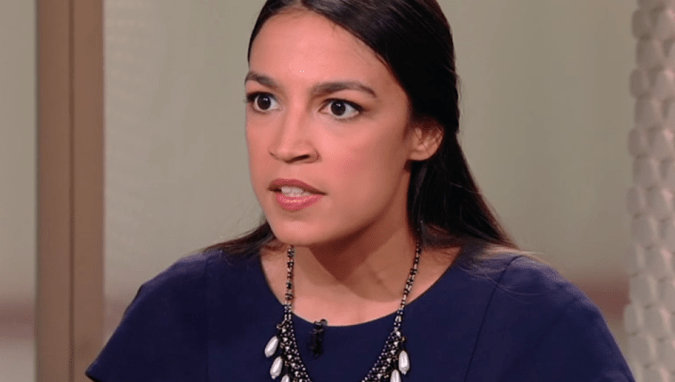
Incompetent UNelected Official Of The Month: Alexandria Ocasio-Cortez

The new darling of progressives and Democrats, New York Democratic congressional candidate Alexandria Ocasio-Cortez, is uninformed and currently, if not permanently, unqualified for office, and not just because she embraces the proven fraud of socialism. Two recent quotes suffice to make the case:

“Unemployment is low because everyone has two jobs. Unemployment is low because people are working 60, 70, 80 hours a week and can barely feed their family.”

This is redolent of Yogi Berra’s famous line about nobody going to a famous restaurant any more because it was too crowded. Does she really think that if one person worked 327 million jobs, the stats would show full employment? Apparently so. Aw, unemployment, underemployment, what’s the difference? Capitalism BAD!

Now this ominous exchange… Continue reading

Ethics Analysis: My CVS Confrontation

As with many ethics problems, the most important question to answer  is “What’s going on here?”

This is what happened.

I take quite a few drugs, some of which keep me breathing. My doctor now e-mails the full slate, usually a three-month supply, but with automatic refills, after every check-up. This time, I actually witnessed the prescriptions being sent. From the start, however, there was a screw up. The first three drugs I tried to get refills for turned up expired: there was no record of the directive from my doctor. Each time, the same thing happened: the CVS pharmacy automated line said the order “was being filled;” when I arrived to get it, I was told that the prescription had expired; I explained that they had a glitch in their system; one of the staff agreed (“Ugh! This ticks me off! Someone is automatically cancelling these orders!”); and I eventually got my drug, sometimes after giving me a partial refill and my having the doctor call CVS to confirm. The last time, however, the prescription I sought was ready. (They all had been e-mailed at the same time.) They also offered me another drug, and extremely expensive one, that I didn’t need immediately. I said I didn’t care to spend the money just then, and they told me they would hold it.

Yesterday I needed that drug, the previous supply having run out the day before. I had no opportunity to go to the pharmacy until nearly 9 PM, but it shouldn’t have mattered: the pharmacy during the week is open until the CVS closes at 10 pm, and I knew the prescription was ready, because of my previous visit.

But it wasn’t. The pharmacist, a young woman, told me that I had no valid prescription. “Nope,” I said. “Wrong.” And I explained what had been happening with my drugs, how I was told that the system glitch had been fixed, and also that I actually saw the filled prescription I now needed when I picked up my last prescription. AND, I said, firmly, skipping a day was not an option. This drug was one of the ones I could not skip.

Then the excuses started. Continue reading

Morning Ethics Wake-Up, 7/17/2018: Swans, Nazis Kids, Rand Paul, And More Freakouts [UPDATED]

Good Morning!

1. And today’s anti-Trump freakout topic is…The complete media/”resistance”/Democrat social media meltdown over whatever President Trump thought he was doing yesterday was typical of what we were talking about in the threads on Monday’s Warm-Up. It’s all so boring and predictable. It’s predictable that the President will say things he shouldn’t; it’s predictable that the people who have already made it clear that they hate is guts will erupt with over-the-top condemnation; it’s predictable that the social media echo chamber will adopt whatever unscrupulous Democratic Party talking point that is launched—yes, yes, Facebook Friend, yesterday proves that Putin “has something” on the President like Nancy Pelosi says. Did she call him “Bush” this time?—and that anyone who tries to point out that the reaction is wildly out of proportion to reality is a Trump-loving racist Nazi. I seriously don’t know how a responsible commentator who isn’t out of his mind is supposed to react. Ignore it, because some new hysteria will be right along, like Leo Slezak’s swan. (Don’t you know this story? It’s one of my favorites! Leo Slezak, a famous Austrian opera singer in the Thirties, was playing the role of Lohengrin in Wagner’s opera, which ends with the hero being carried off to Valhalla on the back of a giant swan. In one performance, the swan, pulled by stage hands on tracks, just swam right by him up stage, leaving the hero stranded. Slezak turned to another singer on stage and asked, loudly enough so the audience could hear him, “What time’s the next swan?” His son, Hollywood actor Walter Slezak, made the line the title of his autobiography.)

2. Obligatory freakout notes: a.  All that matters is what, if anything, comes of the summit. The President (obviously) has his own theories of negotiation. Sometimes they work. b. John Brennan’s statement that the Putin-Trump press conference was “treasonous” was two things: 1) the most ridiculous thing said yesterday by anybody, including the idiot who lives down the street here who said, reportedly, “Rpeterbokle?“, and 2) immediate confirmation of why the President said that he doesn’t trust American intelligence agencies any more than he trusts Putin. c. If anyone can point me to an unbiased authority who can explain how leaders holding joint press conferences help their nations by insulting each other, please do. d. John McCain should either show he can do his job, or he should resign and let someone able do it. Right now, apparently his only role is to snipe at the President. e. Gee, I wonder why President Trump doesn’t trust the FBI, after watching a smug FBI agent who texted about insurance policies against his Presidency and how “we” would “stop” him lecture Congress about his lack of bias? f. Nixon said much nicer things about China and Chou En Lai when Dick made his famous visit. FDR affectionately called mass murderer Stalin “Uncle Joe.” President Bush (absurdly) said that he had seen Putin’s soul, and pronounced it pure. JFK feted the Butcher of the Ukraine and Hungary, Nikita Khrushchev, during a visit to America without condemning him in a pres conference. President Obama whispered to Putin that, in essence, he was going to play tough but would be accommodating after the election. Conclusion: As usual, this President is subjected to a double standard, and it is wildly hypocritical. g. Yes, Trump’s comments were unpresidential and inappropriate. This, however, is no longer news.
Continue reading

When The Anti-Liberty Mobs Attack, Courage And Character Are Paramount, Part II: “Slav”

Betty Bonifassi in “Slav”

Fortunately, not every artist has the jelly-spine of Scarlett Johansson when the political correctness, anti-liberty mobs attack.

In Montreal,the Montreal International Jazz Festival immediately did its best imitation of the artist bowing out of her planned role as a transgender male when it cancelled  the show “Slav,” by the acclaimed Quebec theater director Robert Lepage. The production called itself a a “theatrical odyssey” inspired by “traditional African-American slave and work songs,” but–oh-oh!–it also features a nearly all-white cast performing “black” music. Silly me, I never realized music was colored.  Lepage, is white, as is “Slav’s” star Betty Bonifassi.  Only two of the seven cast members are black.

The show was immediately attacked for its “cultural appropriation” and by black activists for “stealing” “their” songs.

The jazz festival , emulating most organizations that ironically tend to have even fewer spinal columns than individual people, canceled the show after only two performances, even though the production had sold more than 8,000 tickets for its scheduled for 16 performances. The craven festival organizers said it had been “shaken” by the criticism, and grovelled, saying.in a statement, “We would like to apologize to those who were hurt. It was not our intention at all.”

Yecchhh.

As I wrote in the Part I, as Johansson essentially killed a film project because she didn’t have the wit or the guts to stand up to unethical bullying by transgender activists, “What is desperately needed when groups misbehave this way and abuse their influence and power is for their target to say no. Unfortunately, doing so requires unusual levels of principal, character, responsibility, intelligence and courage.”

Scarlett obviously doesn’t have them. Roger Lepage, however, does, especially after several leading theater directors in Quebec rallied behind Lepage this week, pointing out that closing the production could have a chilling effect on artistic expression in Canada. At least four theaters are now proceeding with productions of “Slav,” and preparing to metaphorically spit in the protesters’ eyes. Continue reading

On “Chappaquiddick” And My Multiple “KABOOMS!” As I Watched It.

I finally saw “Chappaquiddick” after delaying the ordeal as long as I could. It isn’t an ethics movie; nor is it the unethical movie I feared that it might be. What “Chappaquiddick” is a very discouraging movie, one that depressed me greatly. It is telling that the Kennedy Legacy Collective didn’t swoop down and try to kill the film, as it is devastating in it depiction of the late Senator. I can only assume that increased focus on what really happened in, say, a libel trial would only affirm the portrayals, and do more damage than a little-seen film alone.

Of course, the movie is open to attack by Kennedy defenders on the grounds that it speculates what Ted Kennedy was thinking, as well as on  the conversations that went on behind closed doors. Nonetheless, the bare fact that Senator Kennedy waited 10 full hours before reporting the accident that killed Mary Jo Kopechne to police has been damning enough since that summer day in 1969 without further elaboration. The cover story—no, we can’t prove it was a cover story, but it was a cover story—that Ted was dazed and in shock from a concussion and wandered around aimlessly, explaining his actions—was never credible, certainly not at my Arlington, Massachusetts home.

I experienced the film this week as a simultaneous flashback and a series of head explosions. I had forgotten the ridiculous neck brace Kennedy wore to Mary Jo’s funeral (but not before or after it); the film states that it was a prop, and I remember that this was the consensus at the time. My biggest head explosion? It was probably the statement of the Martha’s Vineyard judge who gifted Kennedy with the shortest sentence possible for the lesser offense the Senator agreed to plead to, which was leaving the scene of an accident. Kennedy got a two months suspended sentence, and the judge said that he would be “punished enough.” (If you are unfamiliar withe my opinion of THAT rationalization, you can check out this post from 5 years ago; I have another one somewhere about a father who let his baby die in a hot, locked car, and both people involved in those tragedies were less despicable than Ted Kennedy.) Punished enough? The judge presumably meant that Teddy would take a big hit to his White House aspirations, poor guy.

You know, I’d say that every citizen locked up for negligent homicide, which is the real crime Kennedy was guilty of, can kiss their Presidential aspirations good-bye.

KABOOM #2 was the film’s version of first thing out of Kennedy’s mouth when he began explaining the fateful night’s events to cousin and family lawyer Joe Gargan: “I’m never going to be President.” I can’t find substantiation for this; the line isn’t in the version of the screenplay on the web. The subsequent conferences with Kennedy advisors and fixers, however, showed callousness that was not much worse. The film took a lot of its facts from “Senatorial Privilege” by Leo Damore, which was written from interviews with Kennedy friends and relatives, including Gargan.  Kennedy  made over 30 phone calls from the hotel payphone, none of which involved rescuing Mary Jo.   His driving license had been expired for 6-months, so Kennedy’s fixers pulled the right strings and the DMV issued him a new license on that Sunday, before he surrendered to police.

My head blasted the third time watching the recreation of Ted’s nationally televised speech, written by Kennedy wordsmith Ted Sorensen. This is the real version; the movie shortens it quite a bit…

My fellow citizens:

I have requested this opportunity to talk to the people of Massachusetts about the tragedy which happened last Friday evening. This morning I entered a plea of guilty to the charge of leaving the scene of an accident. Prior to my appearance in court it would have been [im]proper for me to comment on these matters. But tonight I am free to tell you what happened and to say what it means to me.

On the weekend of July 18th, I was on Martha’s Vineyard Island participating with my nephew, Joe Kennedy — as for thirty years my family has participated — in the annual Edgartown Sailing Regatta. Only reasons of health prevented my wife from accompanying me.

On Chappaquiddick Island, off Martha’s Vineyard, I attended, on Friday evening, July 18th, a cook-out I had encouraged and helped sponsor for a devoted group of Kennedy campaign secretaries. When I left the party, around 11:15pm, I was accompanied by one of these girls, Miss Mary Jo Kopechne. Mary Jo was one of the most devoted members of the staff of Senator Robert Kennedy. She worked for him for four years and was broken up over his death. For this reason, and because she was such a gentle, kind, and idealistic person, all of us tried to help her feel that she still had a home with the Kennedy family.There is no truth, no truth whatever, to the widely circulated suspicions of immoral conduct that have been leveled at my behavior and hers regarding that evening. There has never been a private relationship between us of any kind. I know of nothing in Mary Jo’s conduct on that or any other occasion — and the same is true of the other girls at that party — that would lend any substance to such ugly speculation about their character. Nor was I driving under the influence of liquor.

Little over one mile away, the car that I was driving on an unlit road went off a narrow bridge which had no guard rails and was built on a left angle to the road. The car overturned in a deep pond and immediately filled with water. I remember thinking as the cold water rushed in around my head that I was for certain drowning. Then water entered my lungs and I actual felt the sensation of drowning. But somehow I struggled to the surface alive.

I made immediate and repeated efforts to save Mary Jo by diving into the strong and murky current, but succeeded only in increasing my state of utter exhaustion and alarm. My conduct and conversations during the next several hours, to the extent that I can remember them, make no sense to me at all.

Although my doctors informed me that I suffered a cerebral concussion, as well as shock, I do not seek to escape responsibility for my actions by placing the blame either on the physical and emotional trauma brought on by the accident, or on anyone else.

I regard as indefensible the fact that I did not report the accident to the police immediately.

Instead of looking directly for a telephone after lying exhausted in the grass for an undetermined time, I walked back to the cottage where the party was being held and requested the help of two friends, my cousin, Joseph Gargan and Phil Markham, and directed them to return immediately to the scene with me — this was sometime after midnight — in order to undertake a new effort to dive down and locate Miss Kopechne. Their strenuous efforts, undertaken at some risk to their own lives, also proved futile.

All kinds of scrambled thoughts — all of them confused, some of them irrational, many of them which I cannot recall, and some of which I would not have seriously entertained under normal circumstances — went through my mind during this period. They were reflected in the various inexplicable, inconsistent, and inconclusive things I said and did, including such questions as whether the girl might still be alive somewhere out of that immediate area, whether some awful curse did actually hang over all the Kennedys, whether there was some justifiable reason for me to doubt what had happened and to delay my report, whether somehow the awful weight of this incredible incident might in some way pass from my shoulders. I was overcome, I’m frank to say, by a jumble of emotions: grief, fear, doubt, exhaustion, panic, confusion, and shock.

Instructing Gargan and Markham not to alarm Mary Jo’s friends that night, I had them take me to the ferry crossing. The ferry having shut down for the night, I suddenly jumped into the water and impulsively swam across, nearly drowning once again in the effort, and returned to my hotel about 2:00am — and collapsed in my room. I remember going out at one point and saying something to the room clerk.

In the morning, with my mind somewhat more lucid, I made an effort to call a family legal advisor, Burke Marshall, from a public telephone on the Chappaquiddick side of the ferry and then belatedly reported the accident to the Martha[‘s] Vineyard police.

Today, as I mentioned, I felt morally obligated to plead guilty to the charge of leaving the scene of an accident. No words on my part can possibly express the terrible pain and suffering I feel over this tragic incident. This last week has been an agonizing one for me and for the members of my family. And the grief we feel over the loss of a wonderful friend will remain with us the rest of our lives.

These events, the publicity, innuendo, and whispers which have surrounded them and my admission of guilt this morning raises the question in my mind of whether my standing among the people of my State has been so impaired that I should resign my seat in the United States Senate. If at any time the citizens of Massachusetts should lack confidence in their Senator’s character, or his ability — with or without justification — he could not in my opinion adequately perform his duties and should not continue in office.

The people of this State, the State which sent John Quincy Adams, and Daniel Webster, and Charles Sumner, and Henry Cabot Lodge, and John Kennedy to the United States Senate are entitled to representation in that body by men who inspire their utmost confidence. For this reason, I would understand full well why some might think it right for me to resign. For me, this will be a difficult decision to make.

It has been seven years since my first election to the Senate. You and I share many memories — some of them have been glorious, some have been very sad. The opportunity to work with you and serve Massachusetts has made my life worthwhile.

And so I ask you tonight, the people of Massachusetts, to think this through with me. In facing this decision, I seek your advice and opinion. In making it, I seek your prayers — for this is a decision that I will have finally to make on my own.

It has been written:

“A man does what he must — in spite of personal consequences, in spite of obstacles, and dangers, and pressures — and that is the basis of all human morality……whatever may be the sacrifices he faces, if he follows his conscience — the loss of his friends, his fortune, his contentment, even the esteem of his fellow man — each man must decide for himself the course he will follow. The stories of the past courage cannot supply courage itself. For this, each man must look into his own soul.”

I pray that I can have the courage to make the right decision. Whatever is decided, whatever the future holds for me, I hope that I shall have — be able to put this most recent tragedy behind me and make some further contribution to our state and mankind — whether it be in public or private life.

Thank you and good night.

I had forgotten that Kennedy never apologized to the Kopechnes for getting their daughter killed. But he did use the recently departed Mary Jo as a convenient device to signal his virtue, standing up for her reputation, while being mostly concerned about his own. The poetic quote was a a typical Sorensen touch, and laying it on a bit thick: a Churchillian passage of dubious provenance that sainted brother Jack had used in his Pulitzer Prize-winning “Profiles in Courage”—which was, after all, written by Ted Sorensen.

The final series of head explosions occurred at the end, as the film showed archival footage of Massachusetts voters, Kennedy worshipers, most of them, talking about how “anyone can make a mistake” and what good things Ted and his dead brothers had done in the past, and how sure, they would vote for him again.

Of course, they did.

The modern progressive movement in the Democratic Party was substantially built on the career of this weak, corrupt man, the product of the triumph of nepotism, mythology, celebrity, money and privilege over merit and justice.

And people deny that there could have been any bias, political manipulation and corruption in the investigation of Hillary Clinton’s private server.

Kaboom.

Monday Morning Ethics Wake-Up, 7/16/2018: Punking, Molesting, Grandstanding And Obsessing

My state of mind this morning…

It’s Monday again.

1. Ethics Neurosis. I failed to get an Ethics Warm-Up or an equivalent posted this past Saturday, and still feel guilty about it after feeling guilty all weekend. This is not healthy. I had an early morning seminar to teach as well as some urgent family business to tend to afterwards, and then found myself thoroughly exhausted. I just couldn’t rouse myself to the task, then felt like I was failing my duties of diligence and responsibility.

This is especially weird, because I’m kind of frustrated over the blog these days. Traffic continues to lag, having dropped about 10% since the overheated days of 2016, and 2018 is a little behind last year, meaning that there is a goodly chance that Ethics Alarms will have negative growth two years in a row after trending up for its first seven years. I attribute the slump to Mr. Trump, as the New York Times calls him, the “resistance,” as the large bloc of progressives, including those in the news media, who have refused to do the ethical thing and let Mr. Trump be the President he was elected to be without unprecedented disrespect, sabotage  and interference from them, and the rigid polarization, social and political, the two have created among members of the public who are now crippled by hate, anger and bias.

One of my Facebook friends, in this case a real friend who has occasionally commented here, recently noted innocently that one of Melania Trump’s dresses was gorgeous, and even though he had led with a disclaimer that he did not want his observation to prompt political invective, several of his own FBF’s reacted by attacking the First Lady. One called her a “ho;” another opined that she had no soul, which is the only way she could be married to this President of the United States. I told the latter commenter to “Get help,” and he responded by declaring me a racist. This is the kind of deranged logic that has caused committed leftists from visiting here, being rational, and discussing ethics. One of our prominent and most noisy excommunicants recently wrote me  to say that since I apparently approved of “putting children in cages,” he was glad to be gone.

Maybe such individuals will be able to reason objectively again some day. I’ve got to learn to stop beating myself up if they can’t. Writing an ethics blog is too much work and responsibility to do every day when it makes me unhappy.

2. Why I don’t give a damn what the Pope thinks. I watched “Spotlight” again yesterday, the Academy Award-winning film about how the Boston Globe broke the Catholic Church child molestation scandal 18 years ago. It ends with a disturbing four screens of small type listing all of the cities in the U.S. and the world where major child molesting scandals and cover-ups had been exposed. (There have been more since.) Come to think of it, I also lost some readers here over the Ethics Alarms (correct) position that a religious organization that could allow this catastrophe to happen had forfeited its moral authority and was untrustworthy.

Then I read a prominent story above the fold in today’s Times that begins, Continue reading

Ken White Enlightens Us Regarding Judge Kavanaugh

Libertarian, free speech specialist lawyer/blogger Ken White has some news for the anti-Brett Kavanaugh fanatics who are claiming that he will lead an evil Republican plot to take away our civil rights. In a Popehat post titled “You”ll Hate This Post on Brett Kavanaugh”, —which tells you a lot about his readers, don’t you think?—Ken demonstrates that he, unlike the reflex foes of President Trump’s distinguished nominee to replace Justice Kennedy on the Supreme Court, has done his homework, and has made a fair and objective analysis of Kavanaugh’s record on the crucial Constitutional issue of free speech.

His conclusion?

“In conclusion, Kavanaugh’s work on the D.C. Circuit show a judge strongly protective of free speech rights, and part of the trend of applying free speech doctrines both to classic scenarios and to government regulation. His stance on telecommunications and elections laws will get him painted as part of the “weaponize free speech” movement by results-oriented thinkers. He’s strong on First Amendment limits on defamation law and his approach to anti-SLAPP statutes do not, as some have suggested, signal that he wants to make defamation cases easier. But though he might help upset applecarts by applying the First Amendment to regulatory schemes, and will not uphold broad speech restrictions, he will likely not overturn doctrines that make it hard for individuals to recover for speech violations.”

Continue reading