Month: March 2019
Ethics Quote Of The Day: “Reston Now”
“Unethical, sketchy, and uncomfortable behavior among Herndon officials are some of the main reasons behind the push to strengthen the code. The councilmembers shared stories of unnamed former town officials who publicly berated staff, grabbed a staffer in a sexual manner, and solicited jobs from other elected officials in the performance of their official duties.”
—From “Town of Herndon Grapples with How to Revamp Ethics Code,” an article in Reston Today, describing the classic and unresolvable problem with Ethics Codes.
Herndon, Virginia, isn’t too far from where I live.
The problem the article encompasses is as old as the hills. Simply passing laws, or regulations, or rules prohibiting wrongful conduct doesn’t do anything to make the people subject to these laws, regulations and rules better human beings. It simply tells them that there are specific consequences to their bad conduct. Maybe that will discourage them, and maybe it won’t. After all, they have to be caught first.
The conduct described in the quote is unethical, and anyone with functioning ethics alarms knows its unethical. Abusing subordinates? Sexual assault and harassment? Using official duties to barter for career advancement? If an official knows this conduct and others equally blatant are wrong, then they don’t need a code. If they don’t know they are wrong, no code is going to help them, and individuals that ethically clueless shouldn’t be government officials.
That doesn’t mean that codes of conduct aren’t essential tools of creating an ethical culture in a local government or tree house clubs. They are, but they are just a starting point, putting in place external standards that have to be internalized, which is to say that they are then used to fix the settings on everyone’s ethics alarms in that culture. By themselves, codes do nothing, and they may even cause more misconduct. Unethical people who are also smart love the Compliance Dodge, from the Rationalizations List: Continue reading
Morning Ethics Warm-Up, 3/18/2019: Paranoia, Pettiness, Pirro, Provoked Applicants, Piqued Students, Posturing And Progressives

Good Morning, Pacific Time Zone!
I’m heading to San Diego tomorrow to talk about “Five Looming Ethics Issues for Lawyers and Their Corporate Clients” to a group of over 600 lawyers. THEY don’t think my analyses of ethics issues violate community standards…okay. I admit it, I’m getting paranoid. Despite a lot of, I humbly believe, useful, timely and well-presented content, the weekend traffic was terrible, and comments were sparse, if excellent. This year, so far, is lagging behind last year, which seriously trailed the year before. What’s going on here? Has Google secretly joined Facebook in its efforts to keep the posts here from reaching an audience? Of could it be that I just suck? Maybe Donald Trump really has killed all belief in ethics…that’s the ticket! Blame the President!
1. Pettiness and vindictiveness vanquished. Good. The Judicial Council of the 10th U.S. Court of Appeals has affirmed its December decision to reject 83 ethics complaints against Justice Brett Kavanaugh, all filed by bitter partisans who are determined to hurt the newest Justice because the Democrats’ slimy and unethical ambush tactics failed, as they should have. In a 6-1 decision, the judicial council affirmed its earlier finding that the federal law governing misconduct complaints against federal judges does not apply to justices on the U.S. Supreme Court. Many of the complaints filed against Kavanaugh argued he had made false statements under oath during hearings on his nominations to the U.S. Court of Appeals for the D.C. Circuit in 2004 and 2006 and to the U.S. Supreme Court last year—you know, like having an innocent recollection of what “boof” meant in his completely irrelevant high school year book. Other complaints accused Kavanaugh of making inappropriate partisan statements in his inappropriately partisan hearings, or claimed he treated members of the Senate Judiciary Committee with disrespect, or as I would put it, the disrespect they deserved for attempting to smear his good name and reputation through demagoguery and calls to reject the presumption of innocence.
Let me remind everyone that Ruth Bader Ginsberg, in her confirmation hearings, stated under oath that she had no pre-formed opinions that would affect her objectivity in abortion cases. Nobody filed any ethics complaints. Continue reading
Comment Of The Day: “Morning Ethics Warm-Up, 3/15/2019: Fevered Ethics Musings, and More” [Item #2]
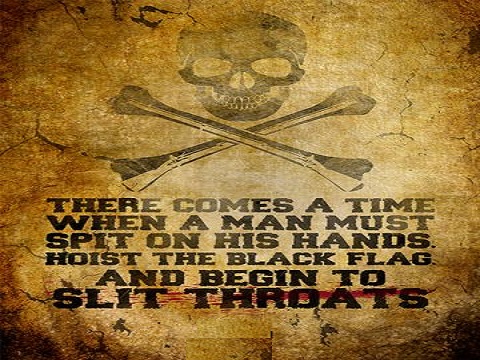
Cultural literacy pop quiz: who’s the quote from?
This Comment of the Day by Benjamin, a relatively recent recruit to the discussions here, typifies the thoughtfulness and seriousness that distinguishes the commentariat at Ethics Alarms. Ann Althouse, a blogger (whose work Facebook doesn’t block) with a much larger readership whose topics often mirror mine, just announced that she is considering changing “the commenting experience”:
I’ll regard the comments submitted to moderation as private messages to me, and I’ll only publish comments I think readers would generally enjoy reading — comments that are interesting, original, well-written, and responsive to the post.
I consider most of the comments here interesting, original, well-written, and responsive to the posts. The kind of comment that Benjamin registered is rare on Althouse, or any blog, really, though not rare here. (The exceptions would be PopeHat, whose progenitor has, at least for now, apparently abandoned for greener pastures, and the original Volokh Conspiracy, before it moved to the Washington Post, and then Reason). Why is that? One reason is the subject matter; another is that commenters who can’t express themselves, issue uninformed opinions or who just aren’t too bright don’t do well on Ethics Alarms. Another reason is that, as I have probably complained about too much, the mass exodus here of the Trump Deranged and knee-jerk progressives has eliminated most of the “You’re an idiot!” “No, you’re an idiot!” exchanges that pollute most blogs, as well as comment sections everywhere.
Here is Benjamin’s Comment of the Day on Item #2 in the post, Morning Ethics Warm-Up, 3/15/2019: Fevered Ethics Musings, and More:
My efforts at suppressing the sin of schadenfreude are becoming futile. The things festering behind fiercely-reinforced masks are starting to spill putrid materials out of the eye and nose holes nearly everywhere and all at once. I believe I’m addicted to two “drugs”: watching good men hoisting the black flag and destroying evil with relish in the name of a good end, e.g. Liam Neeson’s Taken is dangerous for me to watch – I start getting ideas – so I’ve placed an embargo for myself on such plotlines; and watching evil destroy itself. I don’t think I’ll need to embargo the latter, though. There’s nothing more instructive of the fact that difficult-but-correct choices ought to always be chosen over immediately convenient wrong ones than watching the effects of a century or so of those wrong choices. Continue reading
Interview Ethics: Sabotaging A Job Candidate, With A Kavanaugh Hearing Flashback
Frequent commenter and old friend Vinnymick flagged this one, thus proving that someone took my recent appeal for out-of-the-way ethics topics seriously. He pointed me to a Washington Post article, which lays out its topic thusly:
“While browsing Twitter recently, I came across a post that suggested an innovative interview technique: Take a job candidate out for a lunch interview, then secretly ask the server to intentionally mess up the candidate’s order. The purported goal: to see the candidate’s true nature. “It’s easy to say how you would handle when things go wrong, [but] hard to fake your reaction as it happens,” the post concluded.”
Or, as another type of sabotage, have an old high school colleague of the interviewee sit down at the table and accuse him of sexual assault. Then observe how he reacts to that!
The Kavanaugh debacle came to mind immediately, in part because so many who rationalized the Democrats’ abuse of Justice (now, judge then) Kavanaugh was that it was a “job interview.” No, it wasn’t, as I repeatedly had to explain to people (but, you know, when progressives are in the process of a Trump-related freak-out, you can’t explain anything to them(, in a real, fair and professional job interview, the interviewer hasn’t already decided that he or she doesn’t want to hire you, as nearly every single Democrat regarded Kavanaugh before the hearings began . In a job interview, you are being interviewed by your potential supervisors and those who you will be working with if you are hired. The Supreme Court doesn’t report to the Senate, take orders from the Senate, or work with the Senate. In a job interview, there is a presumption of good faith between the job seeker and the interviewer. No, the Kavanaugh hearings were a transparent effort to sabotage the judge’s nomination from the outset.
Now back to the article’s hypothetical: Of course pulling a stunt like the one described is unethical. An earlier Ethics Alarms essay on “silly job interview ethics”—it’s pretty good, I must say, and I had completely forgotten that I wrote it— recommended that if an interviewer starts abusing you, and this is abuse, excuse yourself, saying, “I’m sorry. I was under the impression that I was applying for a position with an organization that respected serious professionals, and that would never exploit the interview process for its own amusement at the discomfort of someone who expected fair and courteous treatment. I apparently was mistaken.”
I added,
I think the use of odd interview questions is a symptom of an arrogant and essentially untrustworthy corporate culture. There may exceptions, but I don’t believe it’s worth the gamble. If the interviewer starts messing with your emotions and confidence, tell him or her to cut it out, or better yet, leave.
From The Elephantine Ethics Alarm “Nah, There’s No Mainstream Media Bias!” Files: Reuters, Beto O’Rourke, And The Cult Of The Dead Cow

Reuters reported Friday that newly declared Democratic Presidential candidate Beto O’Rourke had been part of an infamous hacker group as a teen. (Hacking is illegal unethical, don’t you know.)
Reporter Joe Menn said that he learned about O’Rourke’s involvement in the group when he began researching The Cult of the Dead Cow, which he called “the most interesting and influential hacking group in history.”
He discovered that an alumnus of the group had a member who was sitting in Congress. “I didn’t know which one,” Menn said, “and then I figured out which one it was. And the members of the group wouldn’t talk to me about who it was. They wouldn’t confirm that it was this person unless I promised that I wouldn’t write about it until after the November 2018 election,” that being O’Roarke’s unsuccessful effort to defeat Texas Senator Ted Cruz last year. Reuters, to be clear, sat on the story, which may have interested Texas voters, for two years.
Continue reading
Sunday Morning Ethics Warm-Up, 3/17/19: March Ethics Madness!
Good morning!
Any week that starts off with John Belushi’s immortal reflections on March just has to be a good week.
1. Connecticut: Judicial ethics and guns. Anti-gun fanatics are cheering this week’s ruling by the Connecticut Supreme Court reversing a lower court judge dismissing a lawsuit by the families of victims of the Sandy Hook shooting against Remington Arms Company, allowing the case to proceed. In the 4-3 decision the court possibly created a path that other mass shooting victims can follow to get around the federal Protection of Lawful Commerce in Arms Act, known as PLCAA, which has protected the manufacturers of the AR-15 assault rifle from lawsuits, thus setting the stage for a sensational “Runaway Jury”-type trial. The court’s reasoning is that the Sandy Hook families should have the opportunity to prove that Remington violated the Connecticut Unfair Trade Practices Act (CUTPA) by marketing what it knew was a weapon designed for military use to civilians. The problem is that the ruling ignores the law, as John Hinderaker explains (but he’s not the only analyst trashing the decision):
“Firearms of all kinds have been ‘designed for military use.’,” he writes. “The 1911, designed by John Browning, was the standard U.S. military pistol for many years and remains one of the most popular pistol designs today. So what? There is no such exception in the Second Amendment…Under the Supremacy Clause, federal law will govern over state law. The Protection of Lawful Commerce in Arms Act is intended to avoid precisely the result reached by the Connecticut Supreme Court. The PLCAA puts firearms manufacturers on the same plane with all others. If their products are not defective–if they do not malfunction–they are not liable. If someone stabs a victim to death with a knife, the victim’s heirs can’t sue the knife manufacturer. It is the same with firearms.”
Hinderaker correctly concludes that significance of the ruling is not that it opens a road for the Second Amendment to be constrained, or for ruinous liability to applied to gun-makers, but that it shows how courts will deliberately ignore the law to reach political goals. Continue reading
Q: “What Kind Of Person Fakes Her Voice?” A: “A Competent One.”
Preface: This is the kind of issue that can be hard to find, unless one has unlimited time to search all sources and for better or ill, I don’t. Ethics Alarms is still feeling the effects of losing the regular services of topic scout Fred, who had a remarkable reach, finding ethics issues in all sorts of places I never would (though Fred does drop by here to comment, and I am grateful for that, as well as his long service.) I really do depend on the readers for tips, particularly in the non-political arena. Even the news aggregating sites like The Daily Beast, The Daily Caller, the Blaze and Huffington Post have become more politics obsessed than ever, so Ethics Alarms has to dig deeper and go farther. Some of our best discussions have arisen out of obscure venues. So please: keep an ye open, and write me at jamproethics@verizon.net/
Ann Althouse found this, from The Cut:
There are many fascinating, upsettingdetails in the story of Elizabeth Holmes, but my favorite is her voice. Holmes, the ousted Theranos founder who was indicted last year on federal fraud charges for hawking an essentially imaginary product to multi-millionaire investors, pharmacies, and hospitals, speaks in a deep baritone that, as it turns out, is fake. Former co-workers of Holmes told The Dropout, a new podcast about Theranos’s downfall, that Holmes occasionally “fell out of character” and exposed her real, higher voice — particularly after drinking. One can only assume the voice will be discussed in the upcoming HBO documentary, too.
To begin with, as anyone can hear from the video above, Theranos did not and does not speak in deep baritone voice, which tells us immediately that the author, Katie Heaney, doesn’t know what she’s talking about. Neither, apparently, does Ann, who directs us to another video and describes Holmes’ voice as “a ludicrous phony voice.” There’s nothing ludicrous about it, and if she is not using a ventriloquist, it’s not phony either. Continue reading
Saturday Ethics Warm-Up, 3/16/2019: Smirks, Grovels, Smears, Gotchas And Gracelessness
Gooooood MORNING!
Feeling blue today, so I had to start off with the great Charles Trenet magic ballad.
1. “I’m smart! I’m not dumb like everybody says!” Yesterday I hypothesized that Southern Poverty Law Center founder Morris Dees was fired because of sexual harassment allegations. Apparently I was right.
2. Another hypothesis! I think I may know why the unhinged media and MAGA-haters went so over-the-top bonkers over Nick Sandmann’s supposedly sinister smile when the Native American jerk was banging a drum in his face. We’ve been streaming 2018’s “The Assassination of Gianni Versace” on Netflix, and it is amazing how much Darren Criss, playing serial killer and sociopath Andrew Cunanan, resembles Sandmann in that unfortunate photo. I suspect that Martinez’s disturbing performance as a gay predator was sill percolating in the minds of some observers, and Sandmann’s “smirk” stirred extreme revulsion that wasn’t entirely his doing.
Look:

3. “Never apologize; It’s a sign of weakness.” Capt. Nathan Brittles’ (John Wayne) rebuke of a young cavalry officer (Harry Caray Jr.) in “She Wore A Yellow Ribbon” is sometimes right, especially recently, when cowardly public figures apologize when they have done nothing wrong.
Yesterday, a group of students at an NYU vigil dedicated to the 49 people were murdered in two mosques in central Christchurch, New Zealand confronted Chelsea Clinton, accusing her of sparking the massacre by condemning the anti-Semitism of Democratic Minnesota Rep. Ilhan Omar. “The 49 people died because of the rhetoric you put out there!” one student told her. If Chelsea had any integrity at all—and to be fair, given her parents, how could she?—she would have told all of the students that blaming a massacre in New Zealand on legitimate criticism of a Jew-bashing Muslim demagogue in the U.S. was moronic, and she should have queried the students about whether they got into college because someone had taken their tests for them, since they lacked the critical thinking skills to run a bait shop. But no…lacking integrity and courage, the former First Daughter grovelled to the mob, because that’s what good progressives are supposed to do in 2019, saying, “I’m so sorry that you feel that way. It was certainly never my intention. I do believe words matter. I believe we have to show solidarity.”
Then there’s the latest entrant into the Democratic Presidential race, Beto O’Roarke, who yesterday apologized for for joking at several events in his first two days campaigning in Iowa that his wife has been raising their three children “sometimes with my help.” After grovelling for that, he apologized for fiction he wrote when he was a teenager, using the pen-name Psychedelic Warlord, about murder written from the murderer’s point of view. He said he was “mortified to read it now, incredibly embarrassed… whatever my intention was as a teenager doesn’t matter.”
This kind of reaction is why the unethical Hader Gotcha! is becoming an epidemic. Bravo to Ann Althouse for a great take-down:
No. I want him to apologize to the teenager, the boy he once was. Apologize for saying he doesn’t matter. Apologize for being embarrassed for him. Who the hell are you to be embarrassed for him? You are erasing him. You are misappropriating him. What about the teenagers today who hear you and resolve never to write fiction lest it trip up some aggressively ambitious person they may grow into some day?
4. Meanwhile, another Hader Gotcha! finally fails. Right wing activists Jack Posobiec and Mike Cernovich got James Gunn fired by Disney as the writer-director of Guardians of the Galaxy 3, after he unearthed old tweets in which Gunn made tasteless and politically incorrect jokes. Hundreds of thousands of people signed a Change.org petition asking Disney to reconsider. Of course, Gunn also grovelled sufficiently, saying that his tweets were “stupid, not at all funny, wildly insensitive and certainly not provocative like I had hoped.”
Cernovich and Posobiec maliciously set out to hurt Gunn after he had criticized President Trump on social media. Now Cernovich has demanded that Media Matters boycott Disney , telling TheWrap, “Disney’s rehiring of James Gunn presents an excellent opportunity for Angelo Carusone and Media Matters to show they are principled fighters for social justice. I eagerly await joining Media Matters’ boycott of ‘Guardians of the Galaxy 3.” This is all to prove that Media Matters is biased and hypocritical (like Cernovich), because it has called for a boycott of Fox News pundit Tucker Carlson based on his comments during an old interview with Bubba the Love Sponge.
Ethics note: Kant correctly declared that using human beings as a means to an end is unethical. But no one involved in this episode gave a thought to ethics at all, much less Emanuel Kant.
4. This is why nobody should read Vox. From Ezra Klein’s website:
President Donald Trump just used similar language to describe immigrants coming into the United States that the alleged mass shooter did to justify killing nearly 50 Muslims in Christchurch, New Zealand. On Friday, Trump issued the first veto of his presidency to override a congressional blockade of the national emergency he declared at America’s southern border. During the veto signing ceremony, Trump explained why he felt a national emergency was warranted to stop migrants from entering the US. “People hate the word ‘invasion,’ but that’s what it is,” he said, according to the White House pool report. That is chillingly similar to the language the main suspect in Friday’s Christchurch terrorist attack used to explain why he chose to gun down at least 49 Muslims.
- The President has never called immigrants “invaders.” He has called illegal immigrants, who fit the definition of invaders, what they are. The victims of the two Mosque shootings were not illegal immigrants.
- The President never uses the term “migrants,” which is another deceitful language tactic to blur the material differences between legal and illegal He does not want to “stop migrants” from entering the U.S. He wants to stop terrorists from entering the U.S., and he wants to stop illegal immigrants.
- “Using the same language” as someone who does vile things is a desperately unethical accusation and contrived offense, unless the contexts are identical, the words used mean the same thing, and the intentions are the same. Here, they were not—not even close.
5. Rejecting democracy. Oh, let’s have Stacey Abrams run for President too! She fits. Like her increasingly anti-democratic and ironically named party, she wants to undermine public trust in elections. This week the defeated Georgia Democratic gubernatorial candidate again claimed that she won her November election against Republican Brian Kemp, though the vote tallies say otherwise. “I did win my election. I just didn’t get to have the job.”
She has no proof of this, of course; just the continuing Democratic Party’s corrosive Big Lie that the system is rigged against female and minority candidates. Hillary Clinton started this partisan trend of refusing to accept defeat with grace and magnanimity, as the system requires to remain viable, unless you want to count Al Gore. Now Abrams says that she will never concede that she lost. Naturally, Hillary, the worst loser in U.S. Presidential history, backs her up. (Clinton, you might recall, excoriated Donald Trump for trolling that he might not accept the election results as legitimate…when she assumed she would win.) Clinton said during her speech on the anniversary of “Bloody Sunday” march,
“We know, don’t we, that candidates both black and white lost their races because they had been deprived of the votes they otherwise would have gotten. And the clearest example is from Georgia. Stacey Abrams should be governor, leading that state right now.”
We just know! Just like Democrats just know President Trump has done something impeachable, and just knew Justice Kavanaugh was a rapist, and just know all sorts of things so intensely that evidence and due process aren’t required.
Comments Of The Day: The College Admissions Bribery Scandal
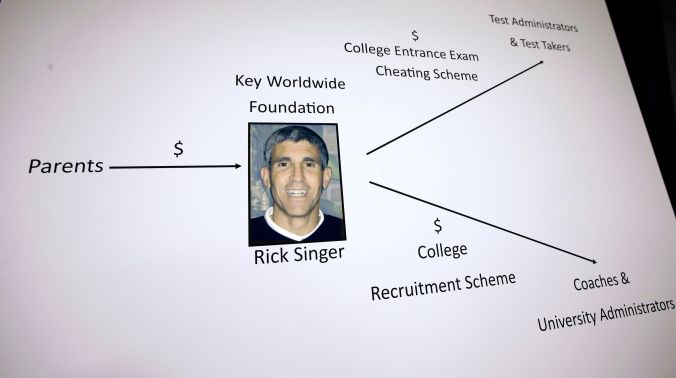
This is a bit of a departure, a showcase for one of Ethics Alarms most active commenters (especially appreciated as the blog experiences boycotts, embargos, and Facebook blocking and other indignities), Michael R. The topic is the recent College Admission scandal, which has been covered here and here.
Michael, an educator, is well informed on this topic, and he shows it in three excellent Comments of the Day. And I forgive him for never, ever, making a typo.
I.
The college scandal has many, many facets. What has caused standards to slip so low? Well, athletics obviously has a corrosive effect, with students admitted based on athletic ability instead of academic ability. The grade inflation has also greatly degraded college standards. The almost lack of education occurring in our high schools is another factor.
An overlooked factor, however, is the public higher ed systems’ oversupply of colleges. Public college policy has mainly been about votes and prestige, not actual societal need. This has resulted in a lot more colleges than the country actually needs. A typical example would be Local Community College. Well, the President of Local Community College would rather not be the laughingstock of the College President’s Club, so he petitions the state legislature to authorize his school to offer 4-year degrees. He states that his community deserves a 4-year school like (insert rival town here). This proposal is mainly decided on its political merits, not the needs of the state as a whole. It goes through, along with new funding for new facilities, new faculty, and more students for the Local State College. With all the Community Colleges becoming State Colleges, the presidents of the Regional State Colleges petition to become Regional State Universities. They point out the prestige and grant money they could get if they had graduate programs. This too, is granted based on political merit. The National Science Foundation is then pressured to remove funding from the traditional research schools and transfer it to the new State Universities amid allegations of elitism for favoring longstanding research schools with top-notch researchers over the new State Universities with no significant research results and they cave. Now, with no community colleges left, a new round of community colleges is constructed. This increases the number of seats for college students by 30% or so, but there are not more high school students graduating. This is repeated all over the country, so out-of-state students are not an option. The only reasonable option is to lower admissions standards. Once the admission standards are lowered, retention suffers and the faculty are ordered to improve retention and graduation rates. The only reasonable way to do this is to make the classes easier and the race to the bottom is on. Continue reading
 Ethics Alarms
Autism “cures”, aka “Snake oil.”
Ethics Alarms is blessed with several commenters with specific expertise in areas that arise here often. Alexander Cheezem is our authority on autism and the various misconceptions and unethical practices surrounding it, and he contributed valuable perspective on why Amazon was under pressure to stop offering two books about the topic. I carelessly assumed that the problem was the further circulation of the dangerous myth that vaccinations cause autism, since that is the autism-related issue we hear about most often from the media. There’s a lot more to autism misinformation than that, and Alexander graciously enlightens us.
As he acknowledges, the thrust of the post is not dependent on why the two books have been pulled The remedy to bad information is good information, not censorship–like the useful information in Alexander Cheezem’s Comment of the Day on the post, “Tales Of The Slippery Slope: Amazon And Censorship”: