If I’ve learned one thing from writing this blog, it’s that I have no ability to make what I believe are the most important posts the most read. I regard this post, from yesterday, an important post, and the story an important ethics story, though it is being handled as trivia by the non-local news media. Here’s another one that shows that frighteningly few commentators are sensitive to what the real ethical issues are in current events.
The headline says it all… “San Antonio leaders, residents outraged after former mayor Lila Cockrell isn’t allowed to vote.”
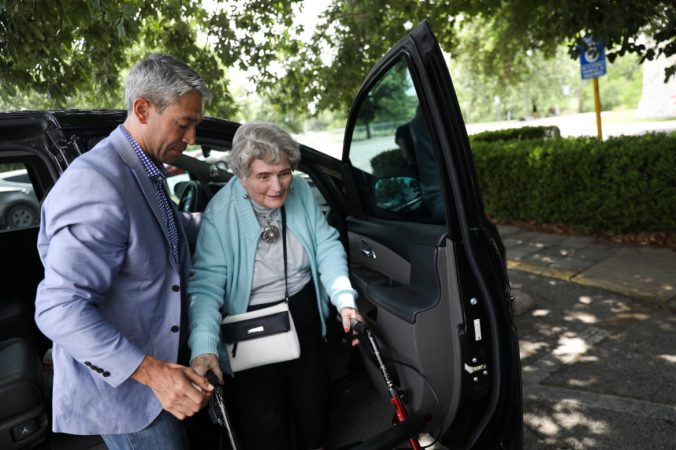
Outrage over Texas’ voter ID law was reignited in San Antonio on Thursday after the city’s 97-year-old former mayor was turned away from a polling site for lack of identification. Lila Cockrell was one of more than 12,000 people who flocked to the polls Wednesday to vote in San Antonio’s mayoral runoffs, but she didn’t get to cast a ballot when she couldn’t present an authorized form of ID. “I’m 97, I don’t drive anymore,” said Cockrell, San Antonio’s first female mayor. “I haven’t been on a cruise or anything in years.”
Jacque Callanen, the elections administrator in Bexar County, said the incident was unfortunate, but officials don’t have the same discretion they had in the past. “It was uncomfortable for the election officials to tell her, ‘No.’ Obviously, they knew who she was,” Callanen said. “But the law is the law. The election officials did what they’re supposed to do.”
Texas’ controversial voter ID law, first passed in 2011 and then amended after a federal court declared it unlawful, requires residents to bring one of seven forms of identification to the polls. Acceptable forms include a Texas driver’s license, passport and Texas Department of Public Safety-issued personal identification card.
After the law was struck down, lawmakers included an exception in 2017 for people who can’t “reasonably obtain” an ID. Those voters can sign what’s called a “reasonable impediment declaration” and bring a utility bill, bank statement or paycheck to prove their identity.
Lydia Camarillo, the president of the Southwest Voter Registration Education Project, said Cockrell’s experience underscores how the voter ID law makes it more difficult for people to vote.
“I’m not surprised that it happened,” Camarillo said. “I’m surprised that it happened to someone as distinguished as our former mayor.”
What’s going on here? An entitled politician showed up to vote knowing she wasn’t complying with the law, and just assumed that she would be given special dispensation. (Or, as I suspect the more I think about it, intentionally set up this episode to spark attacks on the law.) The ethical reality is that she is at fault, and only her. Her age is irrelevant. Her past position is irrelevant. This was only “unfortunate” in the sense that the news media and political operatives were able to spin it to their the advantage of their agenda.
If the ex-mayor is competent to vote, and if she was paying attention sufficiently to have a rational basis to vote, then she knew about the law and knew, long ago, what she needed to meet the requirements. She just didn’t bother, that’s all. She knows, or should, that no ID law has any legitimacy or integrity if poll workers can just waive it for people they know, think they know, or just want to give a pass.
San Antonio leaders and residents are either ginning up their outrage for a political agenda—dishonest and unethical—or are too ethically ignorant to be able to figure out who is the ethics miscreant here. It’s the ex-mayor.
 Ethics Alarms
This story is anti-citizen propaganda intended to shame those marginally favoring voter ID to loosen up and give in. Our world is filled with these little planted stories to make the fence sitters on these issues side with the borderless society crowd. It is so obvious.
Would these same people apply this logic to firearm sales?
Not obvious enough, to enough, apparently…
An ID card is pretty easy to get in most states. In my state, you can get it free if you declare it’s needed for voting.
Not necessarily. We have an alert and engaged bed bound family member who cannot get out to get a photo ID, and the absentee system has serious holes. They cannot change banks or other civil commonalities without that all-encompassing photo ID. I thought the idea was that no rule is perfect, and knowing when to make the exception was the better policy?
Read all your posts this weekend. I even watched the Ashton Kutcher video; I almost never open a video (funny observation: even his attribution to Steve Jobs was a plagiarized attribution).
Just little time to comment for the next few weeks.
-Jut
This was a set up intended to push the progressive agenda. Either she got to vote, which makes the law a suggestion progressives can brush aside, or she was stopped, and LOOK HOW HORRIBLE!
Two observations:
1) It’s extremely unlikely that Mrs. Cockrell doesn’t possess some form of ID that would have been accepted at the polling place. It is almost impossible to conduct the day-to-day business of life in America without some kind of photo ID. Has she never cashed a check? I feel certain that she has some kind of photo ID, she just didn’t bring it with her, and chose to make it an issue (bolstering Jack’s theory that this might have been an intentional set-up). If she doesn’t have such ID, and she’s ambulatory enough to go vote, there’s no reason she couldn’t obtain an ID quite easily.
2) 12,000 people voting out of a city of 1.5 million is considered “flocking to the polls” now? No wonder our republic is crumbling.
They say Texas is inevitably going to turn blue…
Yep – one big city at a time – backed-up by both affluent and impoverished ‘burbs.
Like it was for the first nine-and-a-half decades of the twentieth century?