“No, No! That’s NOT How You Use The Cognitive Dissonance Scale Tactic, You Idiots!”

From Newsweek:

As President Donald Trump attacks House Democrats heading an impeachment inquiry of him, The Democratic Coalition is countering with a new “Impeachment Task Force” studded with liberal celebrities to protect lawmakers seeking to hold Trump “accountable for his betrayal of America.” The task force, designed to lead rapid response to Trump during the impeachment inquiry, has confirmed members including comedian Rosie O’Donnell; actors Tom Arnold, Ron Perlman and George Takei; and actresses Debra Messing and Alyssa Milano, The Democratic Coalition’s co-founder Scott Dworkin told Newsweek. The task force launched a fundraising effort and basic plan on Thursday. The group has already started meeting and is set to go live with its website next week.

Oh, God.

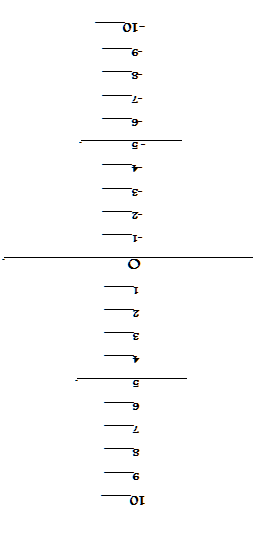
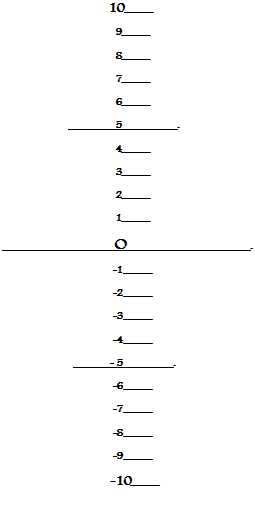
See, the theory behind attaching “celebrities” to political advocacy is to force the adversary target down the cognitive dissonance scale because the celebrities have so much credibility and are so beloved that the target, in this case President Trump, lowers himself on the scale below dimply by opposing such icons, who have daunting positive values. This is Dr. Festinger’s invaluable scale right-side-up….

How many of those named celebrities are on the plus-end of the scale to most Americans, if they are recognized as celebrities at all? Tom Arnold? Rosie O’Donnell?Anyone taking their political, moral, or ethical guidance from these fools and jokers have bigger problems to worry about than impeachment, like not getting their heads stuck in loving cups, or avoiding setting their crotches on fire.

Some questions that come to mind… Continue reading

‘Thank God It’s Friday’ Ethics Dump, 10/4/2019: SCOTUS, Impeachment And Cannibalism…

Hi!

Usually, October might be my favorite month…New England foliage, the best of baseball, my sister’s birthday, the Monster Mash…

1. I hate this stuff. A woman  confronted Rep. Ocasio-Cortez during a town hall in Corona, Queens this week and ranted that  the Green New Deal wasn’t enough to save the world. She declared instead that “we must eat the babies” to stop climate change. “We got to start eating babies! We don’t have enough time! … We have to get rid of the babies! … We need to eat the babies!,” she exclaimed. Then she took off her coat to reveal a T-shirt bearing the phrase: “Save the planet, eat the children.”

The Representative  calmly responded that we have “more than a few months” to solve the climate crisis (“though we do need to hit net-zero in a few years”) and that “we all need to understand that there are a lot of solutions that we have.” Naturally, Tucker Carlson criticized her for not emphatically rejecting the woman’s cannibalism proposal.

The woman was a plant, and the disruption was a hoax. A right-wing PAC started by the late Lyndon LaRouche confessed, saying, “It was us. Malthusianism isn’t new, Jonathan Swift knew that. Sometimes, only satire works.”

Works at what? Interfering with legitimate civic discourse?

2. No, the latest SCOTUS abortion cases don’t pose a threat to abortion rights. The hysteria you may be hearing is more anti-Kavanaugh hype. The cases involve Louisiana’s law requiring abortion clinics to have admitting privileges at a hospital within 30 miles.  The Supreme Court granted certiorari to June Medical Services v. Gee, Secretary of the Louisiana Department of Health and Gee v. June Medical Services the U.S. after the 5th Circuit Court of Appeals ruled that the Louisiana law was permissible. However, in 2016 the Supreme Court struck down a nearly identical Texas law by a vote of 5-3. The theory in Louisiana is that the law there will not have the same restrictive impact as in Texas.

Even if the Fifth Circuit’s ruling stands, the cases are only tangentially related to Roe v. Wade. Continue reading

The Ruling In The Harvard Asian Discrimination Case: So What WAS “The Point”?

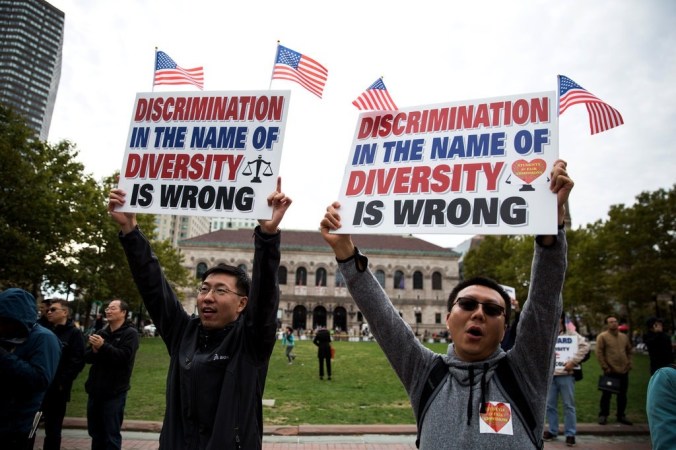
In response to U.S. District Judge Allison D. Burroughs’ ruling this week that Harvard University does not discriminate against Asian Americans in undergraduate admissions, two commentators issued reactions with almost themes: the ruling missed the point. In the New York Times, law professor Melissa Murray wrote that the opinion missed the point by being…

…focused on diversity as the sole grounds on which the use of race in admissions may be justified. As Judge Burroughs noted in her ruling, diversity-centered admissions policies can “enhance the education of students of all races and backgrounds, to prepare them to assume leadership roles in the increasingly pluralistic society into which they will graduate,” “broaden the perspectives of teachers” and “expand the reach of the curriculum and the range of scholarly interests.” Her words echo the standard refrains that have been deployed to defend affirmative action since Justice Lewis Powell’s opinion in University of California v. Bakke (1978). Justice Powell famously extolled the virtues of the “Harvard Plan,” which recognized that a “farm boy from Idaho can bring something to Harvard College that a Bostonian cannot offer.” The problem, of course, is that thinking about diversity in terms of what beneficiaries might contribute makes the benefits of affirmative action contingent and conditional — worthy only because its beneficiaries serve the broader needs of institutions and those who are assumed to belong.

To the contrary, Murray believes that Harvard’s race preferences out to be justified as permanent reparations, though she never uses those exact words.  (Hmmmm.…I wonder if she’s black? Let’s see…why yes, she is!):

Those who fought for affirmative action expected institutions to maintain policies that ensured continued representation of those who had long been excluded. But at least in the courts, these convictions have been largely jettisoned.

That’s because they are unethical, illegal and unconstitutional.

The momentary victory for Harvard, which was correctly accused of discriminating against Asian-Americans in admissions in order to further affirmative action goals, was the result of an ideological rather than a legal analysis. I give the judge credit for being open about his bias: how else could one interpret his reasoning? From the Washington Post:

While Harvard’s “admissions process may be imperfect,” Burroughs wrote, the judge concluded that statistical disparities among racial groups of applicants “are not the result of any racial animus or conscious prejudice.”

The law does not require “racial animus or conscious prejudice” to make  racial discrimination illegal. Discrimination on the basis of race is unfair, unjust, illegal and wrong. The judge doesn’t address that fact; he just explains why Harvard’s discrimination is the good kind, writing,  “The use of race benefits certain racial and ethnic groups that would otherwise be underrepresented at Harvard and is therefore neither an illegitimate use of race or reflective of racial prejudice.”

What does “under-represented” mean? This is a tell: Judge Burroughs is a disciple of the Left’s edict that  institutions, workplaces, benfits and distinctions are inherently suspect or harmful if they don’t closely match demographic divisions within the public in general. This essentially un-American myth requires the use of quotas while disguising their intent and function.

Affirmative action has always been an example of policy hypocrisy, engaging in present discrimination in order to combat the effects of past discrimination. It was justified, at best, as a temporary breach of core principles in pursuit of a theoretical remedy to a unique problem.

Another “the opinion missed the point” article had a more useful, if also flawed,  analysis than the law professor’s “We should keep discriminating against whites and Asians forever because of slavery and Jim Crow” argument. Richard Ford makes the case in “The Harvard Ruling Misses the Point” that the entire debate is taking place within an absurdity. Elite institutions like Harvard exist to bestow the credential of being  certified “elite,” a member of the deserving American upper class. “Democratizing” the anointment process by artificially using factors that have nothing to do with merit or achievement to bestow elitism is self-contradictory: once it becomes obvious that getting admitted to Harvard signifies nothing substantive, then Harvard’s ability to sanctify its graduates vanishes, or should.

It should. Harvard’s degree always was something of a fraud in this respect. Ford correctly observes,

The unstated assumption that folds affirmative action into a general critique of elite admissions is that acceptance should be based exclusively on individual merit (and that merit, in turn, should be measured by grades and test scores). Indeed, opponents of affirmative action often speak as if it is a departure from an otherwise even-handed and admirable meritocracy. But the Harvard case and the bribery scandal both expose—in high relief, if not for the first time—the extent to which non-racial (and hence legally unproblematic) admissions preferences dwarf those associated with race. Athletes, legacy applicants, and those otherwise likely to help universities secure large donations enjoy higher admission rates than members of underrepresented racial groups. Affirmative action is one of the more modest of many departures from numerical indicia of merit.

Continue reading

Open Forum, And An Idea….

I’m traveling again today, so once more I’m asking readers to keep the ethics fires burning by taking over the blog and engaging with each other on whatever ethics-related issues and current events that come to mind. Several blogs I frequent do this regularly, and in most cases the exercise has  devolved into nonsense or worse in short order. Nothing like that has happened here, and it is a credit to the quality of active participants here that I’ve never seen any hint of that.

If I were on the open forum today, I’d probably want to discuss Bernie’s heart procedure (reminding us that 70-plus-year old Presidential candidates may not be responsible); the statement by Rep. Ocasio-Cortez that “billionaires should not exist”—nah, she’s not a Communist!—and the not-so-surprisng news that Rep. Schiff coordinated with the whistleblower before his complaint was filed.

But that’s just me.

That does lead me to my idea, however. For an Ethics Alarms project, I would like to launch a separate website dedicated to presenting all of the relevant news, evidence and commentary regarding the Democratic Party/ “resistance” impeachment efforts. This would be a non-partisan site where citizens could be informed regarding this fiasco without news media spin and hype. I can’t do this alone, however, so a condition precedent to going forward will be finding two or more partners to assist with the site.

If you are interested, please contact me off site at jamproethics@verizon.net.


Baseball Ethics: Integrity, Records, And The “Juiced Ball”


The Boston Red Sox didn’t make the play-offs (and made me physically ill in the process), but that doesn’t mean I won’t find some baseball ethics to write about during October, which will cover the play-offs and World Series involving  five teams from each league. Some weeks ago commenter JutGory asked about the ethics implications of the so-called juiced baseball. and I was not in a mood to think that seriously about baseball, since the Red Sox were engaged in the final throes of an epic, inexplicable, season-long choke that, among other bad things, soured my wife on the game, undoing years of careful nurturing by me. I’m OK now, and Jut was right, the juiced ball does raise ethics issues.

Early on in the 2019 season, it was obvious that the ball was different somehow. The very first month had more home runs than is normal in the spring, and the phenomenon only got more extreme as the weather got warmer. Pitchers like Houston Astros ace (and likely Cy Young winner as the AL’s best pitcher) Justin Verlander and former Cy Young winner David Price called out MLB management directly, accusing them of messing with the ball to help the hitters. Baseball’s brass denied it initially, but eventually they had to admit that something was weird about the balls.

Researchers  confirmed  that the 2019 ball was traveling farther when hit with the same amount of force than the balls in seasons past. The change was determined to be that the balls’ seams were flatter, less raised, than they had been before. This reduced the drag when they were flying through the air, resulting in longer distances.

How and why this happened is  a mystery. Major League Baseball swears it was an accident,  but nonetheless the sport is completely in in control of the manufacturing of baseballs. It owns the company that makes them. The current theory is that this was a quality control issue or, perhaps, a quirk in which eliminating a flaw in the balls made them too uniform, too exact.

Among the ball’s many specifications, the degree to  which the stitches were raised had never been included. Continue reading

Comment Of The Day: “Contract Cheating: One More Reason College Is A Massive Scam On Our Society”

Michael R’s Comment of the Day on the post “Contract Cheating: One More Reason College Is A Massive Scam On Our Society,” to my mind, represents an overly optimistic view of the state of higher education policy as well as the mindset of the typical college student in 2019. It is, however, a view—I could say a romantic view–that has majority support in this country, despite growing evidence that indoctrination now co-exists with education as the de facto mission of most liberal education colleges. I answered Michael’s comment thusly…

I was the chairman of a non-profit educational advocacy organization, and attended many conferences and symposiums. The emphasis always was on college as a way to get better jobs. Always. At one session, a Clinton rep from the Dept of Education went on and on about how a college degree was essential to being employed and getting a good job, and why this justified affirmative action, grade inflation, and making sure we eliminated all impediments to graduation.

I stood up and asked why I had heard nothing about the value of education for its own sake…that it made better citizens and better, more productive, happier human beings. My comments were ridiculed. Literally, no one in the room would concede that education itself was the mission of going to college. And college does not educate. Indoctrinates, baby-sits, credentials, but there isn’t a strong current that leads to education. Students are incentivized to seek easy courses that guarantee the highest grades, and, in turn, better job prospects. Most college graduates, for example, cannot write coherently.

I absolutely stand by my statement, and until and unless we realize that this is the true framing of higher education in rhetoric and policy up and down the bureaucracy, the scam will continue.

Well, as I have a tendency to do, that was a bit over-stated. I also should have pointed out that one certainly can get educated in college, but one can also get educated outside of it, and a lot more cheaply. I’d also point to the recent push to pay college athletes, because, apparently, the quid of an education isn’t deemed as sufficient justification for the quo of their sports heroics.

Here is Michael R’s Comment of the Day on the post “Contract Cheating: One More Reason College Is A Massive Scam On Our Society”

“The idea is to get jobs, not to be educated.”

I’m sorry, this is just elitist academic garbage. Why is it that if you want a college education to become employable, it means you don’t want to be ‘educated’? I would say it is because the elites in this country don’t need any type of knowledge for THEIR jobs, so they equate being educated to possession of trivia and anything they have defined as elite culture. I went to college because I wanted to have a better life than I could have without a college education. That is true for a majority of college students nationwide. I wanted knowledge because I had neither money nor connections. I was going to have to make my way in the world based on my own merit.

This post is deceptive because it does not point out the dichotomy of college experiences. There are some students who go to college to become employable. Other people go to college to get plausible paper credentials and network. The latter have always been more likely to buy their papers and pay others to take their tests for them. Take someone like Chelsea Clinton. She didn’t have to learn one thing at Stanford. She had million dollar jobs lined up just because of who she was. However, she needed some kind of plausible degree to allow those companies to plausibly say she was qualified. In reality, they could have hired her at 18 and she could have done just as good a job for them, since her pedigree and connections were all they wanted. However, it would have been blatantly obvious what was going on and apologists couldn’t say “No, she really is qualified because of her B.A. in…”. Just look at the apologists go with Hunter Biden right now. Continue reading

By What Theory Is This Judge Qualified To Stay On The Bench?

How low can judicial standards of ethics go? In the 10th Circuit, apparently, pretty low.

U.S. District Court Judge Carlos Murguia of Kansas City, Kansas, is an appointee of President Bill Clinton. His sister is a judge on the San Francisco-based 9th U.S. Circuit Court of Appeals and was also appointed by Clinton.

According to the Tenth Circuit’s judicial council recent opinion following a judicial conduct investigation, Judge  Murguia gave “preferential treatment and unwanted attention to female employees of the judiciary in the form of sexually suggestive comments, inappropriate text messages, and excessive, non-work-related contact, much of which occurred after work hours and often late at night.” In other words, he is a serial sexual harasser. The harassed employees, the investigation found,  were reluctant to tell Murguia to stop his abuse because of his power as a federal judge.  One victim finally complained.  Murguia continued the harassing conduct anyway. Continue reading

Morning Ethics Warm-Up, 10/2/19: While Basking In The Glow Of Another Life Lesson From Baseball

Go Nats!

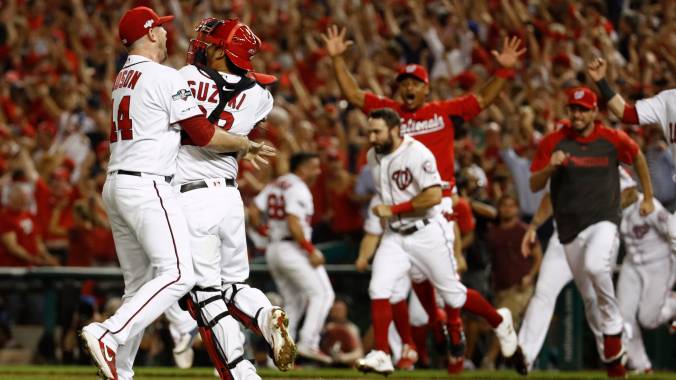
The Washington Nationals had never won an elimination game in the National league post-season. They were 0-6 in such games going into last might’s do-or-die single Wild Card play-off at home against the Miracle Milwaukee Brewers. Following the script many Nats fans dreaded, the team’s Hall of Fame-bound ace, Max Scherzer, quickly gave up three runs while the Brew Crew’s storied bullpen kept the offense at bay save a solo homer from National shortstop Trey Turner. Heading into the bottom of the eighth, the Nationals had to face closer Josh Hader (he of the Hader Gotcha), who gives up hits less often than some pitchers give up runs.

Then, as they say, fate took a hand. With one out, uninspiring Nats pinch-hitter Michael Taylor reached first illicitly. A 3-2 pitch from Hader hit the knob of Taylor’s bat and immediately ricocheted onto his hand. It should have been called a foul, but the umpires ruled it a hit-by-pitch, sending Taylor to first base. Hader struck out the next Nats batter, then aging Nats slugger Ryan Zimmerman was called upon as another pinch-hitter. He barely connected with a pitch out of the strike zone, breaking his bat, but his weak “dying quail” bloop dropped in just over the head of the Milwaukee second baseman for a cheap and fortunate single. (On TV, Zimmerman could be seen smiling and shrugging sheepishly.) That meant the tying runs were on base for the Nats best hitter, MVP candidate Anthony Rendon. Hader gave him what is known as an intentional unintentional base on balls in order to face 20-year-old Juan Soto, a left-handed batter. Lefty Hader allowed left-handed batters to hit .143 this season. But young Soto lined a pitch into right center, and Brewers right fielder Trent Grisham, one of the heroes of the late-season Brewers play-off drive, did a Bill Buckner. The single got past him (he was charging the ball in what would have been a futile effort to throw out the tying run at the plate) , and all three runners scored. Incredibly, the Nats now led 4-3. After the Brewers went down in the top of the 9th without scoring, they, and not Milwaukee, moved on to the next round of the play-offs.

Lesson: In baseball, as in life, it is as important to be lucky as to be good. Chaos lurks in every second, and the illusion of control is just that, an illusion. A bad call, a fluke hit, and a horribly-timed fielding botch that the same outfielder avoids 99 times out of a hundred, and so much changed for two cities, two fan bases, and the 2019 post-season, affecting jobs, careers, reputations and commerce.

This is why we should never give up, never despair, and never get cocky. It is also why we should strive to live as ethically as possible. We can’t control whether we win or lose, but we can control how.

1. Again we must ask: when did the Democratic Party decide to abandon freedom of speech?  Yesterday, we learned that Joe Biden’s campaign wants the news media to censor adversary commentary from Rudy Giuliani, while claiming that no one who isn’t a public official is qualified to opine on TV regarding public policy.  Now Senator Kamala Harris, who also aspires to be President, says President Trump should be banned from using Twitter because he  uses the platform in an “irresponsible” way. Harris, in an interview with CNN host Anderson Cooper, also called for “other mechanisms” to make sure Trump’s words “do not in fact harm anyone”—you know, like harming her party’s election prospects by exposing its Big Lies and open coup attempts.

I wonder if the public sees how ominous the repeated Democratic calls for censorship are. Maybe the President will tweet about that.

Of course, the President’s use of Twitter is often irresponsible, but also a necessary end-around media propaganda aimed at unseating him and undermining democracy. It is remarkable that Harris, a Senator and a lawyer, somehow missed  that the First Amendment proclaims the importance of free speech to our society. It doesn’t only endorse the right to engage in responsible speech. I think, for example, that advocating censoring the speech of the President of the United States is irresponsible, but I’ll defend Harris’s right to do it—and my right to conclude that because she does it, she is an ignorant, dangerous fool. Continue reading

A Jury Gets An Unarmed Black Victim Cop Shooting Right, But The Reasons Why Are Significant

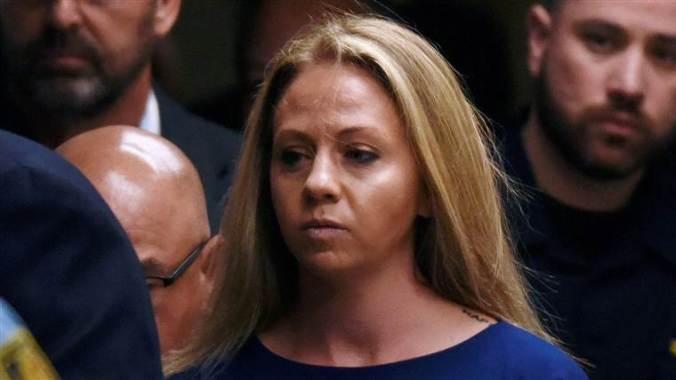
From the AP: “A white former Dallas police officer who said she fatally shot her unarmed, black neighbor after mistaking his apartment for her own was found guilty of murder on Tuesday. A jury reached the verdict in Amber Guyger’s high-profile trial for the killing of Botham Jean after six days of witness testimony but just a handful of hours of deliberation. Cheers erupted in the courthouse as the verdict was announced, and someone yelled “Thank you, Jesus!”

I am surprised at the murder verdict; I expected a manslaughter conviction, and thought that prosecutors may have over-charged.

Nonetheless, a guilty verdict was necessary. It must be remembered, however, that few of the factors typically present in cases where cops have been acquitted for shooting unarmed black citizens existed here. The victim, Botham Jean, did nothing to justify his shooting, indeed nothing to justify having a confrontation with police at all. He didn’t resist a lawful arrest or threaten the officer. Amber Guyger was absolutely and completely responsible for his death in every way. She may have thought her life was in danger, but she was ridiculously wrong, and even if Jean had threatened her, he had every right to do so. She was, to him, a home invader.

In such circumstances as these, none of the usual sympathy that juries have for police officers and their dangerous duties while protecting the public applies. Guyger wasn’t trying to protect the public; she wasn’t even on duty. A jury would naturally sympathize with the victim; if a confused cop could barge into his home and start shooting, it could happen to any juror. Did race play a part in the verdict? I hope not. Whatever the verdict was, there was no evidence to suggest that Jean was killed because of his race.

It will be interesting to see what sentence the jury recommends. I feel sorry for Guyger: she was badly trained, she may have been exhausted from an over-long shift, and there is no reason she wanted to kill Jean, or anyone. Yet with power comes responsibility, and with responsibility comes accountability.

I just re-read my post from a year ago about this case. You might want to read it again too. I’ve re-posted the whole essay below.

I could easily put this story in the Ethics Alarms Zugzwang file, because I see no analysis or result that won’t make the situation worse.

A white off-duty police officer named Amber R. Guyger  entered the apartment of  Botham Shem Jean, a 26 year old accountant, and fired her service weapon twice at him, killing the St. Lucia immigrant. She claims that she mistakenly entered the wrong apartment after returning home from her 14-hour shift and believed  Jean, who is black, was an intruder.

Indeed, her apartment was directly below his. She had inexplicably parked her car on the 4th floor, where Jean’s residence was, rather than the 3rd floor, where hers was. So far, there is no indication that the shooter and the victim knew each other. Guyger had a clean record. Other facts are in dispute. The officer told investigators the apartment door was  ajar and then fully opened when she inserted her computerized chip key. That seems possible but unlikely.  Lawyers for  Jean’s family say the door was closed. How could they possibly know that?  Guyger said in court documents that when she opened the door,  she saw shadows of someone she thought was a burglar, and shouted commands before shooting. Lawyers for Jean’s family have elicited testimony from neighbors that they heard someone banging on the door and shouting, “Let me in!” and “Open up!” before the gunshots.  Why would the officer do that if she didn’t know Jean, or if she thought it was her own apartment? They also said they then heard Jean, say, “Oh my God, why did you do that?”

Boy, that sounds like an awfully convenient exclamation to be remembering now, don’t you think? But who knows? Maybe it proves the two knew each other. (Why didn’t Jean say, “Who are you?”) Maybe it is another “Hands Up! Don’t shoot!” lie for cop-haters and race-baiters  to adopt as a rallying cry.

Surprise! Jean’s family is being represented by Benjamin Crump, the same lawyer who represented the relatives of Trayvon Martin and Michael Brown and managed to manipulate media accounts and public opinion into the narrative that those shootings were motivated by racial hate. If nothing else, Crump is diligent and zealous in creating an atmosphere that maximizes the opportunity for civil damages whether they are warranted or not.

Crump is referring to Jean’s death as an assassination. Of course it is! After all, Guyger’s a white cop, and they live to oppress, brutalize and kill unarmed black men for no reason whatsoever, except to protect white power in a racist nation. Dallas’s black citizens and white activists do not believe the officer’s story, because they presume racism. (Similar impulse: progressives and feminist believe Brett Kavanugh’s accuser, because they want to,)  Protesters chanted and disrupted a City Council meeting last week. There have been escalating  threats against the police. Officers say they believe Officer Guyger’s version of events, as weird and inexplicable as they are. The same bias is at work: they want to believe her.

Things don’t work when they are hemmed in by biases and agendas like this. Let’s say that an investigation yields no clarification. An innocent man was shot in his own home by a police officer who lived beneath him for no discernible reason, and the cop’s only explanation is that she was tired, confused, and made a mistake. What is the ethical course at that point?

There are a few easy calls. The police department has civil liability, and it is high time to put the same kind of limitations on police shifts that airline pilots must abide by. The accident, if it was an accident, may have been caused by unethical working conditions. It would also be sensible for apartment and condo complexes to be required to make all floors recognizably distinct. I have tried to enter the wrong hotel room, apartment, condo unit and dorm room at various times, in addition to walking into ladies rooms and the occasional closet. Luckily, I don’t carry a gun. However, my own experiences make me at least willing to consider that this might have been nothing but a terrible, tragic accident.

Obviously, Officer Guyger’s career is over no matter what the truth is, and should be. Thus I agree with the argument that she should be suspended without pay or simply fired. Off-duty cops are required to carry guns, and once a cop makes this kind of “mistake,” she can’t be trusted. I wouldn’t want her wandering around my neighborhood.

Beyond that, however, what is Dallas supposed to do? The race hucksters want to protest and exacerbate racial divisions. Guyger will be painted as a cold-blooded racist killer, and typical of all police. Any result that doesn’t have her sentenced to prison for a long time will be condemned as proof that the white fix is in. The city has a duty to prevent riots and deaths, but not to squelch protests, no matter how cynical and unfair. Should it indict and try Guyger for murder rather than manslaughter, knowing that over-charging could result in an acquittal?  This was Baltimore’s approach in the Freddie Gray case, and now police passivity has made the city a runner-up to Chicago as U.S. Murder Central. What if the investigation suggests that this was indeed an accident, and no more? Is it fair to try Guyger at all, then? Will jury members concede that she has lost her occupation and her reputation, and that imprisoning her is cruel—that she has suffered enough? Or will Guyger really stand trial not as an individual, but as a symbol of all cops who shot unarmed black men and escaped accountability?

Not only do I see no satisfactory ethical outcome, I can’t even decide what an ethical outcome would be.

I do know this, however. Bias not only makes us stupid, it makes fairness, justice and law enforcement impossible.
 

Morning Ethics Warm-Up, 10/1/2019: “30 Days Hath September” Appreciation Edition

Welcome October!

 I knew the date without having to check..for once.

Time to express my gratitude to the anonymous composer of the days of the month mnemonic, which I still literally have to sing in my head several times a year.

The earliest English version of the  verse has been traced to approximately 1425. It seems that the initial rhyme began with “Thirty days hath November,” not September, but by the time the little verse was first published in English, in  1562, September had taken over the top spot, and there it has remained. Wikipedia’s entry notes that “it is probably the only sixteenth-century poem most ordinary citizens know by heart.”

1. But by all means, it’s irresponsible to have Rudy Giuliani as a guest on a news program…CNN’s fake media ethics watchdog thought it was appropriate to have Robert De Niro as a guest on his CNN show over the weekend. Why is an uneducated, loud mouth, vulgar actor an appropriate guest? It is because he is guaranteed to delight the Trump Deranged with sophisticated commentary like he treated America with when he appeared at the 2018 Tony Awards, shouting, “I’m just going to say one thing. Fuck Trump! It’s no longer ‘Down with Trump.’ It’s ‘fuck Trump!’”

De Niro never graduated from high school, and has fewer credentials to expound on public policy matters than the average American you could identify by throwing a rock into a crowd blindfolded,. He has repeatedly shattered basic standards of public decorum by going into angry, vulgar, non-substantive rants against the President when invited to stand behind a podium or in front of a microphone. So, naturally, he was a perfect guest for Stelter’s show, and, also naturally, he said, in the course of opining that the President and his supporters were “gangsters” and “crazy” and that “This guy should not be president, period, ““F​uck ‘em. Fuck ‘em!”

A voice from off-set could be heard yelling “Woahhhh!”After all, who could have possibly predicted that the actor would behave on CNN when discussing the President exactly as he has been behaving for years? “This is cable, so it’s not an FCC violation, but it still is a Sunday morning,”  Stelter commented, weasel-like as usual.

Yes, it’s Sunday morning, and you invited a guest who habitually shouts versions of “Fuck Trump!’ in public places while being televised, because you know your audience wants to hear someone say “Fuck Trump.” Continue reading