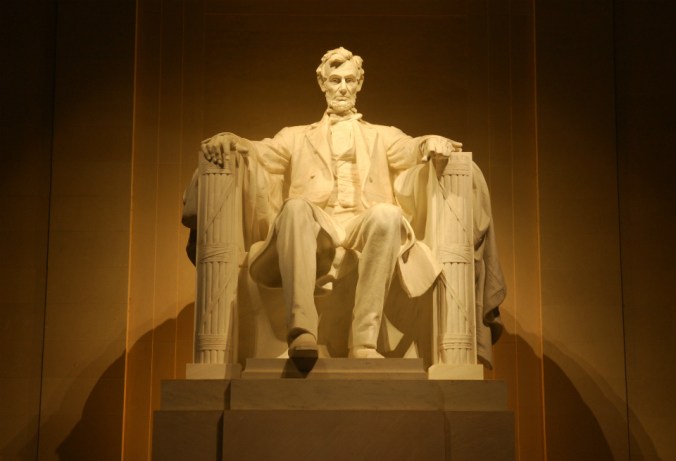
I think we’ll end our foray into Presidential oratory with the master, Abraham Lincoln. We have recently revisited his Gettysburg Address; in this speech. Abe gave us the famous words that grace his memorial in Washington, D.C.
Fellow Countrymen,
At this second appearing to take the oath of the presidential office, there is less occasion for an extended address than there was at the first. Then a statement, somewhat in detail, of a course to be pursued, seemed fitting and proper. Now, at the expiration of four years, during which public declarations have been constantly called forth on every point and phase of the great contest which still absorbs the attention, and engrosses the enerergies of the nation, little that is new could be presented. The progress of our arms, upon which all else chiefly depends, is as well known to the public as to myself; and it is, I trust, reasonably satisfactory and encouraging to all. With high hope for the future, no prediction in regard to it is ventured.
On the occasion corresponding to this four years ago, all thoughts were anxiously directed to an impending civil-war. All dreaded it — all sought to avert it. While the inaugural address was being delivered from this place, devoted altogether to saving the Union without war, insurgent agents were in the city seeking to destroy it without war — seeking to dissolve the Union, and divide effects, by negotiation. Both parties deprecated war; but one of them would make war rather than let the nation survive; and the other would accept war rather than let it perish. And the war came. Continue reading →
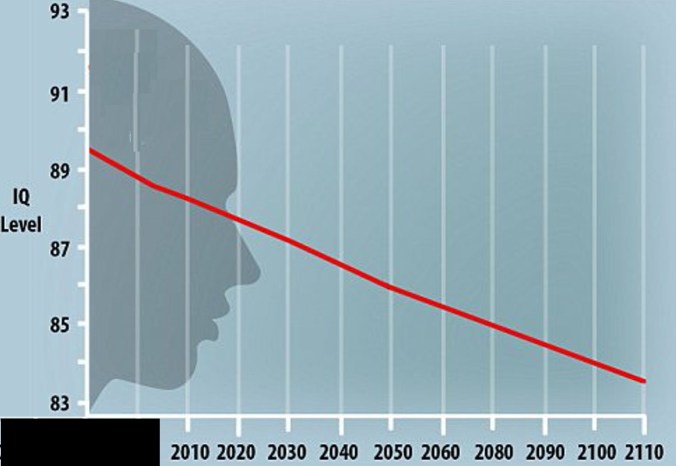
It’s not exactly “Is We Getting Dummer?” the New York Times headline in the prescient science fiction novel, “IQ 83,” by Science fiction author Arthur Herzog in which a man-made virus begins reducing the intelligence of Americans to idiot levels, but its close enough to cause concern. The NBC News headline is “Cities weigh free public transit amid rising costs.” Wait. what? Public transit is getting too hard to pay for, so the solution being considered is to make it free?
I assumed that this was just another example of incompetent headline writing, but no: if anything, the headline makes more sense than the rest of the article, in which we learn that:
Michelle Wu, a Democratic City Council member in Boston, says that because use of the crumbling public transportation infrastructure of the Massachusetts Bay Transportation Authority is dropping and rush-hour traffic is increasing, and the solution is to let everyone ride buses and subways for free.
The article doesn’t say Wu is a Democrat, and I didn’t bother to check. Trust me: she’s a Democrat.
Desperately in need of money for repairs, local transit shouldn’t raise fates, but eliminate them, Wu and other progressives argue, because public transportation “is a human right, like health care and education.”
In “IQ 83,” Patient Zero is the brilliant scientist who goofed while trying to invent a cure for mental retardation. In the real ife case of Wu and others, Patient Zero is obviously Bernie Sanders.
We are told, that “some experts warn that free rides wouldn’t solve the issues besetting many public transit systems, including crumbling infrastructure, infrequent and unreliable service, and routes that take workers nowhere near their jobs.”
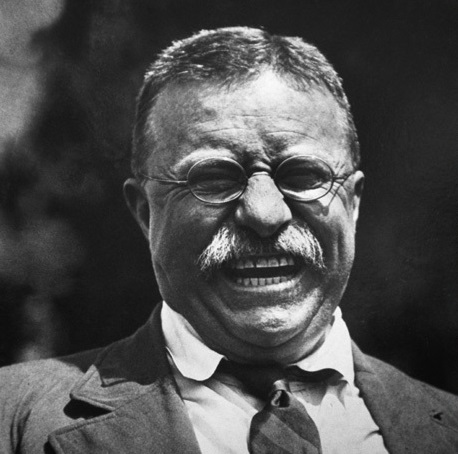
Theodore Roosevelt wasn’t still President when he gave his speech, “Citizenship In A Republic”, at the Sorbonne, in Paris, France on April 23,, 1910. He was a President, though, and getting ready to run for the office again; moreover, you can have a speech be any more pure Teddy than this one.
It is his most quoted speech as well as the one which describes his essence. I wonder if President Trump has read it? Teddy wouldn’t approve of Trump, I think, but he would have to admire the President’s determination to spit in the eyes of his critics, and “whose face is marred by dust and sweat and blood; who strives valiantly; who errs, who comes short again and again, because there is no effort without error and shortcoming; but who does actually strive to do the deeds; who knows great enthusiasms, the great devotions; who spends himself in a worthy cause; who at the best knows in the end the triumph of high achievement, and who at the worst, if he fails, at least fails while daring greatly, so that his place shall never be with those cold and timid souls who neither know victory nor defeat.”
That describes Donald Trump these past three years as much as any President, including Teddy Roosevelt.
Strange and impressive associations rise in the mind of a man from the New World who speaks before this august body in this ancient institution of learning. Before his eyes pass the shadows of mighty kings and war-like nobles, of great masters of law and theology; through the shining dust of the dead centuries he sees crowded figures that tell of the power and learning and splendor of times gone by; and he sees also the innumerable host of humble students to whom clerkship meant emancipation, to whom it was well-nigh the only outlet from the dark thraldom of the Middle Ages.
This was the most famous university of mediaeval Europe at a time when no one dreamed that there was a New World to discover. Its services to the cause of human knowledge already stretched far back into the remote past at a time when my forefathers, three centuries ago, were among the sparse bands of traders, ploughmen, wood-choppers, and fisherfolk who, in hard struggle with the iron unfriendliness of the Indian-haunted land, were laying the foundations of what has now become the giant republic of the West. To conquer a continent, to tame the shaggy roughness of wild nature, means grim warfare; and the generations engaged in it cannot keep, still less add to, the stores of garnered wisdom which where once theirs, and which are still in the hands of their brethren who dwell in the old land. To conquer the wilderness means to wrest victory from the same hostile forces with which mankind struggled on the immemorial infancy of our race. The primaeval conditions must be met by the primaeval qualities which are incompatible with the retention of much that has been painfully acquired by humanity as through the ages it has striven upward toward civilization. In conditions so primitive there can be but a primitive culture. At first only the rudest school can be established, for no others would meet the needs of the hard-driven, sinewy folk who thrust forward the frontier in the teeth of savage men and savage nature; and many years elapse before any of these schools can develop into seats of higher learning and broader culture.
The pioneer days pass; the stump-dotted clearings expand into vast stretches of fertile farm land; the stockaded clusters of log cabins change into towns; the hunters of game, the fellers of trees, the rude frontier traders and tillers of the soil, the men who wander all their lives long through the wilderness as the heralds and harbingers of an oncoming civilization, themselves vanish before the civilization for which they have prepared the way. The children of their successors and supplanters, and then their children and their children and children’s children, change and develop with extraordinary rapidity. The conditions accentuate vices and virtues, energy and ruthlessness, all the good qualities and all the defects of an intense individualism, self-reliant, self-centered, far more conscious of its rights than of its duties, and blind to its own shortcomings. To the hard materialism of the frontier days succeeds the hard materialism of an industrialism even more intense and absorbing than that of the older nations; although these themselves have likewise already entered on the age of a complex and predominantly industrial civilization. Continue reading →
In some ways, Jack Kennedy was the anti-matter Donald Trump.
He unified the country with optimistic words and soaring idealism, and was treated by the media and much of the public as if appearances and substance were the same thing. Like Trump, he was rich and the son of a ruthless business man; unlike with our current President, few seemed to care. JFK was young and vigorous (or as he would say, “vigahrous”), and nobody accused him of hyperbole and lies. The press loved him; his press conferences were all laughs and smiles. Yet Kennedy was every bit the narcisisist that Donald Trump is, and at least as much of a misogynist. He engaged in open nepotism, having his brother as his Attorney General and chief advisor, but nobody suggested he was hving incestuous relations with Bobby. Both had glamorous wives, but while Melania has been effectively banned from the covers of women’s magazines, Jackie was on a cover every month, if not every week. Kennedy committed impeachable offenses, like having a secret sexual liaison with an Israeli spy (and Mafia moll), but it was Trump who was impeached. Meanwhile, President Trump’s accomplishments in his first term far exceed those of Kennedy, who also managed to prompt East Germany to erect the Berlin Wall, and to nearly trigger World War III.
His inaugural address, however, marked his Presidency as the gateway to a new era, when anything was possible. Kennedy was not a great orator—all the Kennedys had and have a tendency to shout—but he was a a passionate one, and he had charisma, that indefinable magic that makes strangers love and trust a politician. Though he had barely received 50% of the votes in the 1960 election, nearly seventy-five percent of Americans expressed approval of President Kennedy after this speech.
Mostly crafted by Kennedy aide Ted Sorenson, it is undeniably a masterpiece.
Vice President Johnson, Mr. Speaker, Mr. Chief Justice, President Eisenhower, Vice President Nixon, President Truman, Reverend Clergy, fellow citizens:
We observe today not a victory of party but a celebration of freedom–symbolizing an end as well as a beginning–signifying renewal as well as change. For I have sworn before you and Almighty God the same solemn oath our forbears prescribed nearly a century and three-quarters ago.
The world is very different now. For man holds in his mortal hands the power to abolish all forms of human poverty and all forms of human life. And yet the same revolutionary beliefs for which our forebears fought are still at issue around the globe–the belief that the rights of man come not from the generosity of the state but from the hand of God.
We dare not forget today that we are the heirs of that first revolution. Let the word go forth from this time and place, to friend and foe alike, that the torch has been passed to a new generation of Americans–born in this century, tempered by war, disciplined by a hard and bitter peace, proud of our ancient heritage–and unwilling to witness or permit the slow undoing of those human rights to which this nation has always been committed, and to which we are committed today at home and around the world.
Let every nation know, whether it wishes us well or ill, that we shall pay any price, bear any burden, meet any hardship, support any friend, oppose any foe to assure the survival and the success of liberty.
This much we pledge–and more.
To those old allies whose cultural and spiritual origins we share, we pledge the loyalty of faithful friends. United there is little we cannot do in a host of cooperative ventures. Divided there is little we can do–for we dare not meet a powerful challenge at odds and split asunder.
To those new states whom we welcome to the ranks of the free, we pledge our word that one form of colonial control shall not have passed away merely to be replaced by a far more iron tyranny. We shall not always expect to find them supporting our view. But we shall always hope to find them strongly supporting their own freedom–and to remember that, in the past, those who foolishly sought power by riding the back of the tiger ended up inside.
To those people in the huts and villages of half the globe struggling to break the bonds of mass misery, we pledge our best efforts to help them help themselves, for whatever period is required–not because the communists may be doing it, not because we seek their votes, but because it is right. If a free society cannot help the many who are poor, it cannot save the few who are rich.
To our sister republics south of our border, we offer a special pledge–to convert our good words into good deeds–in a new alliance for progress–to assist free men and free governments in casting off the chains of poverty. But this peaceful revolution of hope cannot become the prey of hostile powers. Let all our neighbors know that we shall join with them to oppose aggression or subversion anywhere in the Americas. And let every other power know that this Hemisphere intends to remain the master of its own house. Continue reading →
In honor of our Presidents, Ethics Alarms is posting some of the best and most important Presidential speeches during the day. We’ll see how many I get up; there are a lot of excellent ones to choose from.
In all of these cases, whichever I post, a President was acting in one of the non-partisan functions of the office, when the President’s job is to represent all of our nation’s citizens. It is a disturbing fact that the current President has been virtually blocked from discharging these duties, as part off the long, relentless effort by the A.U.C.—the Axis Of Unethical Conduct: Democrats, the “resistance,” and the mainstream media—to deny his Presidency’s legitimacy and to reduce his support among the public to the point where it becomes politically feasible to remove him without an election.
The nation needs those non-partisan Presidential moments, because they symbolize unity and strengthen, rather than weaken, our bonds: throwing out the first pitch of the baseball season, attending the funerals of distinguished Americans, hosting the Kennedy Center Honors. It is not this President’s fault that he had been prevented from doing his job.
1. Why look! Here’s another example! Yesterday President Trump, having been invited to serve as grand marshal for the Daytona 500, uttered the traditional “Gentlemen, start your engines!” and boarded his official limousine, nicknamed “The Beast”, and, with a U.S. and Presidential flag on the front fenders flapping in the wind, headed out onto the track, pacing the full field of cars.
The Horror. Tweeted Maggie Halberman, the usual co-author of New York Times front page features—inevitably negative– on the Trump administration,
Nah, there’s no mainstream media bias! Obama and Bush throwing out the baseball season’s ceremonial first pitches, Obama using his limo for a Jerry Seinfeld comedy bit, and prominently attending an NCAA basketball tournament game–all good! President Trump serving as grand marshal at a NASCAR event? Unacceptably political.
This is smoking gun bias from the journalist the Times uses to inform its readers about what this President does.
By late winter 1933, the Great Depression had caused more than 11,000 of 24,000 banks to failed, wiping out the savings of depositors. Millions of Americans were unemployed and desperate; millions more were working at vastly diminished wages that barely provided subsistence. Currency values had dropped and farms were failing.
The Democratic Party had run on a vague but revolutionary platform that made it clear that the election of its Presidential candidate, Franklin D. Roosevelt, would result in unprecedented governmental growth to deal with the crisis. Roosevelt’s task in his first speech as President was to calm the burgeoning panic, and to reassure America that it was in competent hands.
Lincoln, Reagan and Roosevelt were the greatest orators ever to hold the office of President, and FDR was perhaps the greatest of them all. His strong and confident delivery, cocky body language and dramatic delivery made this speech a success as much as its content. And, of course, it contains his most famous quote, and one of the endearing quotes in our history.
I am certain that my fellow Americans expect that on my induction into the Presidency I will address them with a candor and a decision which the present situation of our Nation impels. This is preeminently the time to speak the truth, the whole truth, frankly and boldly. Nor need we shrink from honestly facing conditions in our country today. This great Nation will endure as it has endured, will revive and will prosper. So, first of all, let me assert my firm belief that the only thing we have to fear is fear itself–nameless, unreasoning, unjustified terror which paralyzes needed efforts to convert retreat into advance. In every dark hour of our national life a leadership of frankness and vigor has met with that understanding and support of the people themselves which is essential to victory. I am convinced that you will again give that support to leadership in these critical days.
In such a spirit on my part and on yours we face our common difficulties. They concern, thank God, only material things. Values have shrunken to fantastic levels; taxes have risen; our ability to pay has fallen; government of all kinds is faced by serious curtailment of income; the means of exchange are frozen in the currents of trade; the withered leaves of industrial enterprise lie on every side; farmers find no markets for their produce; the savings of many years in thousands of families are gone.
More important, a host of unemployed citizens face the grim problem of existence, and an equally great number toil with little return. Only a foolish optimist can deny the dark realities of the moment.
Yet our distress comes from no failure of substance. We are stricken by no plague of locusts. Compared with the perils which our forefathers conquered because they believed and were not afraid, we have still much to be thankful for. Nature still offers her bounty and human efforts have multiplied it. Plenty is at our doorstep, but a generous use of it languishes in the very sight of the supply. Primarily this is because the rulers of the exchange of mankind’s goods have failed, through their own stubbornness and their own incompetence, have admitted their failure, and abdicated. Practices of the unscrupulous money changers stand indicted in the court of public opinion, rejected by the hearts and minds of men. Continue reading →
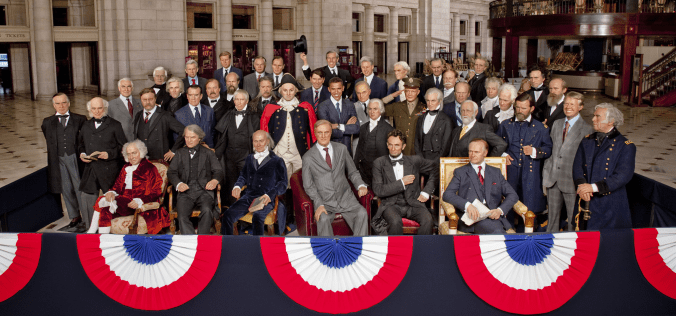
U.S. Presidents are leaders of their parties, but that is only one role among many that the U.S. Presidency has evolved to serve. There are times when it is crucial for the President to be seen as the symbol of the nation and the representative of all Americans, whether some Americans are able to concede that fact, or not. Some of the greatest Presidential speeches were inspired by national tragedies, as a Chief Executive was forced by events to serve as “Comforter-in- Chief,” and to to set aside partisanship in times of tragedy to speak words that remind us that, despite what may be passionate differences, we are all Americans.
No President was better qualified by his experience and talents to fulfull this role than Ronald Reagan, after we all watched the Space Shuttle Challenger launch and then explode into pieces on that beautiful, cloudless day.
Ladies and gentlemen, I’d planned to speak to you tonight to report on the state of the Union, but the events of earlier today have led me to change those plans. Today is a day for mourning and remembering.
Nancy and I are pained to the core by the tragedy of the shuttle Challenger. We know we share this pain with all of the people of our country. This is truly a national loss.
Nineteen years ago, almost to the day, we lost three astronauts in a terrible accident on the ground. But we’ve never lost an astronaut in flight; we’ve never had a tragedy like this. And perhaps we’ve forgotten the courage it took for the crew of the shuttle; but they, the Challenger Seven, were aware of the dangers, but overcame them and did their jobs brilliantly. We mourn seven heroes: Michael Smith, Dick Scobee, Judith Resnik, Ronald McNair, Ellison Onizuka, Gregory Jarvis, and Christa McAuliffe. We mourn their loss as a nation together. Continue reading →
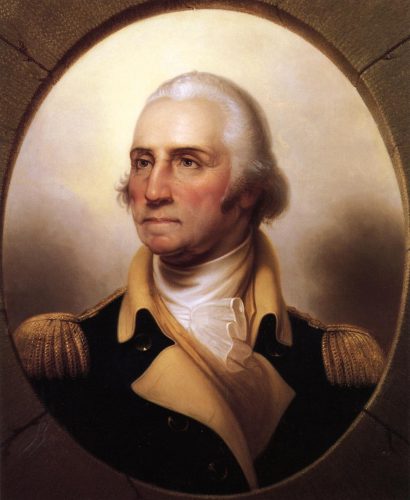
George Washington’s last “address” was really a letter, sent to Congress and published in newspapers across the nation, to “Friends and Citizens” as the first President’s second term was nearing its end in 1796
The U.S. Senate began the tradition of having a member of Congress read the letter every February 22, Washington’s birthday, beginning in 1862, as a morale-boosting gesture during the Civil War. Citizens of Philadelphia had petitioned Congress to commemorate the forthcoming 130th anniversary of Washington’s birth by reading the Address at a joint session of both houses. Future President and Tennessee Senator Andrew Johnson introduced the petition in the Senate. “In view of the perilous condition of the country,” he said, “I think the time has arrived when we should recur back to the days, the times, and the doings of Washington and the patriots of the Revolution, who founded the government under which we live.”
Here is Washington’s “Farewell Address”:
Friends and Citizens:
The period for a new election of a citizen to administer the executive government of the United States being not far distant, and the time actually arrived when your thoughts must be employed in designating the person who is to be clothed with that important trust, it appears to me proper, especially as it may conduce to a more distinct expression of the public voice, that I should now apprise you of the resolution I have formed, to decline being considered among the number of those out of whom a choice is to be made.
I beg you, at the same time, to do me the justice to be assured that this resolution has not been taken without a strict regard to all the considerations appertaining to the relation which binds a dutiful citizen to his country; and that in withdrawing the tender of service, which silence in my situation might imply, I am influenced by no diminution of zeal for your future interest, no deficiency of grateful respect for your past kindness, but am supported by a full conviction that the step is compatible with both.
The acceptance of, and continuance hitherto in, the office to which your suffrages have twice called me have been a uniform sacrifice of inclination to the opinion of duty and to a deference for what appeared to be your desire. I constantly hoped that it would have been much earlier in my power, consistently with motives which I was not at liberty to disregard, to return to that retirement from which I had been reluctantly drawn. The strength of my inclination to do this, previous to the last election, had even led to the preparation of an address to declare it to you; but mature reflection on the then perplexed and critical posture of our affairs with foreign nations, and the unanimous advice of persons entitled to my confidence, impelled me to abandon the idea.
I rejoice that the state of your concerns, external as well as internal, no longer renders the pursuit of inclination incompatible with the sentiment of duty or propriety, and am persuaded, whatever partiality may be retained for my services, that, in the present circumstances of our country, you will not disapprove my determination to retire.
The impressions with which I first undertook the arduous trust were explained on the proper occasion. In the discharge of this trust, I will only say that I have, with good intentions, contributed towards the organization and administration of the government the best exertions of which a very fallible judgment was capable. Not unconscious in the outset of the inferiority of my qualifications, experience in my own eyes, perhaps still more in the eyes of others, has strengthened the motives to diffidence of myself; and every day the increasing weight of years admonishes me more and more that the shade of retirement is as necessary to me as it will be welcome. Satisfied that if any circumstances have given peculiar value to my services, they were temporary, I have the consolation to believe that, while choice and prudence invite me to quit the political scene, patriotism does not forbid it.
In looking forward to the moment which is intended to terminate the career of my public life, my feelings do not permit me to suspend the deep acknowledgment of that debt of gratitude which I owe to my beloved country for the many honors it has conferred upon me; still more for the steadfast confidence with which it has supported me; and for the opportunities I have thence enjoyed of manifesting my inviolable attachment, by services faithful and persevering, though in usefulness unequal to my zeal. If benefits have resulted to our country from these services, let it always be remembered to your praise, and as an instructive example in our annals, that under circumstances in which the passions, agitated in every direction, were liable to mislead, amidst appearances sometimes dubious, vicissitudes of fortune often discouraging, in situations in which not unfrequently want of success has countenanced the spirit of criticism, the constancy of your support was the essential prop of the efforts, and a guarantee of the plans by which they were effected. Profoundly penetrated with this idea, I shall carry it with me to my grave, as a strong incitement to unceasing vows that heaven may continue to you the choicest tokens of its beneficence; that your union and brotherly affection may be perpetual; that the free Constitution, which is the work of your hands, may be sacredly maintained; that its administration in every department may be stamped with wisdom and virtue; that, in fine, the happiness of the people of these States, under the auspices of liberty, may be made complete by so careful a preservation and so prudent a use of this blessing as will acquire to them the glory of recommending it to the applause, the affection, and adoption of every nation which is yet a stranger to it. Continue reading →
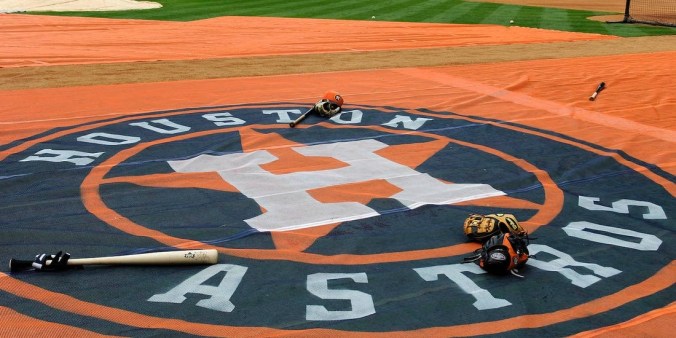
Rather than abating, the fallout from the Houston Astros sign stealing scandal is getting more intense.
On Valentine’s Day, Los Angeles Dodger star Cody Bellinger, the reigning National League MVP, told reporters , “I thought [Baseball Commissioner Rob] Manfred’s punishment was weak, giving [the Astros players} immunity. I mean these guys were cheating for three years. I think what people don’t realize is [Astros second baseman José ] Altuve stole an MVP from [Yankee rightfielder Aaron] Judge in ’17. Everyone knows they stole the ring from us.”
The Astros defeated the Dodgers in the 2017 World Series, stealing their signs while doing so, according to MLB’s investigation.
1. The Silent Sam saga continues. The University of North Carolina at Chapel Hill reached an agreement to give its toppled statue of an anonymous Confederate soldier (there’s a similar statue in down town Alexandria, Virginia, about a ten minutes drive from where I type this) to the North Carolina Division of the Sons of Confederate Veterans, along with a $2.5 million trust to display it somewhere other than on a campus.
But professors, alumni and students accused the university’s board of governors of entering into a corrupt deal with a “white nationalist” group, so the judge who originally approved the agreement voided it, finding that Sons of Confederate Veterans lacked the legal standing to enter into the pact.
For the record, I don’t understand what kind of “standing” any group needs to come to a contractual arrangement. I don’t understand why the school can’t give the thing to a museum without having to pay 2.5 million bucks for the privilege. I don’t understand how the University allowed a bunch of vandals—the statue was illegally pushed over by student protesters who were never punished—to trigger this problem in the first place.
I don’t understand why a work of art showing a realistic representation of actual historical figures, for there really was a Confederacy, there really were soldiers who fought and died for it in the belief that it was a patriotic duty, and there really is a value to the culture, and especially education, in remembering controversial events and times, is viewed as so dangerous that it must be hidden from view.
James L. Leloudis, a professor of history at the University of North Carolina at Chapel Hill, is supposed to be explaining things to people like me when he said, “The people who erected the monuments went out of their way to make it clear that they honored the living as well as the dead, and most particularly, those ex-Confederates who returned from war and committed themselves to the long, bloody and ultimately successful effort to re-establish white supremacy.” For example, when “Silent Sam” was dedicated, a former Confederate soldier named Julian Carr delivered a speech praising the Confederate Army for saving “the very life of the Anglo Saxon race in the South” and recalled that he had “horsewhipped” a black woman “until her skirts hung in shreds” because she had publicly insulted a white woman.
Isn’t that fascinating! How times have changed! That certainly explains how Jim Crow took over, especially once President Woodrow Wilson encouraged the effort after his election in 1912. But now “Sam” looks at a very different South! You, see, students, the reason….Sam? Sam?Continue reading →


 Ethics Alarms