The coverage of the recent rulings in Students for Fair Admissions v. University of North Carolina and Students for Fair Admissions v. Harvard almost universally created the impression that they were further attacks on democracy by a rogue Supreme Court, foiling the will of the people. In particular, these decisions blocking institutionalized institutional racist discrimination, which is what higher education affirmative action is, were assailed as creating disastrous hurdles to black Americans as they strive to succeed in this nation plagued by systemic racism.
Two recent polls show that this narrative was fake news from the news media and misinformation from the Left. A Rasmussen Reports national telephone and online survey found that 65% of “Likely U.S. Voters” approve of the rulings, with 49% approving “strongly”. Just 28% disapprove of the conclusion that the prohibition on discriminating by race means no discrimination by race. You can read how the questions were posed here. Another poll from YouGov/The Economist asked “Do you approve or disapprove of Supreme Court’s ruling on affirmative action?” Both sexes, all races, every age group, and every level of income approved more than not. (See here.)
Yeah, I know: polls. In this case, however, these easily manipulated surveys perform a service. The Supreme Court’s function does not and should not involve following the mob, but appealing to mob emotions has been a central strategy by progressives as they seek to de-legitimize the one branch of the government they don’t control. An accompanying myth is that the Roberts Court is an obstacle to “the will of the people,” even when, as in this case, the will of the people is supported by the Constitution and our laws.
Even after a concerted and ongoing effort to inflict Marxist goals, racial quotas and “good” discrimination on the culture, our core values have stood up to the propaganda siege—so far.
There is hope.
 Ethics Alarms
There’s a reason why most news sites have closed their comments sections, and those that haven’t heavily “moderate” them, and that reason isn’t “hate speech” or “misinformation”. It’s the same reason the Left collectively freaked out when Elon Musk shook things up at Twitter. When you try to convince people that a matter is settled, that everyone agrees with you, it’s a little embarrassing for a chorus of voices to rise up in opposition, right where anyone can see them. They need to suppress dissenting voices, if only to make dissenters think they are alone.
It is like people have been taught that racial discrimination is wrong.
I find these surveys to be of little value. Questions that can be interpreted differently depending on one’s frame of reference don’t provide any insight. The Rassmussen survey question was defined enough to get a reasonable understanding of public sentiment. The YouGov poll did not.
If a conservative believes the court is being negatively affected by liberal justices who let emotion guide their decisions and liberals believe that conservative justices are allowing their religious beliefs to be imposed on others, then neither side will trust the court.
Questions about favorability or unfavorability of political candidates are skewed by political bias.
The same holds true for questions about the economy or other political issues. For example, the topics of climate change, education, health care etc. all assume the same frame of reference as to why it is important to the respondent. Why the issue of climate change is important depends on whether you are asking a Greta Thunberg acolyte or someone whose quality of life will be affected by some draconian governmental edict. On the issue of education, we can all agree that is important, but no one seems to ask the question “on average, are our public-school teachers delivering the value we expect from our educational system”. Questions like that help to identify the real issues.
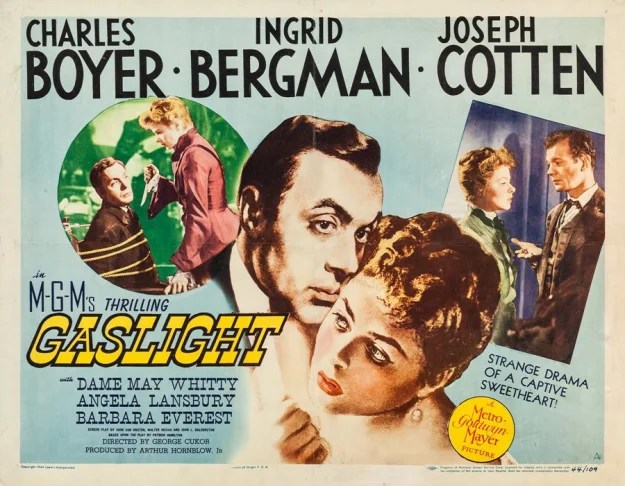
Gaslight, Angela Lansbury’s first film role earning an Academy nomination for best supporting actress.
There is a tactical reason that the left undermines SCOTUS, they want to destroy its effectiveness. This Supreme Court smack down of Affirmative Action is a good example of what I’ve been saying for a while that our courts appear to be the last barrier to prevent a complete shift to a totalitarianism state, at lease that is the last barrier we have that’s short of using bullets and violence. The problem is that that last barrier is showing undue signs of being actively influenced by these hive-minded totalitarians and there are many, many of these totalitarian hive-minded people on their way to the judicial system via students in our law colleges and they will effectively destroy the system.
We need to kick the justice system into high gear and start fast tracking cases into courts so we can legally put a stop to our culture shifting into totalitarianism before it’s effectively too late.
Remember, the mobs don’t have to destroy the Constitution to make it irrelevant and unenforceable. Our Constitution and our laws are completely useless if there’s no one in our justice system that’s willing to stand against intimidating mobs and actually enforce the law. Does anyone honestly think the socially woke lawyers coming out of colleges these days are willing to stand up for the law when it counters their cultish ideals?
Trouble is right around the corner.
When the Left pivots from invoking the mandate of the people and resumes claiming a basis in logic and reason, be ready to show them what real reason looks like! This is the sort of conversation people should be having about affirmative action: https://ginnungagapfoundation.wordpress.com/2023/07/04/midmorning-zone-approaching-arguments-about-affirmative-action/
Let me know if you want to learn how to have such conversations on any topic with any person.
Extradimensional Cephalopod wrote, “When the Left pivots from invoking the mandate of the people and resumes claiming a basis in logic and reason, be ready to show them what real reason looks like!”
You started that sentence off with “when” as if you fully expect it to happen. Isn’t that an assumption that may not be supportable by fact? I don’t make those kind of assumptions, to do so is not logical and it can cloud over what is there to be seen and distract from what needs to be done.
I’m all for giving people the opportunity to change based on self evaluation using logic and evidence but I’m not going to actively enable them to remain in their ideological bubble devoid of logic and evidence simply because I am being guided by a be polite and be politically correct guideline of some sort. I’m open to the possibility but will not expect change from anyone, as you did above, especially when the evidence points to cultishly rigid dogma.
I think your toolbox of basic concepts for framing problems and solutions constructively is fully appropriate for closed therapy sessions or relatively controlled private conversations but it won’t be very effective in everyday civil discourse, especially via online discussion forums or large group debate (I’m using the word debate very liberally). You don’t deprogram a cult member during everyday civil discourse, you actively engage them in closed therapy sessions. I think I’ve written something like that to you before.
You must start with a conversation with some kind of situational awareness. When your conversation is with someone that cultishly believes right down to their indoctrinated bones that the moon is made of cheese your method of conversation, no matter how polite and politically correct it may be, will get you nowhere in open civil discussion which is a far, far cry from a closed therapy session. The same can be said of conversing online with a mentally immature cultish socially woke progressive that’s completely devoid of logic, refuses to think critically or has no common sense.
At some point in a conversation with a cultishly dogmatic person, rationally thinking people eventually become aware that being polite and politically correct has failed, so rational thinking people have three reasonable choices 1) try to ring the proverbial bell of the cultish person with a rhetorical hammer and hopefully that will allow the synaptic energy to flow (even if it’s only slowly) to that light bulb of enlightenment that we’ve all heard about, or 2) continue to foolishly beat a dead horse with pleasantries, or 3) simply walk away from the conversation knowing full well that some people are simply not “fixable”.
The toolbox of basic concepts for framing problems and solutions constructively, which I called above being polite and politically correct, is great when all parties are fully versed in the concept and are willing to conform to the framework, but reality shows us time after time that sometimes it’s simply not possible to use the superficial tools in the top tray of the toolbox and you need to lift that tray and grab the rhetorical hammer in the bottom. This is especially so when the concept is only used by one side in the conversation and the other side is operating like a cultish feral animal.
I know that I sometimes come of as being harsh but I honestly hope this is taken as I intended, constructive criticism. I hope the points I’ve raised somehow help in the long run.
I was under the impression that political factions like the Left pivot from invoking the mandate of the people to claiming a basis in logic and reason whenever their dogma reaches a reductio ad absurdum that’s beyond what most people will tolerate and the narrative starts losing popularity, and back again when the “logic” line works. It’s a classic political manipulation technique: when the majority is with you (not you personally, but in the general sense), public opinion is the source of truth. When the majority is against you, the truth is immutably based in “logic”, which in turn is based on assumptions that people are discouraged from examining too closely. It’s an epistemologically and ethically bankrupt tactic, but a common one. I don’t place much importance on this point, though, so the rest will be in a separate comment.
I think what you may be forgetting is that there is no limits to the depths of stupidity especially when that stupidity is indoctrinated into the mind beginning at a young age. Indoctrinate them when they’re children and you’ll have them for life. There’s no reason to shift their tactics and goals because they see no failure and know it will work in the long run. They are clearly in it for the long haul.
Being polite and respectful doesn’t require actively enabling someone’s bubble. On the contrary, it’s actually the most effective approach I’ve found for getting people out of bubbles, because it’s disarming. It leads people to listen and reflect instead of being defensive. One might as well say that chess makes no sense because moving one’s pieces directly towards the opponent’s king isn’t always the best move. (Borrowing the example from here: https://xkcd.com/1112/.)
As it happens, I do use these techniques in conversations with random people on the internet, and they work. They get people to pay attention and engage. They’re not always sufficient, but they’re necessary.
Sometimes the other person changes their mind. Sometimes I change my mind. Sometimes we both reach a more complete picture of the situation. Sometimes only one of us does. At the very least, I learn more about the stories people tell themselves about why they’re right, which means I can take the time to unravel their worldview on my own and figure out where the emotional anchors are. That makes it easier for me to engage with such people in the future and lead them to reconsider their perspective. None of these things could happen if I approached the conversation with a rhetorical hammer, if I understand your maning of it correctly. (I tried the hammer for years.)
The rhetorical hammer might actually be the most superficial tool, because all it knows of other people’s perspectives and reasoning is filtered through the lens of one’s own experiences and assumptions–the things which are not proven because they are “obvious”. When all you have is a rhetorical hammer, everyone with opinions you don’t understand starts looking like a cultish, feral animal.
More sophisticated tools are ones like the skill of identifying people’s fears, the better to reassure them. The Socratic method is handy, but you are right that most people believe things they don’t understand based on the word of people they trust. To someone who disagrees, that looks like a cult. However, that’s not entirely fair. Much as I dislike it, people are entitled to have opinions they can’t thoroughly defend on a philosophical level. It’s not practical to ask everyone to think everything through from first principles. I wouldn’t learn tectonic geology to argue with a creationist.
The trick is that people believe certain things and not others based on their confidence that they can deal with the consequences of being wrong. If someone resists changing their beliefs, I ask what they might be afraid of. If they’re wrong, what do they think will happen? Or what are they afraid to acknowledge has already happened? Then I become their ally to help them face that fear. It’s all part of the deconstruction method: Make them comfortable, make them think, make them choose.
I am curious–I’m trying to share tools with people because I find the tools work. You seem to want to convince people the tools don’t work because… you think they’ll give a false sense of validity to people with beliefs you disagree with? But the rhetorical hammer already does that, by making people think the hammer-wielder is a closed-minded jerk. The hammer frequently misses its target, because it goes right past people’s real concerns–concerns they might not consciously realize they have. (In the rare cases where the hammer does lead a person to change their mind, they’re likely not going to thank the hammer-wielder, because the hammer-wielder was gratuitously obnoxious to them.)
Success happens when we create the conditions for people to rethink their views. That doesn’t validate those views; the disagreement is still there. The conditions for change begin to form when you say, “I think your beliefs are wrong and cause problems… but I realize you think the same about my beliefs. I’m willing to listen to what you think is wrong with my beliefs, and we can go from there.”
What do you think?
Extradimensional Cephalopod wrote, “What do you think?”
Respectfully; I think you’re misunderstanding what I’ve written and maybe it’s my overall tone that’s skewed your perception. I think you’re an intelligent guy so please reread my JULY 20, 2023 AT 11:09 AM comment above in its entirety and think a bit longer about what I actually wrote.
I reread your comment, and now I’m not sure if we disagree in theory. It appears that we agree that it’s good to engage with people respectfully, and that some people will not reevaluate their beliefs under casual circumstances.
In practice, I think fewer people are brainwashed than you think. Most humans hold their ideologies because they don’t see any other alternatives that they are willing to accept instead. If I show them an alternative that has a place for them, they are willing to at least consider it. That’s not something a brainwashed person would do. The way I judge brainwashing is how easily a person responds to the deconstruction method: make them comfortable, make them think, make them choose.
If one doesn’t properly employ the deconstruction method, I don’t think it’s fair to label people as being brainwashed. Even if they still don’t change their mind, that doesn’t necessarily mean they’re brainwashed. The real indicator is whether they’re able and willing to look at the situation from a different perspective at all. When I create a safe space for people to do that, most of them do. The process does not require me to pretend to agree with something I don’t believe.
I do sometimes pull out a rhetorical hammer, cut my losses, and walk away, but that’s a last resort. It’s also not about imposing a label from my perspective onto them. It’s about planting a seed of doubt in their perspective. I attack their paradigm’s logical consequences, its internal consistency, or its consistency with their own observations, in decreasing order of preference.
Here’s what I’m concerned about: If we keep assuming, “these people are brainwashed and we can’t do anything about it” then we won’t accomplish anything. However, if we consider that people who appear brainwashed might respond favorably to a demonstration of respect, we can open the minds of most of the humans we engage, and they outnumber the actual brainwashed cult members.
Does that address your points?
EC wrote, “I reread your comment, and now I’m not sure if we disagree in theory. It appears that we agree that it’s good to engage with people respectfully, and that some people will not reevaluate their beliefs under casual circumstances.”
I appreciate you rereading.
Yes I do think we agree about about some things as you mentioned, although I might choose to swing that rhetorical hammer a bit quicker than you do but generally that’s because of the cultishly dogmatic rhetorical walls that ignorant indoctrinated totalitarians have intentionally built around them. I’m willing to give these people a chance but it’s obvious to me that it’s a rhetorical wall supported by mob mentality and a hammer is likely the only way to break through.
I wasn’t writing about brainwashing although that has definitely been happening over the last dozen years or so with the blatantly in-our-face intimidation tactics used by the social justice woke crowd. If you don’t think that tactic is outright attempts at mass brainwashing (it’s been plenty successful across society) then I’ve got some ocean front property in Arizona for sale. 😉 What I was talking about was the more subtle indoctrination. Think of it this way; cult members are usually not brainwashed in a very literal way, they are fast tracked indoctrinated using a very similar kind of conversation tactic that you have written about and they do it in a relatively controlled environment where everyone is basically a parrot. What has taken place across the USA is both slow and fast tracked indoctrination.
If there is one thing that’s become very obvious to me over the last dozen years or so is that Generation Z and younger Generation Alpha have a serious gullibility problems and are easily indoctrinated especially in the highly populated urban centers of the USA. These are the future social, cultural and political leaders of the USA, serious trouble is right around the corner.
You wrote, “I think fewer people are brainwashed than you think.”
I would say I think there are far far more people out there indoctrinated into believing right down to their bones in their woke utopian totalitarianism than you think. Totalitarian tentacles are stretching out and sucking the freedom and liberty mindedness out of we the people are all across our society and the evidence is all around us.
I whipped this out pretty quickly before I headed out the door. I’ll reread it later to see if I need to fix anything.
Thanks again for taking the time to reread.
EC
I read your work on having constructive conversations at the link above. If conversations were held in such a manner, they would not wind up with the players being at loggerheads at the end, but I don’t think the problem would be solved.
Where I do find fault with the methodology is that AA is the solution to be justified or explained when in fact the conversation boils down to why one group is not having the same success economically or socially as others. What is lacking is any requirement for introspection by either person. Additionally, it appears as if very little needs to be bargained away by the side arguing that AA is a positive while the opposite is true for those in opposition.
The concept of equilibrium state used in the example serves as an appropriate device but it assumes that no other efforts to help push the cart over the hill have been provided. None of A’s assumptions are allowed to be challenged which allows A to make an unrebuttable assertion that lingering effects of discrimination is the cause of income and wealth disparity.
Having a conversation in this form is appropriate but both sides must agree to the ground rules beforehand. The initial apology from B to A because B had a positive view of the opinion immediately puts him on a lower standing. Why does B need to apologize for having a different belief? Neither side need to apologize for their positions. Doing so causes resentment which leads to unhealthy conflict. I would suggest that B question A about how these “lingering effects of past discrimination” manifest themselves and if there are any other causes that might not be related to past discrimination that are effectively handcuffing the minority in question. By asking questions you are giving the person the opportunity to have to dig deeper into the issue which allows issues to rise up for exploration and you are not telling him or her the answer which can be interpreted as being oppressive.
Sorry for the delayed response! I had to finish a few things with time constraints on them.
This particular conversation is an example I created, informed by my own opinions and the limits of my knowledge on the subject. I did my best to do justice to the various concerns in play, but I have limited time in which to track down everybody’s concerns. The point isn’t for me to do exhaustive research and come up with the solution to a problem that everyone needs to implement. The point is for to show the stakeholders in a situation how they can work together to solve the problem themselves, because they’re the ones who collectively decide what “solved” looks like. You’re a stakeholder here, bringing concerns that I evidently did not adequately address, or did not do so in an adequately clear manner.
Regarding A’s assumptions about the causes of discrimination, B and A agree that poverty is difficult to escape regardless of how a person or group became impoverished. Past discrimination is a major contributor to the current correlation of ethnicity with socioeconomic status, but that’s a secondary concern compared to the nature of poverty itself. It may have been less obvious than I intended, but A bargained away affirmative action itself in exchange for more constructive and ethnically neutral efforts to address poverty.
B did challenge A’s assumptions by raising concerns about people becoming decadent and expecting things to be handed to them. If you yourself have a conversation like this one, you can elaborate on your concerns about endemic cultural issues based on your own observations about human cultures. The person you’re talking with can then suggest ways to address your concerns, such as revitalizing the constructive aspects of people’s cultures and leaving behind the less healthy aspects. I am not sufficiently versed in relevant human cultures to be confident in offering specific points as evidence for or against B’s concerns on this topic, so I had the characters bring up general concerns about stagnation.
Also, B isn’t apologizing for having a different belief; B is apologizing for expressing satisfaction at something that A feels upset about and implying that satisfaction is obviously the only appropriate feeling. B could have acknowledged A’s feelings on the matter while still expressing B’s concerns, and in fact that’s what happened during the conversation. It’s not about what opinions you express, but how you express them.
Finally, one of the major advantages to this approach is that both sides don’t have to agree to ground rules beforehand. The reconciliation method (understand one’s own values, understand others’ values, frame the situation constructively) works unilaterally with people who aren’t actively looking to learn anything, especially when combined with the deconstruction method (make them comfortable, make them think, make them choose). I just didn’t want to depict A or B as being ignorant or unreasonable by default.
Does that all make sense?