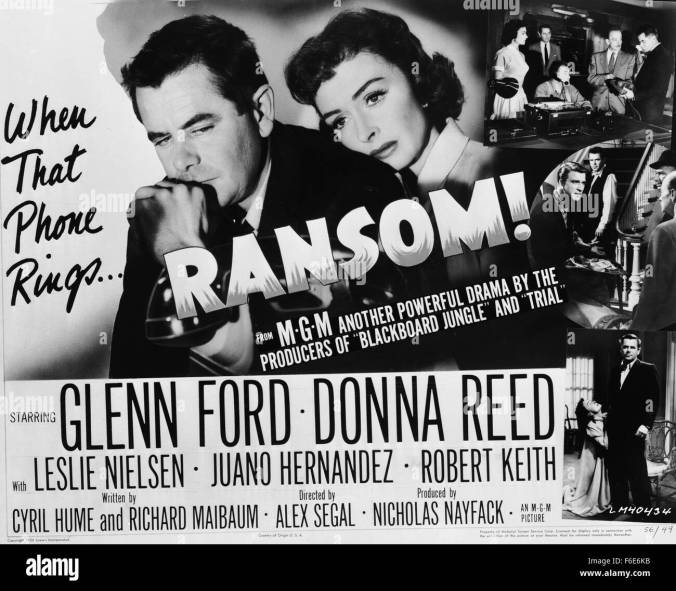
“Ransom” is one of several Mel Gibson movies that constitutes a guilty pleasure. A remake of an old Glenn Ford film (also pretty good), “Ransom” is about a multi-millionaire whose young son is abducted, and after initially setting out to pay the ransom, decided to turn the tables on the kidnappers and offer the same amount as a bounty on them. I thought about “Ransom” when I read this yesterday:
The United States and Iran have reached an agreement to win the freedom of five imprisoned Americans in exchange for several jailed Iranians and eventual access to about $6 billion in Iranian oil revenue…
As a first step in the agreement, which comes after more than two years of quiet negotiations, Iran has released into house arrest five Iranian American dual citizens, according to officials at the State Department and the National Security Council…when the Americans are allowed to return to the United States, the Biden administration will release a handful of Iranian nationals serving prison sentences for violating sanctions on Iran. The United States will also transfer nearly $6 billion of Iran’s assets in South Korea, putting the funds into an account in the central bank of Qatar…the account will be controlled by the government of Qatar and regulated so Iran can gain access to the money only to pay vendors for humanitarian purchases such as medicine and food.
Barack Obama and now his protege Biden have obliterated the former U.S. policy of never paying rogue governments and terrorists for hostages. The reason for the former policy was solid: if we make taking Americans as hostages profitable, then more Americans will be taken as hostages. The same principle applied to allowing American citizens to be used as extortion to make the U.S. change its policies. What the Biden administration is doing with Iran (again) is abject weenie-ism. Essentially, it validates taking American hostages as a means of international diplomacy. Mel Gibson would not approve.
The current policy, however, can be supported by some ethical arguments, as one can see from the closely divided comments to the Times news story on the deal. Reciprocity is the most prominent defense of Biden, from the simplistic “Who would you feel if it were your children being held?” to “The U.S. must respect the criminal justice system of other nations.” (Hostages are always declared guilty of “spying” or some other crime. Sometimes they really did something wrong.)
The principle that one should never pay ransom is an example of absolutism, which prevailed when the main purveyors of hostage-taking were terrorists. (Of course, one could legitimately label the whole government of Iran as a purveyor of terrorism.) As is often the case, utilitarianism, the balancing of ends and means, comes up with different answers depending on how one chooses to weigh the elements in play. Three aspects of the deal to keep in mind if Mr. Mill’s favorite system is yours as well:
1. U.S. taxpayers aren’t footing the bill for the ransom: it’s all from frozen Iranian assets.
2. The detail about Iran being only able to use the money for “humanitarian purposes” is deliberate deceit, because the Biden Administration thinks the public and media are stupid and, to be fair, has good reason to think so. Money is fungible, so whatever basic needs that 6 billions pays for, it frees up an equal amount for Iran to use for diabolical purposes. Duh.
3. Another benefit of not paying money to release Americans from places like Russia and Iran is to send the message to future idiots who will get themselves arrested after defying State Department warnings and basic common sense by traveling to such hell holes is that they are on their own.
Your Ethics Alarms Ethics Quiz of the Day is…
Should the U.S. be giving billions to Iran for the release of American prisoners?
 Ethics Alarms
To stop such things was sort of why we fought the Barbary Wars 200 years ago…it’s all very depressing.
One Times commenters writes, “Biden’s doing a great job in just about every area. He does his job while the former guy just looks like a petulant little kid, full of nothing but hot air.”
The former guy does behave like a petulant little kid.
🤣🤣🤣
2: Presupposes that some or all of that fungible money would have been spent for humanitarian purposes. Unless Iran’s books are open, that’d be hard to prove, and lacking those open books, a dubious assumption.
True. But “humanitarian” is vague enough that it can apply to a lot especially by the sights of Qatar, no?
It can, perhaps we could wait and see if the text of the agreement is made available before passing judgment on that particular provision.
Personally I’m against paying for hostages that should have known better than to put themselves in the power of a hostile regime (I’m more sympathetic to aid workers who get scooped up in areas of political unrest/war zones when the front lines move.) But once you get into the merits of an agreement, the details do matter.
Unless we’re applying absolutism. That’s why absolutism is hard. It’s like those people who say, “I am absolutely opposed to the death penalty!” then make it clear that “details matter” to them so they might be Ok with executing the DC snipers or the Cheshire home invaders or Osama bin Laden.
I think you’ve misunderstood me.
While not being absolute about it, I’m inclined against trading for such people.
You decided to examine the merits. I took issue with one of your points. My opinion of your analysis is unrelated to my inclinations about hostage deals.
I only even mentioned my inclination in the forlorn hope of forestalling the usual attacks claiming correction or clarification means I’m advocating something beyond accuracy.
No, I understood. “My opinion of your analysis is unrelated to my inclinations about hostage deals.” Absolutely valid. I expect nothing less.
To me it is akin to justifying the state lottery by requiring that the proceeds only be spent on education.
Yes, those dollars get spent on education, which frees up money the legislature might have appropriated for education to spend on other things, like buying votes.
I really dislike that rationalization.
==============
And yes, the previous guy does act like a petulant little kid a lot of the time. Is that really a reason for the current guy to act like a stupid little kid?
=====================
Saudi Arabia, at least at one point, would have liked nothing better than to ally with us and probably even Israel against Iran. But no, we have to kick sand in their face and then whine about them taking their marbles and going home.
==================
Sooooo. Any other cheesy phrases I can trot out tonight, or have I hit my quota?
My answer to your question is, “No.” You cited all the good reasons why. Personally, I favor clearly communicating to the Iranian government that if they don’t like the current level of sanctions and don’t release our citizens, then they ain’t seen nothing yet. Call me an absolutist; it’s far from the worst thing I’ve ever been called.
I think that Americans who travel to hostile nations and get picked up should neither be bartered with, nor should we go out of our way to rescue them. They knew the risks; it’s on them. Same with military deserters like Bowe Bergdahl. If taken by terrorists on the other hand, general policy should be to rescue them and exterminate their captors, down to the last man. Unless it’s determined there is absolutely no way to rescue them safely. In that case we pay the ransom, then track the courier back to the terrorist base, and turn it into a crater.
As a side note, the IRS offers no formal guidance on ransomware payments, but multiple tax experts acknowledge deductions are usually allowed under IRS law and established guidance. It’s a “silver lining” to ransomware victims, as some tax lawyers and accountants put it.
Having never experienced having a loved one kidnapped, I hesitate to condemn payment. However, there may be circumstances such that arranging or paying a ransom constitutes a terrorist financing offence — although a prosecution might be deemed against the public interest.
The bottom line is that paying ransom will certainly encourage more ransom kidnappings.