[I had a major mix-up with this post, with a discarded draft going live by accident. My fault: I was rushing. It’s right now, I think…]
The American Alliance for Equal Rights (AAER) is the group founded and run by conservative activist Edward Blum, now reviled by fans of “good discrimination”—you know, the kind that targets whites and Assians—because its efforts helped spark the Supreme Court to (finally) overturn affirmative action policies at colleges and universities. In August the group filed lawsuits against Perkins Coie and Morrison & Foerster, both major law firms, alleging that the law firms’ minority fellowships, which disqualify candidates who don’t have the right skin color, infringe on the Civil Rights Act of 1866 provision that forbids racial discrimination in contracts
“Excluding students from these esteemed fellowships because they are the wrong race is unfair, polarizing and illegal,” Blum told the news media. “Law firms that have racially exclusive programs should immediately make them available to all applicants, regardless of their race.”
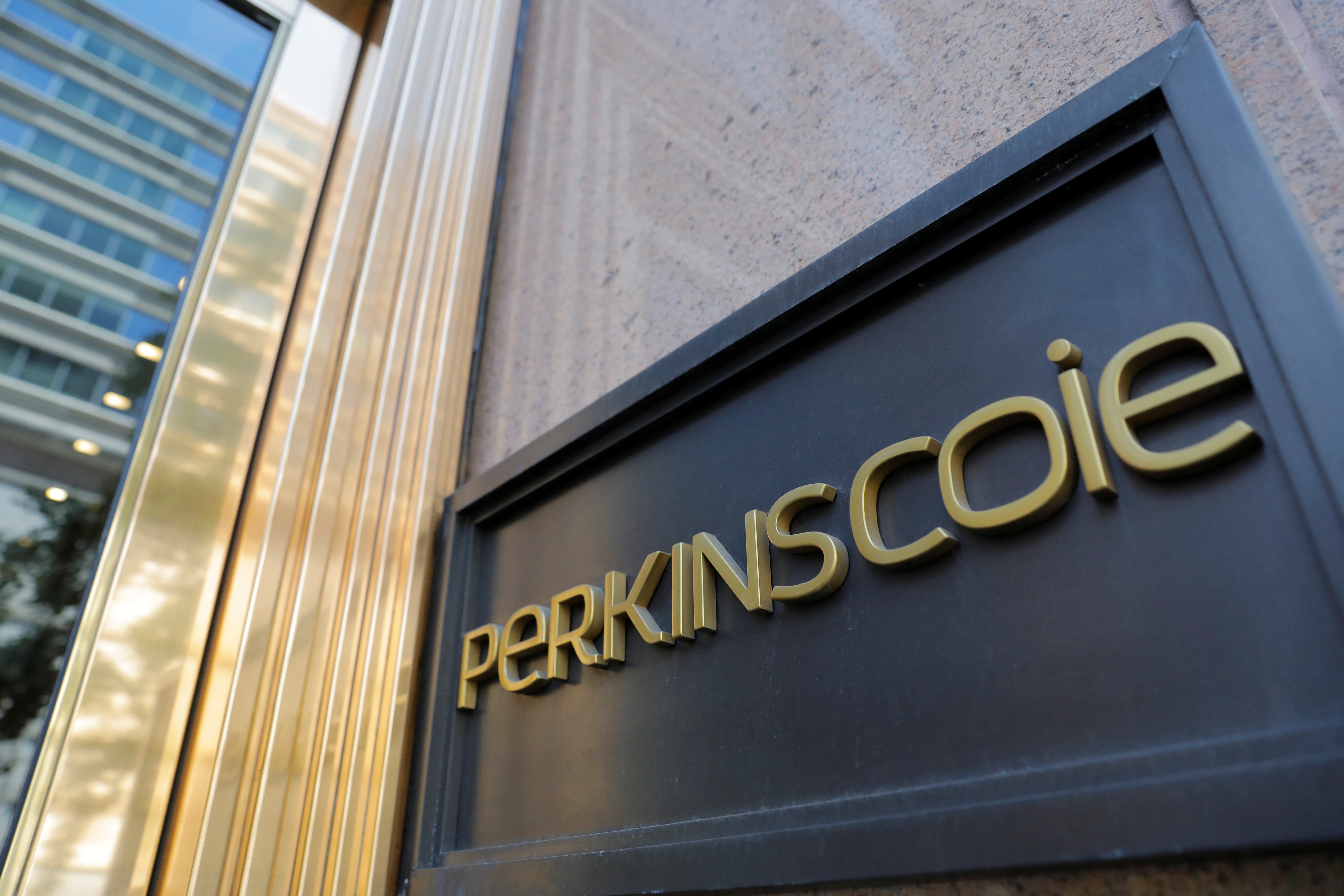
Seattle-based Perkins Coie, with more than 1,200 attorneys in the United States and Asia, funded fellowships for first- and second-year law students who must be “of color,” LGBTQ+ in sexual orientation, or disabled. The first-year student program dated from 1991, and was supposed to create “legal communities that accurately reflect the rich diversity of our communities,” according to the firm’s website. Perkins added the second-year student fellowship program in 2020. The complaint argued, “Between two heterosexual, non-disabled applicants — one Black and one white — the latter cannot apply based solely on his race,” which violates Section 1981 of the Civil Rights Act of 1866.
Sure sounds like discrimination to me!
Similarly, the San Francisco-based firm Morrison & Foerster, with offices across Asia, Europe, and the U.S., established its “Fellowship for Excellence, Diversity, and Inclusion” in 2012, which, ironically, excludes whites. That program for first-year law students included a paid summer associate position, support from a group of lawyer mentors, plus a fellowship award of $25,000 if the student completes the entire summer program and an additional $25,000 if they return the following summer and accept a full-time position upon graduation.
After the suits were filed and Blum had completed his PR assault, both initially firms postured defiantly and vowed to fight, and then changed the illegal criteria for their programs and Blum dropped the complaints. Why did they do this? Because the programs were discriminatory and illegal, and the lawyers in the firm knew they were discriminatory and illegal all along. They had no legal or ethical metaphorical legs to stand on.
Now AAER has sent letters to three additional law firms, Winston & Strawn, Hunton Andrews Kurth and Adams and Reese, pointing out that their programs also violate federal civil rights law and giving them the chance to make them non-discriminatory before the group files lawsuits against them.
“To avoid litigation, the Alliance hopes these law firms will immediately modify their programs to bring them into compliance with our nation’s civil rights laws,” Blum said in a statement “No student should be treated differently because of their race or ethnicity.”
Gee, what a concept! Why hasn’t anyone thought of that before? It sounds…fair!
My guess is that those firms will back down too. What they are doing is not only illegal, it’s a legal ethics violation, not that the super-woke bar associations anywhere will give them the sanctions they deserve. Is it ethical for lawyers and law firms to break the law because they think “it’s the right thing to do” or because they are sure they can get away with it? Surely not, but that’s exactly what was going on here.
Three ethics cheers for Ed Blum for stopping them.
 Ethics Alarms
Of course, now we’re getting into 1950s and 60s era race relations, but now the races are flipped.
Sure, these firms have adjusted the letter of the law, but who would believe that they won’t just continue unlawfully discriminating in an unofficial capacity?
Many of the Ivy League schools are up front about how they plan to continue discriminating; I don’t see why these firms will be different.
Perkins Coie. Former home of Marc Elias, ethics villain extraordinaire. The source of the Trump dossier. The entire firm can’t erase the stain of the fees they gladly took in for one of its partners managing the single most destructive political dirty trick of all time.
So, the programs will go back online with the language changed to ‘low income and disadvantaged groups’. They will award it to exactly one poor white student each year so you can’t claim it is racially biased. Things will go on as before
Yes. Much the same as the scofflaw colleges and universities will continue to competitively scrounge for black kids who can be considered qualified for spots.
You know the accusation of disproportionate impact should work equally well if whites are not represented in proportion to their overall population.
I’d love to see those who push disproportionate impact be hoisted on their own petard.
And they will be. There’s no way around it.
At least I can understand the desperation of law firms to attract black students, who are indeed underrepresented at the most selective firms. My own firm used to get hammered regularly at law school recruiting events for not having “enough” black lawyers. (One wrong answer– which got us banned from one major school for a year — to the question, “Why don’t you have more black lawyers? was “We hire the very best lawyers we can find.”) But who in the world imagines that that gay lawyers are underrepresented at big firms? In my own experience, they were, if anything, overrepresented.
Hilarious. Yes.