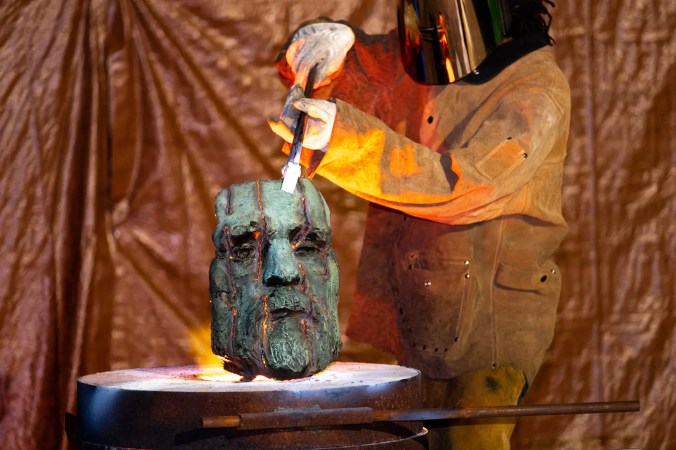
The New York Times turned to a biased art historian to discuss the melting down of the Charlottesville statue of Robert E. Lee that was the focal point of the infamous 2017 riot. Ethics Alarms has spilled too much metaphorical ink over statue-toppling and historical airbrushing already—you can find most of them under this tag or this one. I can summarize them all easily: tearing down statues betrays a totalitarian-mentality and undemocratic values, an intolerance of unpopular beliefs and ideas, and a favorable attitude toward thought-control and censoring history. I hate it, it’s unethical, and I’m not even a fan of Robert E. Lee.
Rigging the commentary (what were the chances that an African-American art historian would object to destroying a Lee statue?), the Times got what it evidently wanted: an almost obscenely gleeful account of Lee’s symbolic melting down. “Acrid fumes penetrated the respirators we had been issued,” Erin Thompson writes. “When the foundryman finally turned off his torch and tapped at the head with a mallet, Lee’s face fell clattering to the floor.” She quotes a founder of the statue-toppling group that helped accomplish the destruction as saying, “It feels like witnessing a public execution.” Clearly, it was a good feeling. You know, like the “reform Communists” felt when they tore down Stalin’s statue and threw his mummified corpse in a hole. “Stalin? Who’s Stalin?” Now the same people who helped the dictator murder millions could pretend it all never happened. It is traditions like this that ensure that Russians never learn from its history, because they don’t like to acknowledge history.







 Ethics Alarms