In Mike Flanagan’s latest horror epic, the Poe mash-up in which “The Fall of the House of Usher” is repurposed into a nightmare scenario for the Sackler family of Oxycontin infamy, the avenging demon named Verna, who sometimes appears as a raven, lectures a soon-to-be victim on the evils of greed:
So much money. One of my favorite things about human beings. Starvation, poverty, disease, you could fix all that, just with money. And you don’t. I mean, if you took just a little bit of time off the vanity voyages, pleasure cruising, billionaire space race, hell, you stopped making movies and TV for one year and you spent that money on what you really need, you could solve it all. With some to spare.
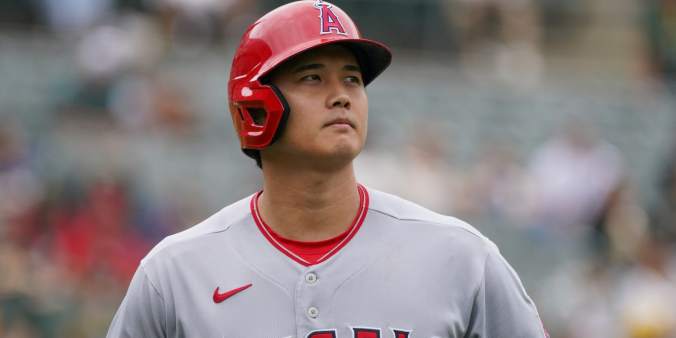
Yes, Verna is a communist and deluded, but it was impossible to read about the $700 million ten-year contract the Los Angeles Dodgers just gave baseball free agent Shohei Ohtani without that speech creeping into my thoughts. $700 million dollars?
My lone surviving aunt, now 95 and as devoted a socialist as ever, would have loud arguments with my father over far more modest athlete and corporate executive salaries, saying “That’s obscene and immoral! Nobody needs x-million dollars!” (back when a million was a million, you know). My father would infuriate her by replying, “It has nothing to do with what someone needs, and especially what you think someone other than you needs. If a party is willing to pay an amount for another party’s services, whatever that amount is, the individual’s services are worth that amount to the one paying for them, and the individual has every right to accept that amount in exchange.” The answer infuriated my aunt, whose nostrum, naturally, was for the government to forbid a citizen from being paid “more than he needed.”
This, however, has an obvious flaw—well, many, but particularly this: the result would be, in a baseball context, that billionaire team owners would pocket a disproportionate amount of the astounding profits teams made because of TV revenue and merchandising, though it is the players, and especially the superstars like Ohtani, that attract the money. The Dodgers are willing to pay all that cash (much of it is deferred, but that’s irrelevant) because their calculations indicate that it is a sound business deal.
If you are not familiar with Ohtani, he is unusually valuable because he is unique in the sports world and the history of baseball. He is both a Hall of Fame caliber pitcher and a Hall of Fame level batter at the same time, literally two players in one, but more than that two great players in one. The nearest comparison to Ohtani is Babe Ruth, the greatest baseball player of them all, and the most influential and popular sports hero in U.S. history. Ruth was a great pitcher and a great hitter, but never both at simultaneously: with the Red Sox before he was sold to the Yankees, Babe was a full-time starting pitcher and a part-time outfielder. Once he was purchased by New York, he became a regular in the line-up, and only pitched a game in a few seasons. 700 million, or 70 million dollars a year, is about twice what current superstar salaries are right now, but Ohtani is more than twice as special as any of them.
I don’t want to spend much time debating the wisdom of the Dodgers’ signing. It’s their money, and they can spend it as they choose. Personally, I think it is insane to devote such resources on a single player, because players get injured, suddenly decline, develop health problems…even with the insurance policies teams take out on their high-priced players, this a risky gamble. In addition, the Dodgers really don’t “need” him. Los Angeles is near the top of the league in attendance every season; it already has spectacular TV coverage and revenue; and the team is probably the best in baseball without Ohtani. There are teams that could revitalize baseball in their city with the double-superstar.
The Dodgers’ signing him is exactly the behavior that made the New York Yankees of old so hated. With more money that any other team, they spent to reach the point where they not only expected to win the pennant every season, but where they expected to crush the opposition and usually did. That pattern led to such dominance in the first part of the 20th Century that it stifled the growth of the sport. Between 1920 and 1965, the New York Yankees finished first in the American League 31 times.
However, even though the Dodgers of today have the outsize resources, determination to maximize the achievements of the team, and the record of winning games to make their extravagant ways seem like the Bronx Bombers when they inspired Broadway musicals about their dominance, the signing of Ohtani poses no similar threat. The Dodgers have won only a single World Series during their recent period of dominance. Because of many factors, including baseballs luxury tax, draft rules, international signing, and most of all the play-off (which I detest, but still…) spending, payroll size and media dominance do not ensure Yankee-ish monopolies on championships. The Baltimore Orioles, a so called “small market team,” had an Opening Day payroll last season that ranked 29th out of 30 teams They won AL East, while the Yankees, with one of the largest payrolls, missed the postseason. The Diamondbacks’ payroll ranked 21st, and they made it to the World Series, upsetting the Dodgers. The 2023 Mets and Padres, like the Yankees, were conceded dominance in the pre-season predictions, and they flopped embarrassingly. Though Ohtani’s salary is more by itself than many whole teams in baseball, those teams either have been successful in seasons within memory or promise to be successful soon.
I must mention here that though I have criticized other players going to play for teams other than the ones they had previously expressed their loyalty to, winding up in whichever city happened to have the most generous owner, there is no evidence that this was the case for Ohtani. Believe it or not, he probably could have received a bigger offer if he was after money only. He liked Los Angeles and his fan base was there. He stayed in the same city he has been in from the beginning. I have often written that players should decide where they will be happiest and sign there even if it isn’t the most lucrative deal, because the size of their contracts makes differences in total payouts superfluous. There is every reason to think that’s what this player did.
One could also argue that Ohtani being with the Dodgers is good for all of baseball. As the most interesting and unusual player in the game, he is guaranteed more exposure and national attention by being in one of the largest TV markets and with one of the most popular teams. Stuck in Anaheim, where he has been for all six years of his career, he never played in a postseason game and the Angels were seldom on national sports broadcasts. Ohtani should be the face of baseball (yes, a Japanese player is the logical face of the National Pastime!), and, with the Dodgers, he will be.
There is also the fact, and it is a fact, that single players have less impact in MLB baseball than in any other professional sport. All one needs to do to see that is to look at Ohtani’s former team, the Angels, who have had Mike Trout, probably the best player in the game after Ohtani, along with him and still had a losing record over that period.
In the end, this signing will upset my aunt (who roots for the Cincinnati Reds) but beyond that, will probably do more good than harm. Now if Ohtani will just set up an international charitable foundation to feed the poor and combat climate change, he might even win her over.
 Ethics Alarms
I don’t know that I agree that this was a good move for the Dodgers. They have but to look across town at the Angels so realize that simply signing great players for humungous chunks of money doesn’t guarantee anything. The Angels also had Albert Pujols who, granted was never as good with the Angels as with the Cardinals. Nonetheless, the Angels were able to sign a number of top players without putting together a winning team. It’s their special ability.
The Dodgers have been winning without Ohtani. I do wonder, though, if spending $70 million on one player will hamper their ability to field the best team overall. The luxury tax in MLB is no joke — even the Yankees have had to trim their profligate ways. They have a good organization, and may be able to pull it off. But as you say, baseball is not a one man sport. The best hitters need batters to get on base for them to drive in. The best pitchers need good fielders behind them, good run support for them.
I’ve never been a fan of the Dodgers to be sure but I also don’t really follow them. My first thought on this signing (other than, that’s a lot of money) was that this was roughly $450k per game. Sheesh.
We’ll see how this works out. We’ll see in five years how this deal looks then.
========================
On a related note, I couldn’t remember Pujols’ name (I knew it started with a ‘P’), so I turned to Google. When I googled St. Louis catcher — I swear his name did not come up. I clicked on the tab for greatest St. Louis catchers and the only name that showed up was Yadier Molina. Really, Google? I am sure Molina was a good player but not to mention Pujols?
Pujols was a firstbaseman…gold glove calibre, in fact, in his younger days.
The Dodgers need pitching, not hitting, and Ohtani won’t be able to pitch until 2024. I agree that of almost all teams, LA needed him the least, but having whiffed in the play-offs (again), they needed some way to prove they were going all out. The contract could easily be a disaster, if Ohtani’s arm doesn’t recover, or he declines in his thirties…as most batters do.
The issue with people earning extremely large amounts of money is that in many cases they’re not that much better than the next best person, but the fame and customer base scales exponentially (a phenomenon Nassim Nicholas Taleb calls “Extremistan”) rather than existing as a normal distribution (e.g. human height; “Mediocristan”).
In other words, the more people want to watch these specific people play baseball, the more money these people will make. Considering the discipline and commitment involved, I don’t necessarily begrudge them their salaries, although I do expect them to think of something useful to do with the money. With that much truly disposable income, compassion becomes cheap enough that if a person still shows none of it, they need to work on their ethical initiative.
I’m more concerned with corporations accumulating enormous amounts of money not by doing a good job, but by warping society so that they are the default option. (I’m not immune to their effects, either.)
Indeed, the variance in compensation is very much out of proportion with the variance in performance in many cases, and there are other confounding factors as well, like the mysterious element of charisma and “star power.” Everything is also affected by the fact that the pool of the population that can play baseball, a difficult sport, at an elite level is already very small.
Here’s an interesting twist to the story:
https://www.wsj.com/sports/baseball/shohei-ohtani-700-million-contract-deferral-067a345f?st=p0k1xg7jncftyt7&reflink=desktopwebshare_permalink
I just got out of the car, having traveled nearly 1,200 miles over the last two days – from Richmond, VA visiting our kids and grandkids back to central Iowa – and I’ve had a lot of time to digest this…I think.
Our son and I talked about this at length the day the deal was announced and we thought it was a terrible deal for the Dodgers, though we certainly agreed with your non-socialist ideals – if LA ownership is willing to put that kind of money down for ten years of service, Ohtani is a fool not to take it.
But I think my mind is changing some on the “terrible” descriptor.
The risks are there, as you and your readers have noted. Shohei has already been through Tommy John surgery…twice. More often than not, pitchers comes back from it. Ohtani has come back once, but there are examples of very good pitchers that do not recover after a second. See: Jarrod Parker. Ohtani is on the wrong side of “the player’s prime”…27 years old, so the law of averages says the decline will begin and he probably won’t best his current numbers, neither in the batting box nor on the mound. Committing that kind of money, even when much is deferred, to those kinds of realities is fraught with peril.
We see a busload of examples of terrible contracts given to players past their primes…Pujols was mentioned. I would add Jason Heyward (though his was signed right at his prime), Nelson Cruz, Jacoby Ellsbury, David Price, Josh Hamilton, Anthony Rendon, even Mike Trout’s numbers are in decline as injuries mount. And that list is done without breaking a mental sweat.
The real saving grace is the deferred money at no interest. Ohtani will still be handsomely paid via endorsements and the like, but the Dodgers can now pay out the bulk of his money 10 years down the road, when the value of money (if things continue) will have significantly depreciated. In the meantime, the Dodgers can pay minimally for him now and build additional quality around him, counting on a bushel basket of World Series championships. If that happens, I imagine they pocket a ton of money and can stash some of that away to pay Ohtani’s big money when the time comes.
I actually think this has turned into a rather team-friendly deal. There is still a LOT of risk given Ohtani’s injury history, but if a team is going to score the #1 player in this era of grotesquely bloated contracts, this is about the best way it could happen.
Shohei staying in LA may have been luck, as traditionally the players’ union has pressured players to take the most money, regardless of the player’s wishes.
One other (super dark) addendum…has anyone considered the idea of a truly evil owner using Ohtani for 9 years of the contract, then having him bumped off in year 10 in an attempt to save $680m?
Ok…tear these thoughts apart…
I agree with all of it. When I wrote the initial post, I didn’t know how much was deferred. Of course, that could turn into a Bobby Bonilla disaster, but we shall see.