On CNN Business, we learn…
Intercity bus lines like Greyhound, Trailways and Megabus, an overlooked but essential part of America’s transportation system, carry twice the number of people who take Amtrak every year. But the whole network faces a growing crisis: Greyhound and other private companies’ bus terminals are rapidly closing around the country.
Houston, Philadelphia, Cincinnati, Tampa, Louisville, Charlottesville, Portland, Oregon, and other downtown bus depots have shuttered in recent years. Bus terminals in major hubs like Chicago and Dallas are also set to close. Greyhound and other companies have relocated their stops far away from city centers, which are often inaccessible by public transit, switched to curbside service or eliminated routes altogether.
These stations built decades ago are shuttering because of high operating costs, government underfunding and, surprisingly, the entrance of an investment firm buying up Greyhound’s real estate for lucrative resale.
Wait, what was that last part?
The terminal closures have been accelerating as Greyhound, the largest carrier, sells its valuable terminals to investors, including investment firm Alden Global Capital. Last year, Alden subsidiary Twenty Lake Holdings purchased 33 Greyhound stations for $140 million… Alden has started to sell the Greyhound depots to real estate developers, speeding up the timetable for closures.
“I don’t know the specific details of each building, but it is clear what is happening here: an important piece of transit infrastructure is being sacrificed in the name of higher profits,” said Stijn Van Nieuwerburgh, a professor of real estate at Columbia Business School.
It is an alarming article about something people like me (I haven’t taken a bus trip since I was a college student) seldom think about. But according to the article, about three-quarters of intercity bus riders have annual incomes of less than $40,000, and more than 25% of those would not make their trip if bus service was not available. Intercity bus riders are also disproportionately minorities, people with disabilities, and unemployed travelers.
Here is what I found strange: nowhere in the article was the Department of Transportation mentioned. No one was interviewed from the department; there was no suggestion that DOT is working on this problem at all. Yet the issue described seems to be exactly the kind of infrastructure concern that a cabinet level agency exists to solve.
What’s going on here?
 Ethics Alarms
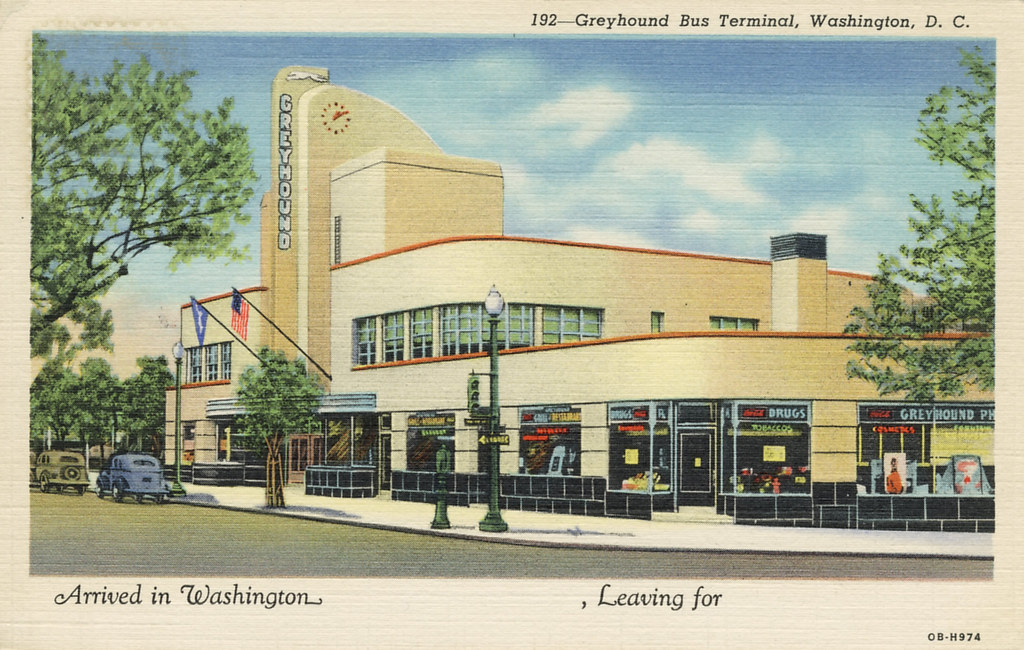
For what it is worth, that Greyhound DC terminal is preserved in the facade of an office building on New York Avenue. It has been an office building for as long as I have been travelling to DC for business. That’s about 30 years.
Bus companies have thin margins, gas as other costs inflation, and customers suffering low wage stagnation. I am surprised any are still doing ok.
So the land is going to private developers. In this economy. This is really making me laugh (or I would cry).
Downtown of my small city is going through one of this “sold to a private developer to make a walkable city” phase. They even got waivers from the city council to build taller buildings than approved by code and a bunch of other concessions including cost sharing with the city for infrastructure.
And then the not-recession of the past couple of years hit. The private firm in charge of the development has been trying to get out of it for the past six months looking for the smallest pretext on the city, or others signing the contract, to pull out. A major family-owned store in downtown sold their land with the understanding that they would get preferential treatment on a long-term lease. Now that the development is off they are being forced to close because the previously signed contract is void. About four blocks (of a twelve block downtown) are about to become fenced off areas that will not be redeveloped in years; ripe to be taken over by encampments that the city will be reluctant to drive off by enforcing the law. And of course, everyone in city government who pushed for this either because of kickbacks or being true believers are pretending everything is dandy.
This has happened before and will happen again.
Best of luck to the victim cities here. Wish you the best, and hopefully once you come out of the other side of this crisis of governance you will be ready to make the right decisions.
“no suggestion that DOT is working on this problem at all.”
Mayor Pete on family leave…?
PWS
Nah, too much work to be done on pronouns…
On the other hand, government involvement has a spotty record when “improvement” or “solution” is needed. Remember those 9 words: “I’m from the government and I’m here to help”.
Add this to all the farmland being purchased by tech giants like Bill Gates and the Chinese. The Chinese are using much of it to grow alfalfa and ship to China, effectively as a method to ship our groundwater to China. Gates is apparently taking the land out of cultivation and allowing it to go fallow at a time of the greatest worldwide famine in recent history. Where is the Department of Agriculture on this?
That 384,000 acres of farmland owned by Chinese investors and companies with Chinese shareholders is really worrisome. Even more concerning is the 672,000 acres owned by the Cayman Islands, or Denmark, at 856,000 acres. Or, worst of all, Canada, with over 12.8 million acres of farmland in the US.
Bill Gates owning 248,000 acres is much more concerning than Jeff Bezos 420,000 acres. Bezos uses his farmland for good ole rocketry. Don’t need farms when you’re going to the Moon.