I find this ethics controversy specially opaque.
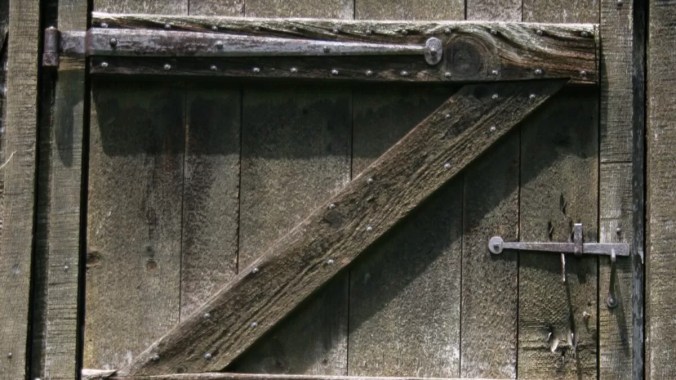
In San Marcos, Texas, Kristy Kay Money and Rolf Jacob Sraubhaar own a home in the city’s Burleson Historic District. It has a large metal “Z” bolted to an iron balcony on the front of the house, a reminder of the home’s original owner (and builder) Frank Zimmerman. He was a local businessman and the owner of the city’s historic theater; he also served as San Marcos mayor from 1949 to 1951. Zimmerman is commemorated around the town: a plaque states he “came to San Marcos in 1922, beginning a 47-year career in the theater industry with the purchase of the Grand Opera House and the original Palace Theater.”
But in 2016, it was discovered that a Palace Theater advertisement in the San Marcos Record dated March 28, 1924 proclaimed “KU KLUX KLAN DAY.” A related article titled “Klan Picture Coming” told readers, “A treat is in store for every person within 20 miles of San Marcos. The Palace Theatre has been fortunate in booking the two-reel motion picture showing the Ku Klux Klan activities at the recent Dallas fair. It will be shown in connection with the regular admission price of 10, 20 and 30 cents, next Wednesday and Thursday.” Zimmerman’s theater also hosted screenings of Woodrow Wilson’s favorite film, “Birth of a Nation.”
Money and Sraubhaar decided they didn’t need a constant reminder of their home’s Klan-tainted history. They now want to remove the balcony and the Zimmerman “Z.” Their home is in a historic district, however, and though it has not been declared a historic structure itself, the San Marcos’ Historic Preservation Commission has to approve the proposed alteration. Last year it voted unanimously to deny their application to make the changes. The couple is now suing, but never mind that:
Your Ethics Alarms Ethics Quiz of the Day is…
Should the government protect historic structures and artifacts that relate to dark events and less than admirable figures (by today’s values) in local and American history?
The San Marcos tale is not exactly clear-cut. Zimmerman seems to have been an important man in the community. That he exhibited “Birth of a Nation” should not be seen as an automatic black mark: the film is still considered a classic. Current day woke-fanatics would find him racist for exhibiting “Gone With the Wind.” Nor does a theater owner pandering to local tastes in 1924 with a KKK bill necessarily mean that he loved a good lynching.
Moreover, a metal “Z” doesn’t scream “Klan!”—it’s not as if the house has a depiction of a burning cross on the balcony. Still, the core question remains: are all aspects of our history worth commemorating? If not, where is the line to be drawn: if letting the big “Z” come down because of Mr. Zimmerman’s minor Klan promotions is fair, surely tearing down John C. Calhoun’s statues can’t be far behind.
And yet: does the couple have a legitimate complaint when they deliberately moved into a historic district?
AI Note: WordPress’s bot told me to tag this post “Venice” and “Italy.”
 Ethics Alarms
My gut instinct is putting this in the same category as people who move next to a gun range or a racetrack because of the cheap home prices, then complain about the noise.
This is a historic house with a well-known former owner. The standards of the past do not always mesh with the standards of today. It isn’t like they found out that this guy was secretly a mass murderer and the head of a Satanic cult that will be featured in a new, blockbuster movie and their house will be sought out by all kinds of people for undesirable reasons. This guy owned a movie theater and had the kind of movies that movie theaters at the time all over the country had. Get over it or move. I doubt any person from 100 years ago would meet their standards of behavior. I would bet a full $1 that every single house in the historic district has something attached to it at least this unacceptable if you searched hard enough. Plus, this happened 8 years ago. Why are they complaining now?
“My gut instinct is putting this in the same category as people who move next to a gun range or a racetrack because of the cheap home prices, then complain about the noise.”
That’s exactly the example that I was going to reference… The correct time to object is when the determination is made that the building was designated a heritage site and future changes would have to be approved. Once that’s in, you’ve bought the property knowing that’s a condition on the property.
My home is also a heritage site. In my town, that basically means that the home is more than 100 years old, because half my neighborhood has the plaque. The idea behind them was to maintain the look of the neighborhood: Everyone has a two story porch, or a turret, or a brick facade. I bought the house knowing that was a thing. I have to get my paint swatches approved, and I knew this walking into it.
I tend to agree with HT and Michael. I suspect that the owners want to make changes to the house notwithstanding its designation as an historical site. The prior owner’s “troubling” past is but a ruse to get around the designation.
This has happened in Houston’s subdivisions around near the city’s center. Developers want to bulldoze tons of houses and put up new buildings but the local historic preservation societies get to weigh in if the developer finds something that looks old.
Most recently, when clearing debris for new roads, the developer found cobblestones dating back to the mid-1850s-or-1860s. The preservation societies raised holy hell declaring that the roads are important to Houston’s black communities because lots of blacks lived in that area. So, construction screeched to a halt and lots of people had to be retained to render opinions about the sanctity of cobblestone and cobblestone roads soaked in the bloody, sweat, and tears of former slaves and defiled yet again by greedy gentrifiers.
Meanwhile, the developer lost time, money, and momentum while studies were commissioned and reviewed, and recommendations made and amended and fees were collected all around.
jvb
I guess that I should point out that I live in an old house. I know who built the house and what they did for a living. I also know some personal stories about the family. I would be willing to bet that you could find an anecdote about the original owners that would be distasteful by contemporary standards. I don’t think they were bad people, I just think that prominent people from early 2000’s probably said things and had some opinions that most people wouldn’t approve of today. I think it is almost 100% certain that they (and almost every other family at the time) uttered a sentence that would get them cancelled in today’s society.
Some additional context–the”balcony” is actually a small central upstairs window shelf intended to hold a couple potted plants. The home has a significant front yard, set far from the road and the decoration isn’t easily visible.
The owners are claiming unconstitutional takings under 5th and 15th Amendments by the board forcing them to maintain the decoration, but the complaints are about the appearance of, and values of the person the letter represents. I’m surprised they’re not arguing 1st Amendment compelled speech.
the historical commission is also only empowered to enforce maintaining compatible appearances in the district, so granting they don’t file an argument showing they have more authority, I’d say this is a slam dunk for the property owners.
If they can remove that, can’t they also remove…say… a historical marker that identifies the house? Can you remove the historical markers on the basis that you don’t ‘like’ the content?
A former mayor’s house is pretty significant historically, but I’m quite sure this fixture is very little historic value. It’s not visible at all in the only airborne Zillow photo of the home facade, and barely visible in two frames of street view, the rest of the frames as you move across the front yard it’s obscured by trees.
A few strategic applications of salt and it might even become resolved by an act of God.
They really might want to remove the Z because it looks tacky and has zero relationship to the current owners. I think the KKK angle is just an attempt to drag the historical value of it down the cognitive dissonance scale in an era of woke airbrushing.
If the preservation association must give the owner permission to remove the historical decoration that identified the structure as historical then if they give permission to remove the historical artifact they will have no standing to deny the removal of other historical artifacts in the future.
Even if the artifact could be directly associated with the klan I would say that the owners had a duty to know what conditions existed before they purchased their home. Like any other covenant, the rules associated with historical districts are binding on purchasers.
“AI Note: WordPress’s bot told me to tag this post ‘Venice” and ‘Italy.‘”
“In San Marcos, Texas,”
Piazza San Marco, or St. Mark’s Square, is the main square in Venice.
Well heck! I guess I should go ahead and add “Italy” to the tags then!
The way Word Press comes up with tags, I’m surprised they didn’t suggest “Phillipines” and “Shoes” for “Marcos”.
Have you been St. Mark’s in Venice, Italy? It simply can’t hold a candle to San Marcos. San Marcos – home of the greatest outlet malls this side of the Doge’s Palace. San Marcos, whose Wimberley Glassworks makes Murano’s offerings pale in comparison. Yes, San Marcos – so far from Heaven but so close to Austin.
jvb
I’m surprised that there was Klan activity in Venice.
Is there an ethical principle around caveat emptor? Seems like this should be the solution.
Should the government protect historic structures and artifacts that relate to dark events and less than admirable figures (by today’s values) in local and American history?
Virtually everything can relate to a dark event in the past. How will we measure progress toward being better humans if we are hell bent in eliminating that which came before us which we now believe to be an abomination.
Perhaps that is the goal. By eliminating the past one need not exert any effort to move the goal posts.
Interestingly, this balcony on the back of the house and cannot be seen from the street. A subsequent owner before the current owner was the first woman major of San Marcos.