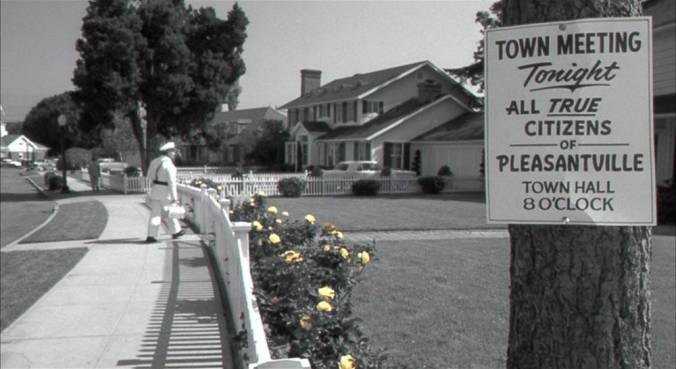
Don Surber is a former journalist and current conservative pundit whose blog and substack I occasionally peruse, usually without too much alarm. However, he has issued a substack essay that, if I had to summarize in three words my objections to it and any culture wars guerilla who cited him as authority would be, “This doesn’t help.” A longer version follows.
Surber’s piece is called “In praise of ties” and carries the subheading, “They helped build a society that we are destroying.” If Glenn Reynolds had not endorsed the link, I would have stopped reading right there. I know ties are going to be used as a metaphor for the decline of elegance, respect, adulthood, civility, dignity, elan and eclat, blattity-blah, but still. Don’t insult my intelligence. This is the equivalent of “In praise of stovepipe hats,” “In praise of spats,” “In praise of derbies” or “In praise of bustles.” These are all fashions, and fashions rise and fall like steam and autumn leaves. We get used to them, if they hang around long enough, and yes, sometimes their demise are linked to cultural factors that have little to do with fashion. Nonetheless, longing for a time when men wore ties as a matter of societal conformity makes one seem like Grandpa Simpson, screaming at clouds. Worse, in fact.
Surber writes, “Chuck Berry always wore a tie. Gas station attendants wore them. You could trust your car to the man who wore the star because he had a tie on. Men wore ties to ballgames because men were civilized. Ties were important because they gave a sense of authority but ties also showed that a man wants to belong in society. As Benjamin Franklin said, “Eat to please thyself, but dress to please others.”
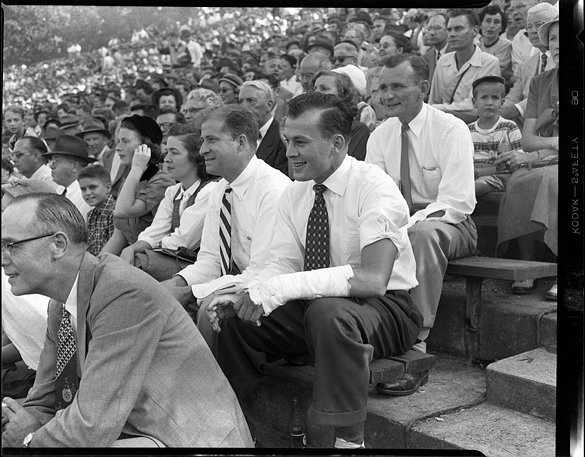
Sure, Don. I always thought those pictures of men wearing ties at baseball games were ridiculous. Ted Williams, one of my father’s heroes whom he passed on to me, famously refused to wear a tie: he had a very long neck and didn’t think ties looked good on him. Ben was right, but when the tie as a symbol of wanting to appear formal and serious wane—it hasn’t waned completely —then people will adopt other ways of “dressing to please.” It is the way of the world, and there is nothing about these transitions to lament.
But Surber was just getting started. Here he is at full speed:
The 1950s were better than what we have today. Women stayed home and took care of their families while men went out and worked for their families. Marriage was the norm and the children were raised right… ‘Couples abided by specific rituals to symbolize their commitment, often exchanging class rings or letterman jackets if of school or college age.’The reason they married was overwhelmingly to have and raise children…People no longer date….They hook up. Women no longer have husbands. They have baby daddies. Abortions and now transsexual butchery are further turning our populace into rutting animals…The devil has been offering sexual freedom since the days of Adam and Eve. The Bible was not written to chain women to a patriarchy but to make men step up and accept their responsibilities…Am I saying we should bring back chastity? How can I not say it? Of course. And blue laws too. I don’t want to hear any nonsense about how government cannot tell a business what to do when there literally are a million laws and regulations already.
Ban gambling. States should be ashamed of themselves for taking over the numbers racket and fleecing the poor — under the euphemism lottery.
Ban marijuana again because it leads to worse drug abuse. Think not? Oregon legalized marijuana in 2020 and five years later it decriminalized hard drugs.
As for booze, bring back the state liquor stores and encourage people to drink at bars because socialization is good for man.
The Lord gave us the Ten Commandments not for Him but for man to live a better life. And part of that better life is dressing for others. Ben Franklin got that right as he did so many other things. A dress code works….
If ties were good enough for the 1950s, why are they not good enough for us?
Do I have to dig up the cognitive dissonance scale again? I guess I do.
When any writer, social commenter or pundit extols the 1950s, he or she loses all credibility and makes every other observation less persuasive by linking them to what can only be called blind nostalgia. There were many good features of the 1950s—we had a President one could respect and trust for eight years, and there has never been a decade with such variety and innovation in music. Network TV, even in black-and-white, was better. But come on. The nation was substantially apartheid. Jim Crow was thriving. Gays had to hide their sexual orientation or be ostracized. Police could beat confessions out of people they arrested. Freedom of speech and association were under attack even more vigorously then than now. Women were largely restricted in their career choices to school teaching, being a clerk, a waitress, a nurse or secretary, or being a “homemaker,” regardless of her talents and ambitions. Don Surber thinks those hellish societal straitjackets were better? Here’s the scale:

For most Americans today, the 1950s, even with its best features, resides near the bottom of the Dr. Festinger’s scale. That means Don Surber is there too, and anything he advocates is dragged down close to the -0- line or below. Good job, Don!
Stay away from me.
Surber’s lament is why so many people hate conservatives and think they are crazy or stupid. It is also why the current progressive smear strategy of linking Republican and conservatives to fascism works. Surber is right about much of what he’s attacking, and some of those features of 21st Century America can be dialed back or minimized, but only through logic, persuasion, and the realization that they are net losses for society. It is worth harping on state sponsored gambling, but advocating banning gambling entirely marks one as a statist and opponent of individual autonomy. Society should relentlessly teach its members to avoid and disapprove of destructive behavior, but people also have a right to be stupid. It is true that in the 1950s drugs like marijuana were overwhelmingly regarded as anti-social and shameful. They still are anti-social and destructive, and I believe the metaphorical pendulum can swing back, just as attitudes toward smoking and littering changed—but not if such positions are packaged with other strict and often destructive social norms like those that flourished in the Fifties.
Chastity is not coming back, and Surber is ridiculously naive if he thought chastity was the norm even in the Fifties. There is no question that the “sexual revolution” and the elimination of social taboos about promiscuity and unwed pregnancies has had terrible consequences, particularly in the black community and at lower socioeconomic levels, but Surber is advocating a return to an era when being single and pregnant meant a woman was unemployable and a teenager was expelled from school.
Worst of all, from my perspective, is that Surber’s essay rejects ethics as a tool of society evolution for the better. The Ten Commandment and laws are moral codes, and yes, they have been effective because they are simple, promise punishment for no-compliance and don’t require any thought. But these features of modern society that Surber deplores will either change, or not, when and if the members of society are persuaded that they are harmful, foolish, and make life for everyone, including future generations, worse. Such conduct is called “unethical.”A pundit who admits that he longs for the 1950s is useless, indeed, worse than useless, a detriment to that mission.
I like ties and suits, but then I’m from Boston. My job is to look as professional and trustworthy as possible, and when the culture changes to such an extent that wearing a tie makes me look like someone who is frozen in the wrong decade, I won’t wear one.
 Ethics Alarms

I admit I skipped over Don Surber’s post when I was skimming Instapundit earlier. The title did not attract me. Now I’m glad I didn’t spend any further time on it.
The problem is that many of us long for what we see as bygone golden age, when everything was much better than it is now. It reminds me of the BarenakedLadies song “Testing 1,2,3” which has the bridge lines:
We recognize the present
Is half as pleasant
As our nostalgia for
A past that we resented
Recast and reinvented
Until it’s how we meant it
There is no doubt we’re going through a very difficult time right now, and it does feel like our society is coming apart at its seams. But every generation has its unique challenges, and pining for the good aspects of the past should only be a challenge to find ways to restore what is good without losing the lessons we’ve learned along the way, much less bringing back the evils of the times.
For example, a lot of conservative Catholics long for the glory days of the Church, when all Europe was united in faith, the Holy Land had been liberated, and scholasticism was at its height. We seem to ignore, as great a time as it was, it was also devoid of the three important A’s — aspirin, air-conditioning, and antibiotics. The world was also much poorer then, and life expectancy a lot shorter. And it isn’t like there weren’t problems at the time. The great Schism had separated the Orthodox Churches from Rome. The Muslims were still a great military threat. And the Albigensians and Cathars would soon provoke a crusade from which we would get the infamous line, “Kill them all and let God sort them out.” (Probably an apocryphal quote. Probably.) And the Cathars, remember, were a fresh offshoot of Gnosticism, holding matter to be evil and the spirit good, so that marriage and babies were bad things (though fruitless promiscuity was perfectly acceptable), and ritual suicide was the highest sacrament. These beliefs were spreading and threatening to tear society apart. So no, for all the wonders of scholastics like Thomas Aquinas and Anselm of Canterbury and Dun Scotus, there were plenty of things about the age that we shouldn’t envy.
So too for the 1950’s. Though, having been born in ’81, I only know of the ’50s from the nostalgic reminiscing of the generation that emerged triumphant from WWII, ready to challenge the world, with industry exploding and everyone getting a TV, a toaster, a refrigerator (inside which you could survive a nuclear explosion, ahem), two vehicles, a white picket fence, and so on.
I recently watched a two part podcast from the Hoover Institute entitled Growing up in the Segregated South. They had a roundtable conversation with three folks who grew up in Selma during that era — extremely accomplished people, one of whom was Condoleeza Rice. We all know what Rice accomplished, one of the others was a university president, and the third I think a professor.
They attributed this to a combination of their families, neighborhood, and pastors all of whom emphasized the importance of education. One of them marched at Selma and was arrested by Bull Connors.
While these three acknowledged they were privileged for their times, they also showed what was possible. Nonetheless they also knew first hand the evils perpetrated by that society in a way it’s really not possible for me to experience first hand.
I was truly impressed by these folks and their positive outlook on life, despite what they’d been through.
I was also reminded that if Condoleeza Rice had ever made a run for president — and she’s not quite too old even now — I’d vote for her in a heartbeat. I’s a pipe dream but hey, “I have a dream’?
“Surber’s lament is why so many people hate conservatives and think they are crazy or stupid. It is also why the current progressive smear strategy of linking Republican and conservatives to fascism works.”
But, it is the progressives that distort the words of a few to cast a dark cloud over the many. That is why so many people reject conservatism. Conservation means to keep the good and minimize the bad. It is when social narcissism takes root and the me is more important than the we is when disagreement over what is good and bad gets out of whack.
Advocating for nuclear families with one parent generally available to be the primary caregiver while the other is the resource provider is not equivalent to the handmaiden’s tale but that is how it is portrayed today.
Despite the racial segregation of the 50’s black families had more wealth, had higher home ownership rates, lower rates of incarceration (read fewer black children killed at the hands of others) and higher rates of graduation. Sometimes looking back to a time when certain metrics were better helps us show us where our progress has led us to shoot ourselves in the foot. I am not advocating to bring back segregation I am pointing out that some of our policies designed to help did more to make society worse off.
Are ties the answer, in and of themselves? Of course not, but what if ties are a metaphor for assimilation and structure. Hell, I hate wearing ties but the idea of a teacher showing up to class wearing the latest fashion jeans that look like they were sent through a shredder is a bridge too far for me. There do not seem to be any guardrails on acceptable social behavior. I don’t see having the ability to hear another’s cell phone conversation in which the speaker is telling someone else that they told so and so to fuck this or that progress in civility.
Conservatism embraces assimilating all that is good from every culture and rejecting the bad. Assimilation requires a willingness to evaluate another perspective and adopt that which is good. Assimilation requires individuals to make a compelling case as to why their way is better that the established way of the new entrant’s culture and vice versa. Unfortunately, those who hate conservatives or progressives find that far easier to mobilize their forces against change because change involves a cost to them.
Clarification: When I wrote
“It is when social narcissism takes root and the me is more important than the we is when disagreement over what is good and bad gets out of whack.”
Such promotion takes the form of promoting social welfare in which the promoters are the principal beneficiaries.
For example: Teachers advocating for more money for education which usually means more pay and benefits; social workers finding new needs for their populations when they have done little to effectuate positive changes in their populations for the initial problems; elected leaders promising money to select constituents.
“We” would all be better off if we focused on making our own “me’s” better off using principles of conservatism such as self-reliance, personal responsibility and work to achieve personal and social progress.
Very much what Chris has said.
The communists won (and continue to win) the language framing battle of ideas.
It’s a bias we all have when an argument like this is presented about “old times” and the ideals that made a time prosperous and strong, but not perfect.
Those same positive ideals that worked then work now, but the baby must be thrown out with the bathwater for the totalitarians to achieve their way.
What the author points out is that there tends to be an elevation in society generally when standards are higher, and appearance is method to express that we all agree to that higher standard.
That shouldn’t be a stretch, and we can all agree that a threshold may be a bit high. Unfortunately, society does not seem to hold a view about what is too low. When you’re wearing your jammy pants on an airline flight (something that IS below my floor of acceptability)…
Where is the line drawn between freedom to be you and a complete disregard for those around you? What responsibility do we have towards our fellow citizens?
You disdain the suggestion we all wear ties, and really so do I, but the thought expressed in that suggestion is not wrong.
Where I work, they want us to wear professional or business attire, I forget which (unless it’s professional business attire).
For guys, that pretty much means ties, although coats are not required (or common). I think of it as my work uniform, but I also think it bumps us up some on the ‘professional’ cognitive dissidence scale. The company basically just doesn’t want us looking like bums or, honestly, like many of our clients.
It’s a fashion and I think people tend to look up on people who are dressed this way. Does it make us better, more virtuous people? Nah, but I think it is a marketing strategy that likely pays off.
I have never liked ties, but a long time ago, I realized that they were basically a message. They are a way of saying “I have put forth effort, I have done more than I am required to do, I have done something not absolutely necessary to show that I take this seriously.” I can respect that message. And if I don’t particularly want to wear a tie, I do appreciate the comment I once saw from someone in the menswear business, that while the general act of wearing a tie is commonly seen as a sign of conformity, the specific tie one wears is one of the few ways that a man can express individuality when formally dressed.
I suspect that the wearing of ties is really descended from a tradition of conspicuous consumption, of rich people wearing particular clothing because it announced that they were rich. My favorite example would be Elizabethan ruffs, but there are plenty of others. You wear an item of clothing that you don’t need to announce to the rest of the world that you can afford it. (This can be particularly effective in a culture where a lot of peoples’ clothing is roughly “what I’m wearing, and what is being washed.”)One of the problems with this is that we now produce enough clothing cheaply that anyone can dress impressively if they want to, and it turns out that a lot of impressive looking clothing is actually uncomfortable.
Generally speaking, I prefer the modern world to the past; I like modern plumbing and modern dentistry, readily available chocolate and not being part of various injustices of the past. (While being keenly aware that there are things that pass as reasonable today which will probably shock our descendants.) What I do suspect is that earlier ages may have been better prepared, culturally and psychologically, to meet the challenges of their day than we are of ours. Things like leaders prepared to make hard decisions, and Tocqueville-style organizations working to improve matters on their own instead of waiting for Washington to Do Something. I may be mistaken.
Anything else? I once heard the comment that, historically, Catholics opposed gambling because you might lose, and it would be foolish to risk your hard-earned money that way. Protestants opposed it because you might win, and it would be wrong to get money without having done anything useful to earn it. There seems to be merit in both positions, but an examination of the record suggests that banning gambling lead heavily to cops on the take. (And, as a more-or-less Catholic, I am also reminded of the joke about bingo being from the Latin for “keep the school open.”)
I think women in the 1950s could also be telephone operators. Probably some other specialized occupations, but it is too late for me to think of them.